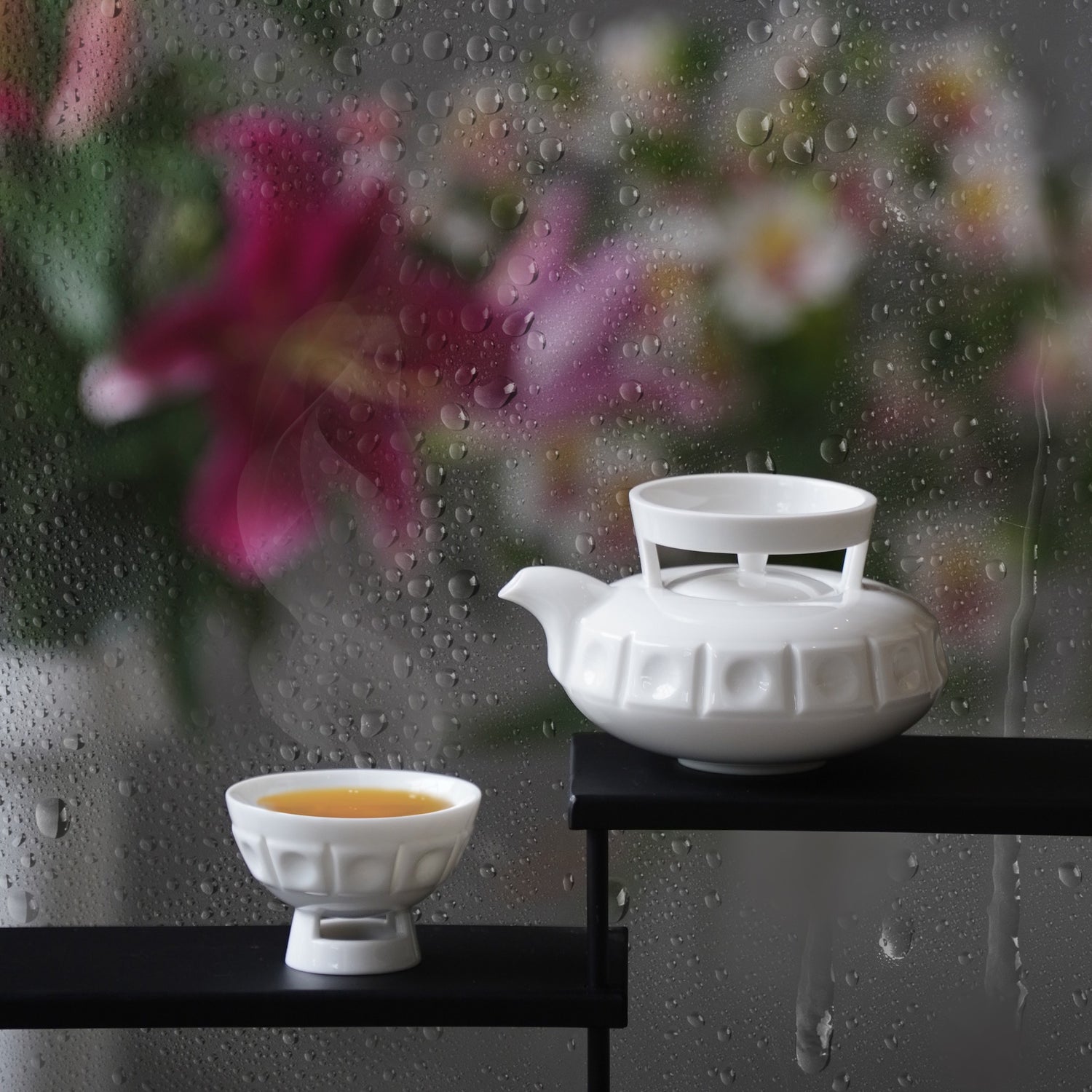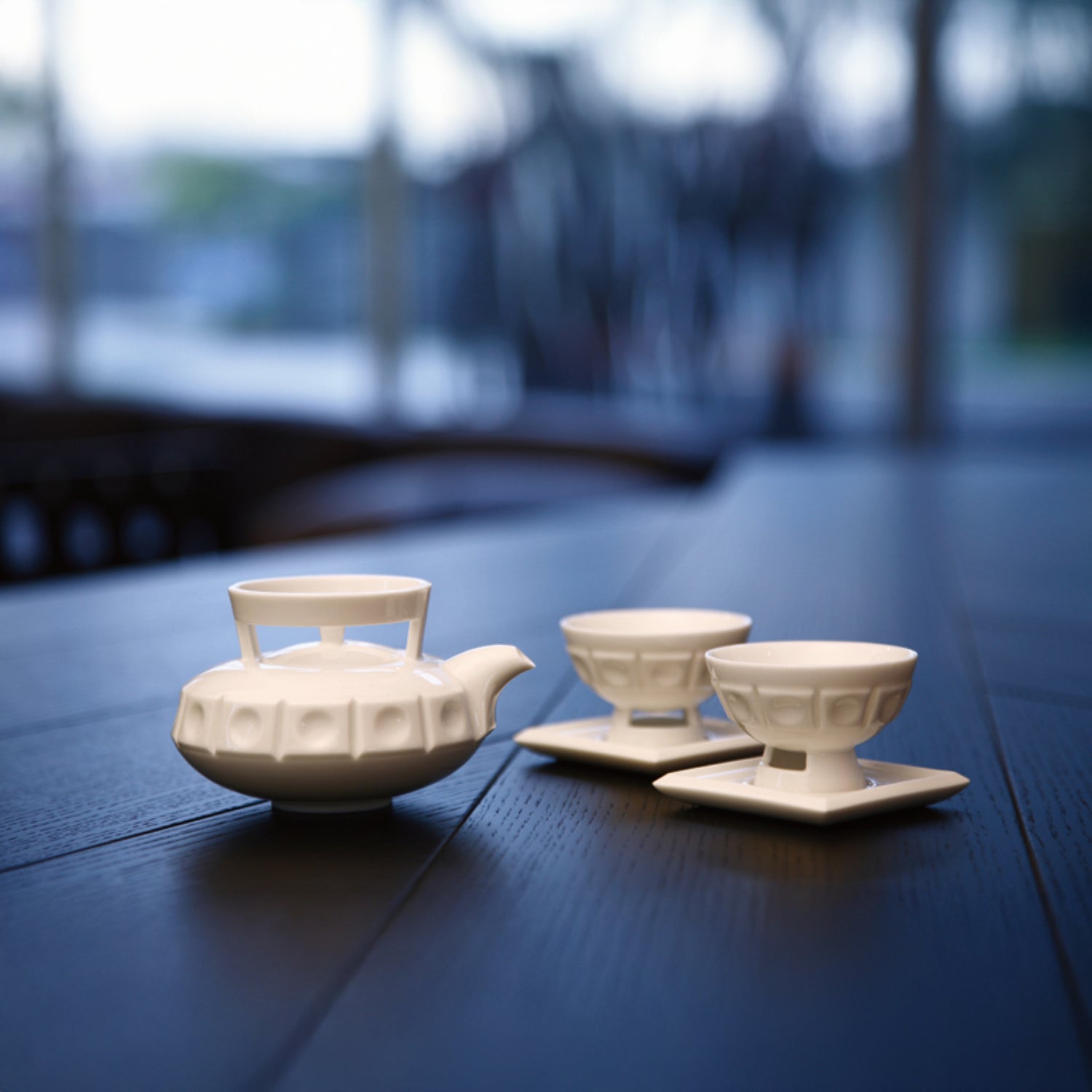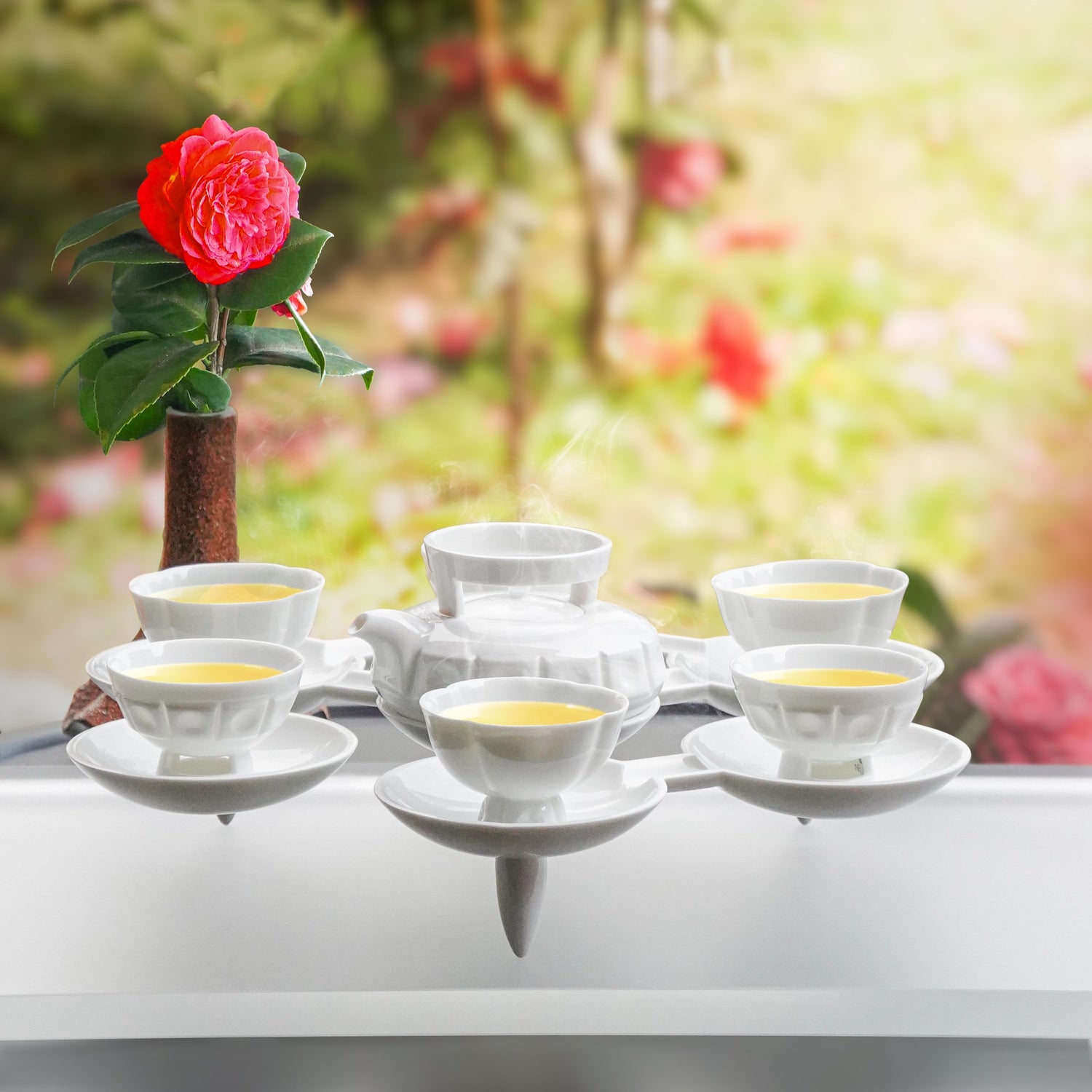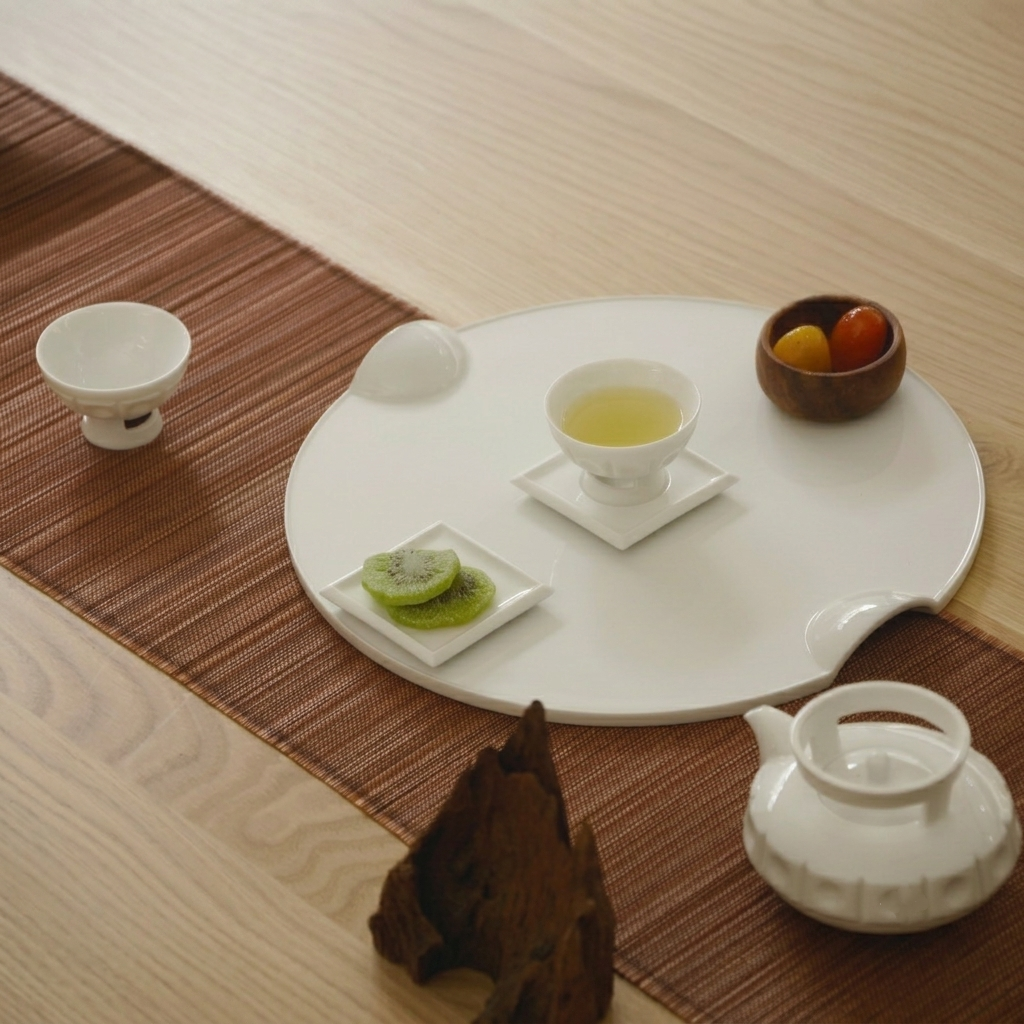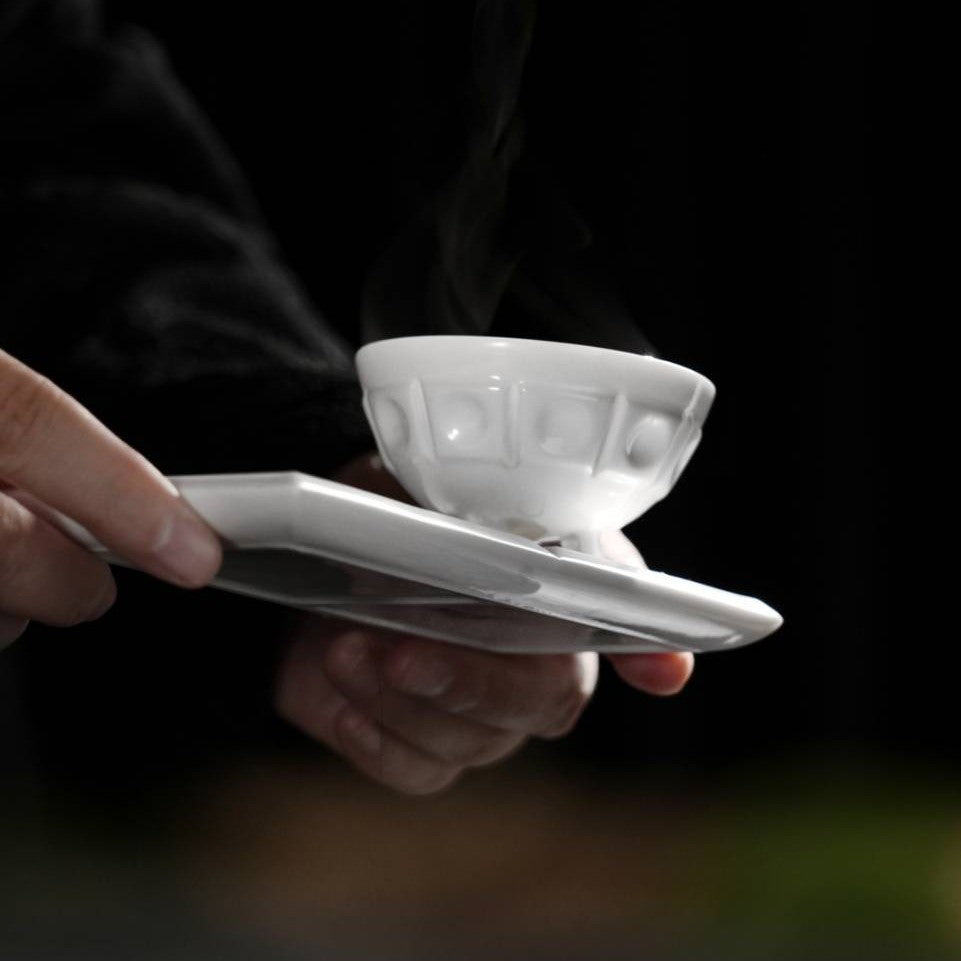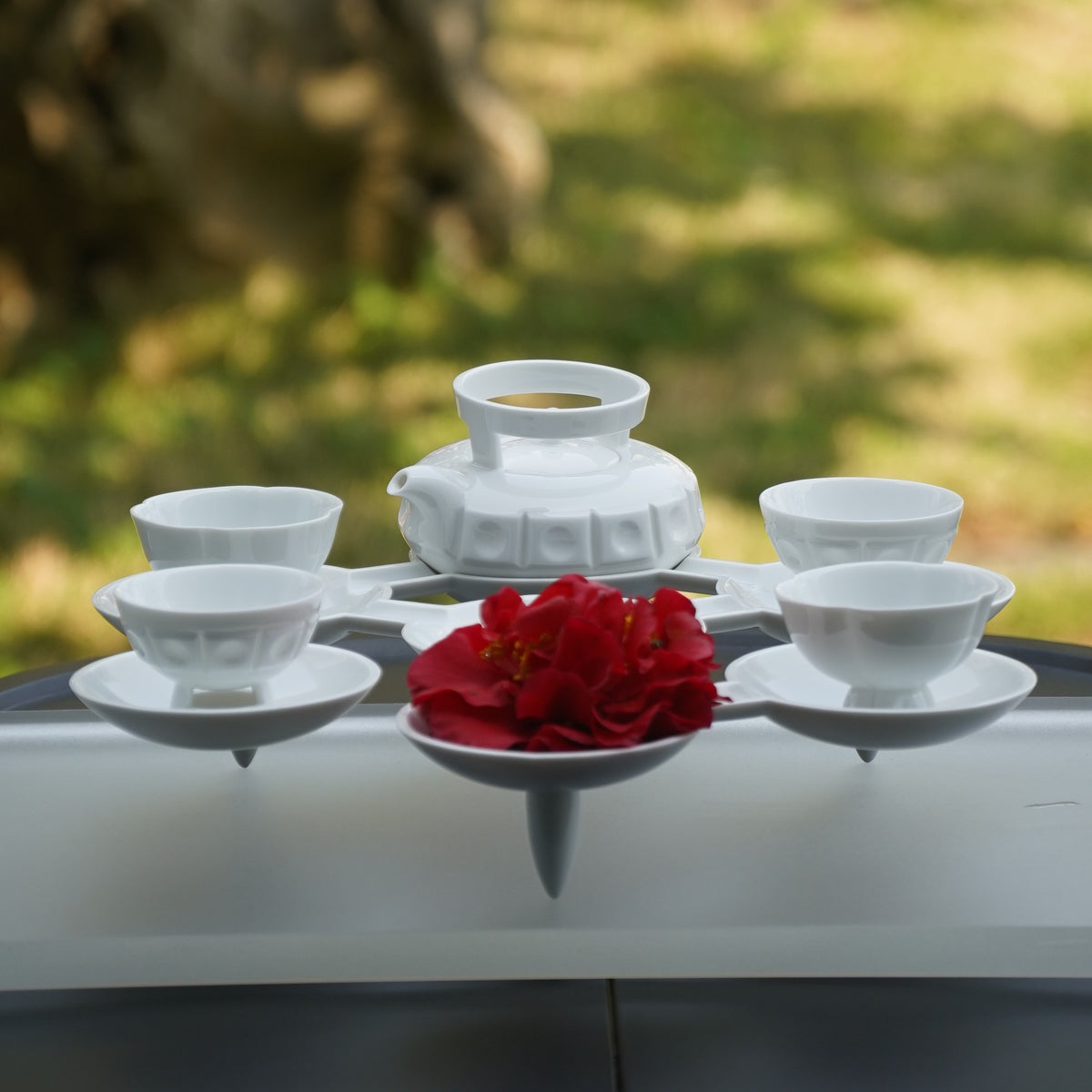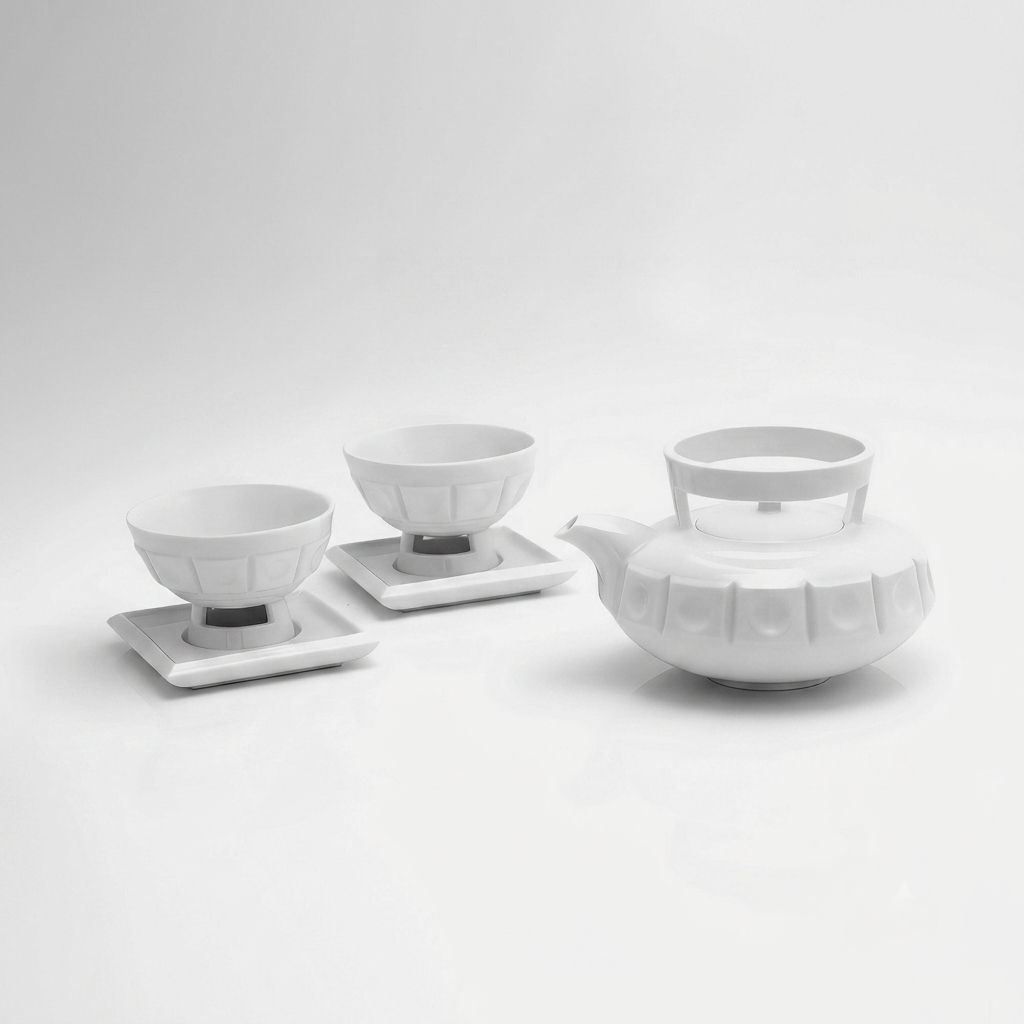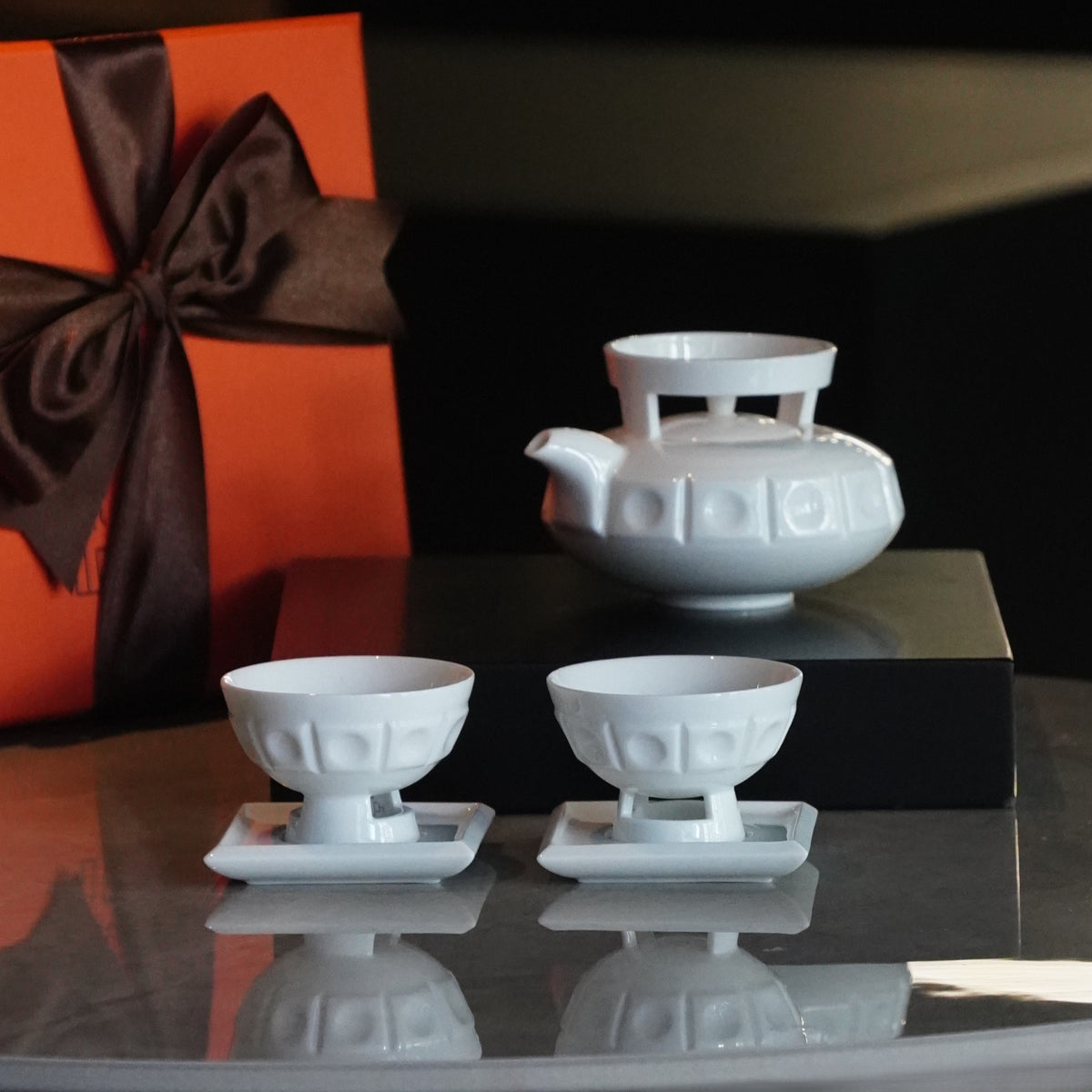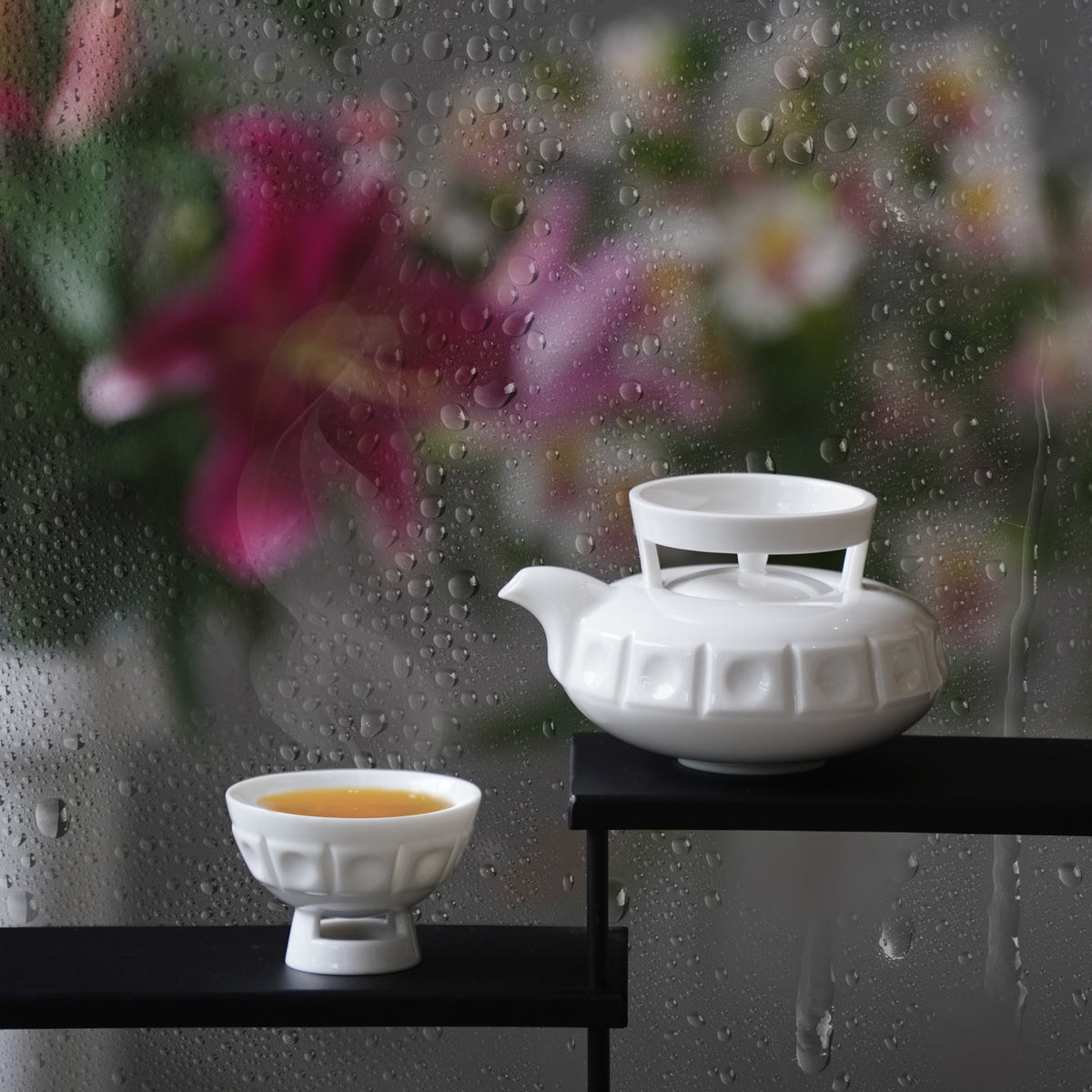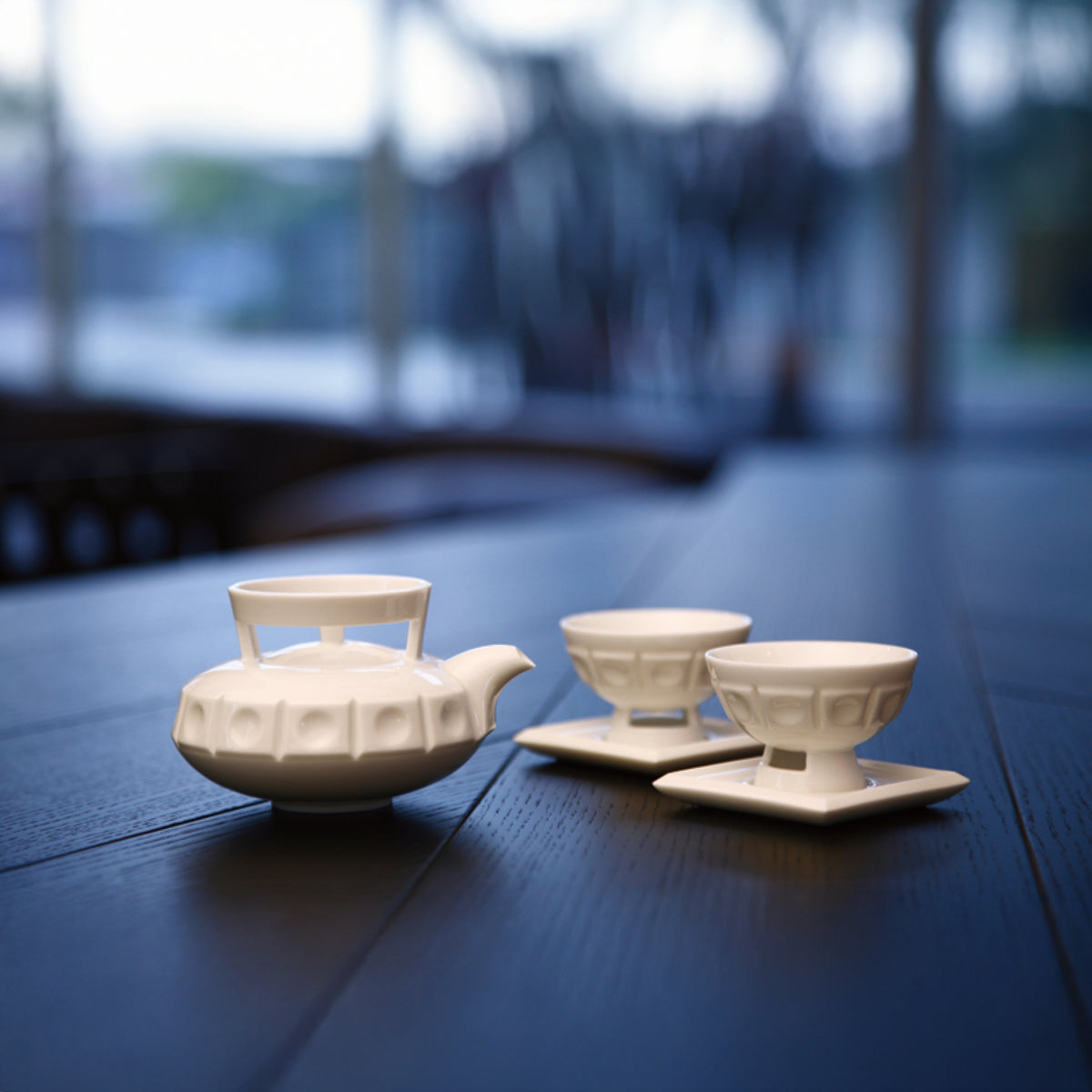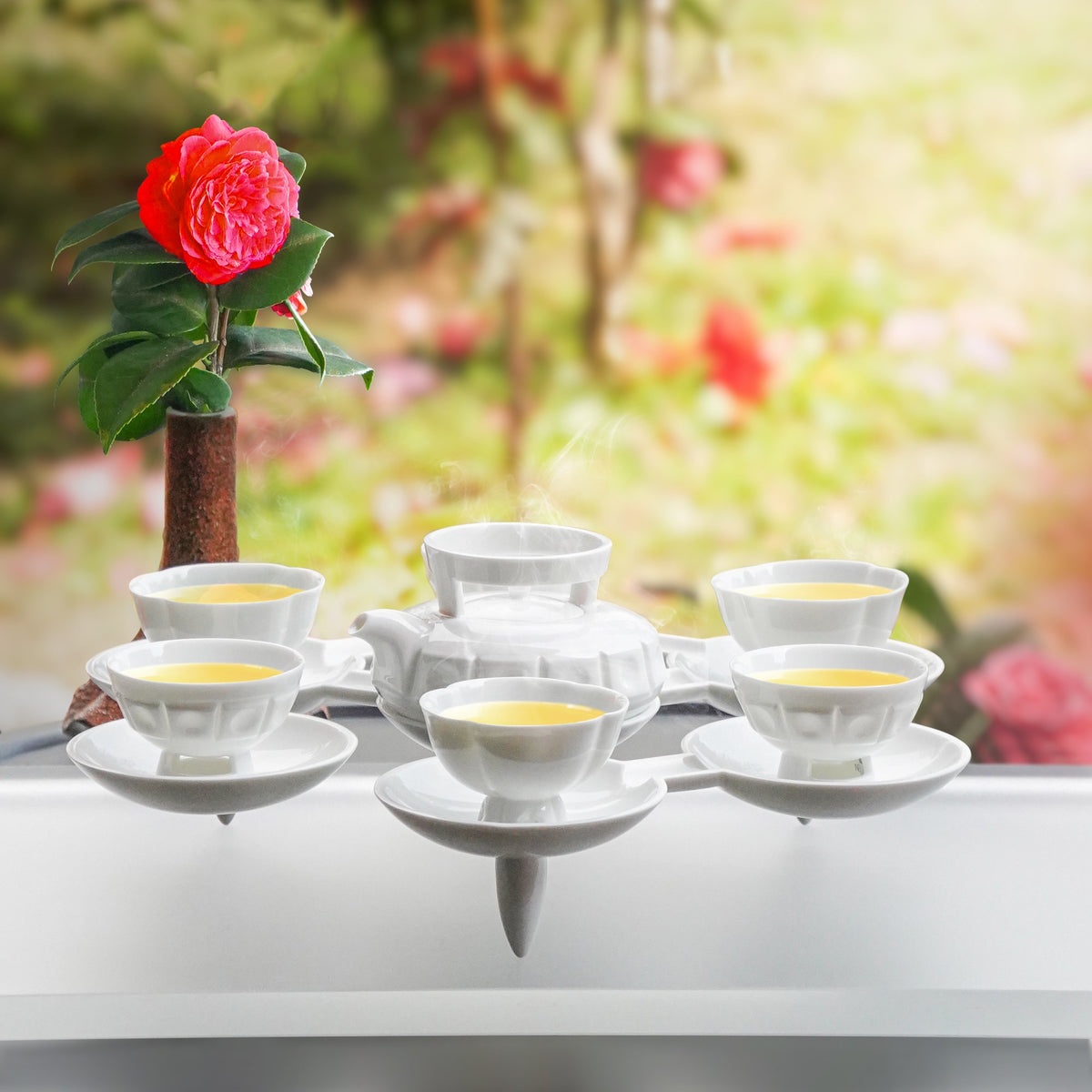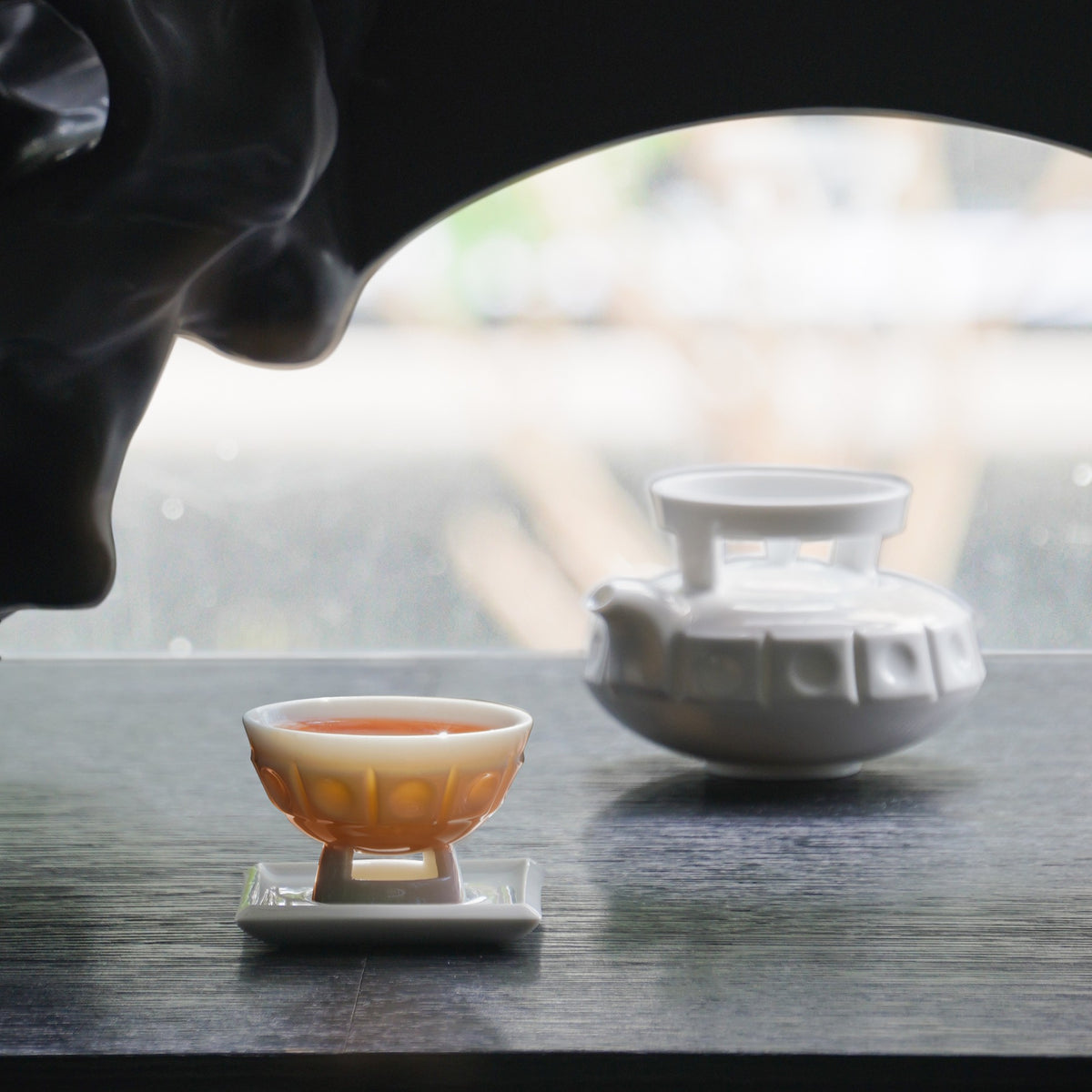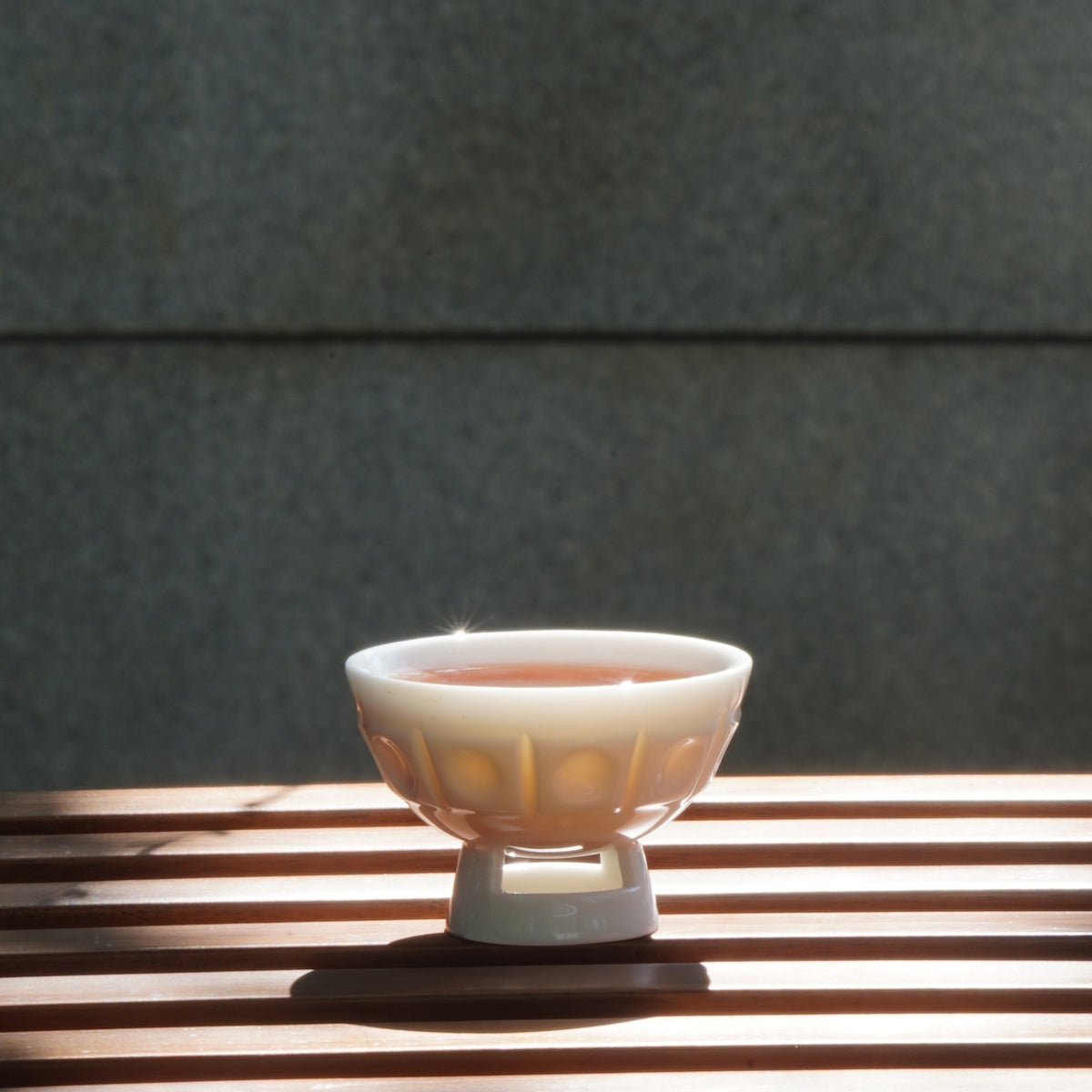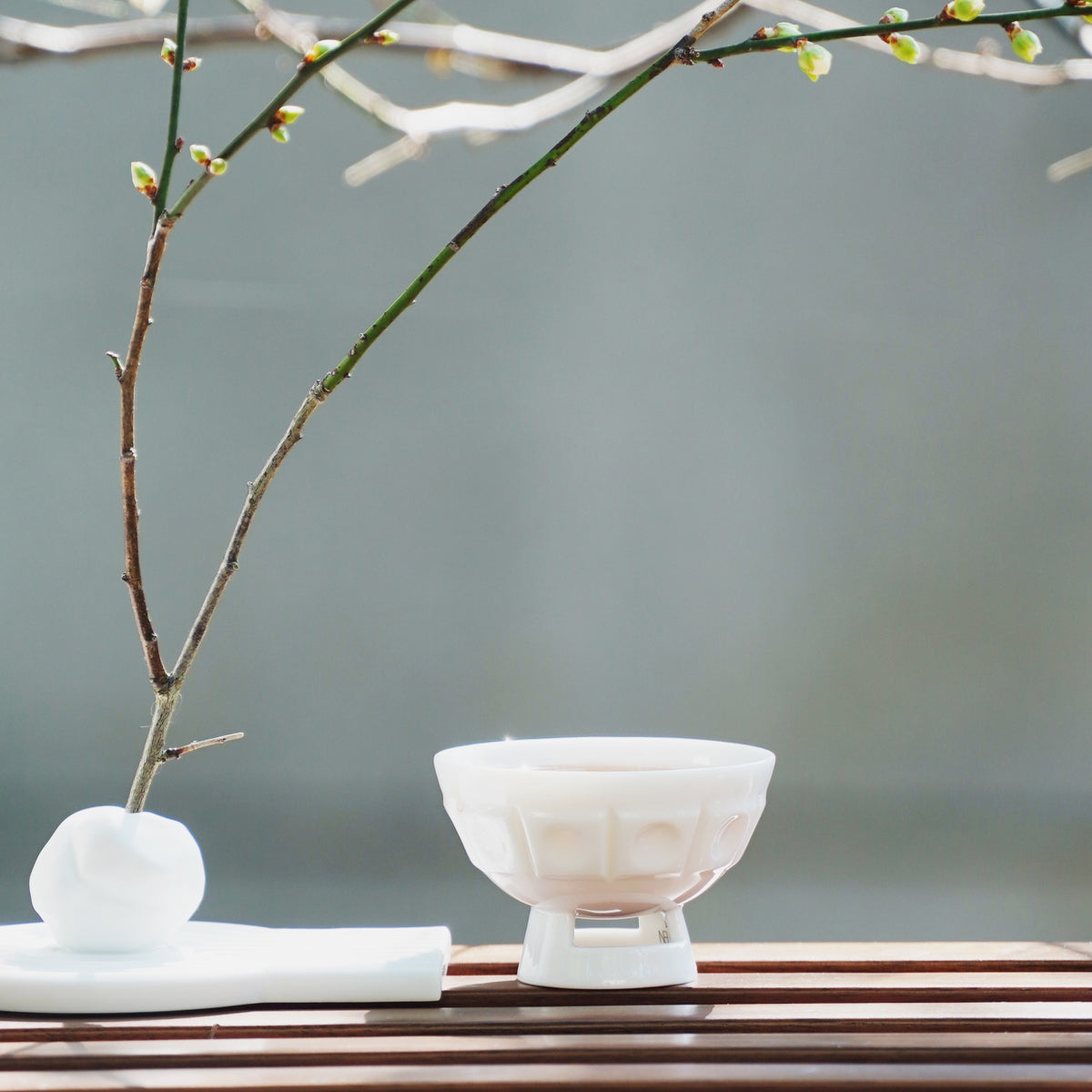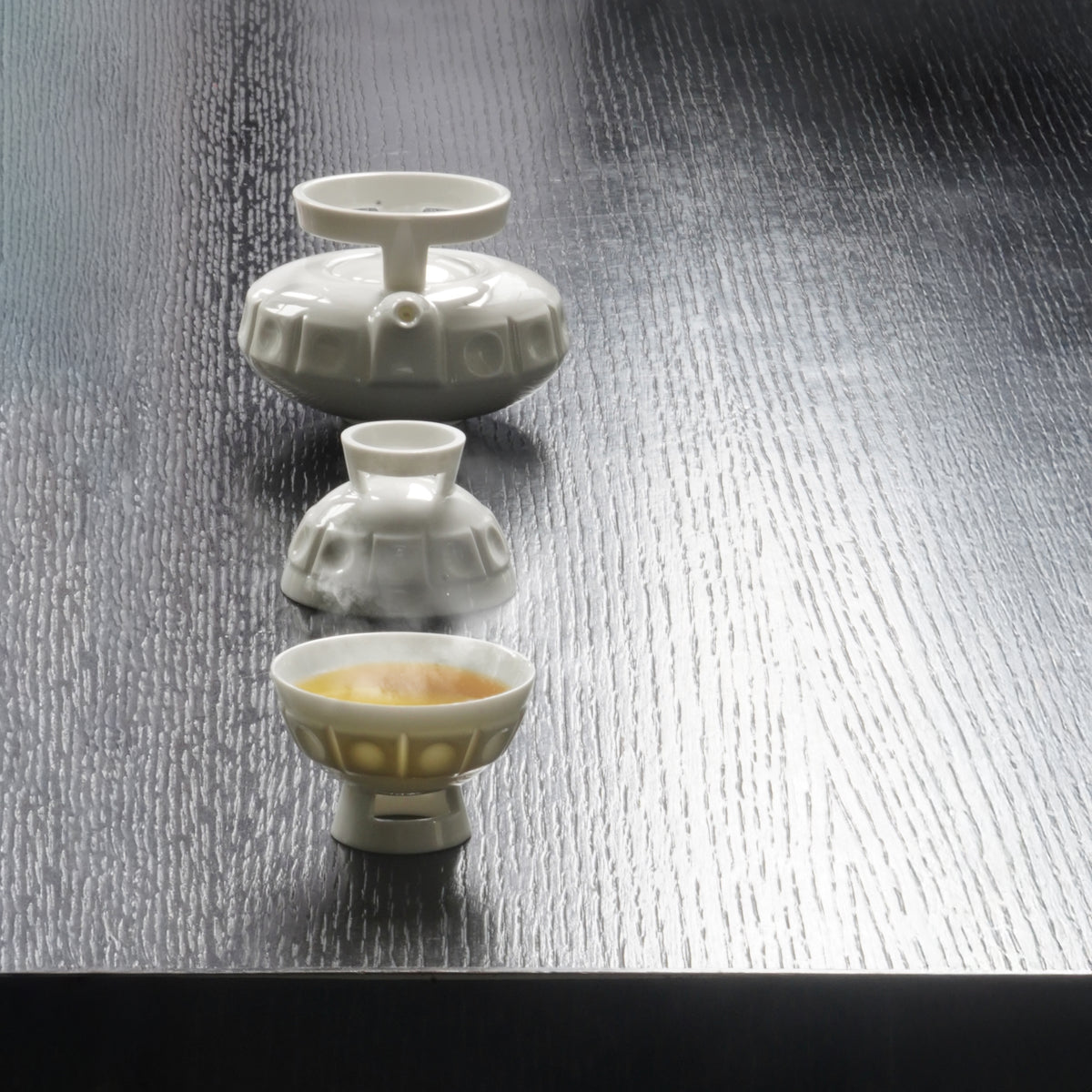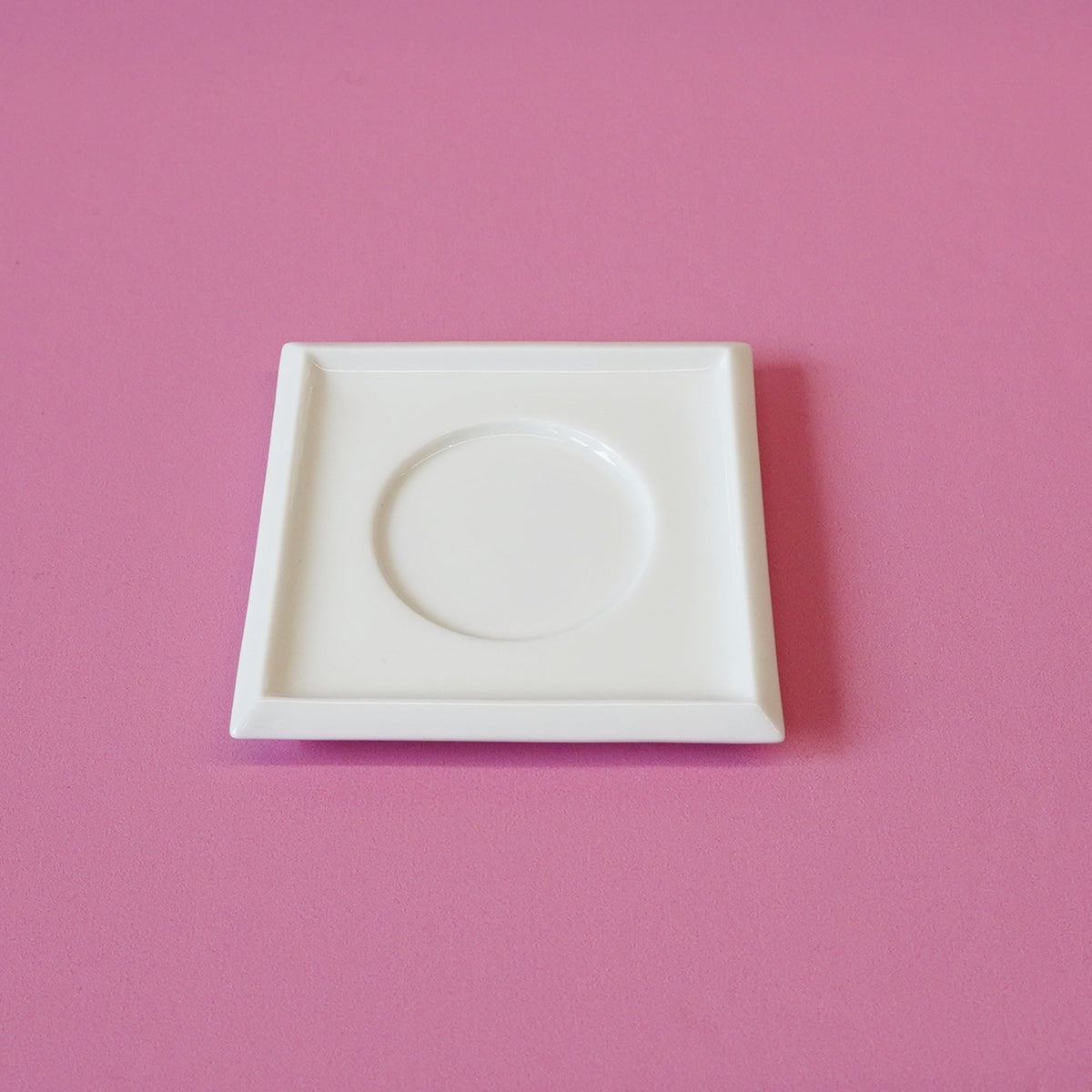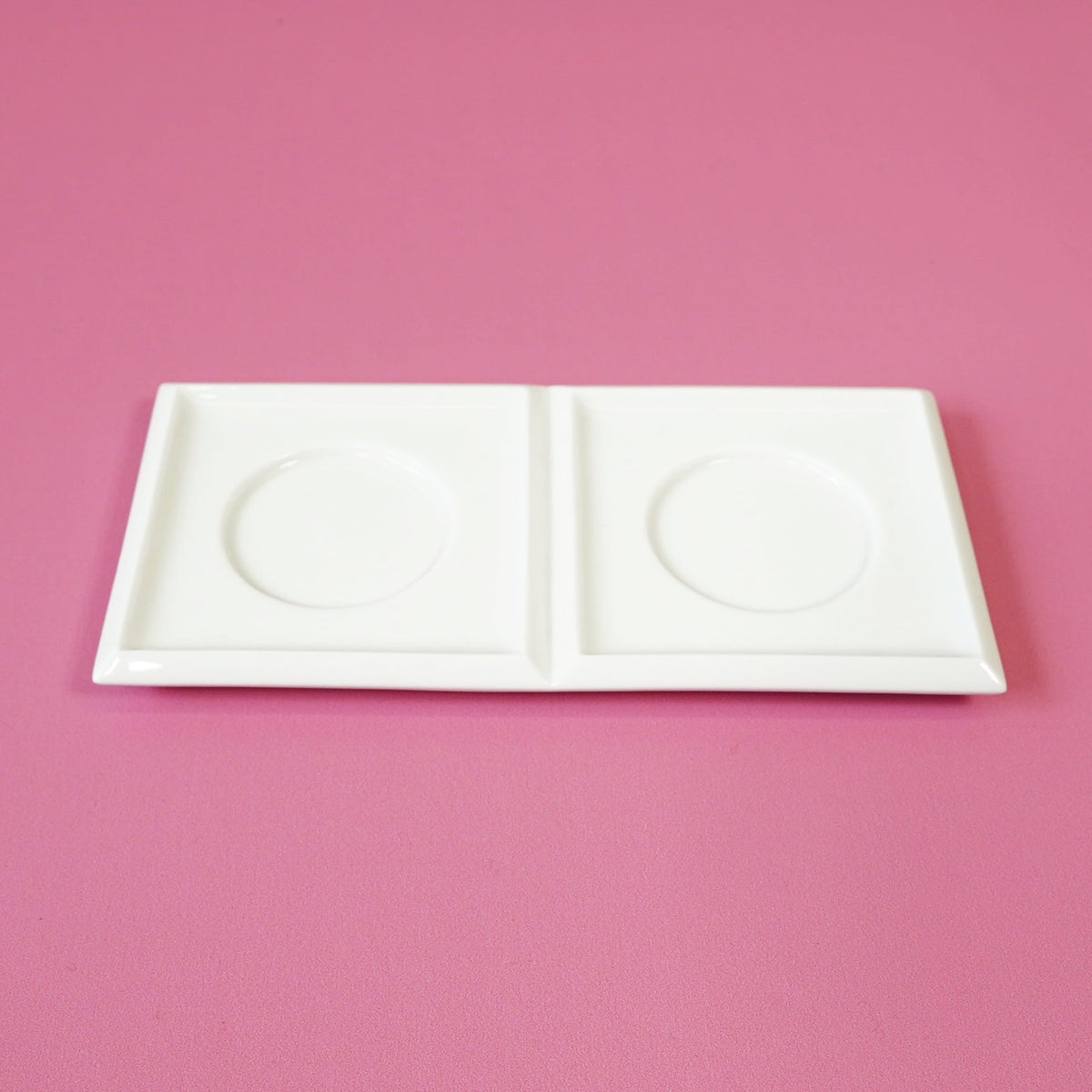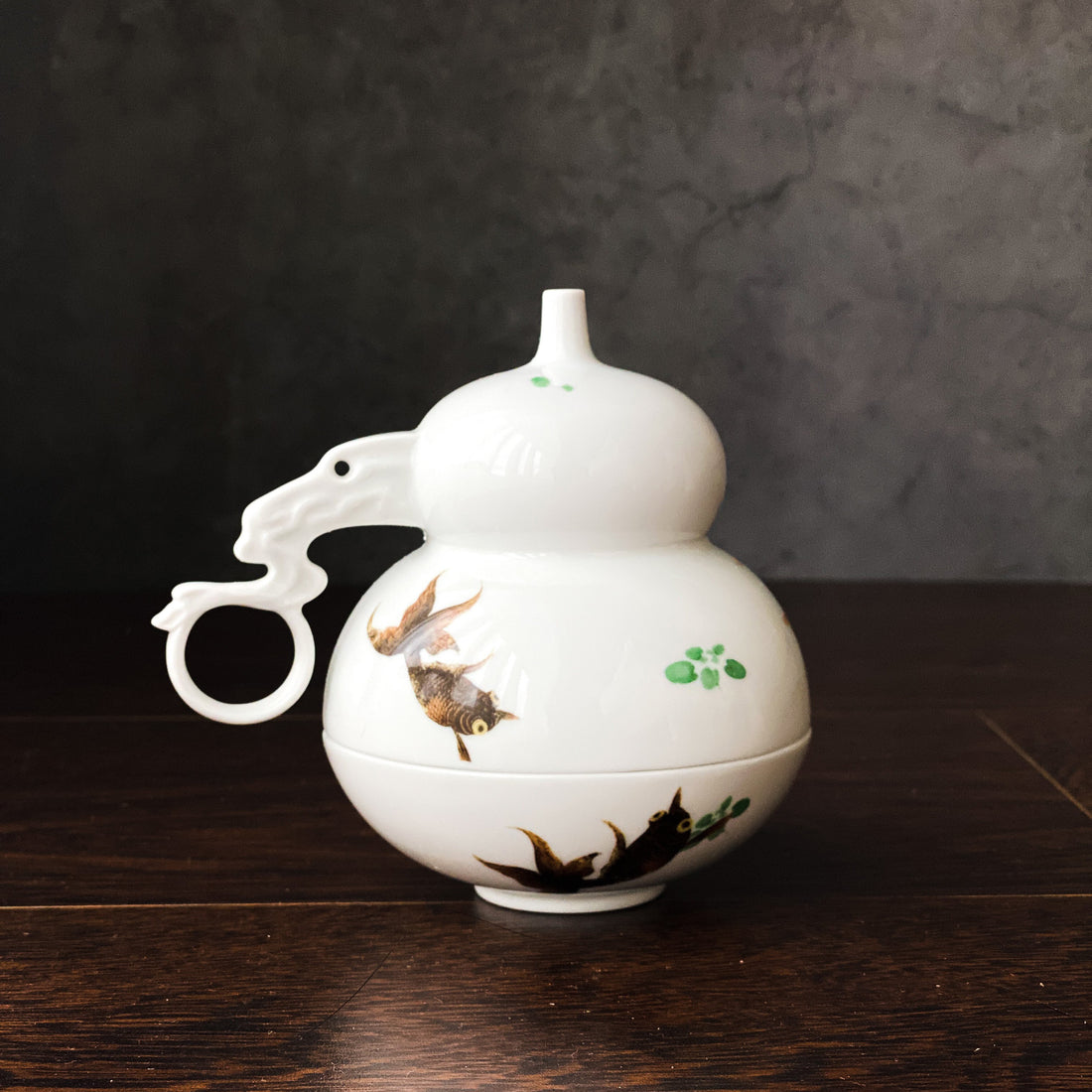


Built upon the timeless harmony of “heaven round, earth square,” Blazing constructs a radiant geometry where light and will intertwine.
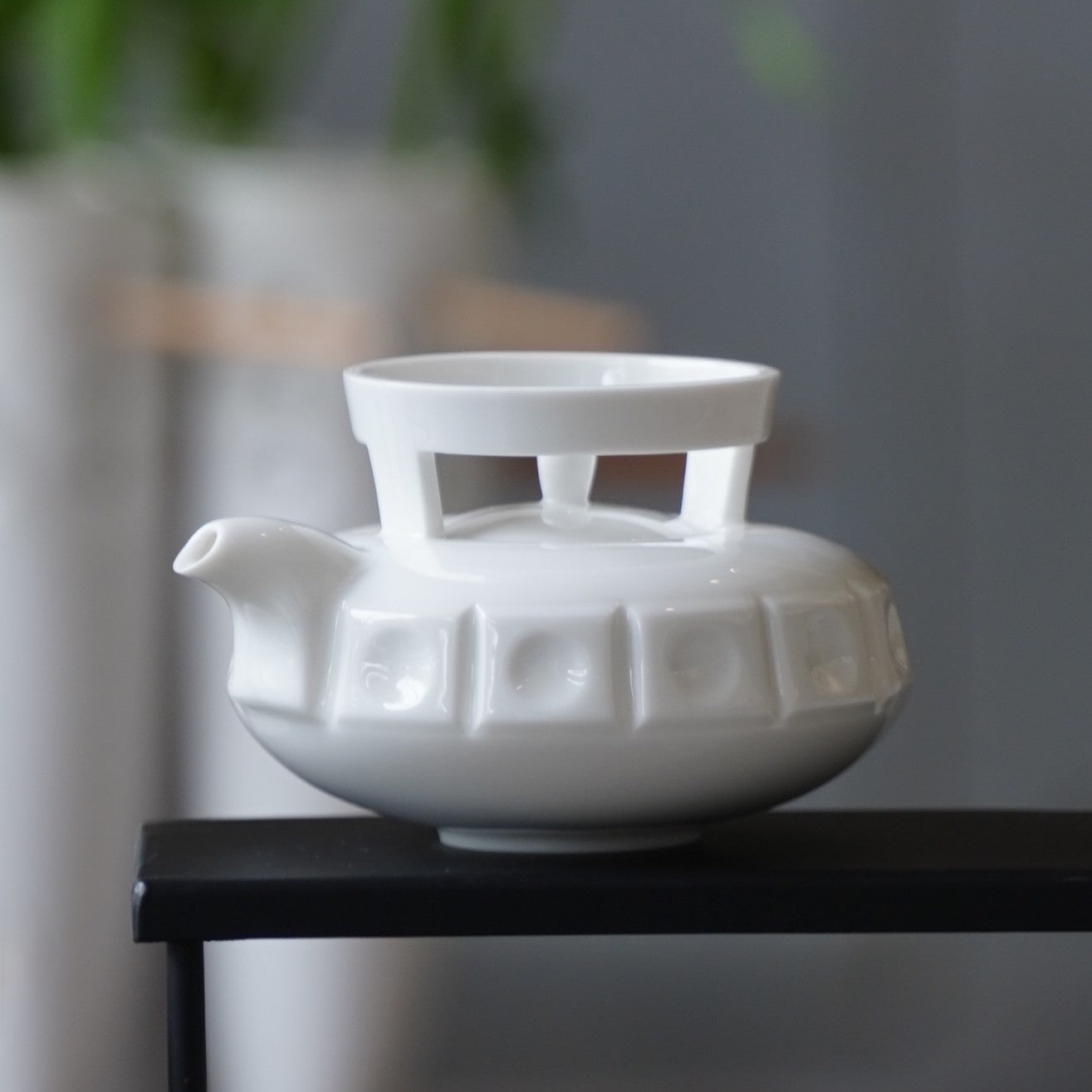
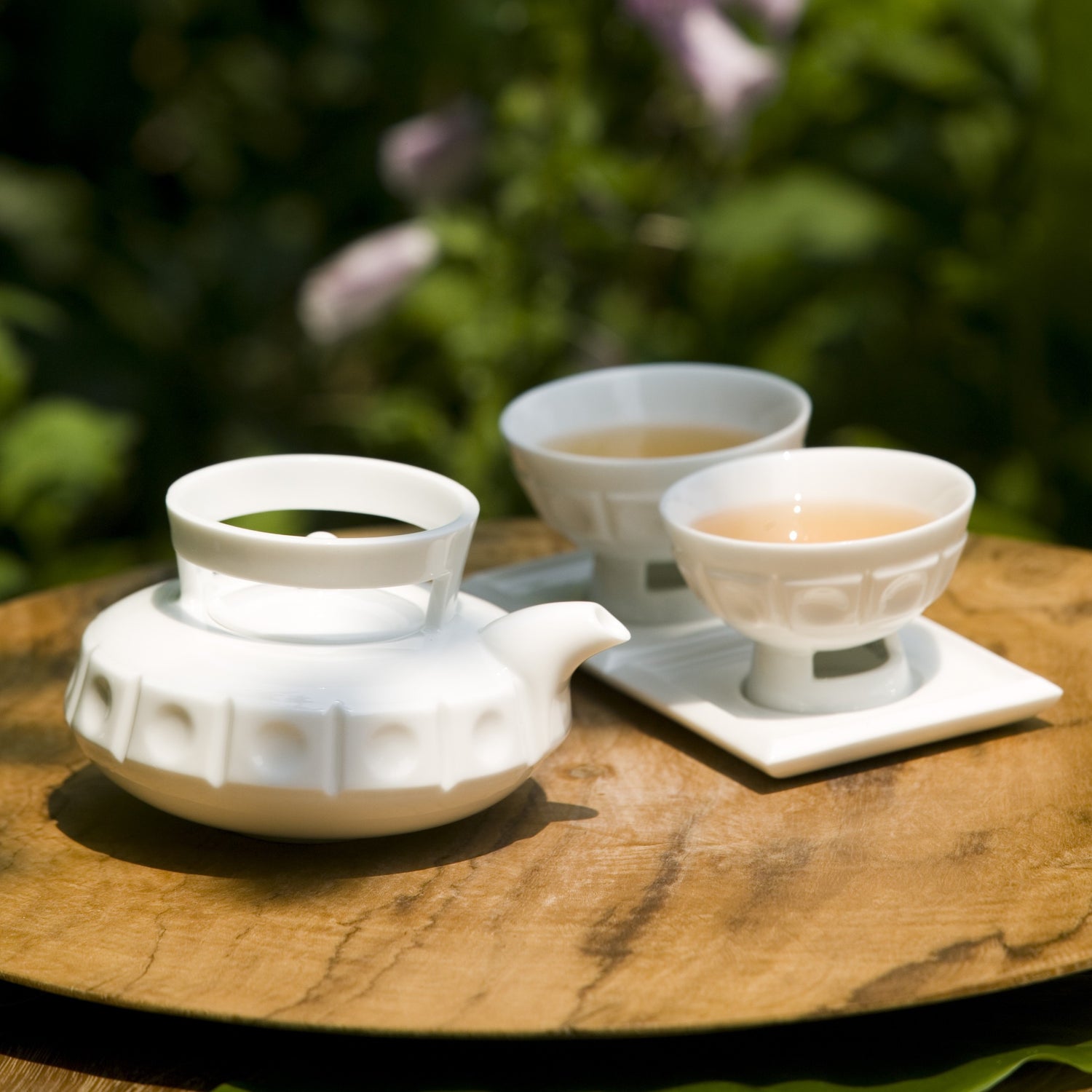
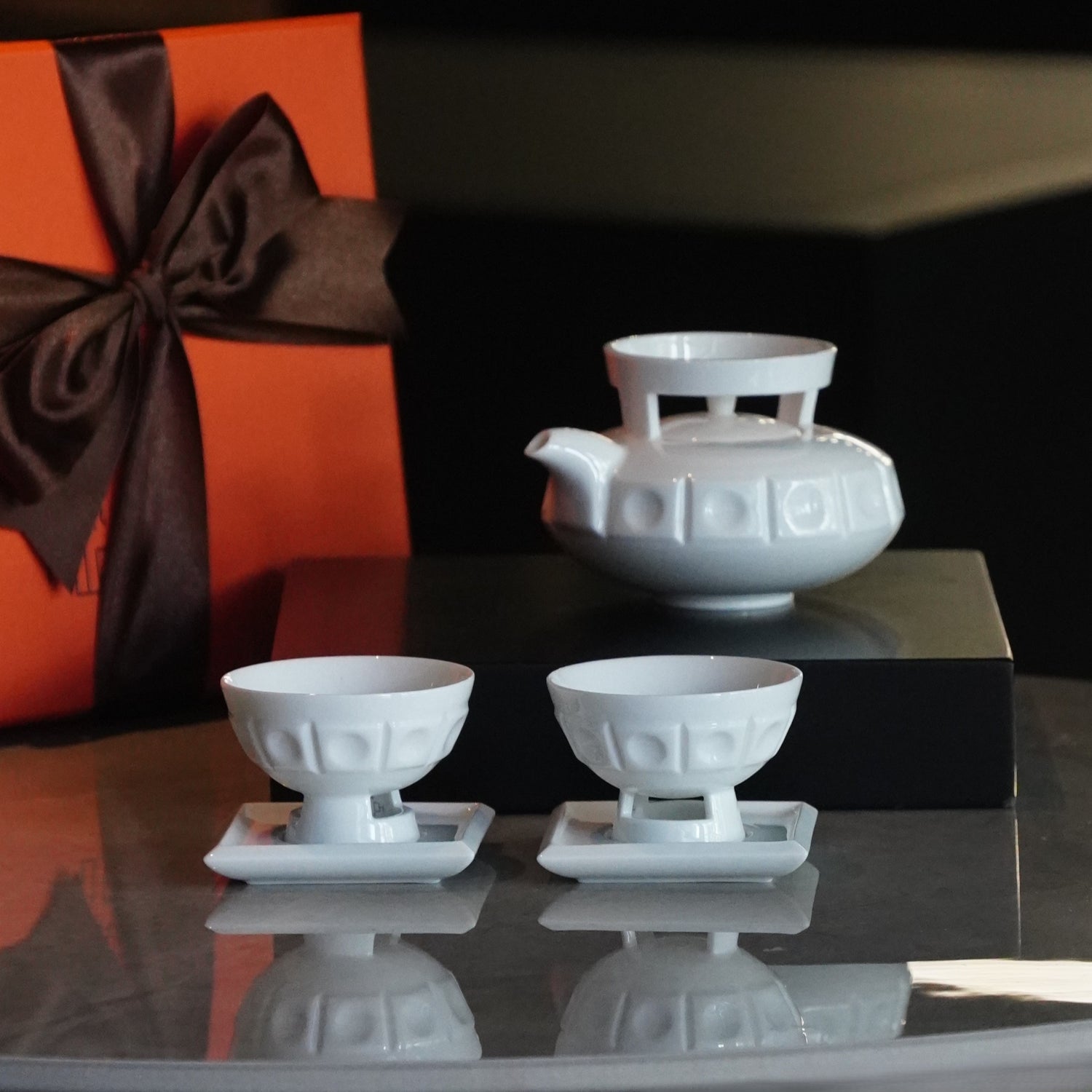
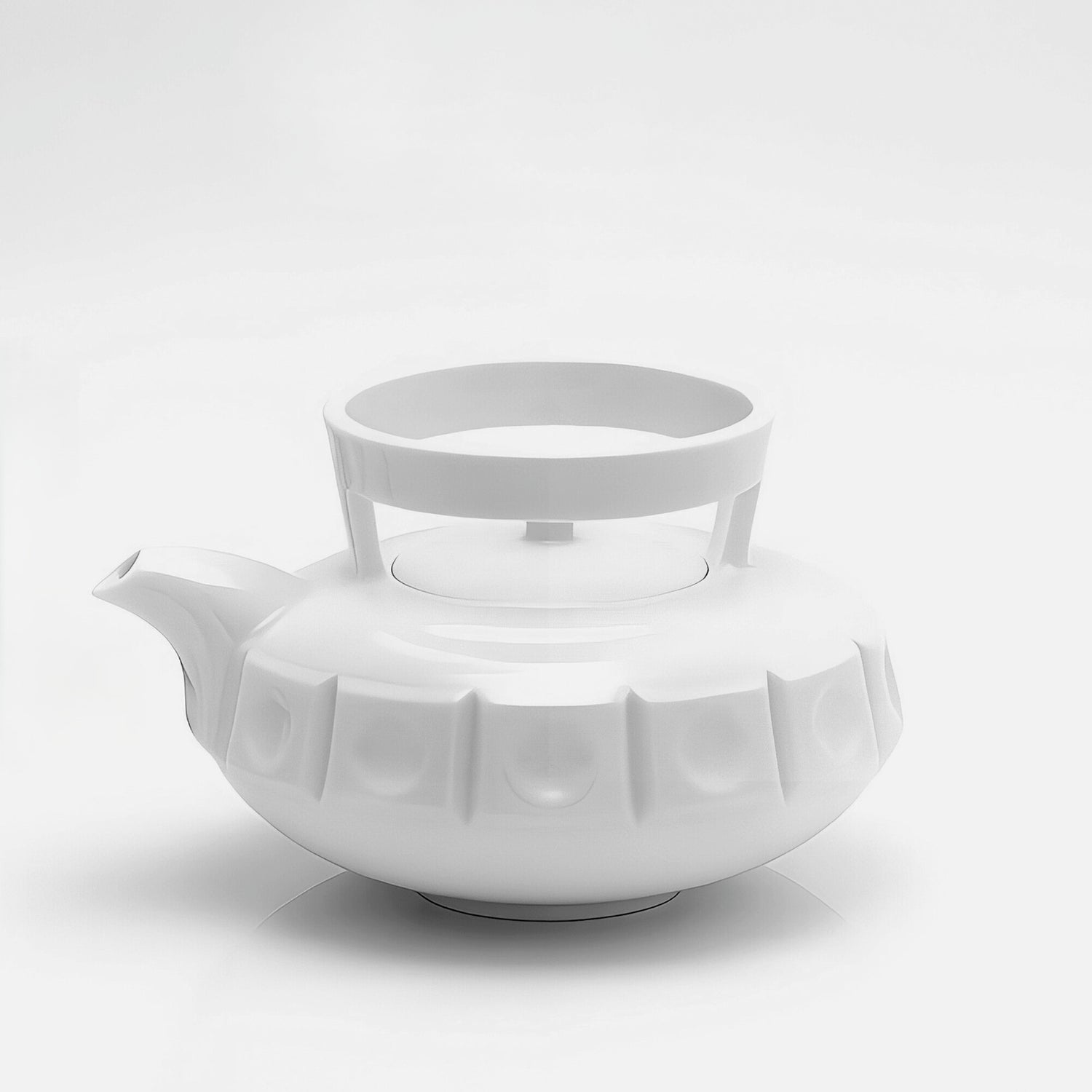
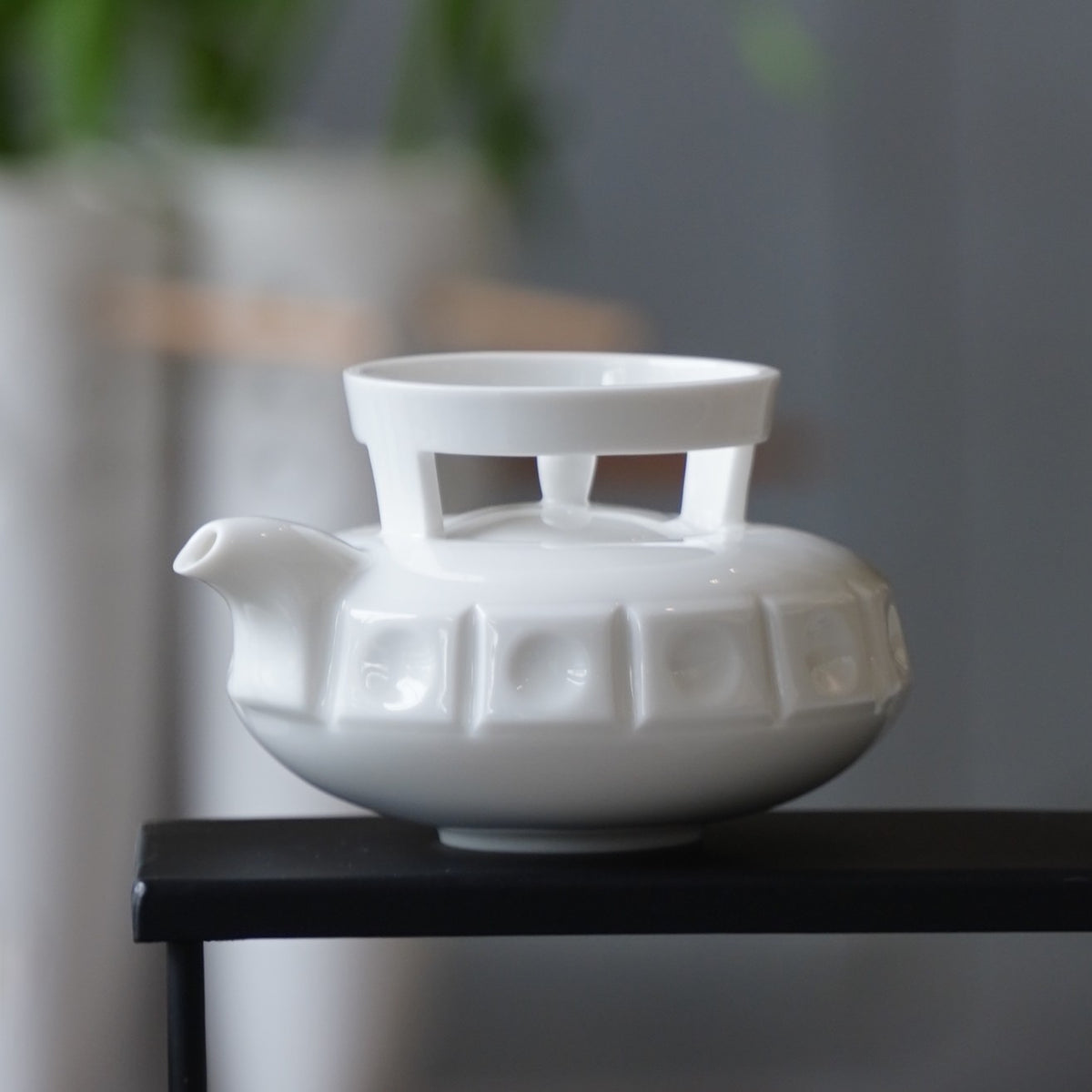
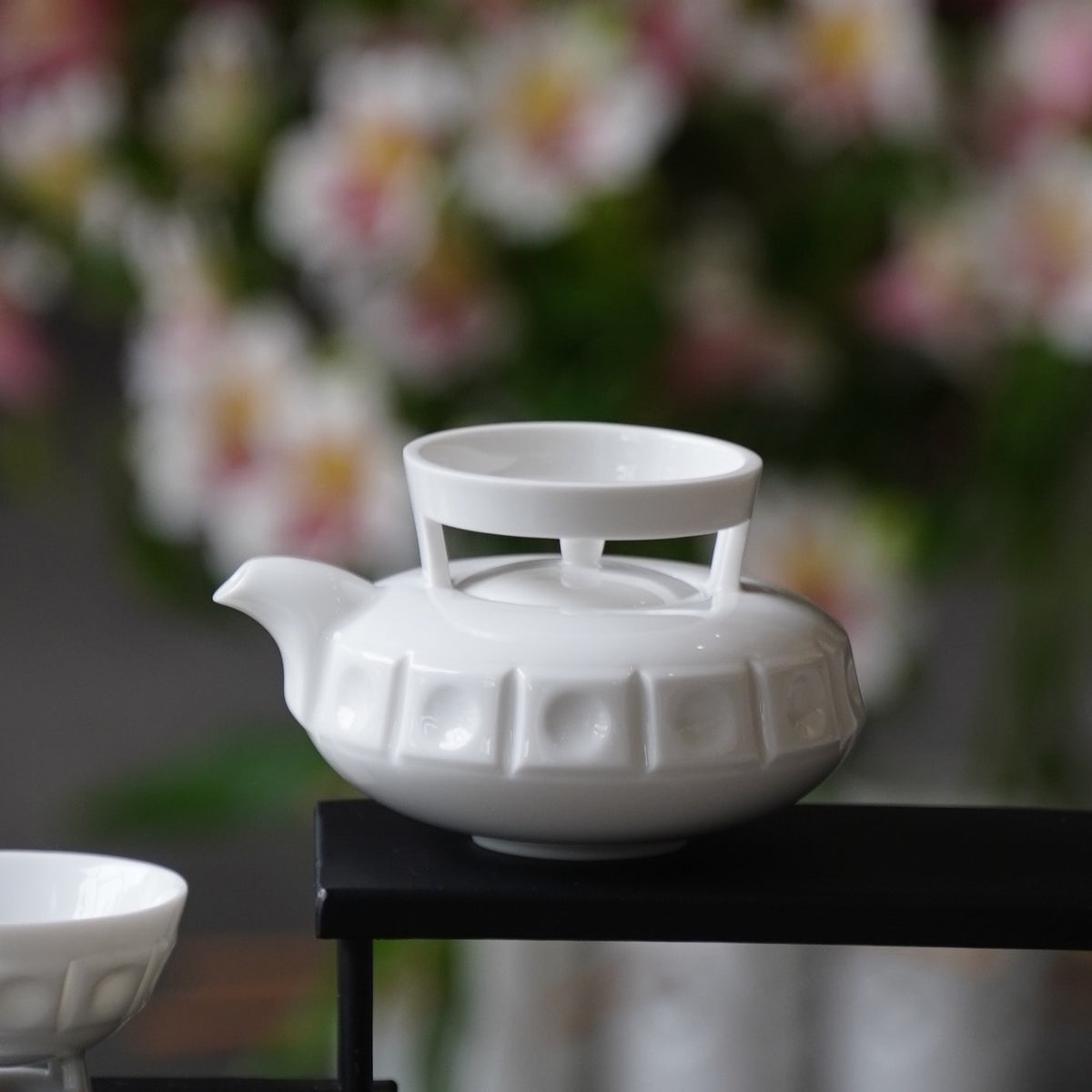
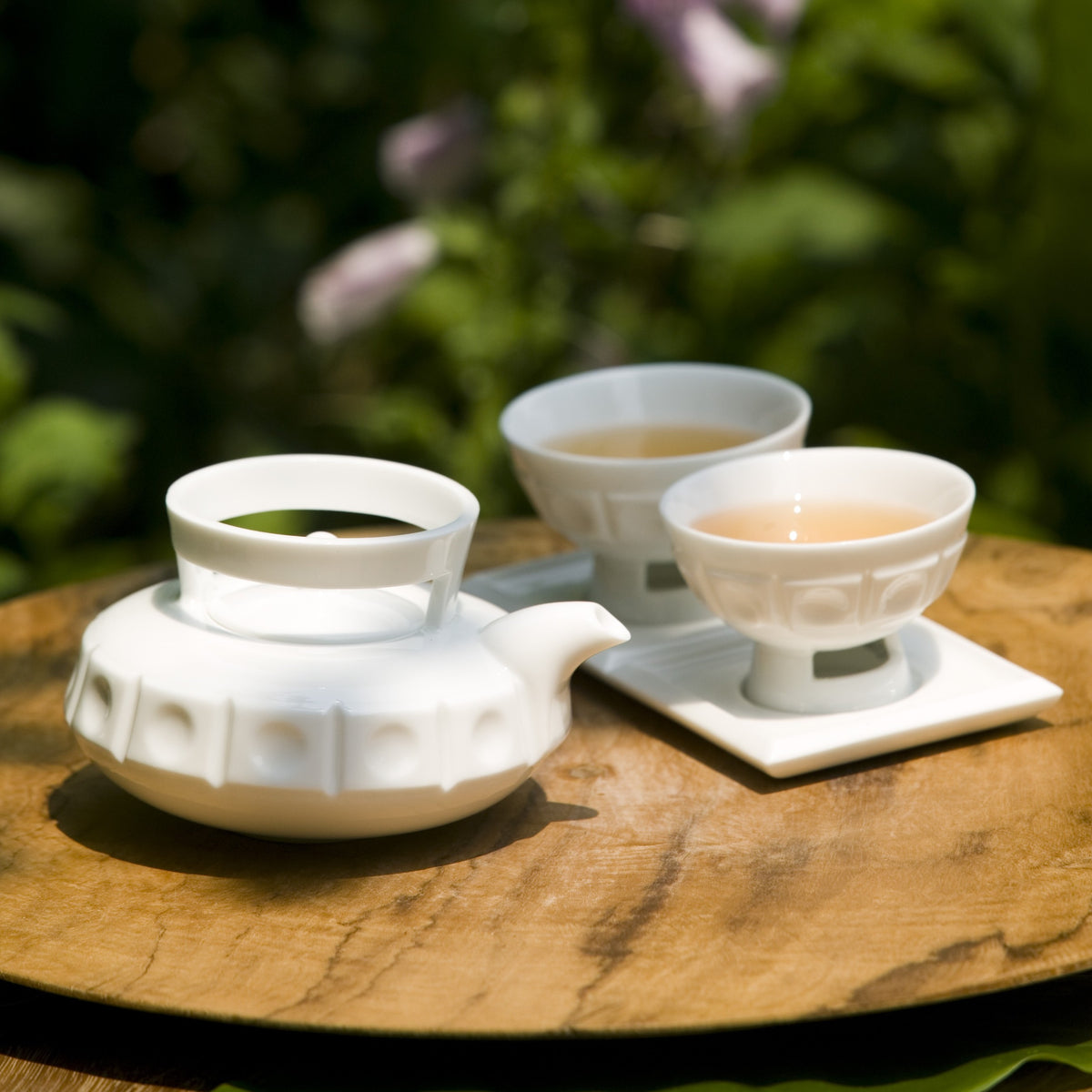
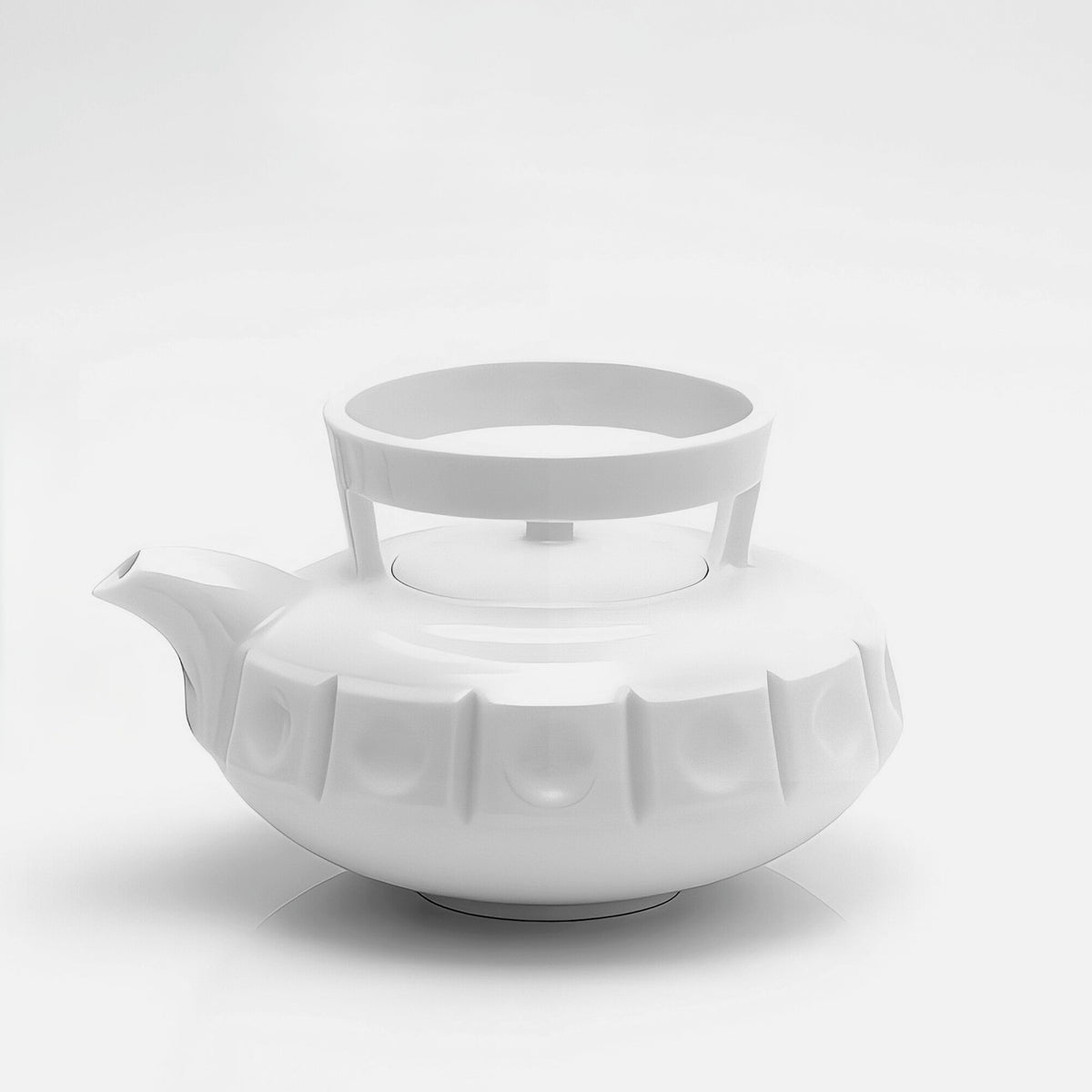
The teapot unites circle and square, its form both resolute and tender. The sharp ridges represent rational order, while the curved surfaces embody gentle inclusion. Inspired by the ancient cosmology of balance, its alternating edges and arcs create structural integrity and rhythm — strength within calm, motion within stillness.
This geometric tension becomes not just a visual exploration but a humanistic dialogue between craftsmanship and spirit — a contemporary response to the “literati temperament” of traditional teapots, extending it into modern cultural context.
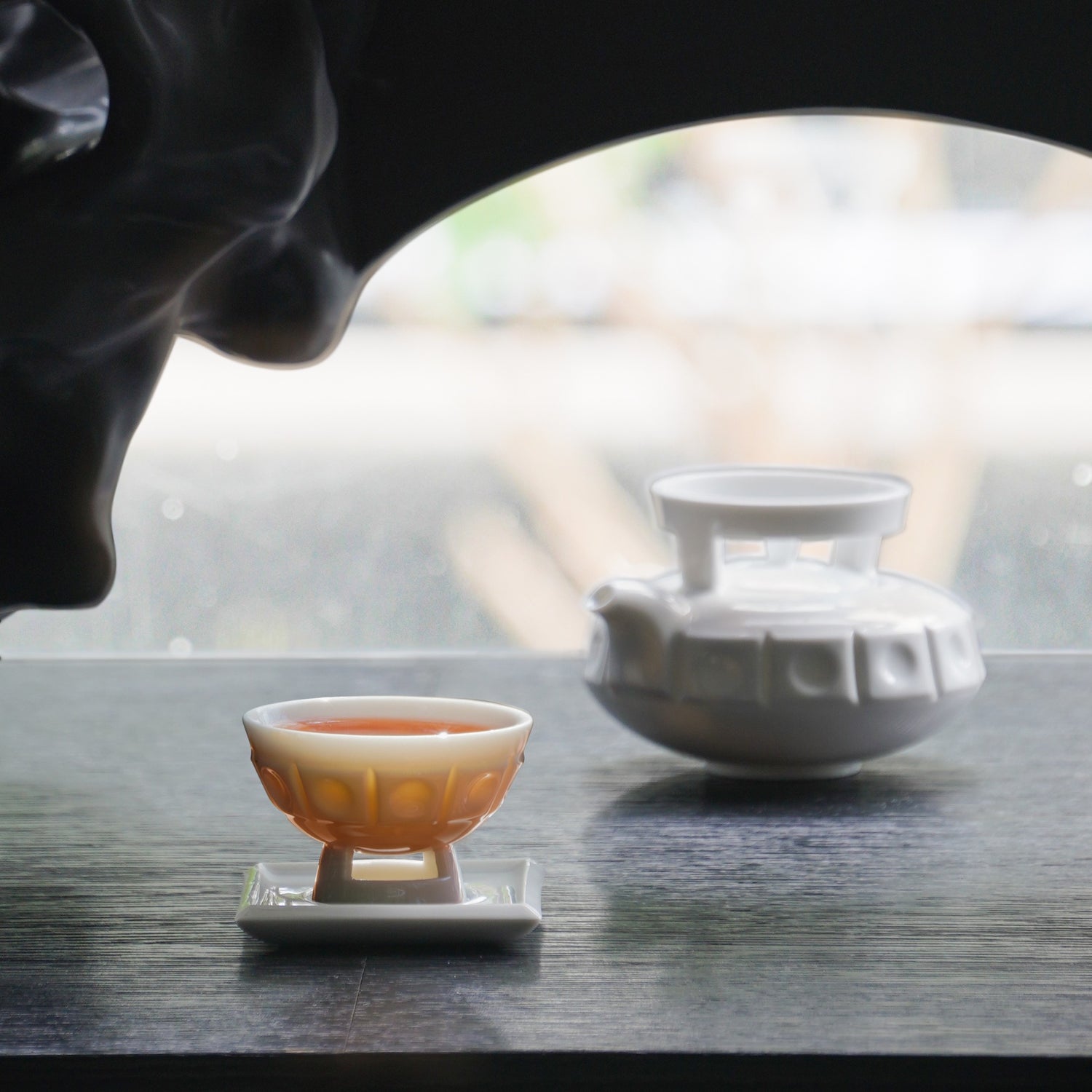
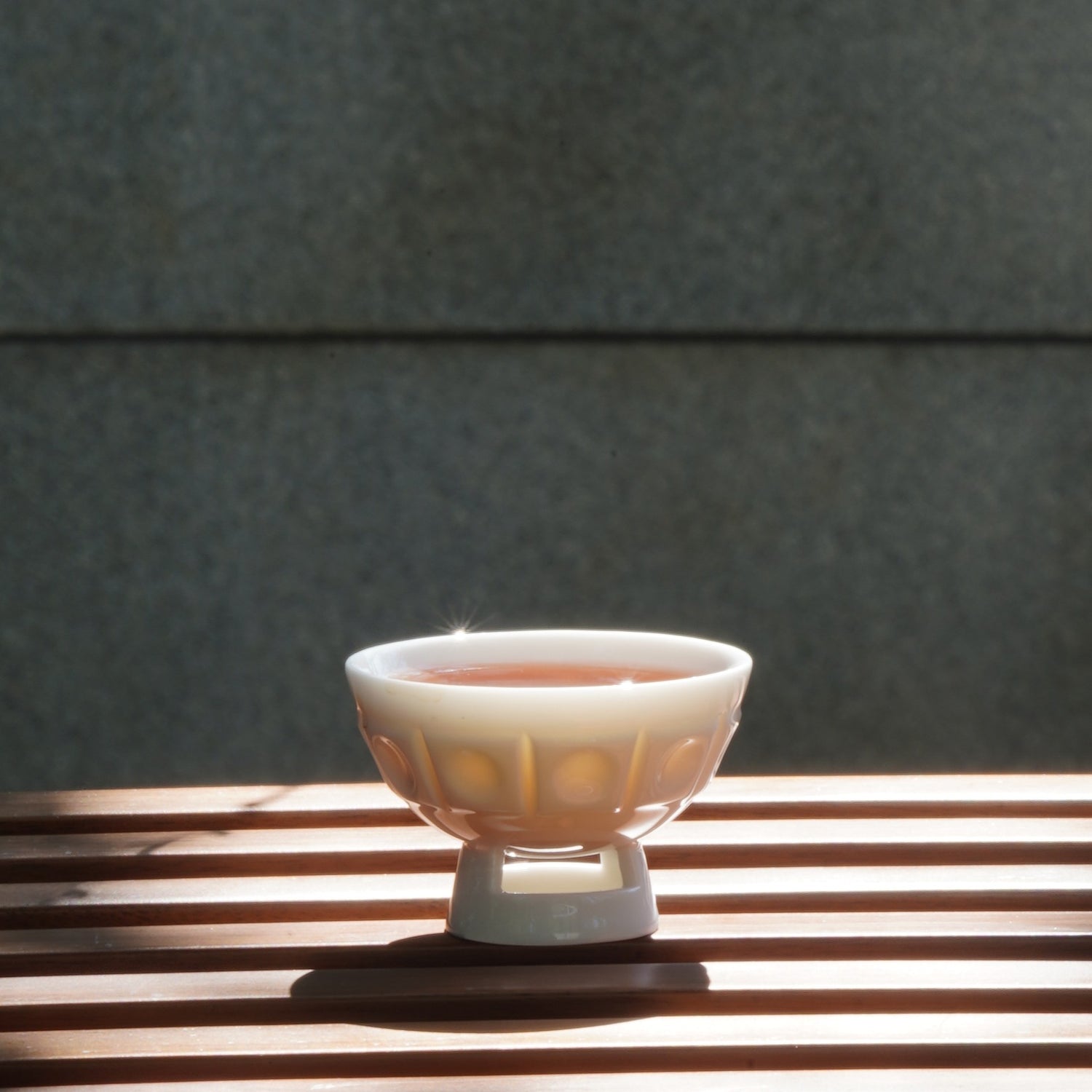
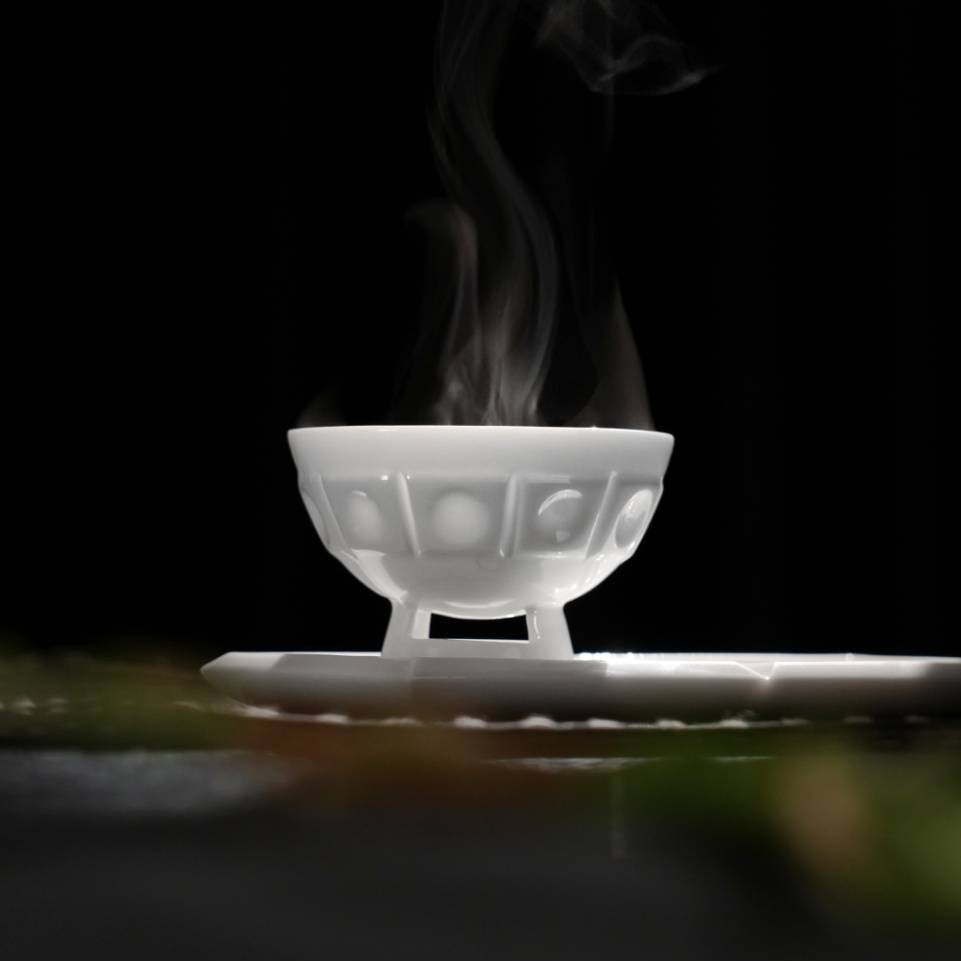
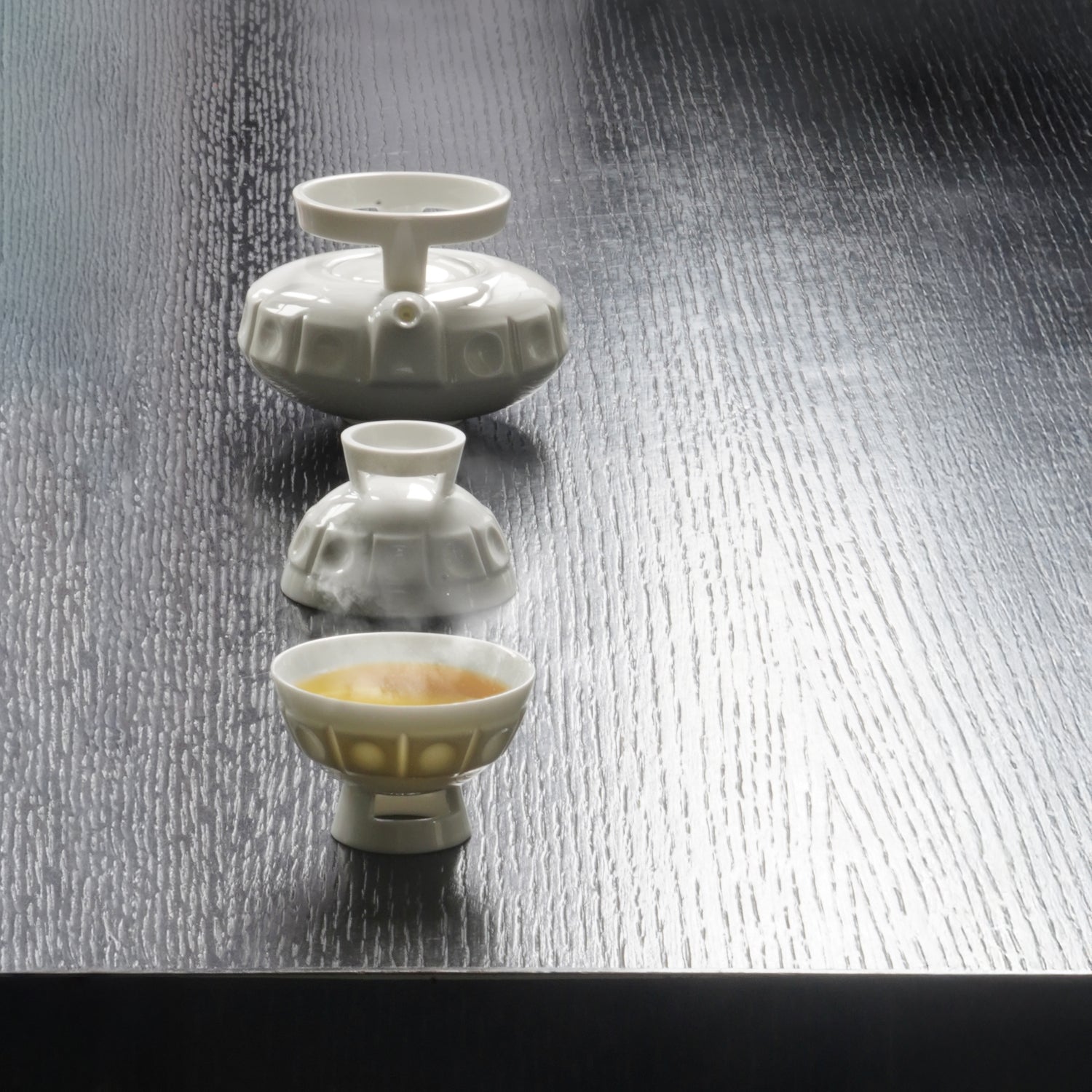
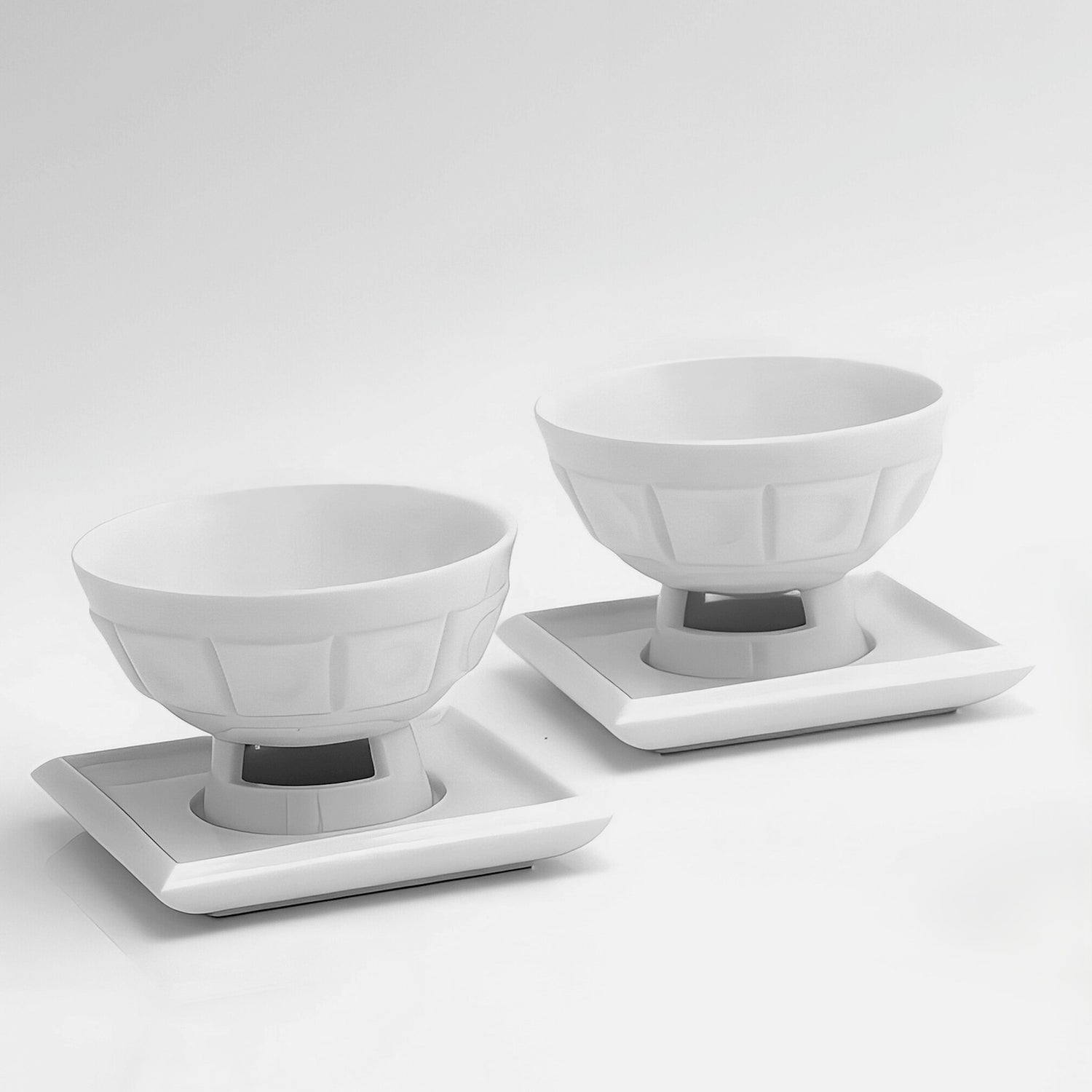
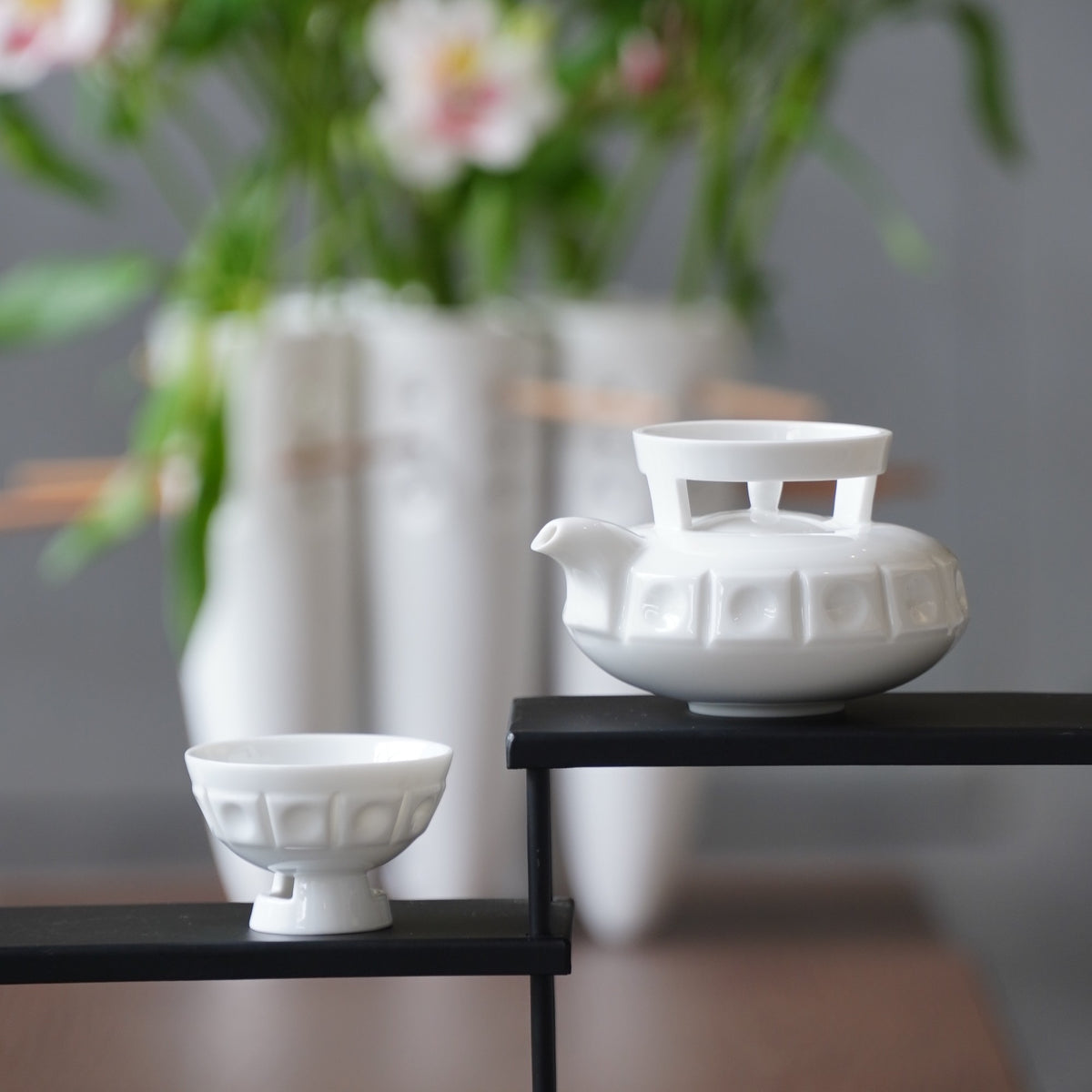
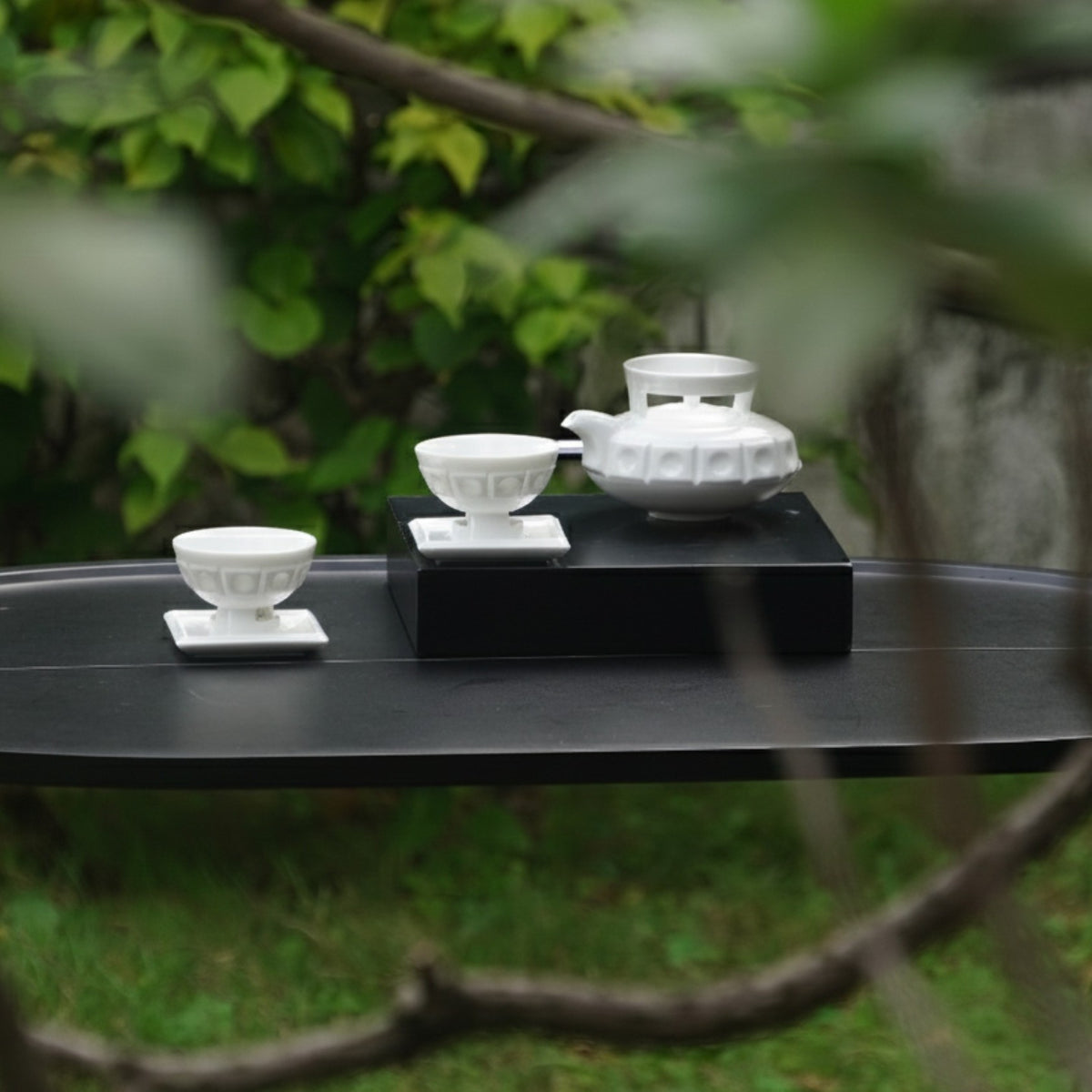
Instead of the tactile warmth of Yixing clay, Blazing reveals purity through white porcelain — light disciplined by reason. The raised ring atop the lid symbolizes radiance and conviction; the suspended horizontal handle continues this circular language, forming a visual duet with the matching cups. Its precision redefines mechanical balance and aesthetic proportion, transforming function into a contemporary art of living.
Ridges ripple along the body like gears or crowns — metaphors for the pulse of will, the rhythm of cities, and the heartbeat of thought. Each line, carved by time and hand, becomes a silent cadence of labor and light. As illumination glides across the porcelain, it reflects both the serenity and resilience of inner strength.
Blazing stands as an embodiment of form and measure — poised between reason and emotion, structure and spirit. It translates traditional craftsmanship into a modern state of being: from a vessel of scholars to an object of contemplation; from the taste of tea to the meditation of light.
In a fast-moving world, Blazing invites us to rediscover stillness — to hold, for a moment, the enduring glow within.