Casting challenges of the solid arched base
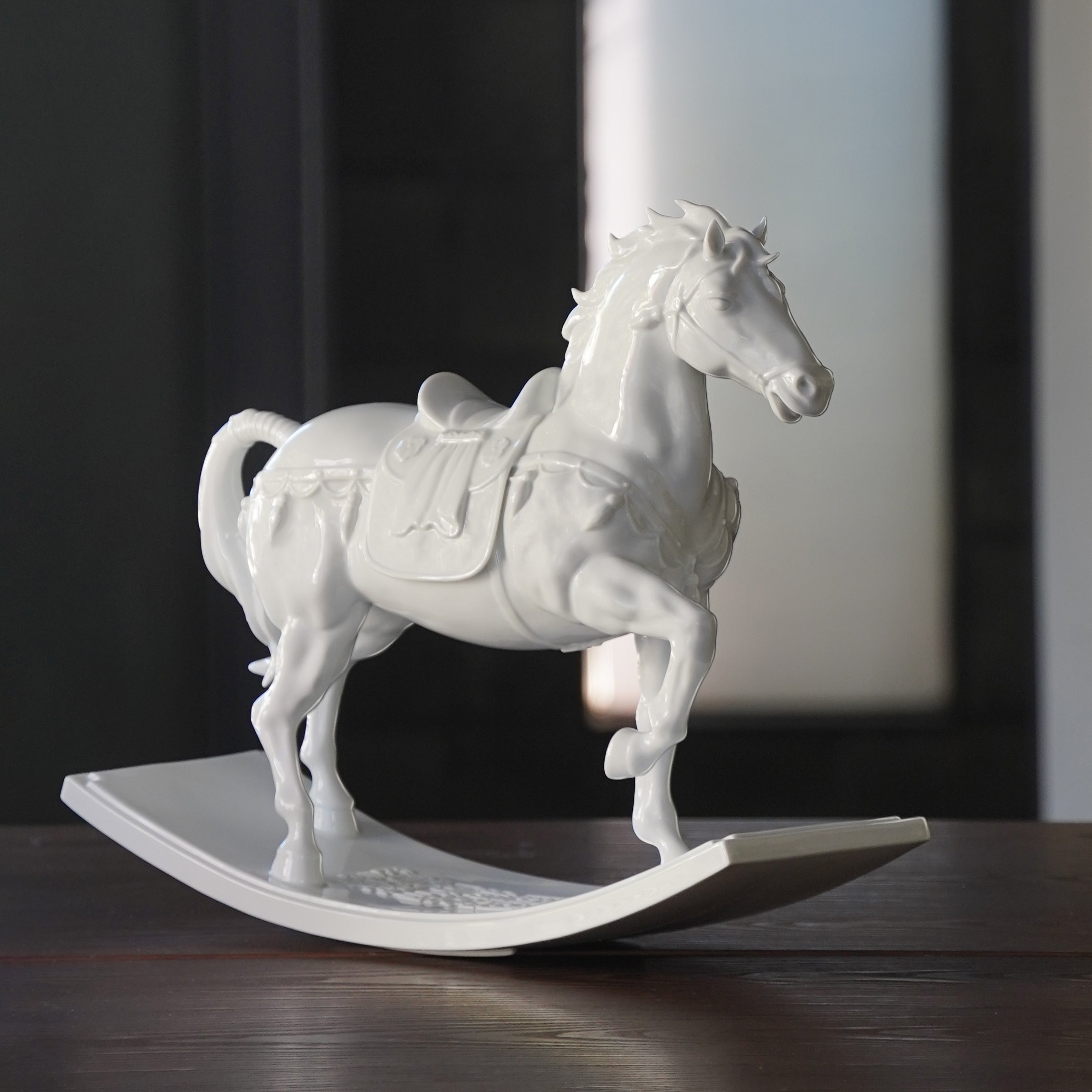
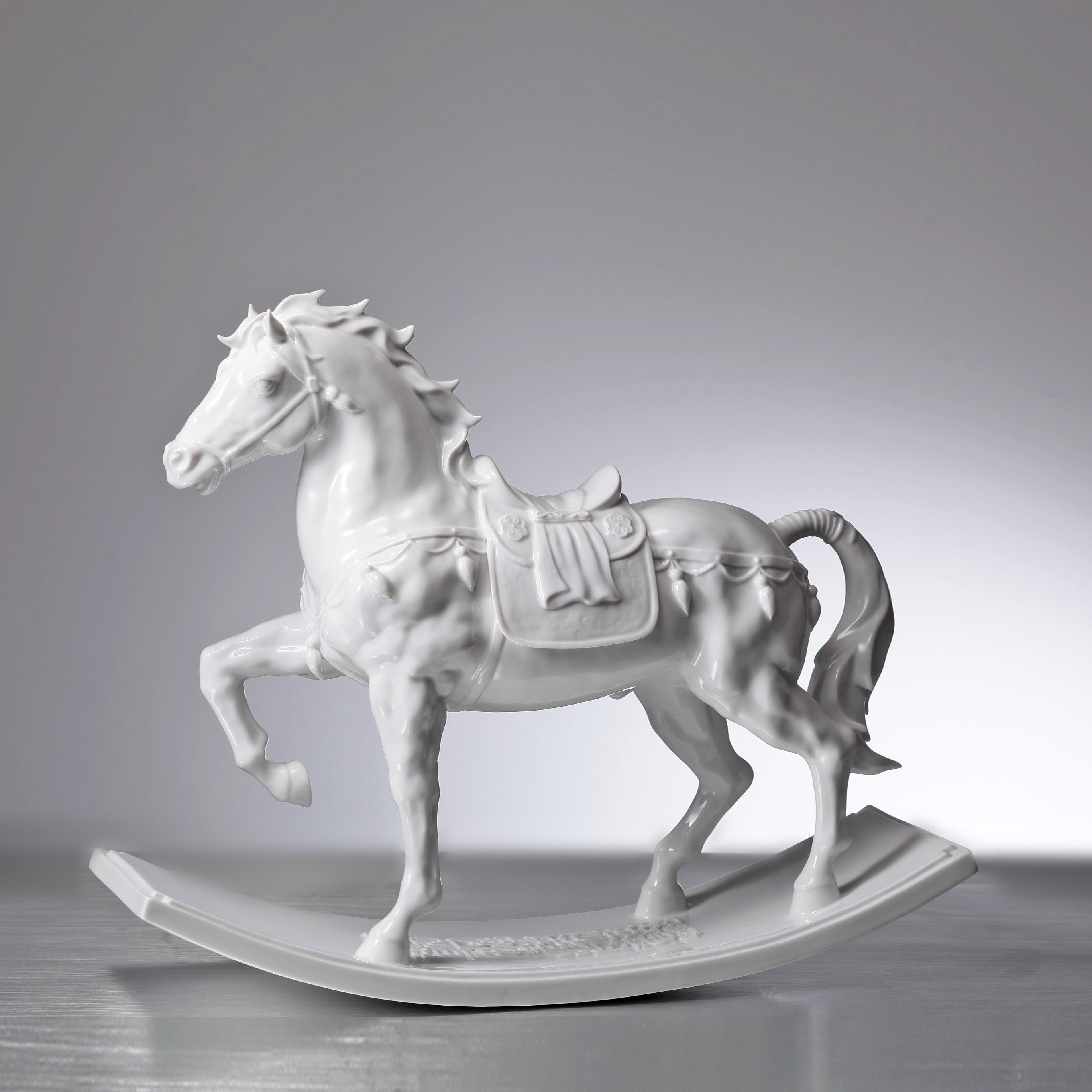
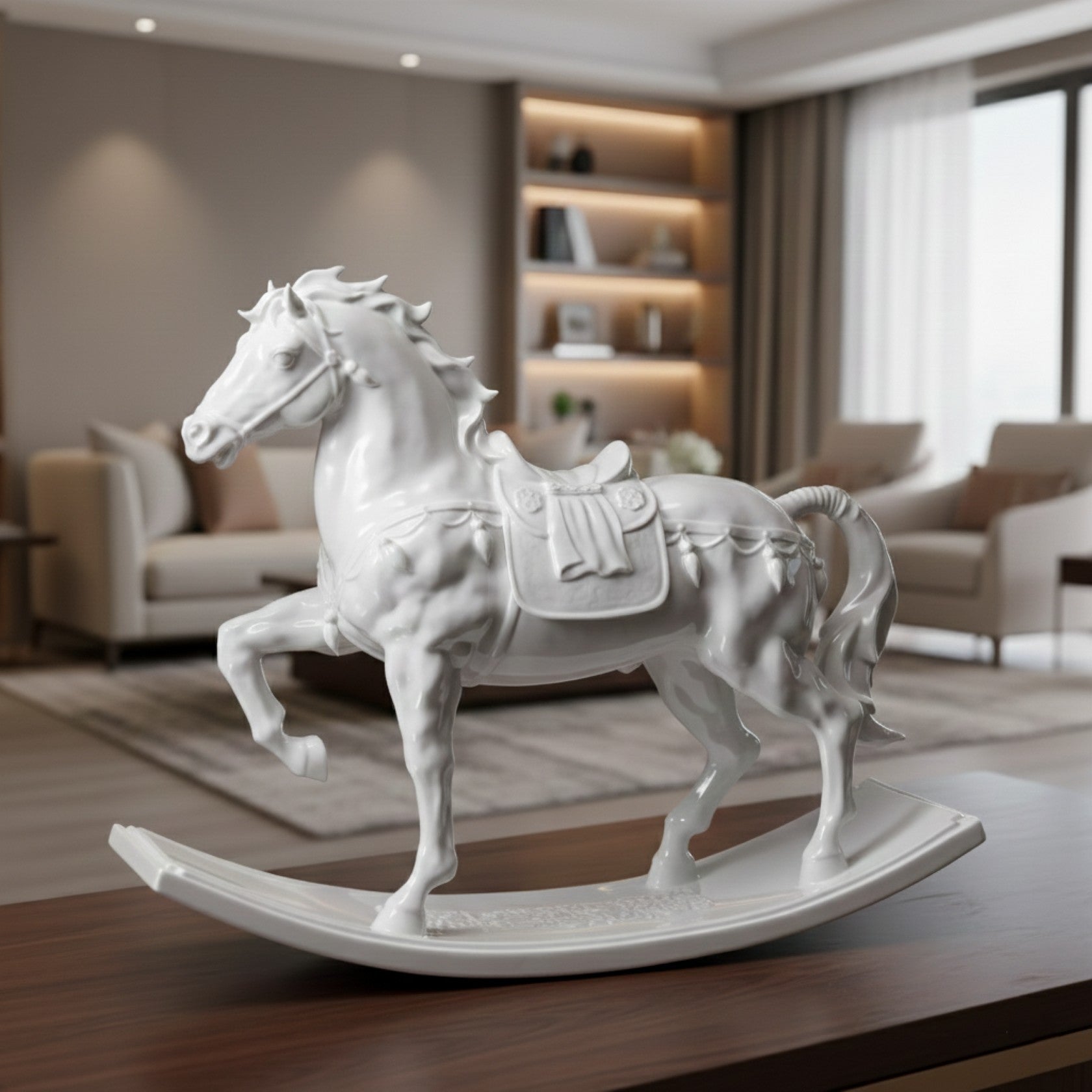
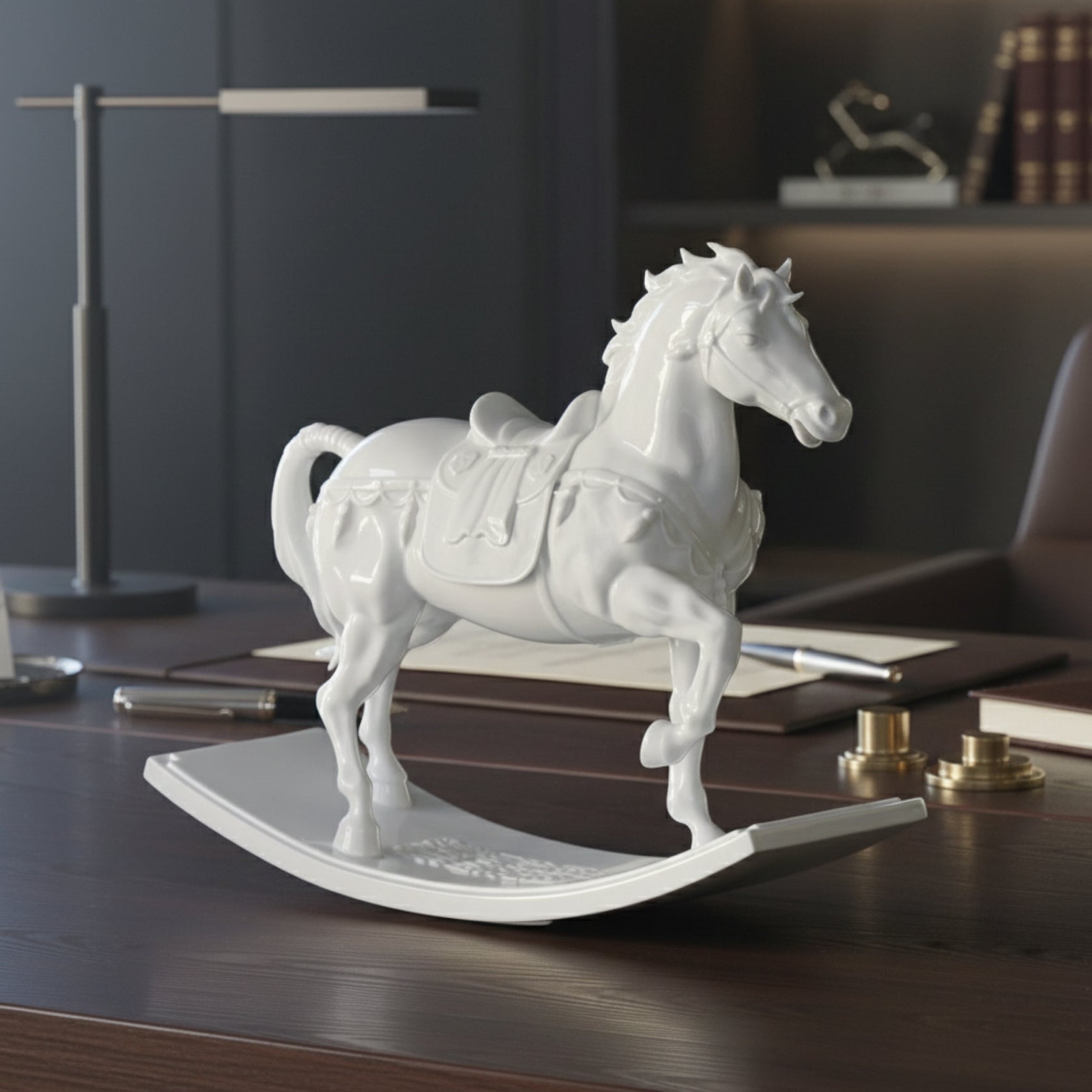
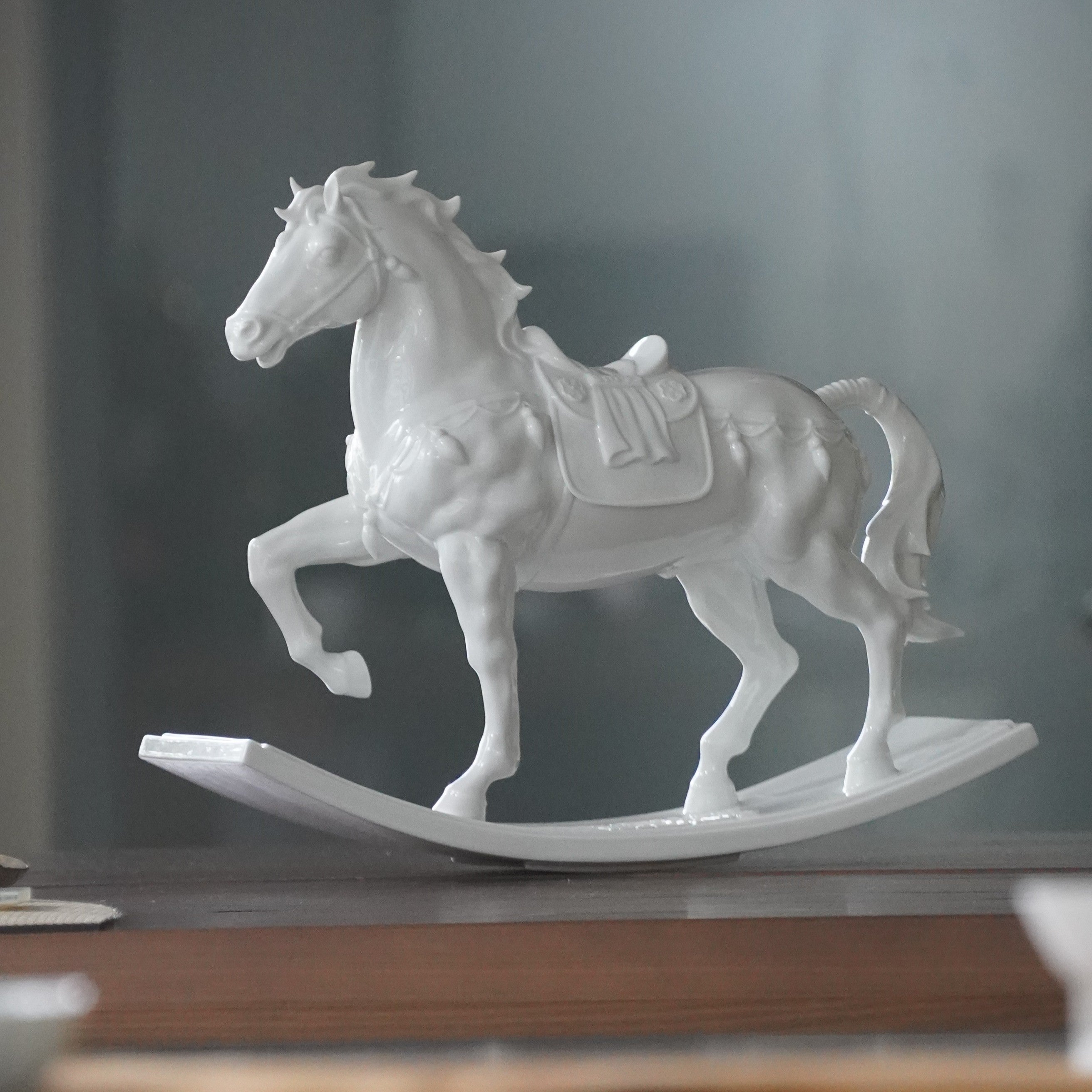
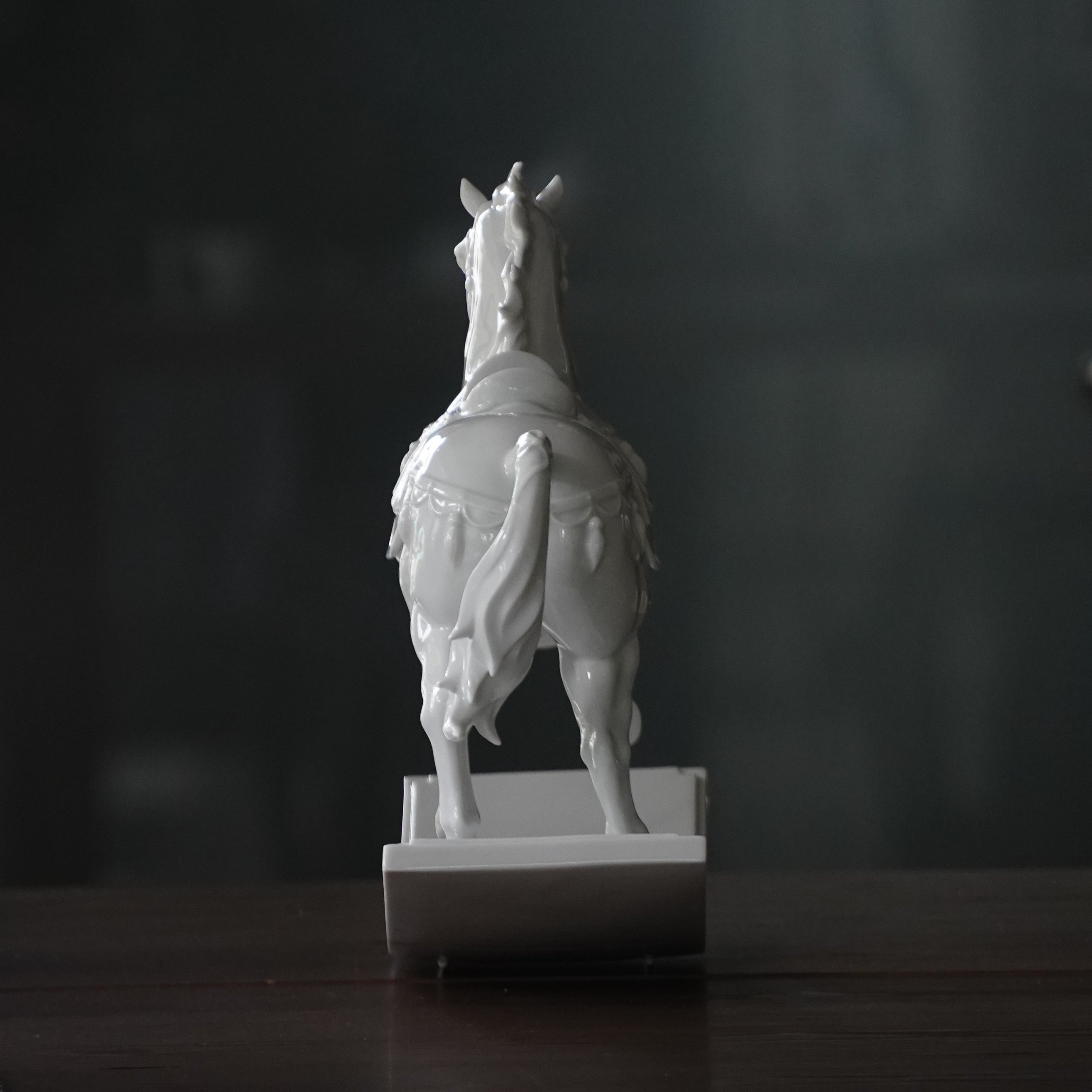
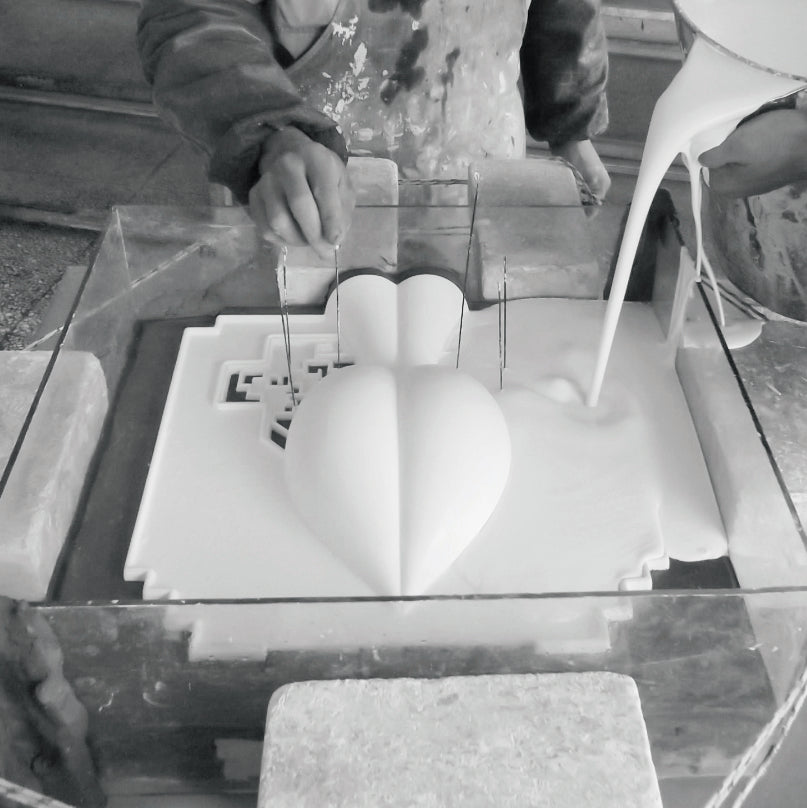
The base features a thick, arched structure that requires the slip to be fully filled during casting. Only with complete filling can visible depressions or collapse marks be avoided, ensuring a form that appears stable, solid, and visually complete.
Structural challenges of suspended forms and slender legs
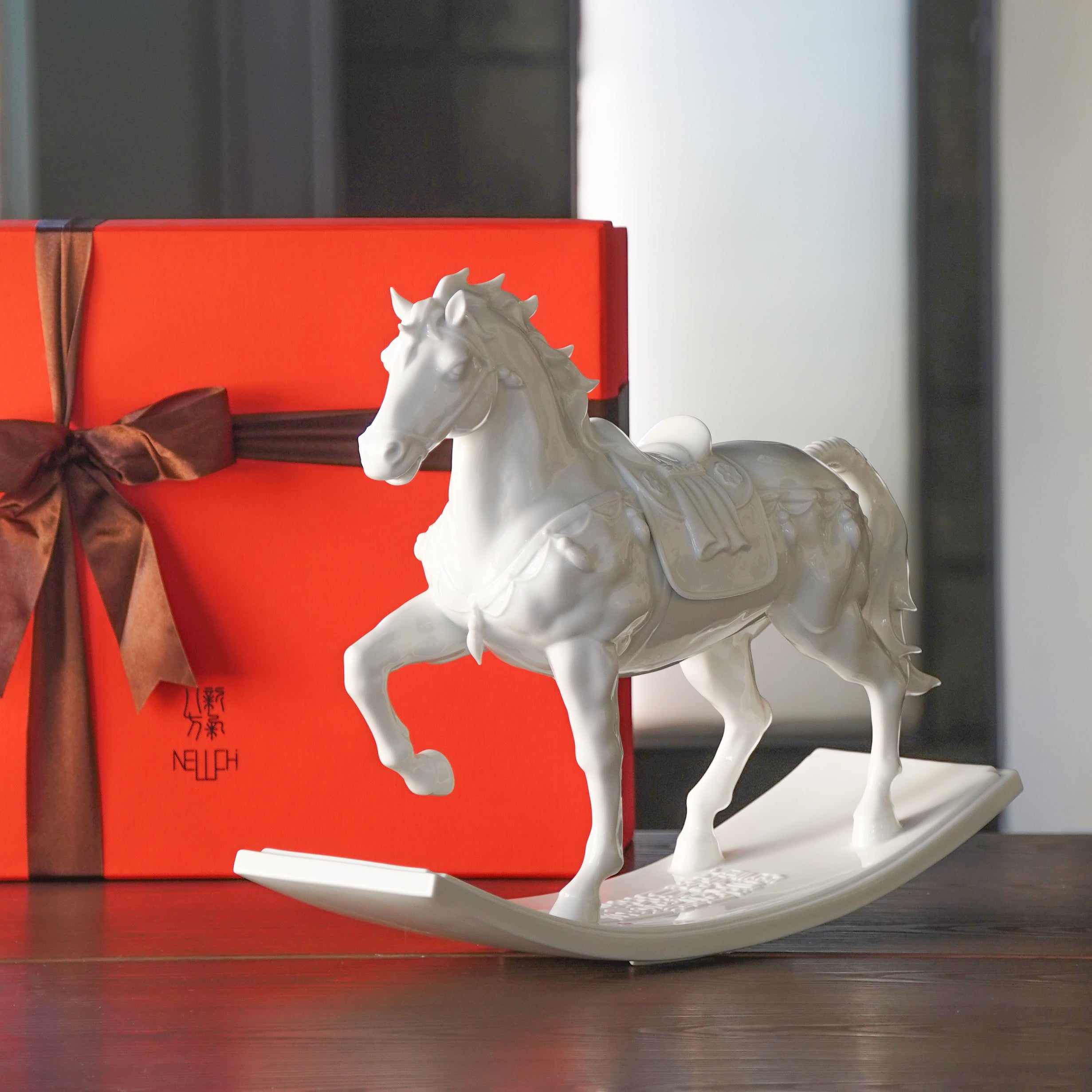
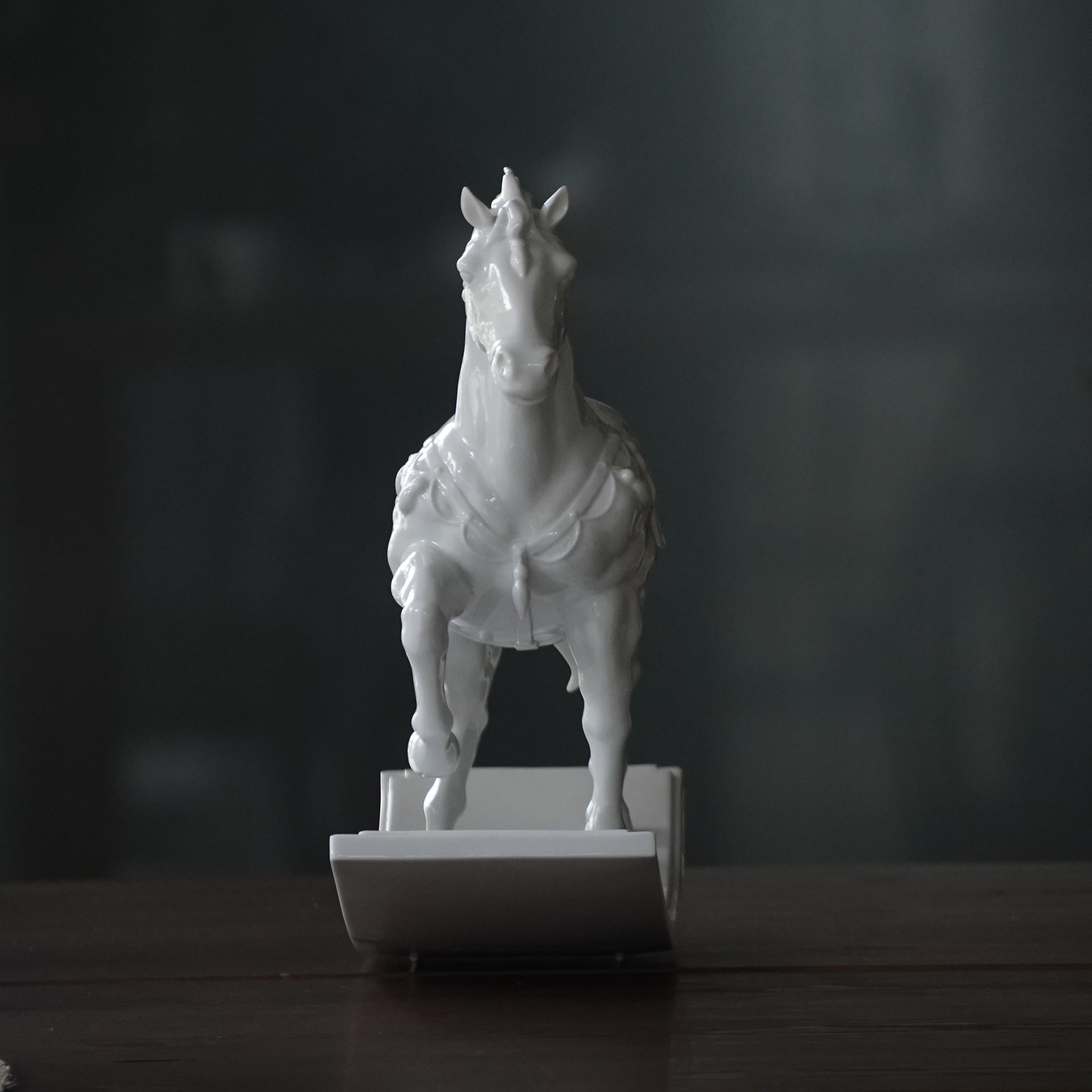
With both sides of the base suspended and the horse’s legs finely sculpted—especially the left foreleg—the piece is highly prone to cracking during shaping and handling. To prevent damage from even the slightest tension, supportive props must be placed beneath the body throughout the forming process.
Firing control amid dramatic thickness variation
The body combines thick and thin sections, from the arched base to the delicate legs. Precise temperature control during firing is essential to reduce the risk of cracking—particularly in the left foreleg—while preserving the sculpture’s overall sense of motion.
Lustre and inscription beneath a transparent glaze
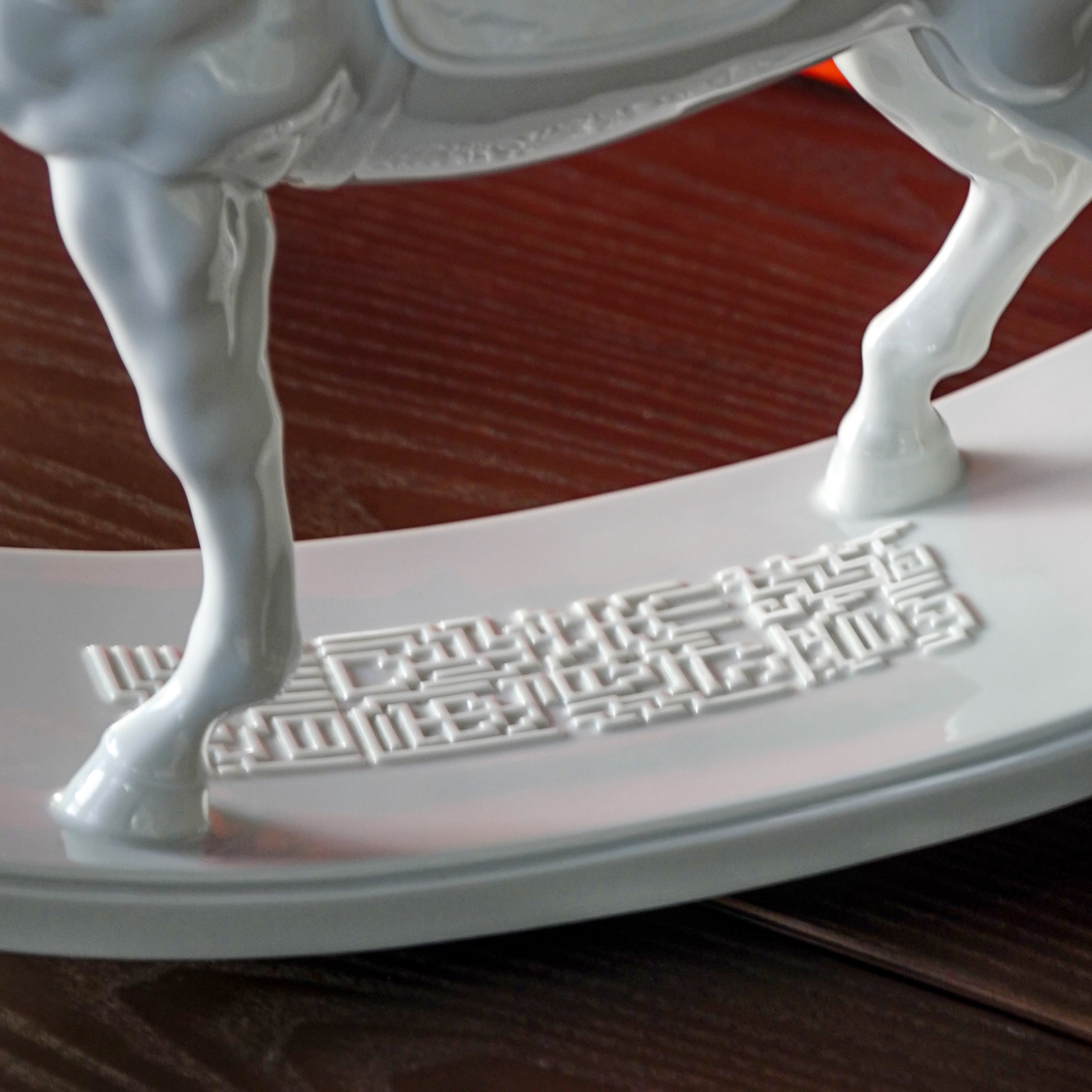
Finished with a clear glaze that reveals the natural whiteness of porcelain, light flows organically across the horse’s musculature and the curved base. The inscription “Spring Breeze at Ease, Hooves in Motion” gradually appears and disappears with shifting light, like an echo rising from a poetic verse.