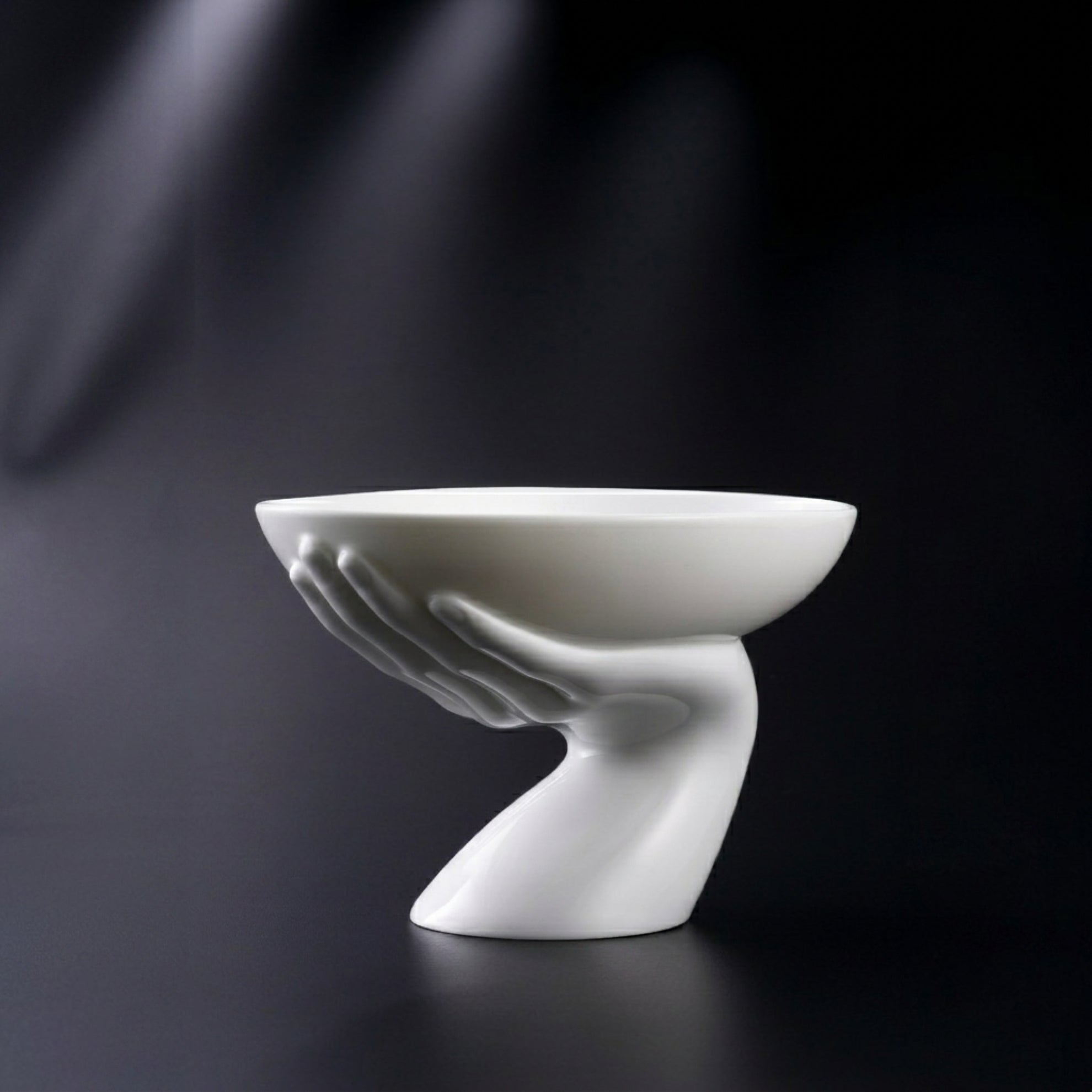
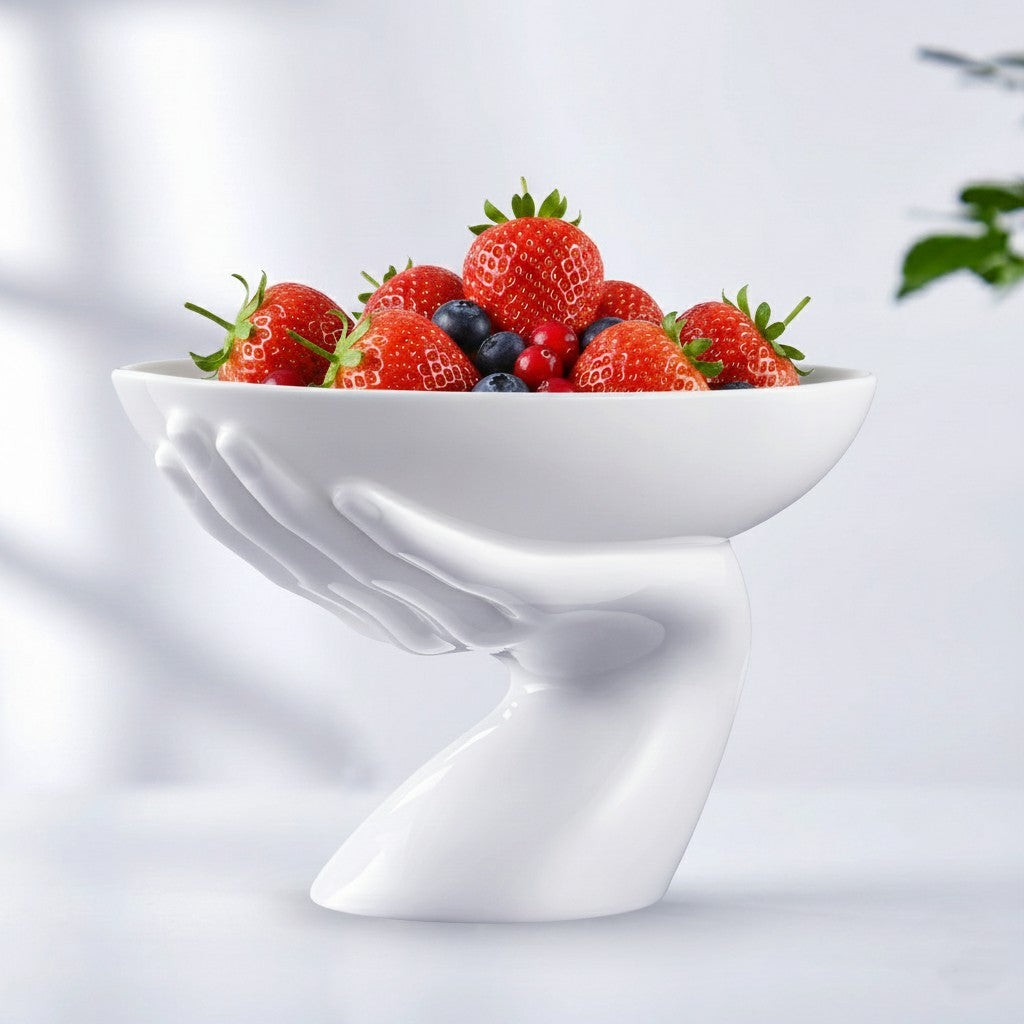
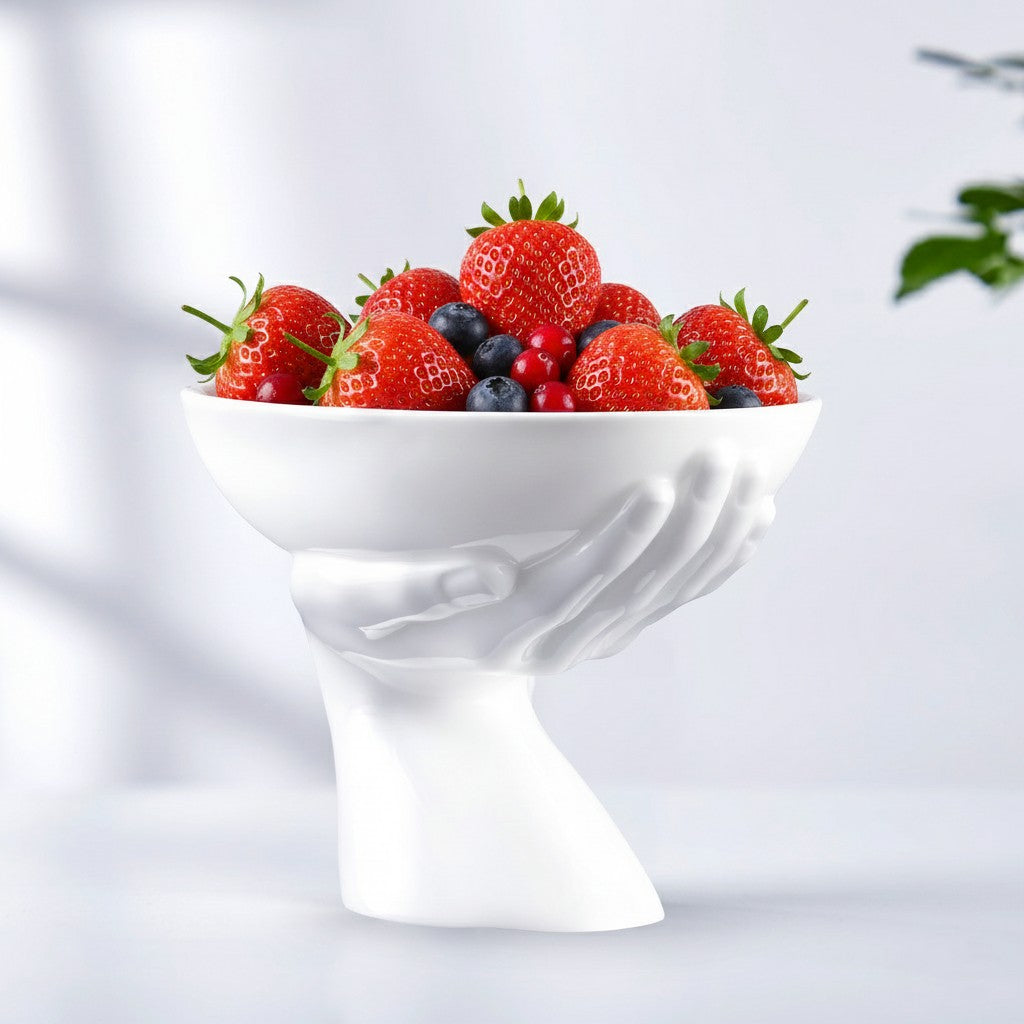
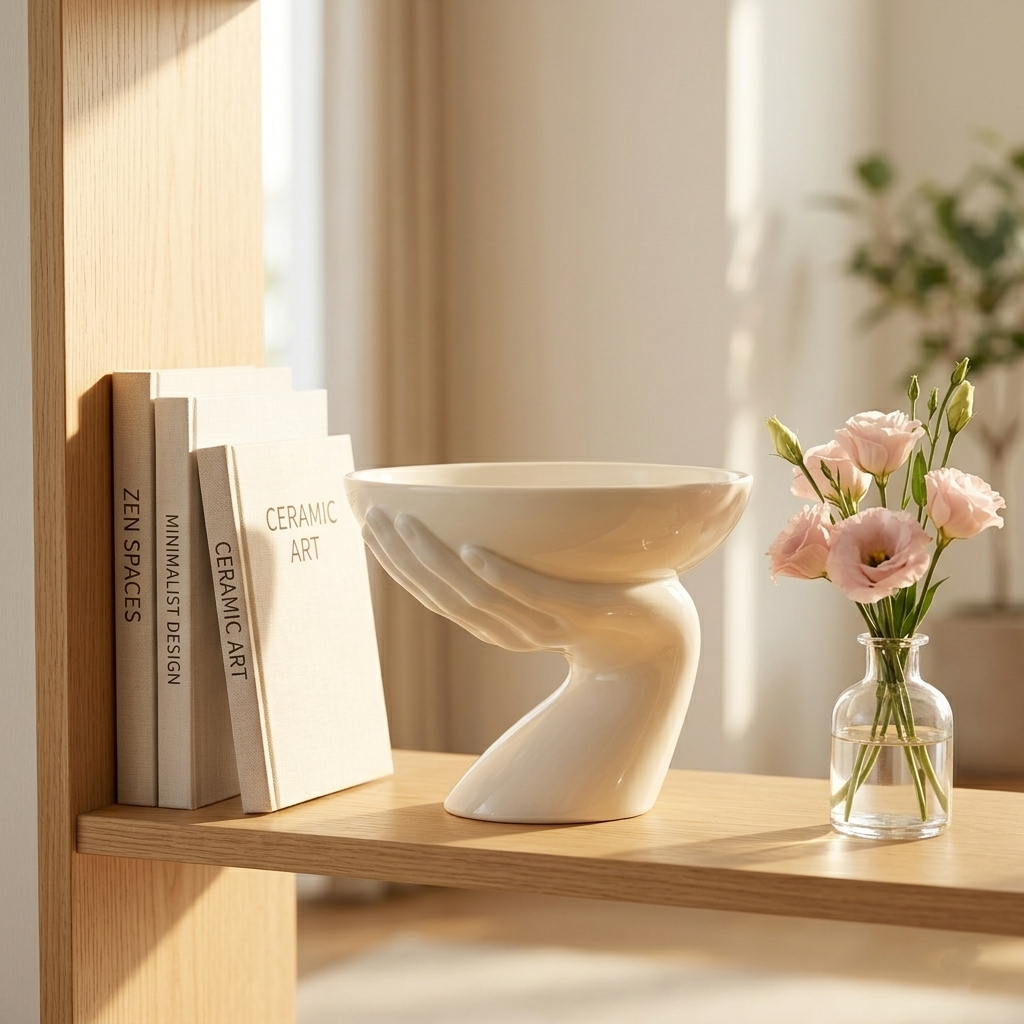
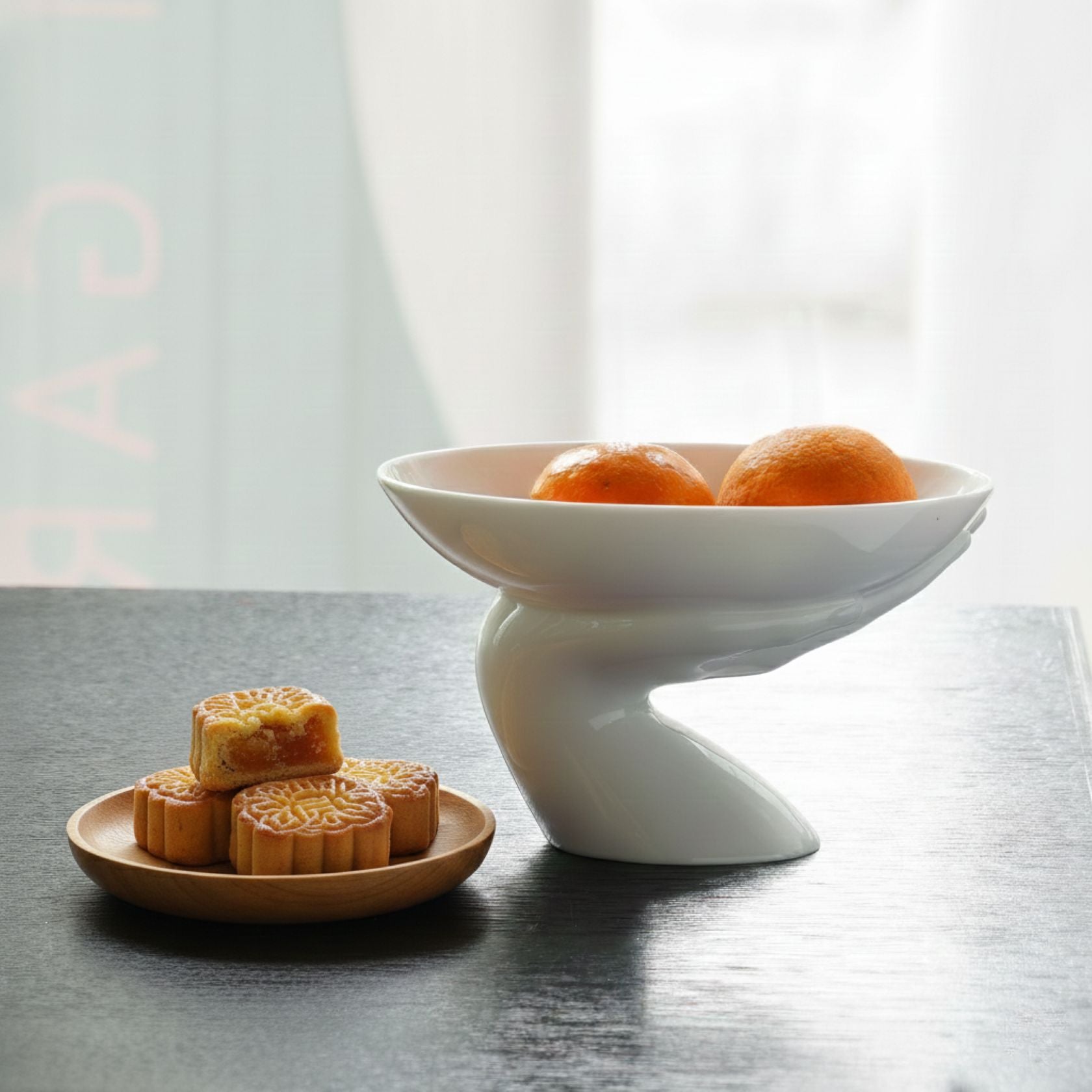
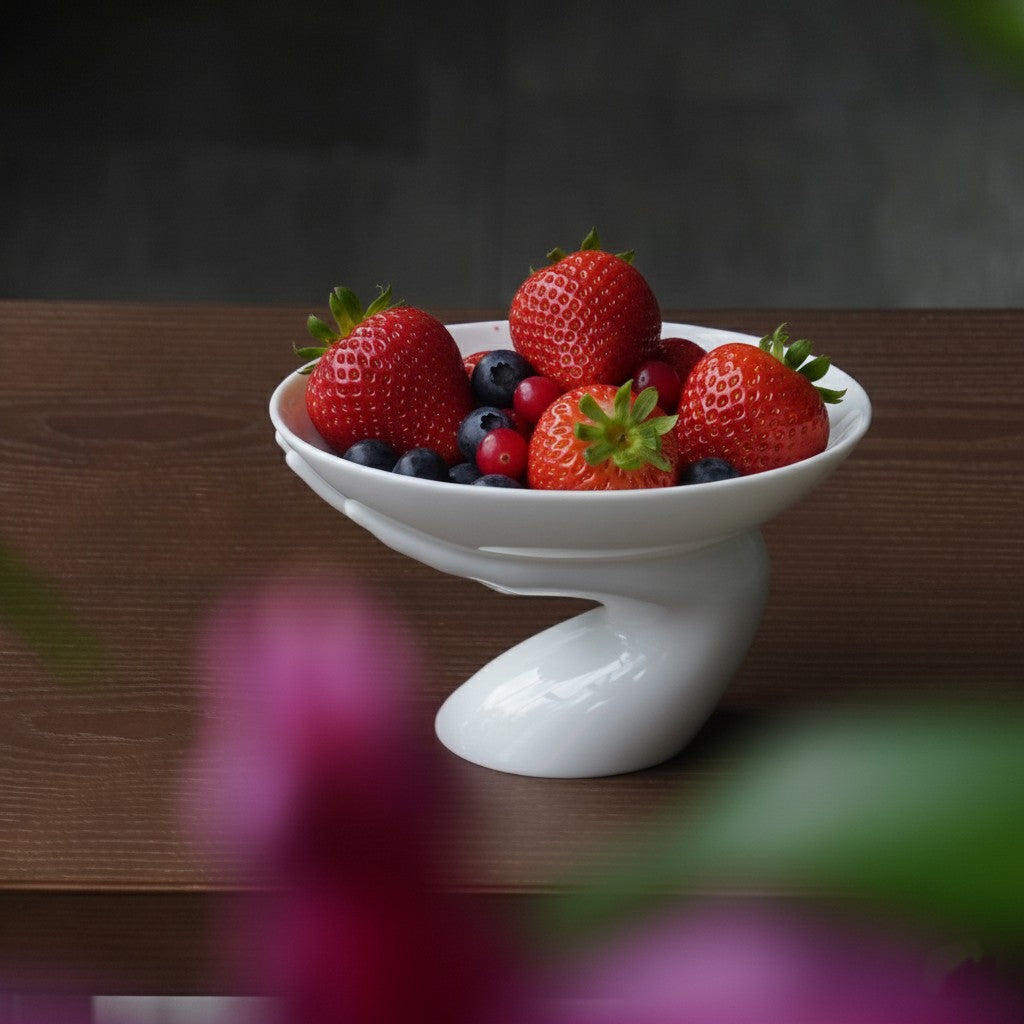
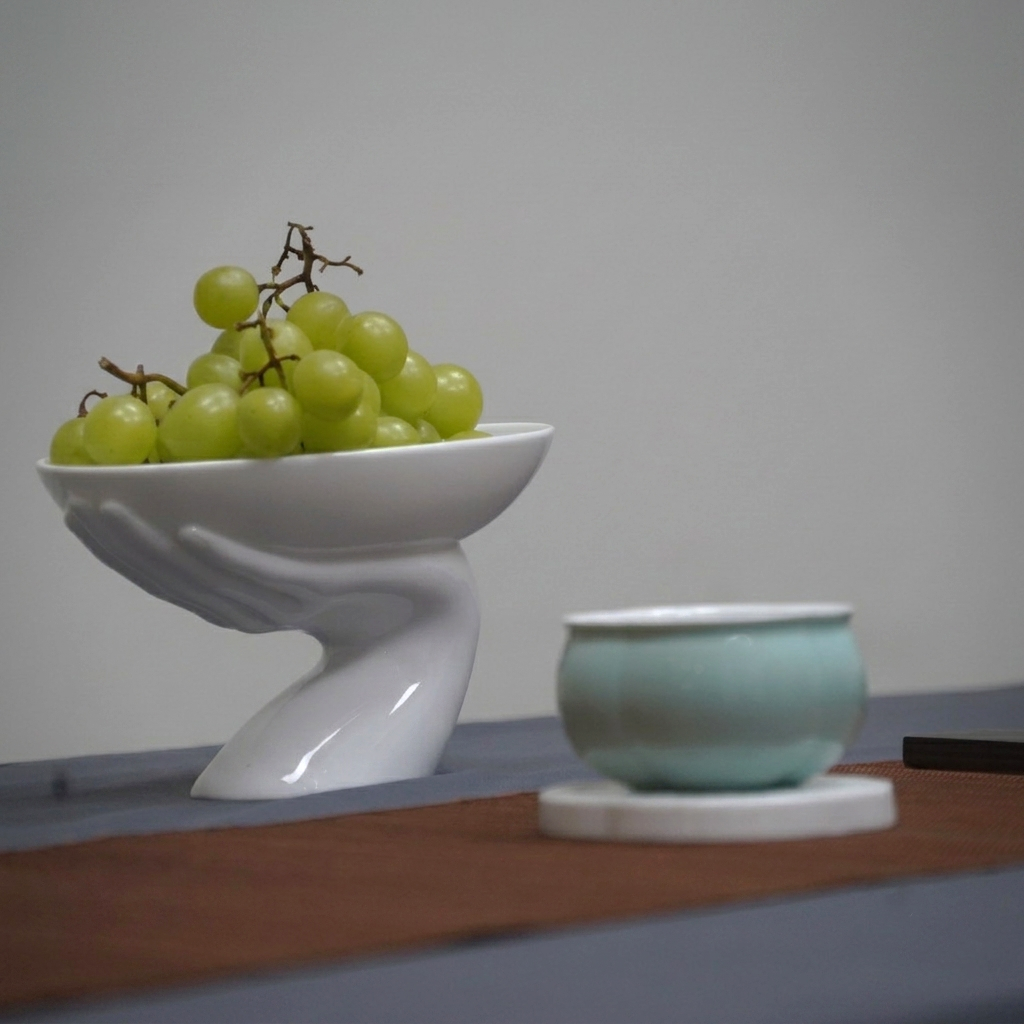
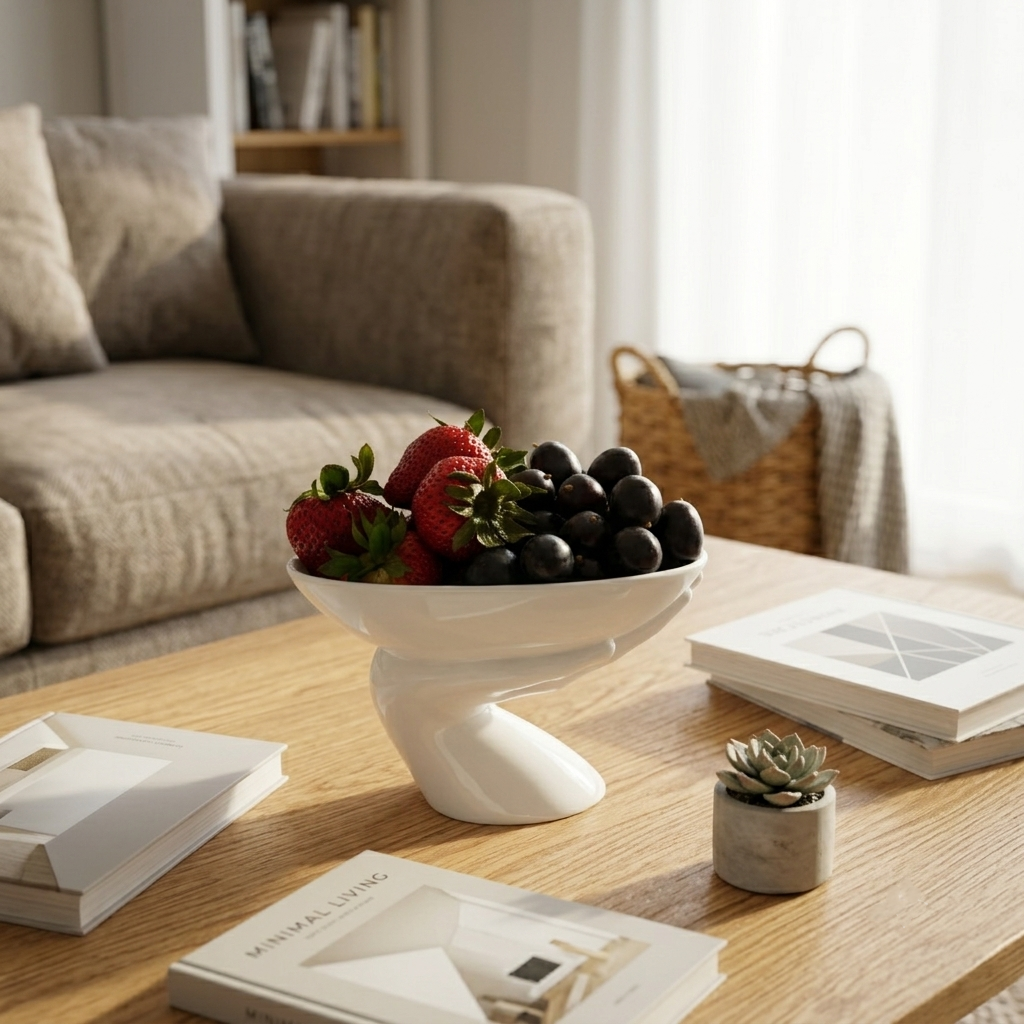
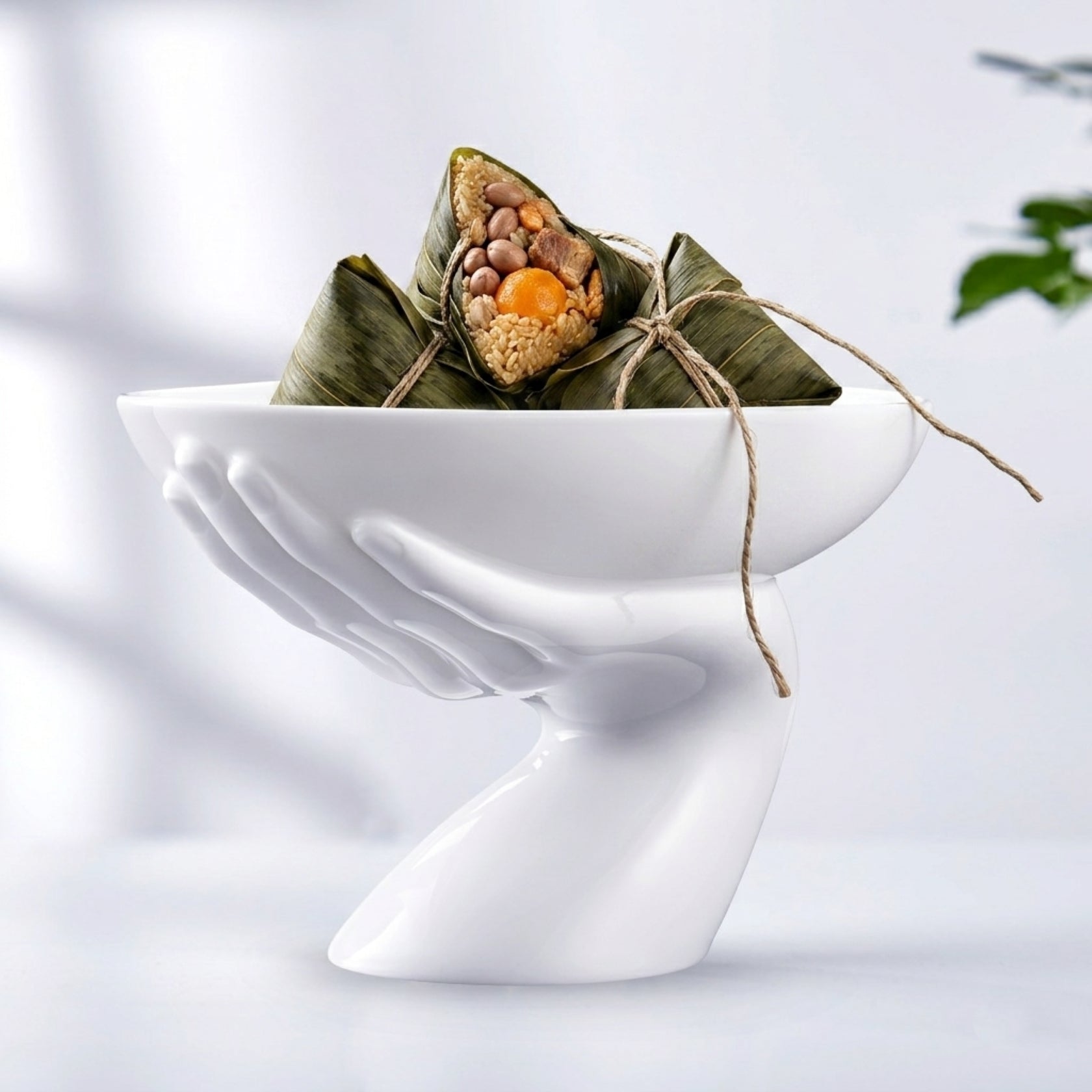
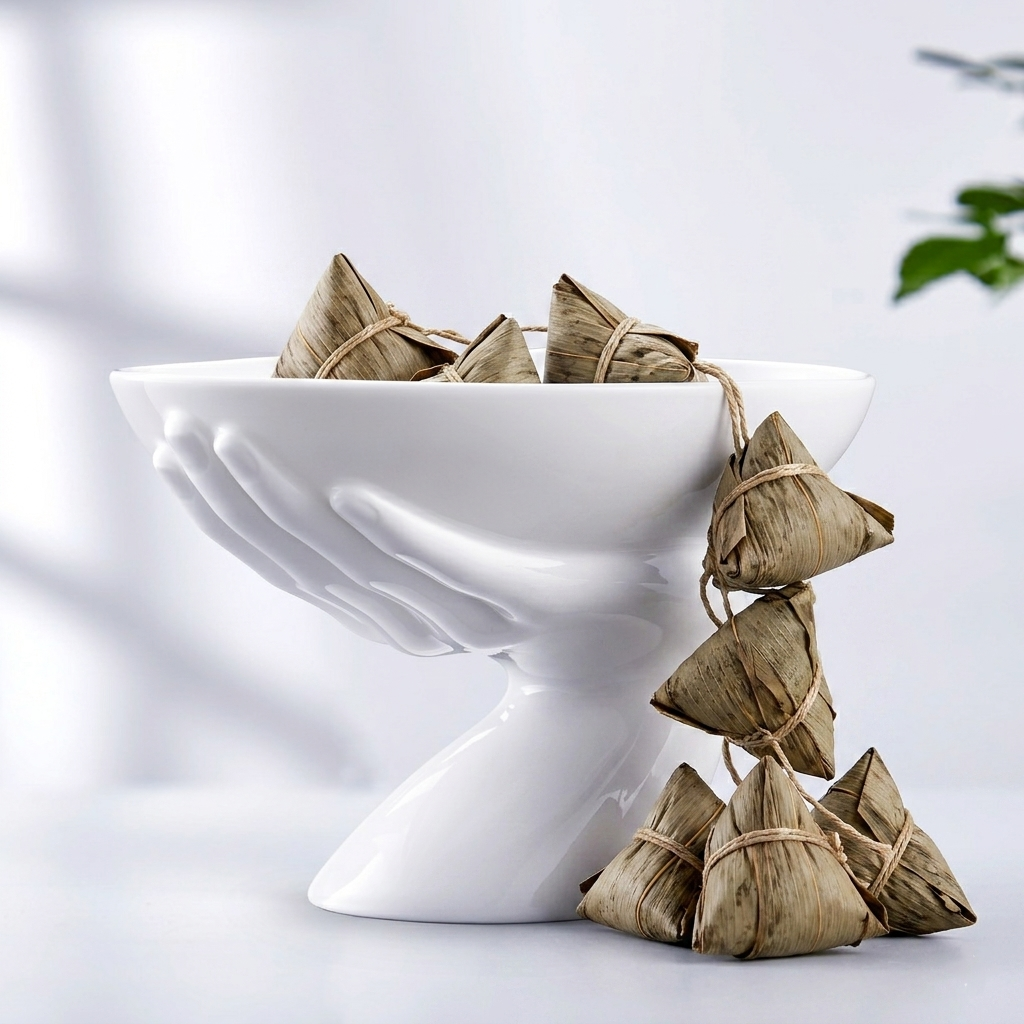
One hand — the posture of capable, unhurried accountability. This is not two hands raised in offering. It is one hand, steady and open, carrying the full weight without strain. Heinrich Wang chose the single hand deliberately: those with genuine capability hold what they must hold with ease — one hand is enough, and that ease is itself a kind of confidence. The form communicates what it takes to earn good fortune: not luck, but the quiet steadiness of someone who shows up, holds on, and does not waver.
The fingers pressed close — the detail of full attention. The hand does not loosely support the bowl. The fingers follow the curve of the base, pressed firmly along its underside — the design language of thorough, attentive care. Wang writes: "This manner of conducting oneself will inevitably bring success and nobility, inevitably bring ease and auspiciousness." Prosperity is not waited for. It is held into being.
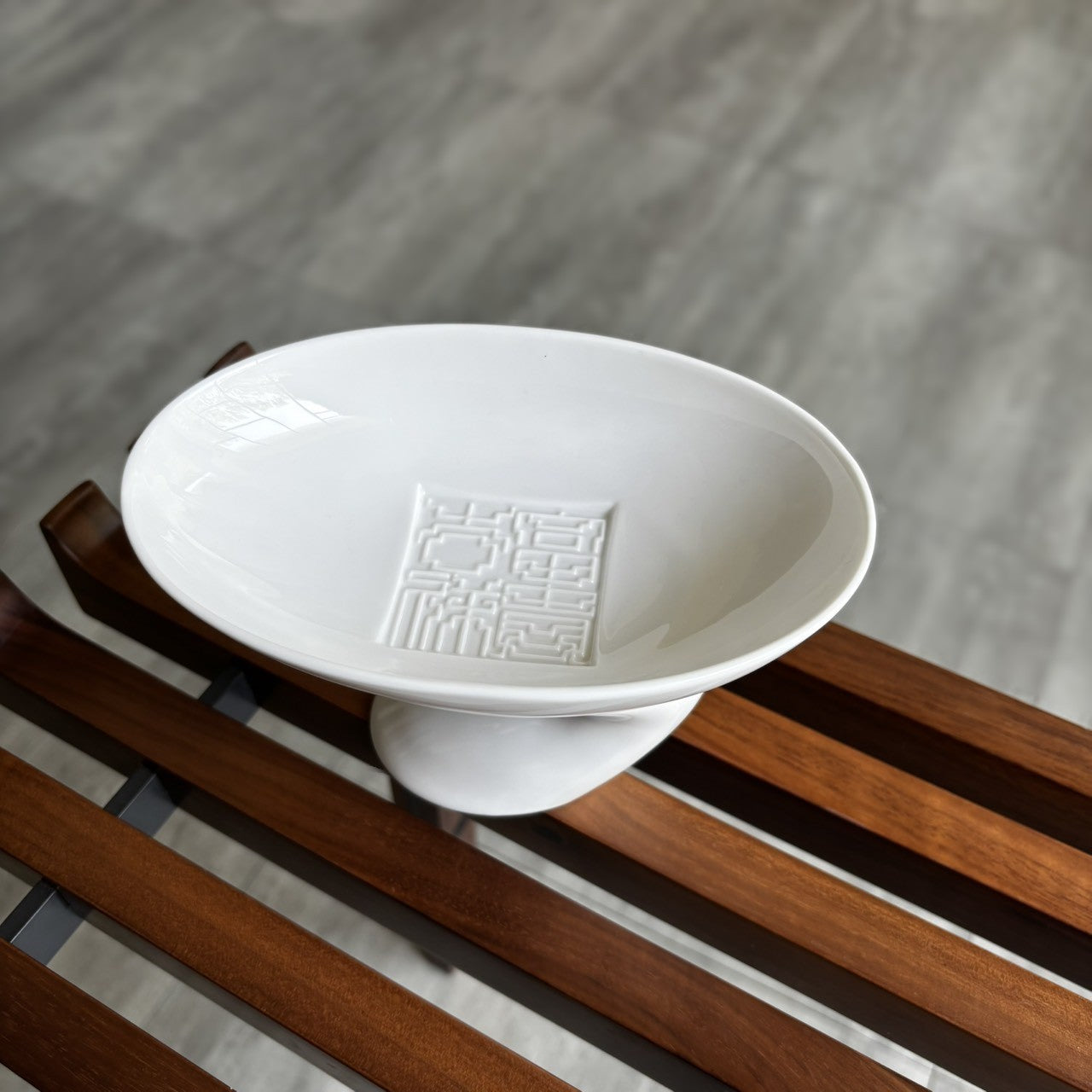
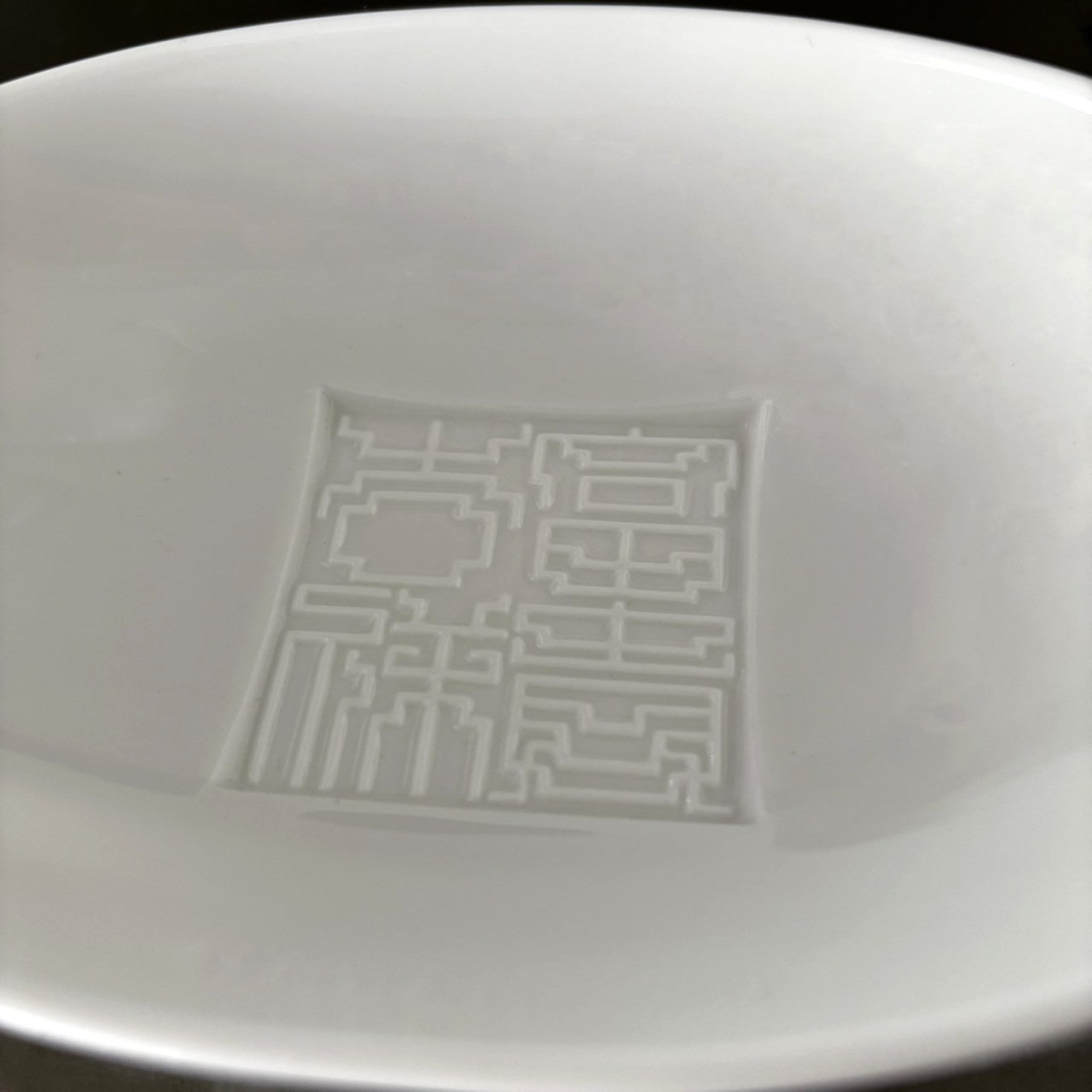
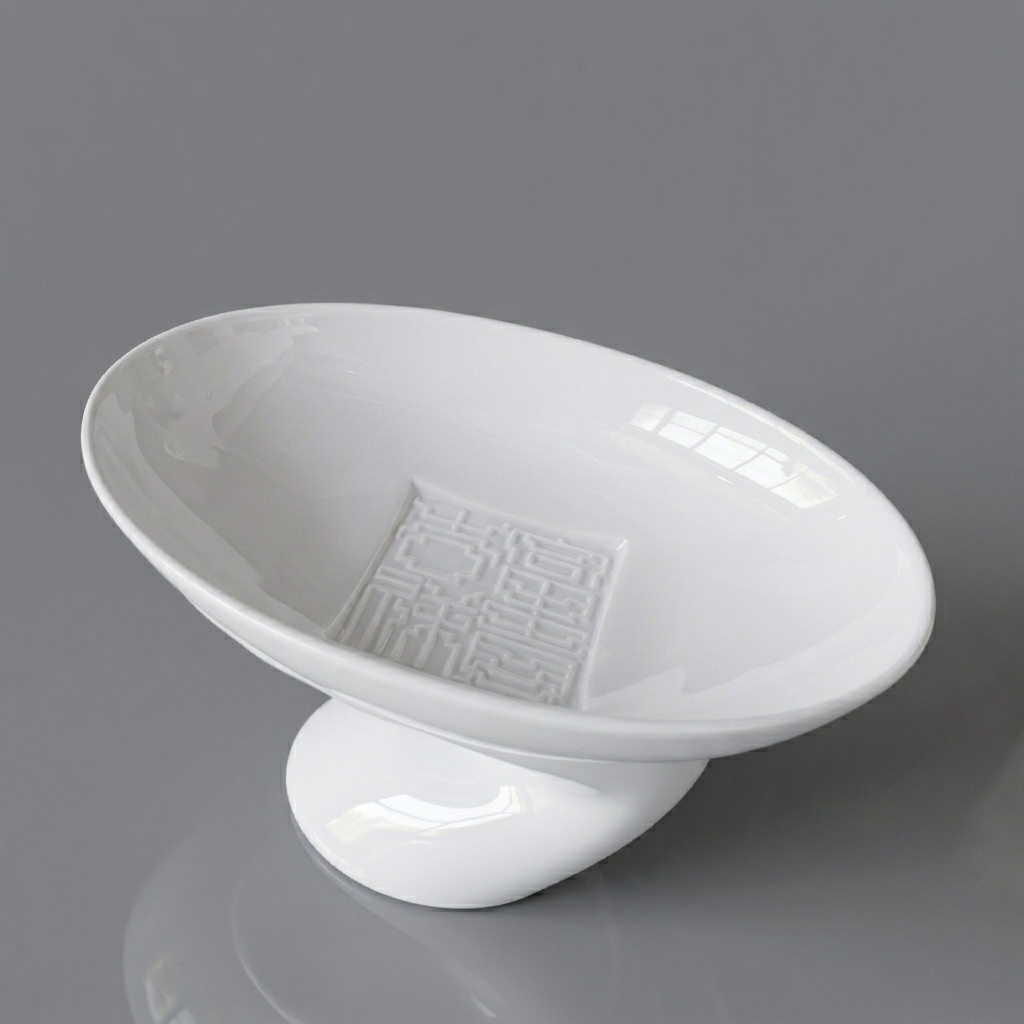
The four characters inside the bowl — a blessing that knows when to appear. The characters 富貴吉祥 are carved in shallow relief on the interior surface of the bowl — not announced, not displayed, but present. When the bowl is filled, they rest beneath what it holds. When the bowl is empty, they surface quietly. A blessing does not need to be seen every time. It only needs to always be there.
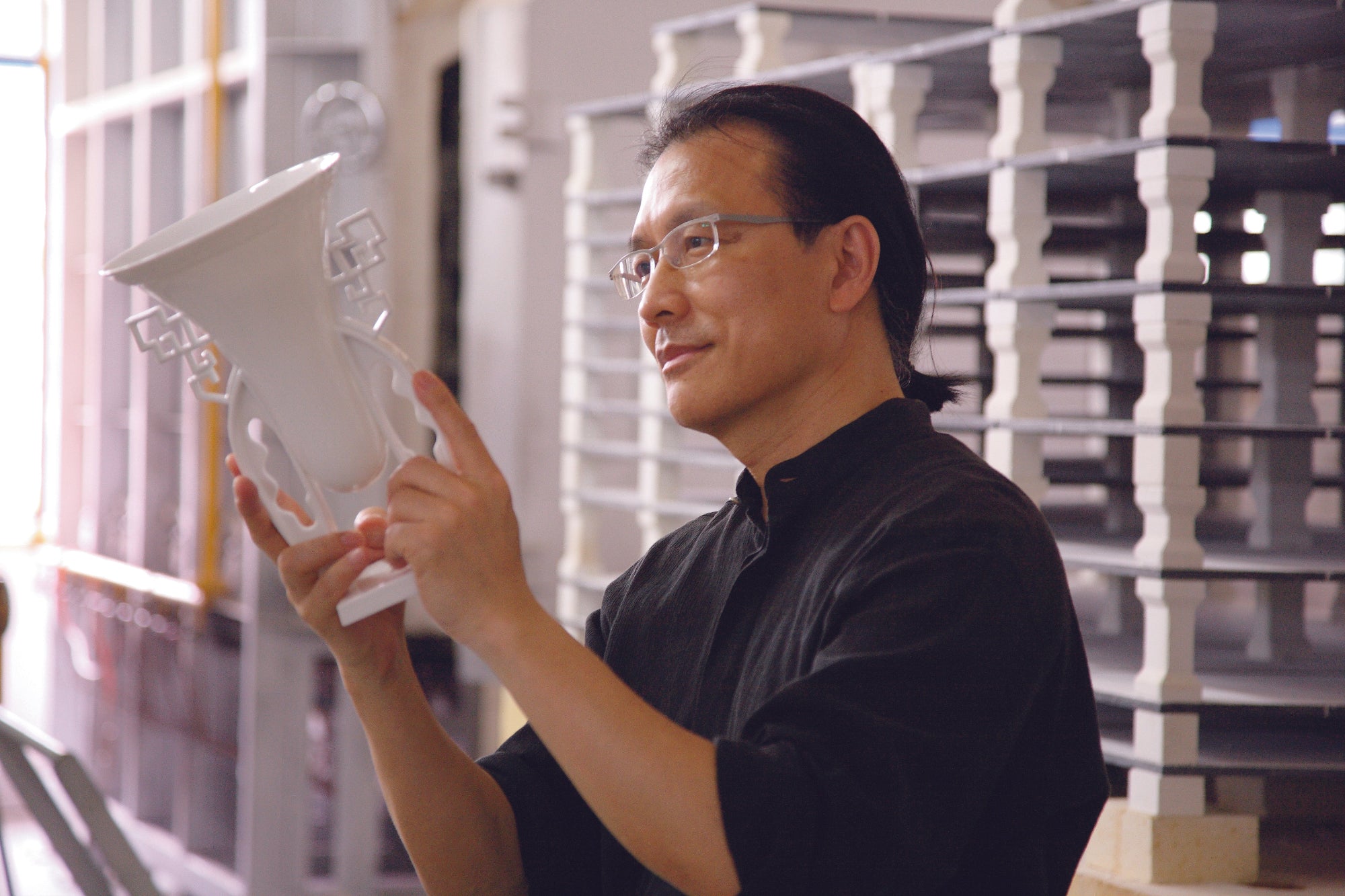
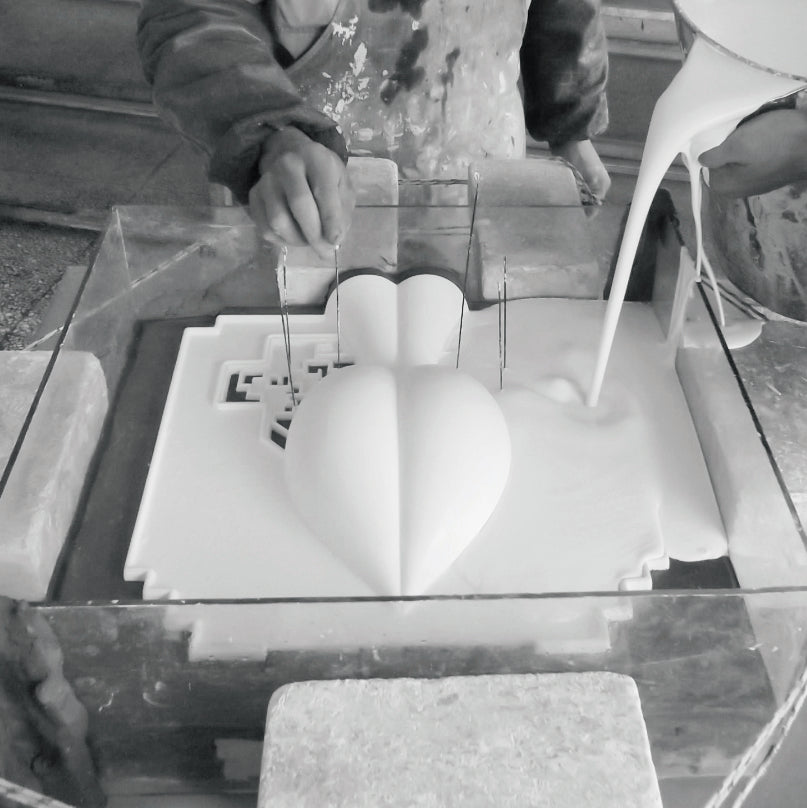
The oval surface is the most demanding element to produce. The spaces between the fingers are prone to hairline cracking during firing. Every finished piece with a clean dish surface and intact finger detail represents careful, unhurried work at each stage of production.