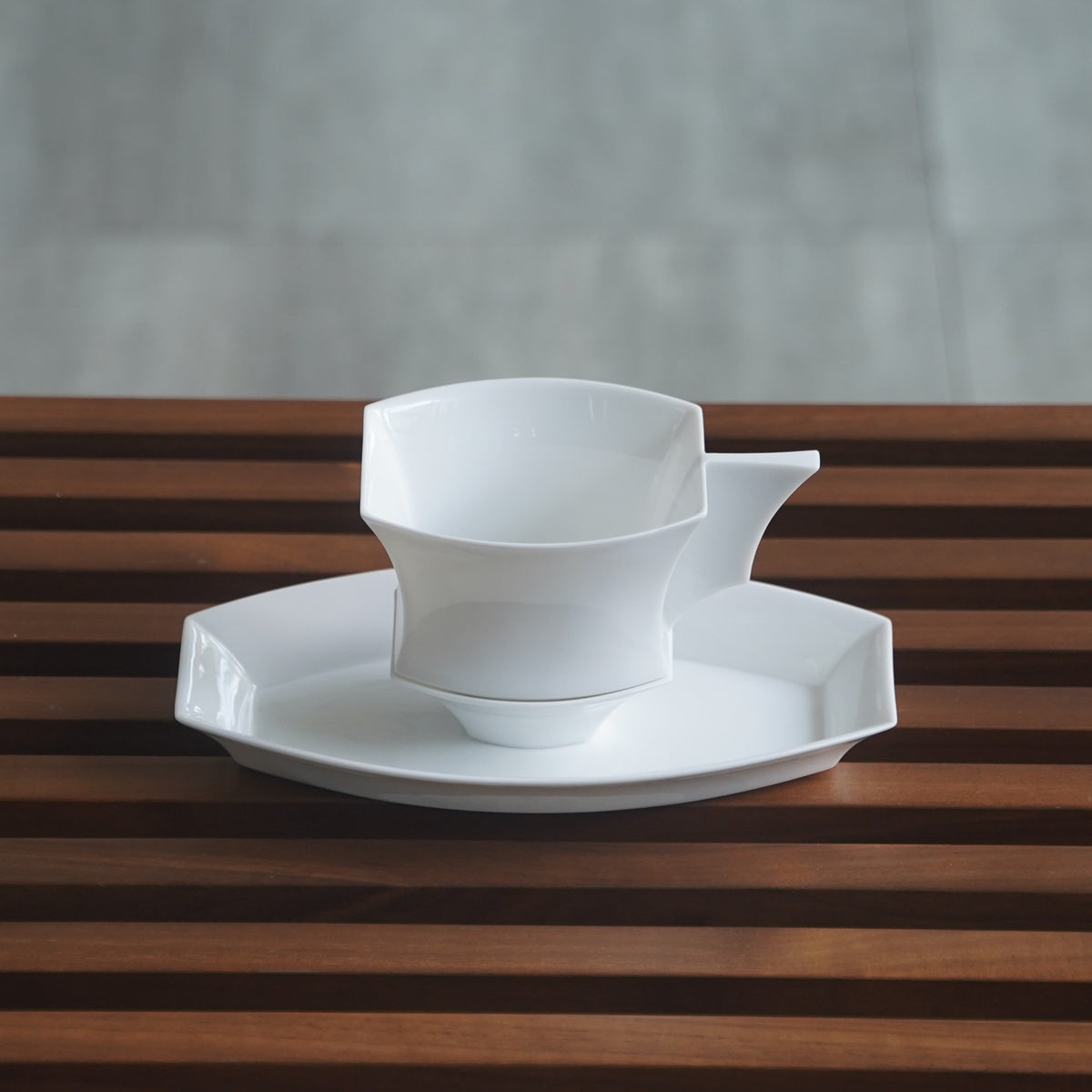
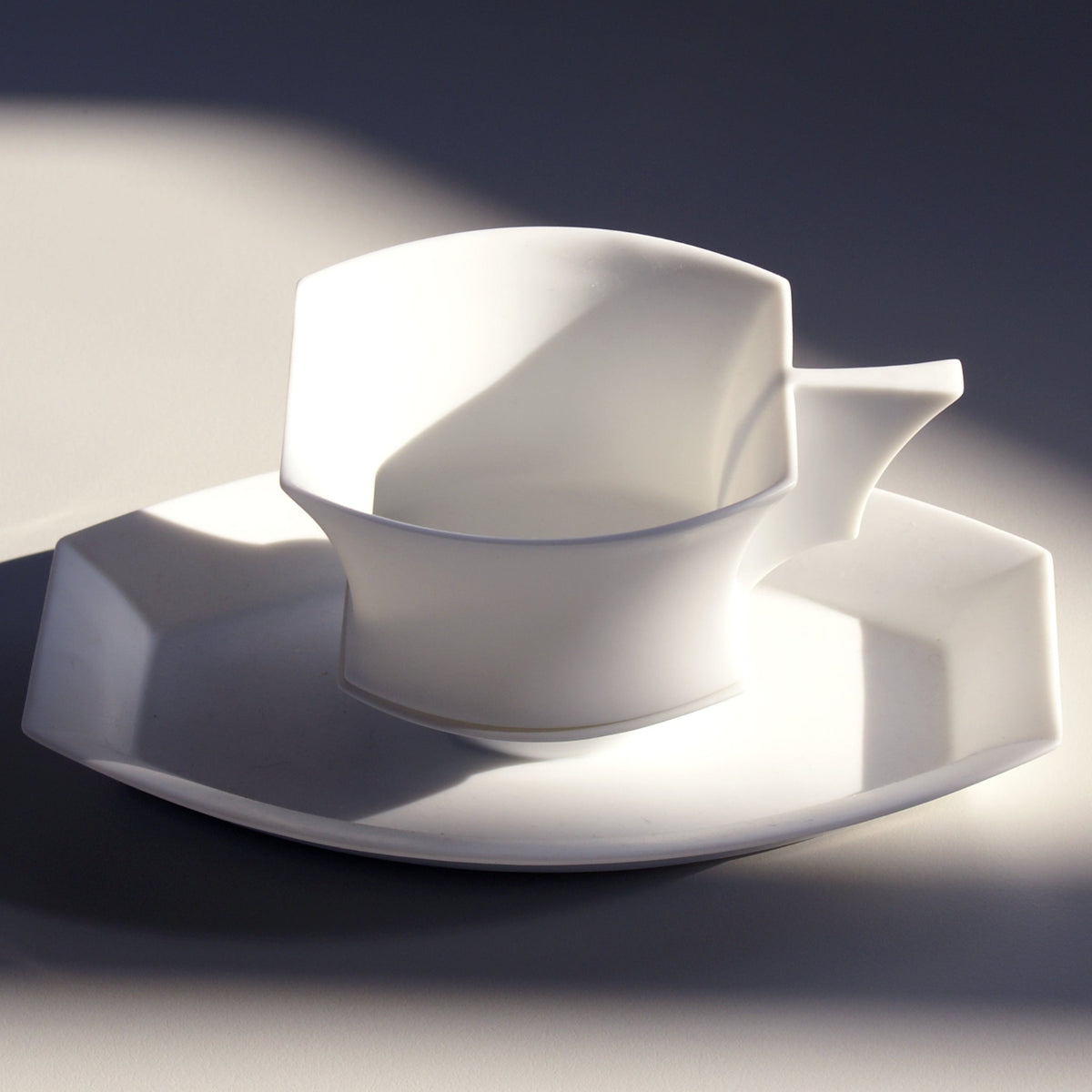
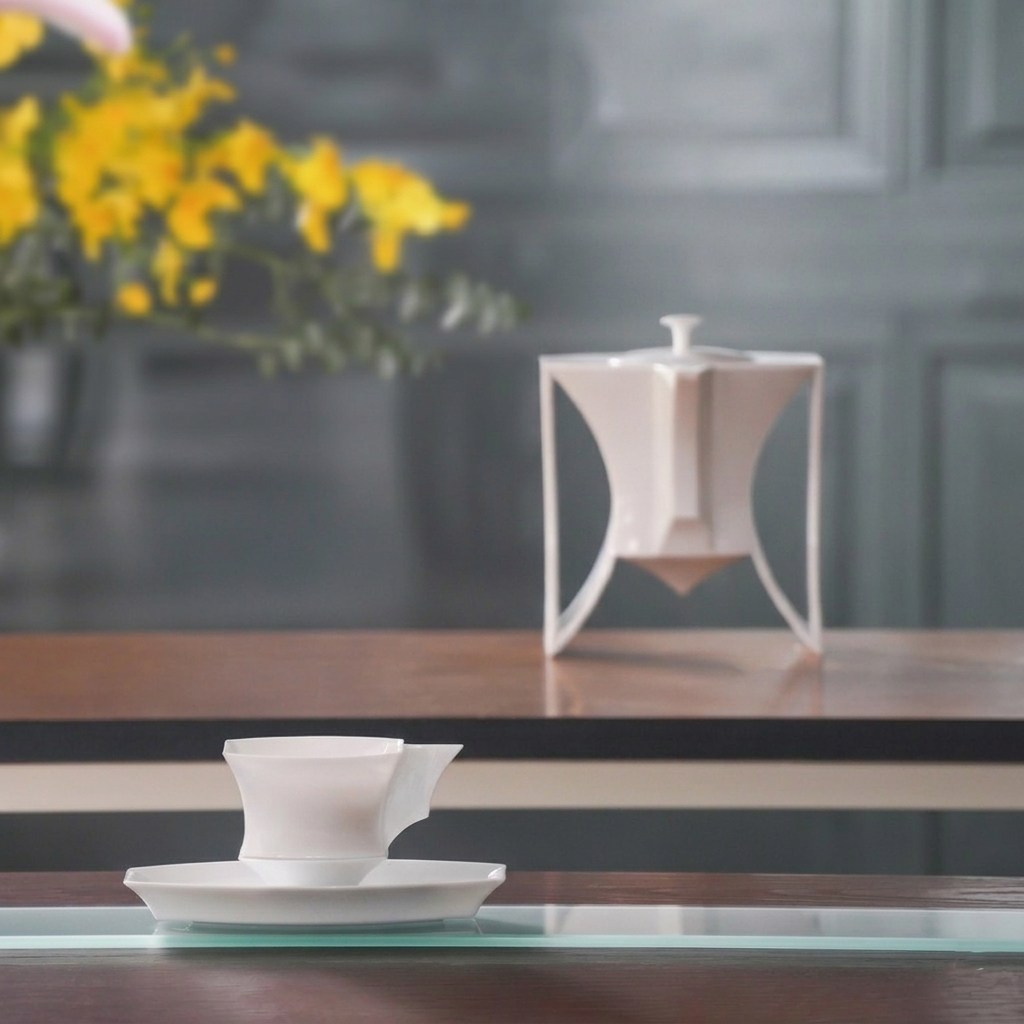
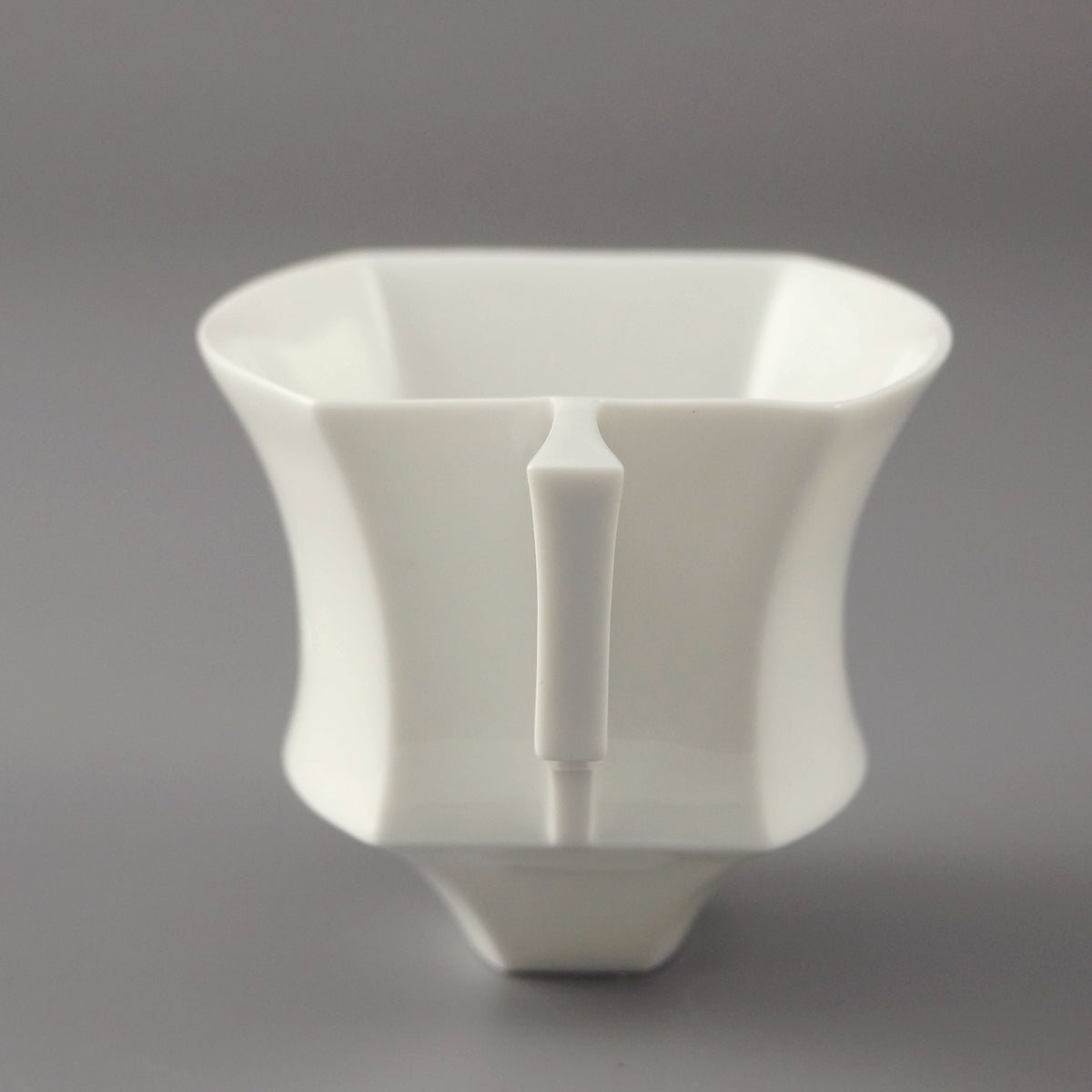
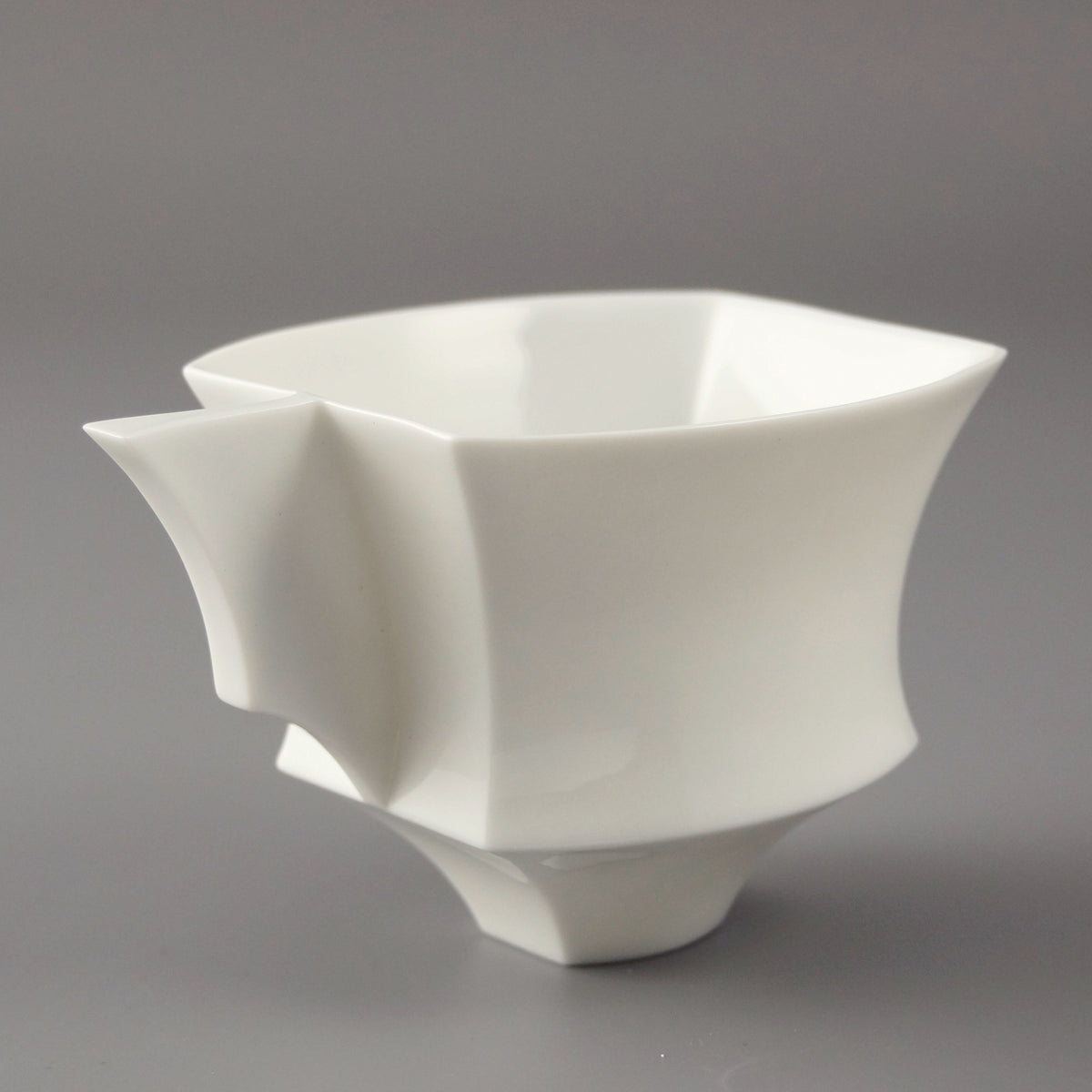
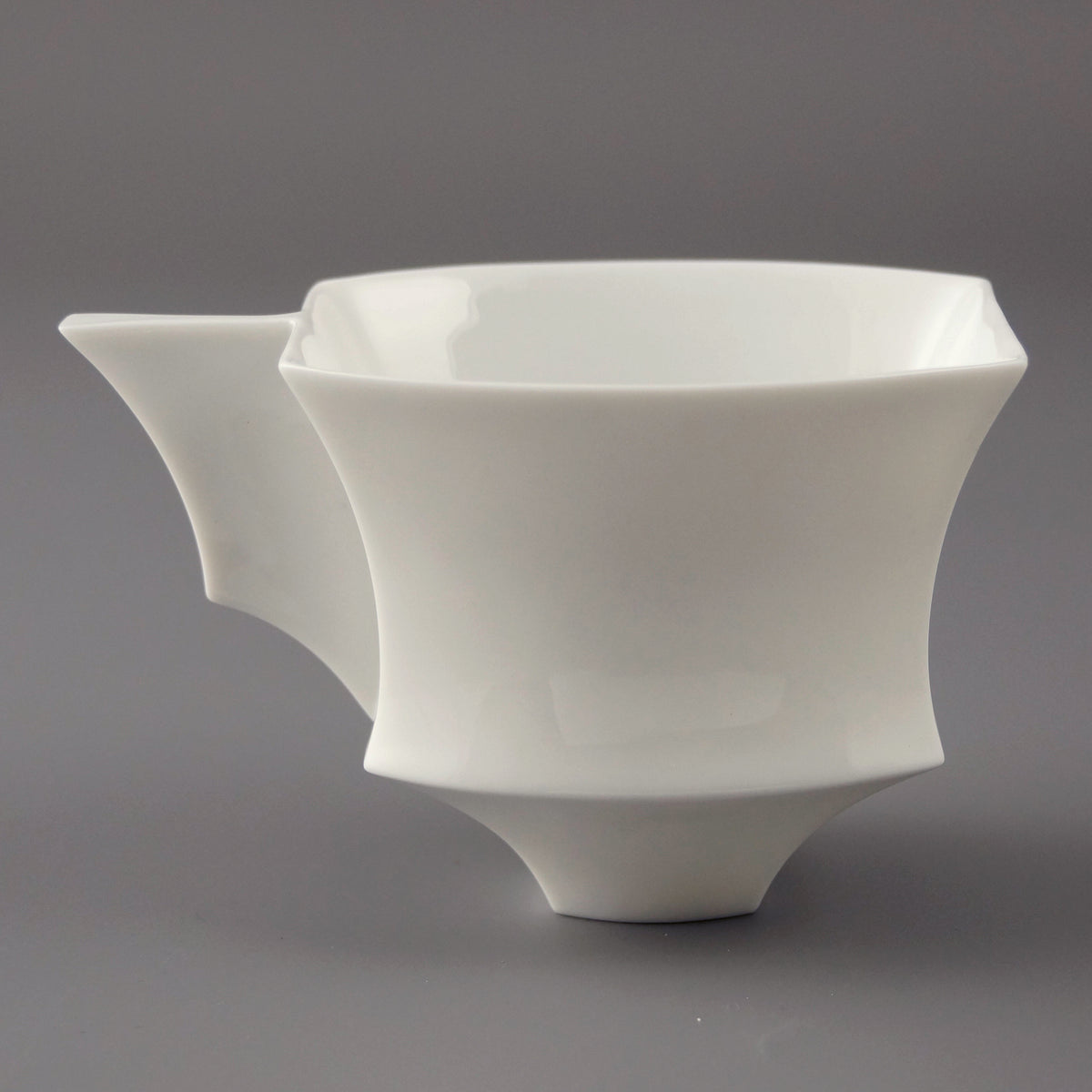
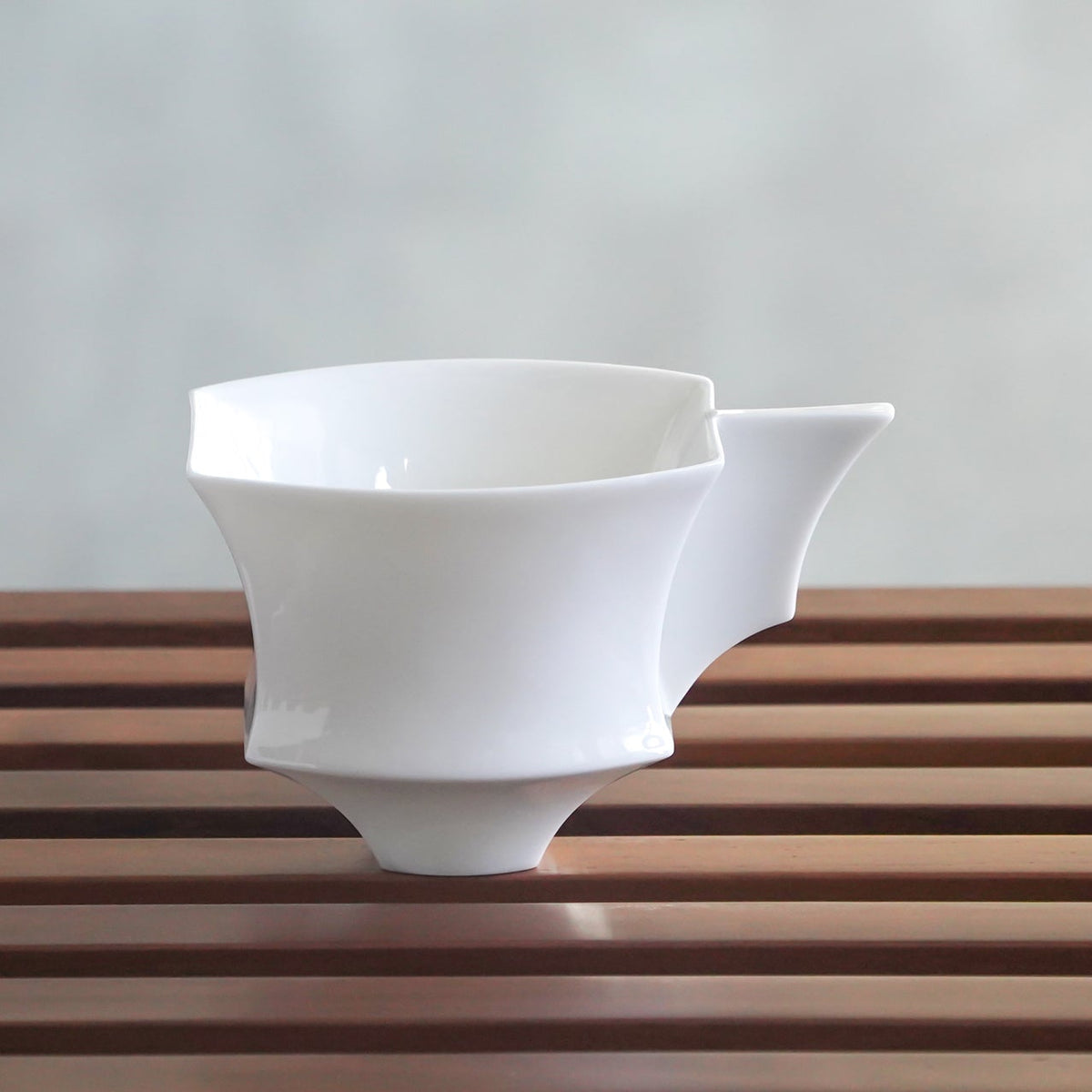
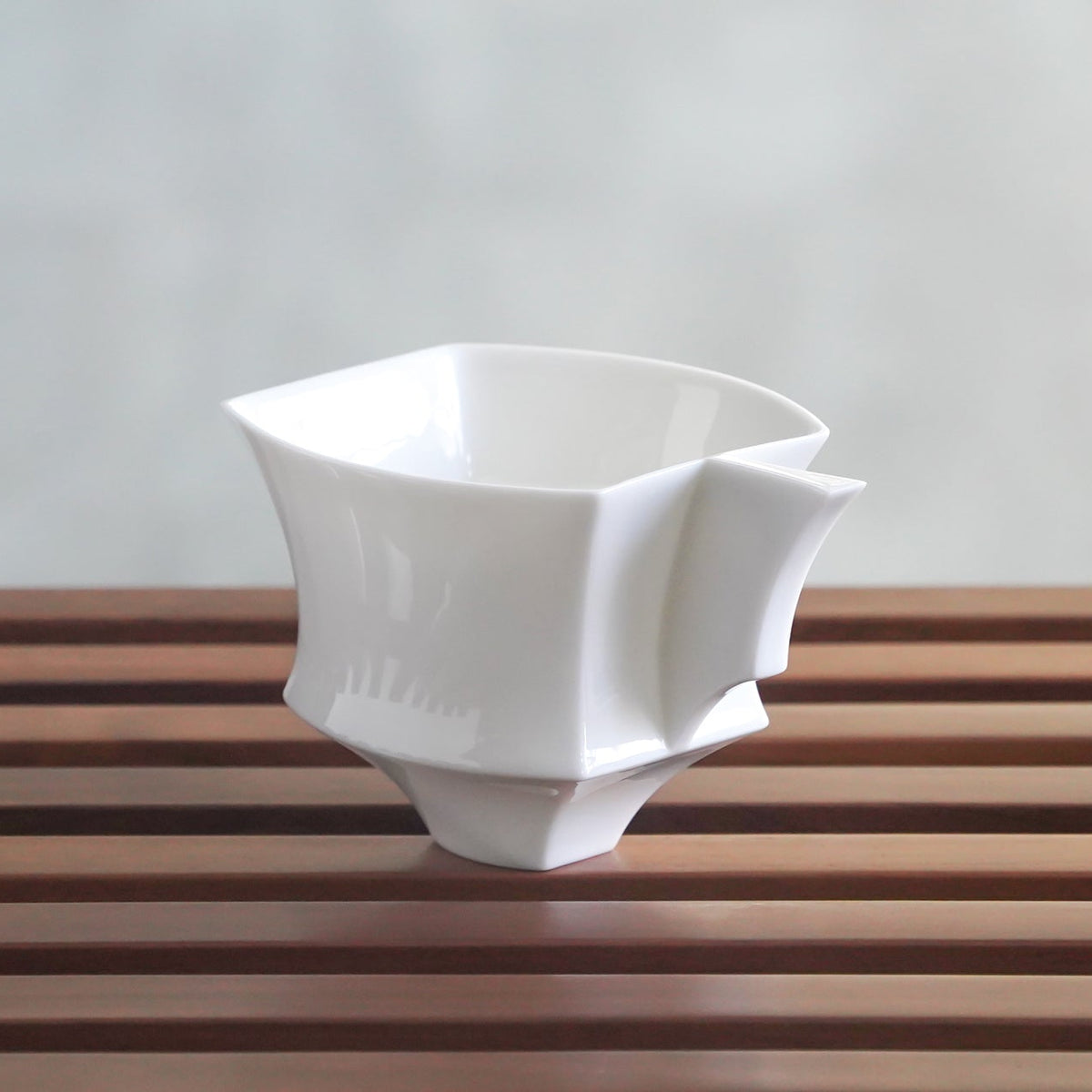
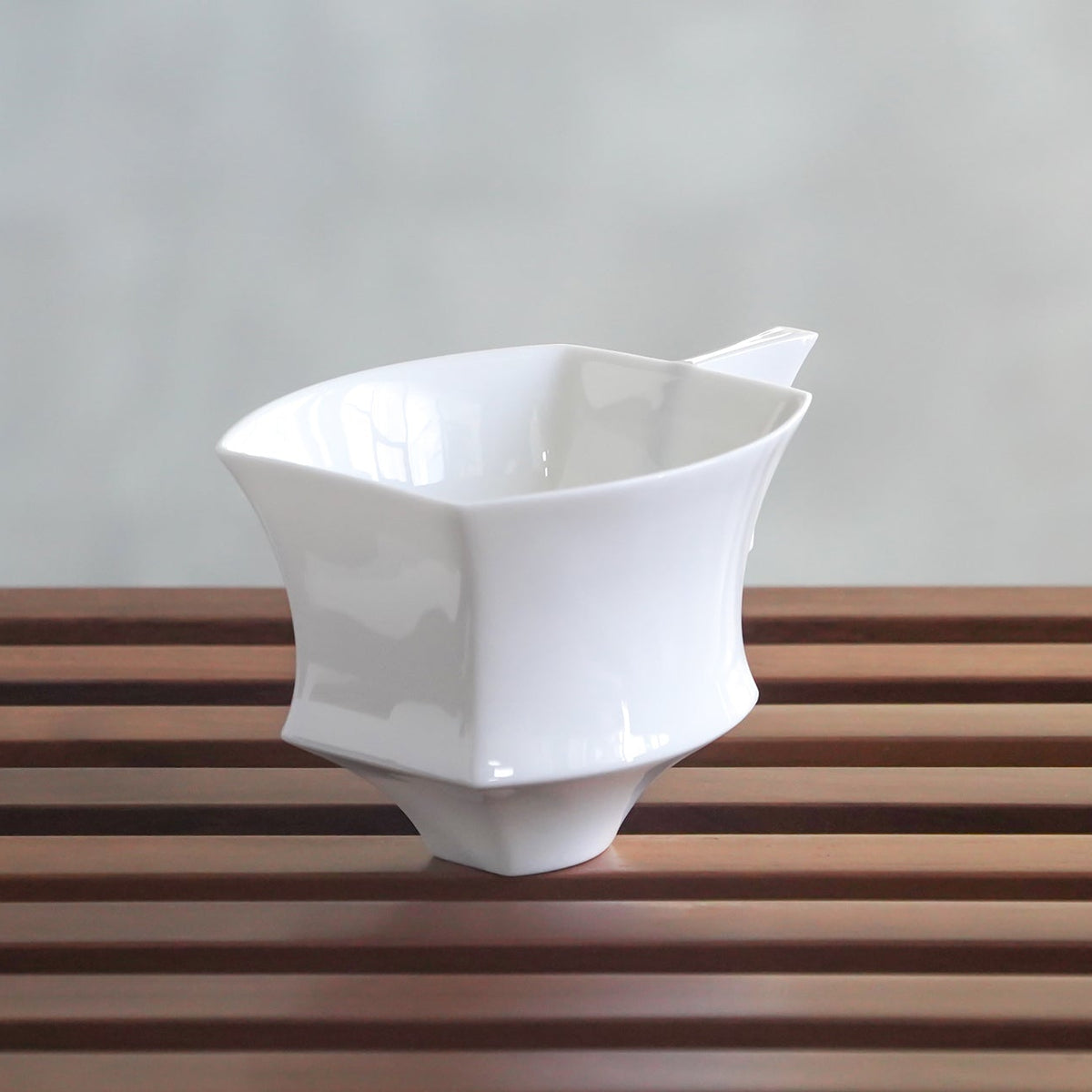
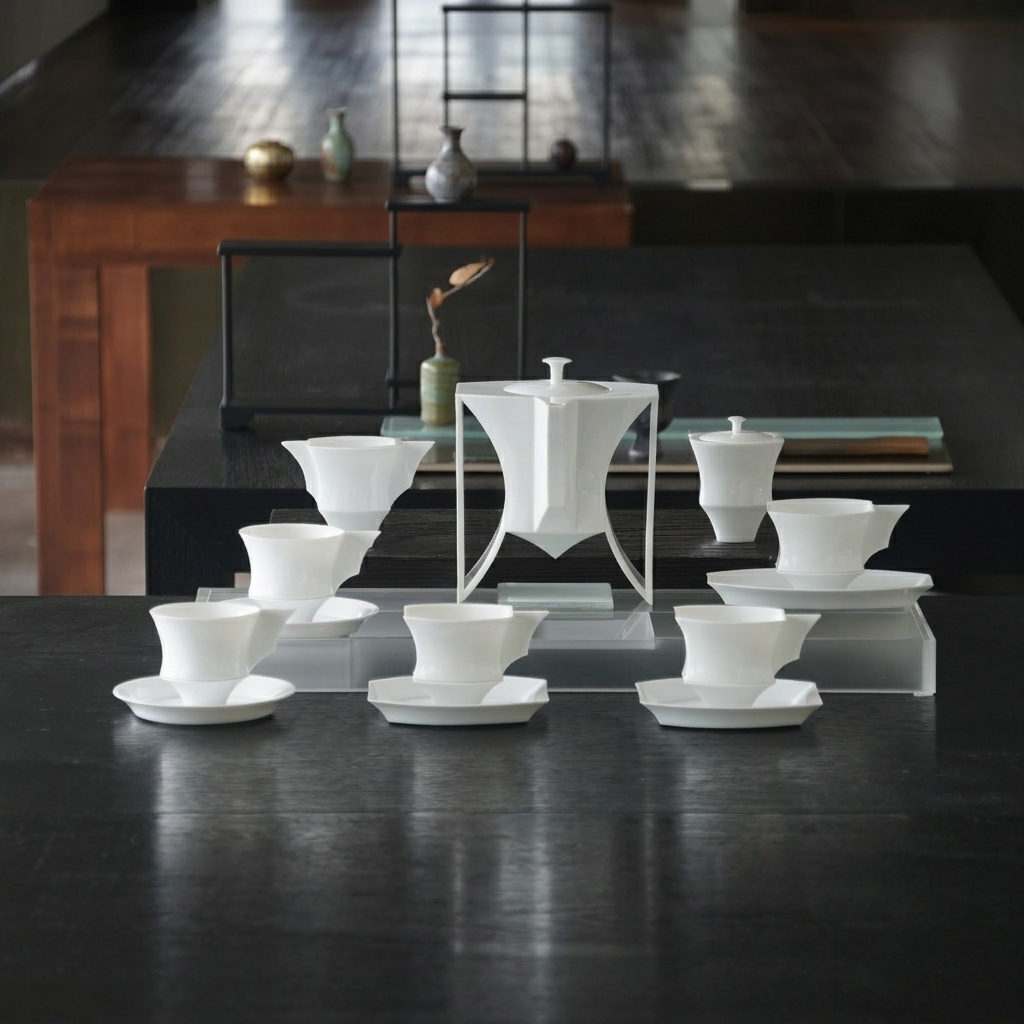
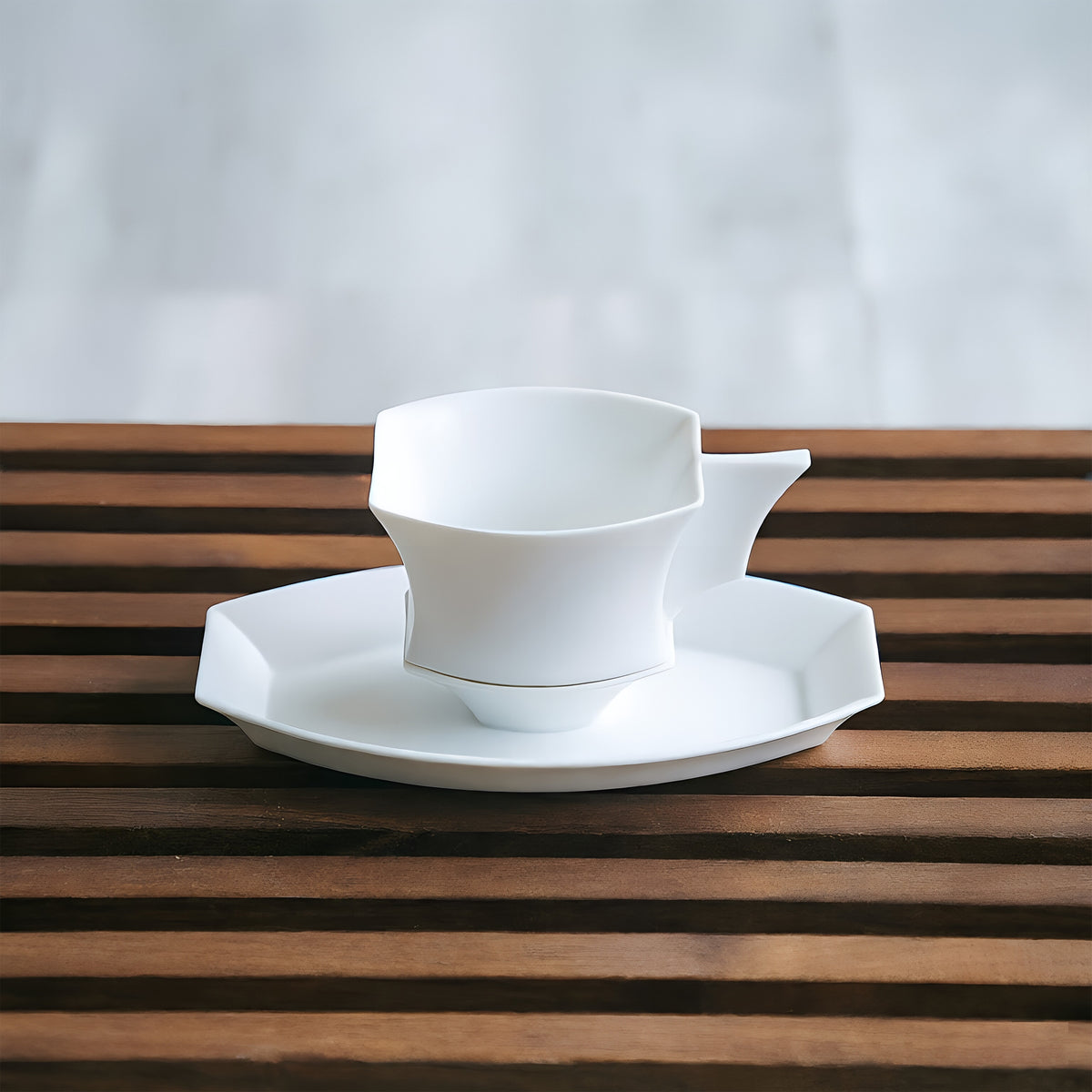
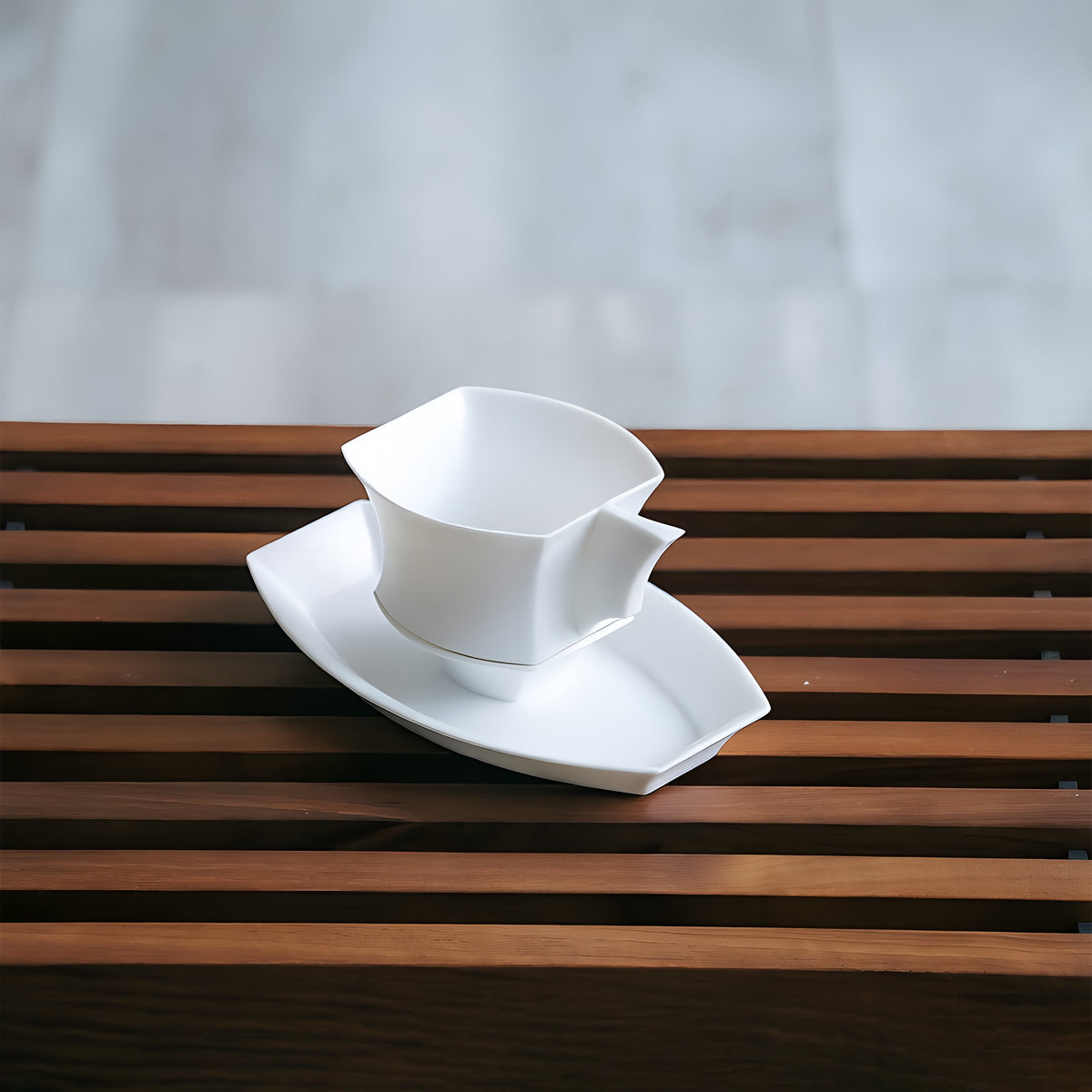
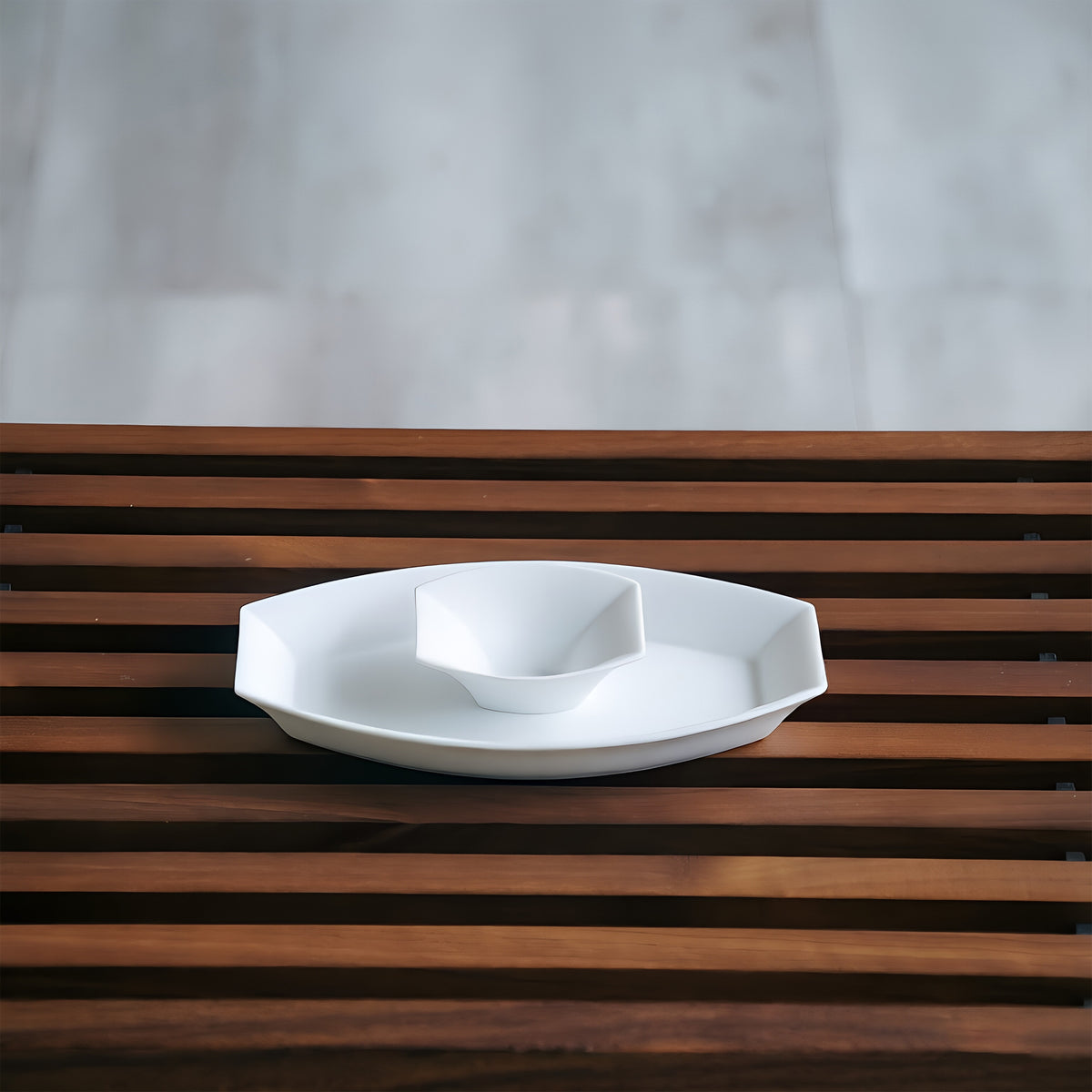
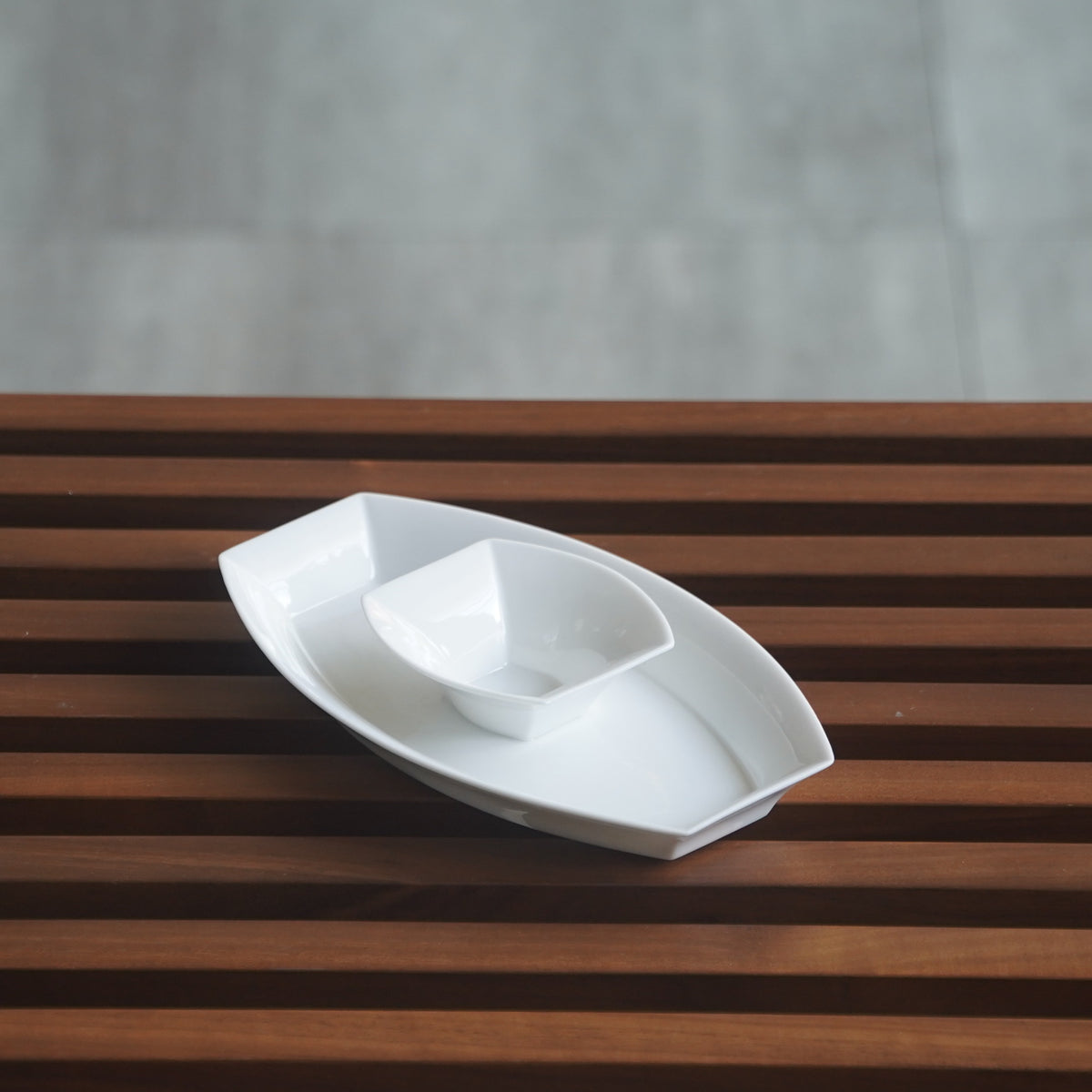
The long saucer is the most spatially present of the three. At 19 × 11.4 cm, the long saucer occupies the most table surface of the three Imperial Memories saucer forms. When the set is placed on a table — or a desk, or a tea tray — it commands the space around it in a way the round and square sets do not.
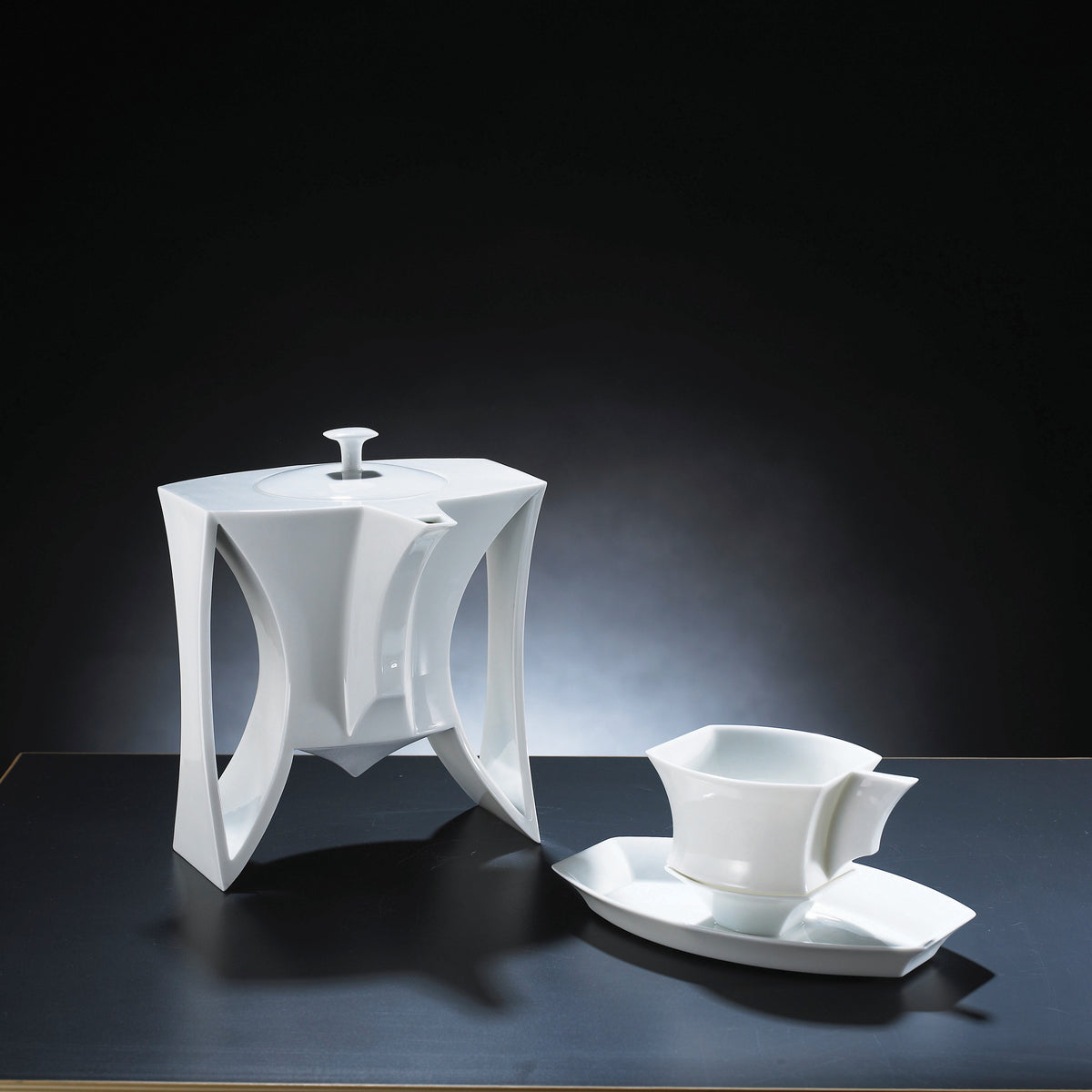
Vertical cup, horizontal saucer — a composed tension. The upright blade handle of the square cup and the lateral extension of the long saucer create a visual counterpoint: the cup rises, the saucer spreads. This proportion relationship is the strongest compositional statement in the Imperial Memories series.
The long flat surface is the hardest surface in the series to fire. A long rectangular flat plane is more technically challenging than a round or square flat surface — it is most likely to bow along its long axis during firing as the kiln heat distributes unevenly. Every long saucer that comes out of the kiln flat represents a precise management of temperature, clay body, and kiln positioning.
The cup seat means the cup belongs somewhere specific. The long saucer's cup seat is fitted to the base of the square cup. Each use ends with returning the cup to that position — not placing it anywhere on the long surface, but returning it to its place. The long saucer makes that return feel like a closing gesture on a stage.
The most displayable set in the series. When not in use, the long set at rest has the compositional quality of a sculptural object. On a bookshelf, a side table, or a display surface, the horizontal proportion of the long saucer with the cup at its seat reads as a complete, considered composition.