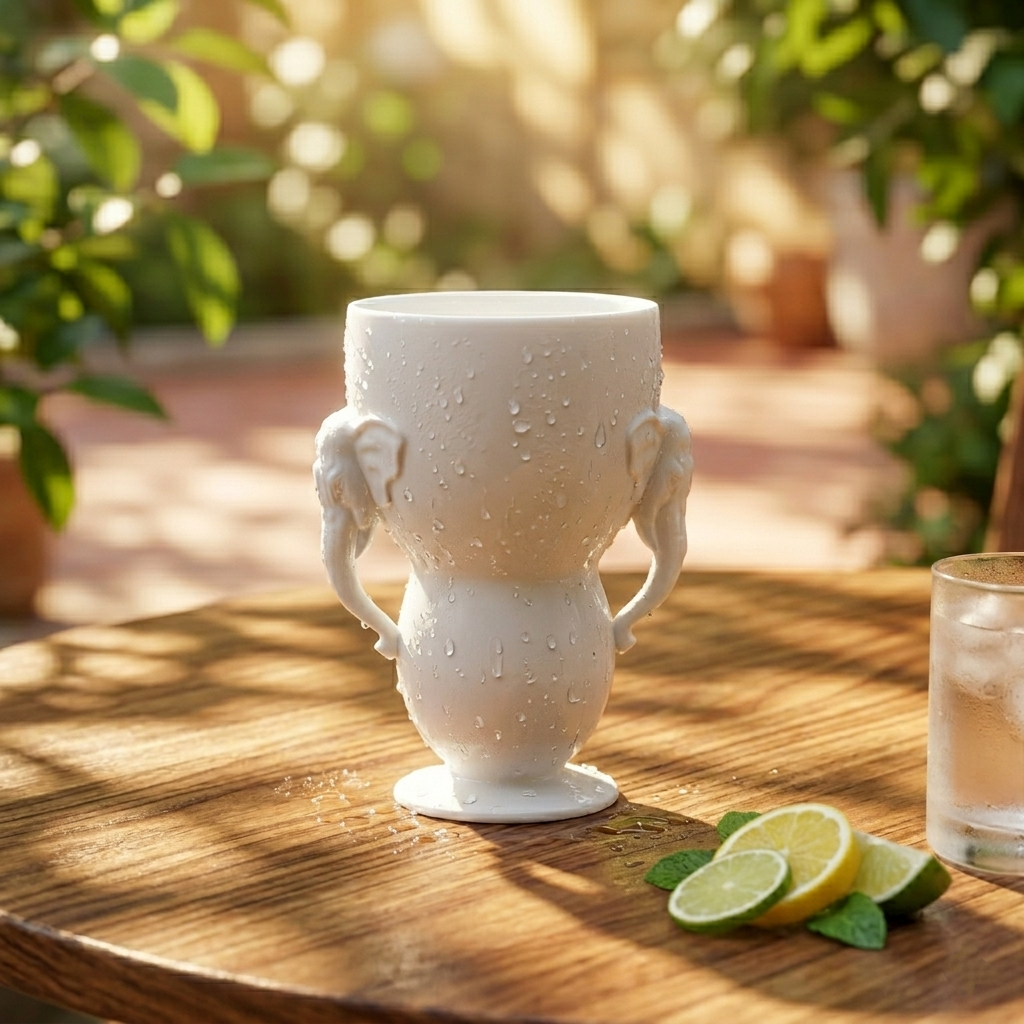
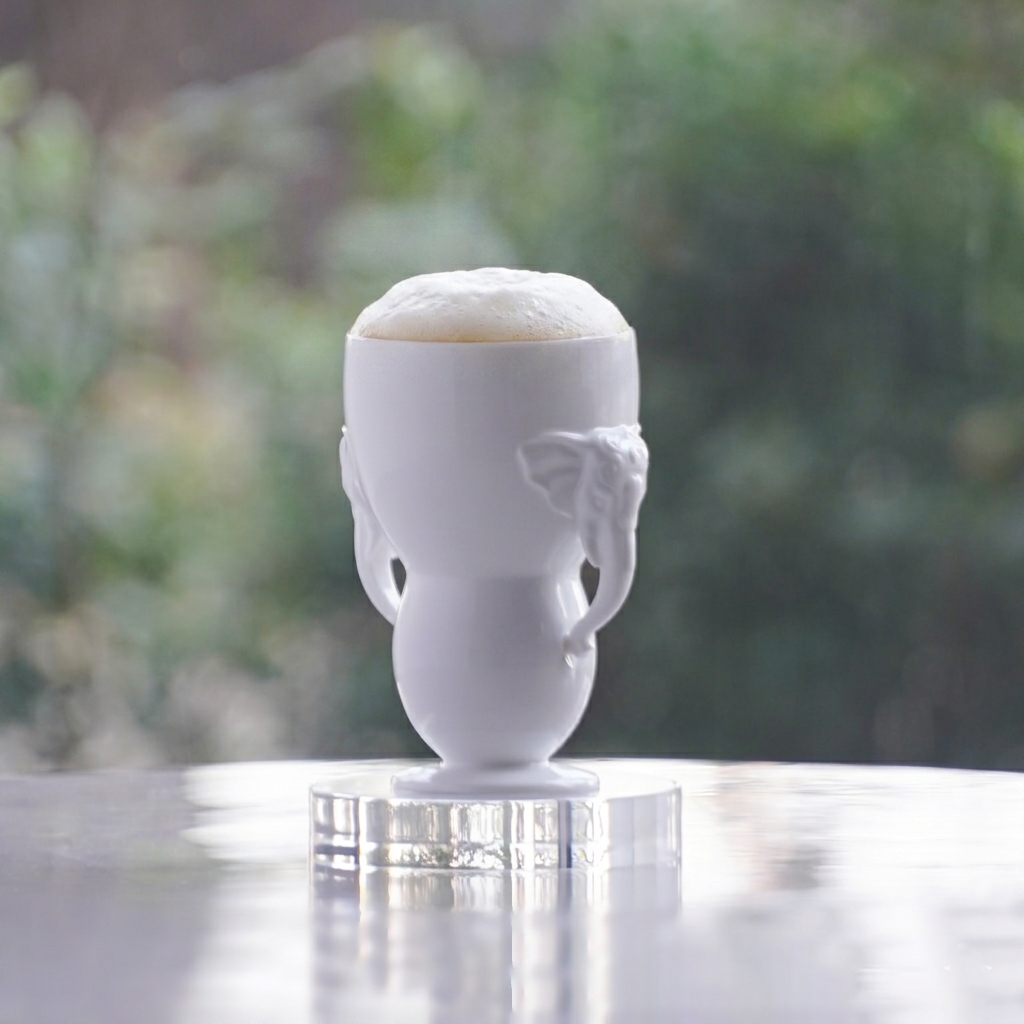
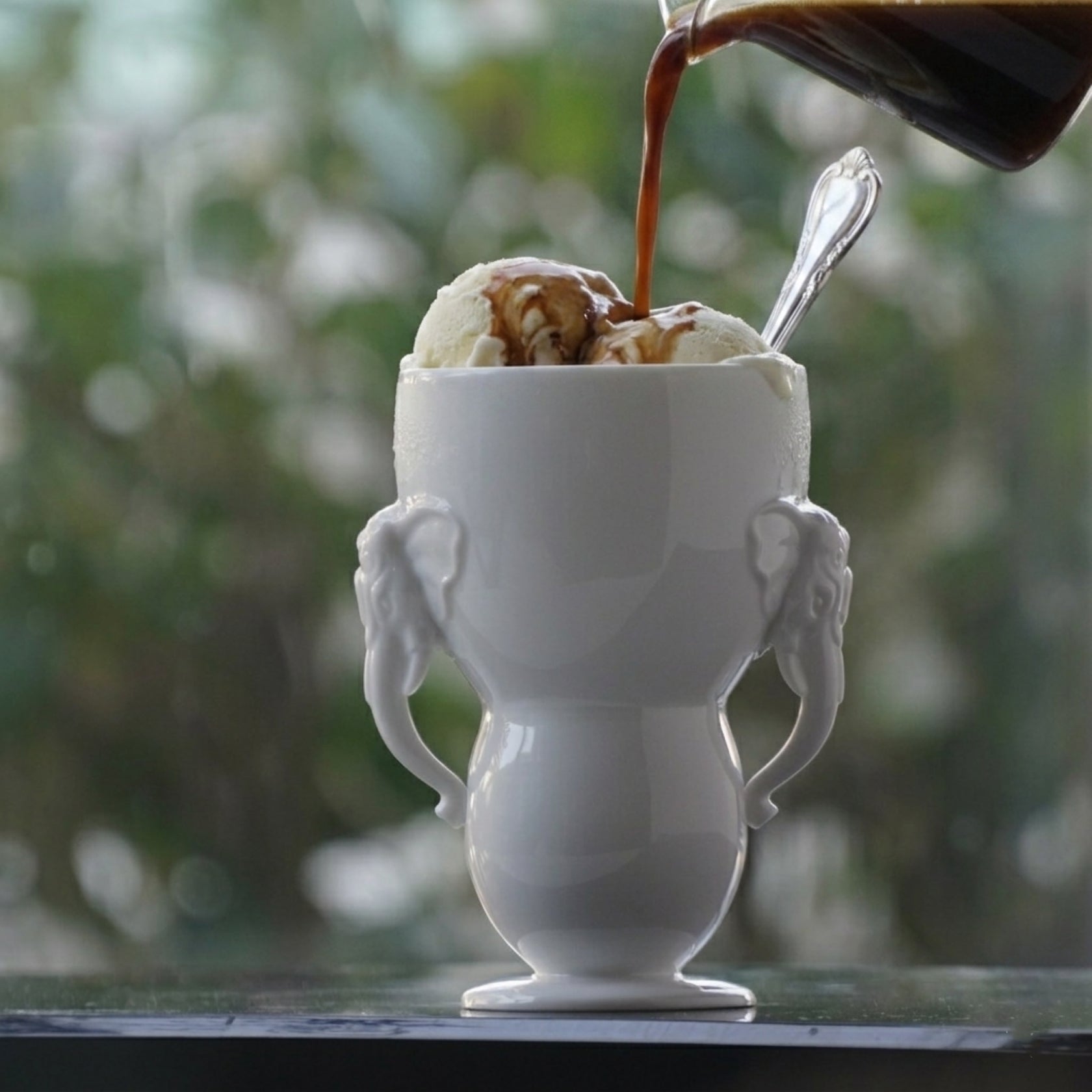
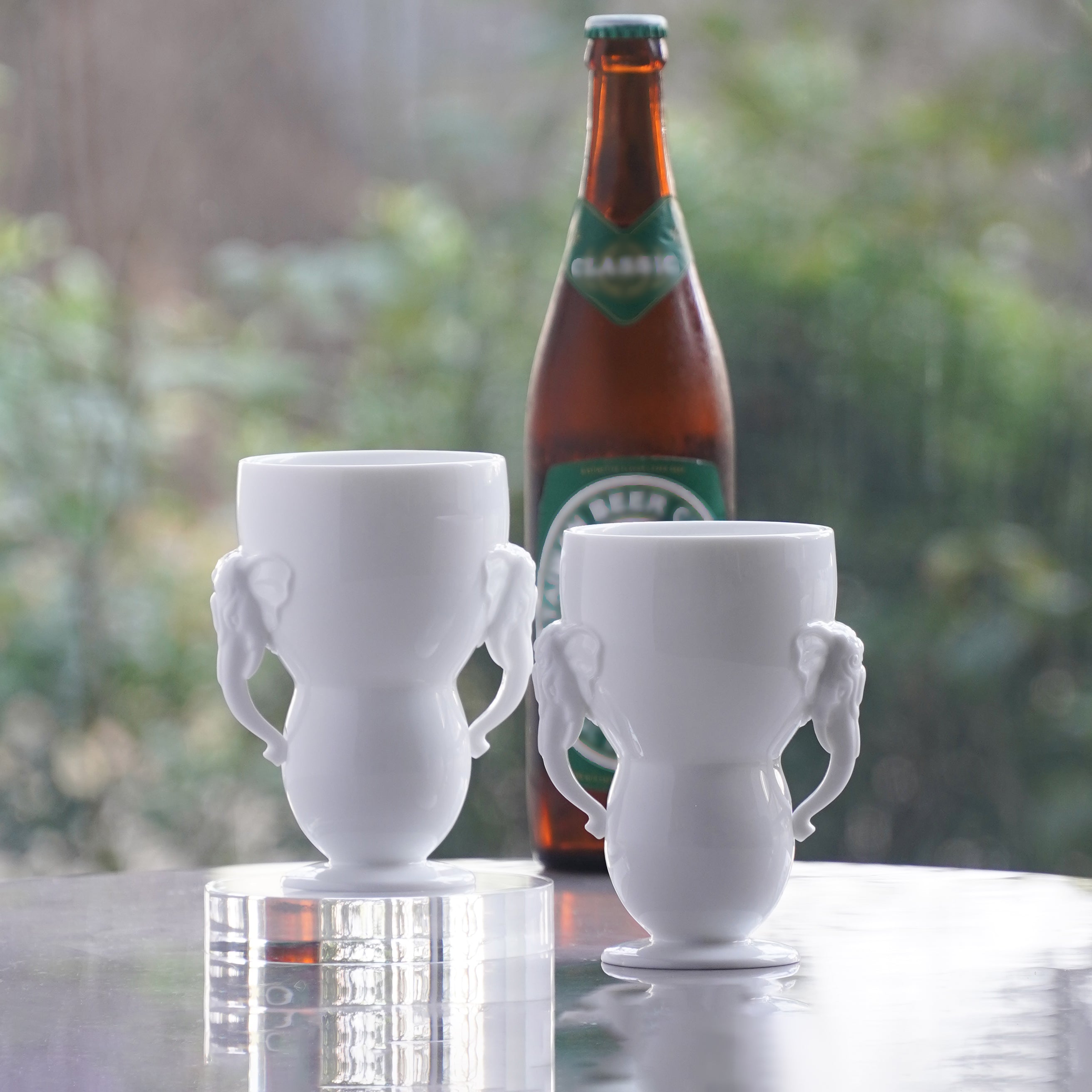
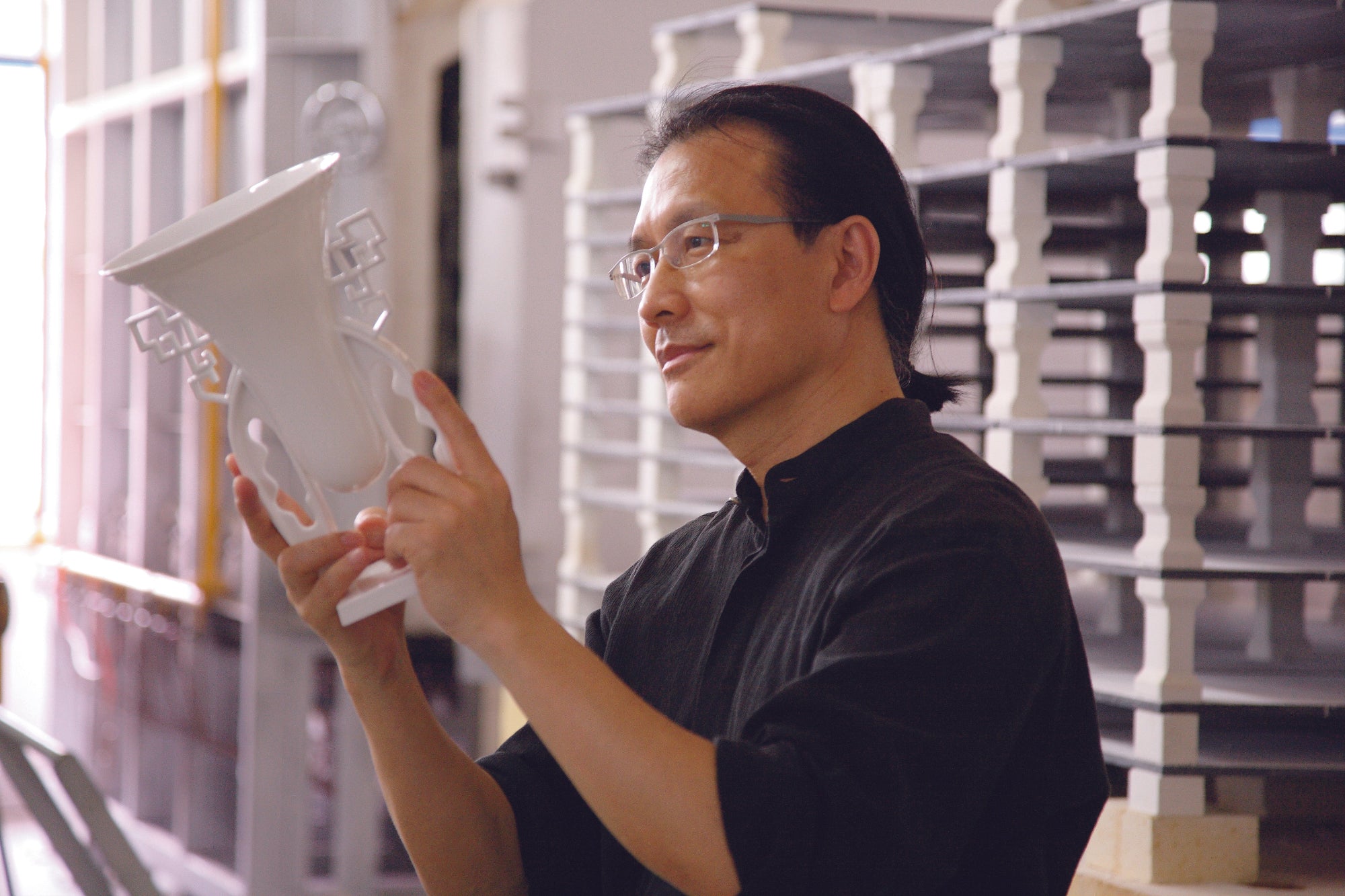
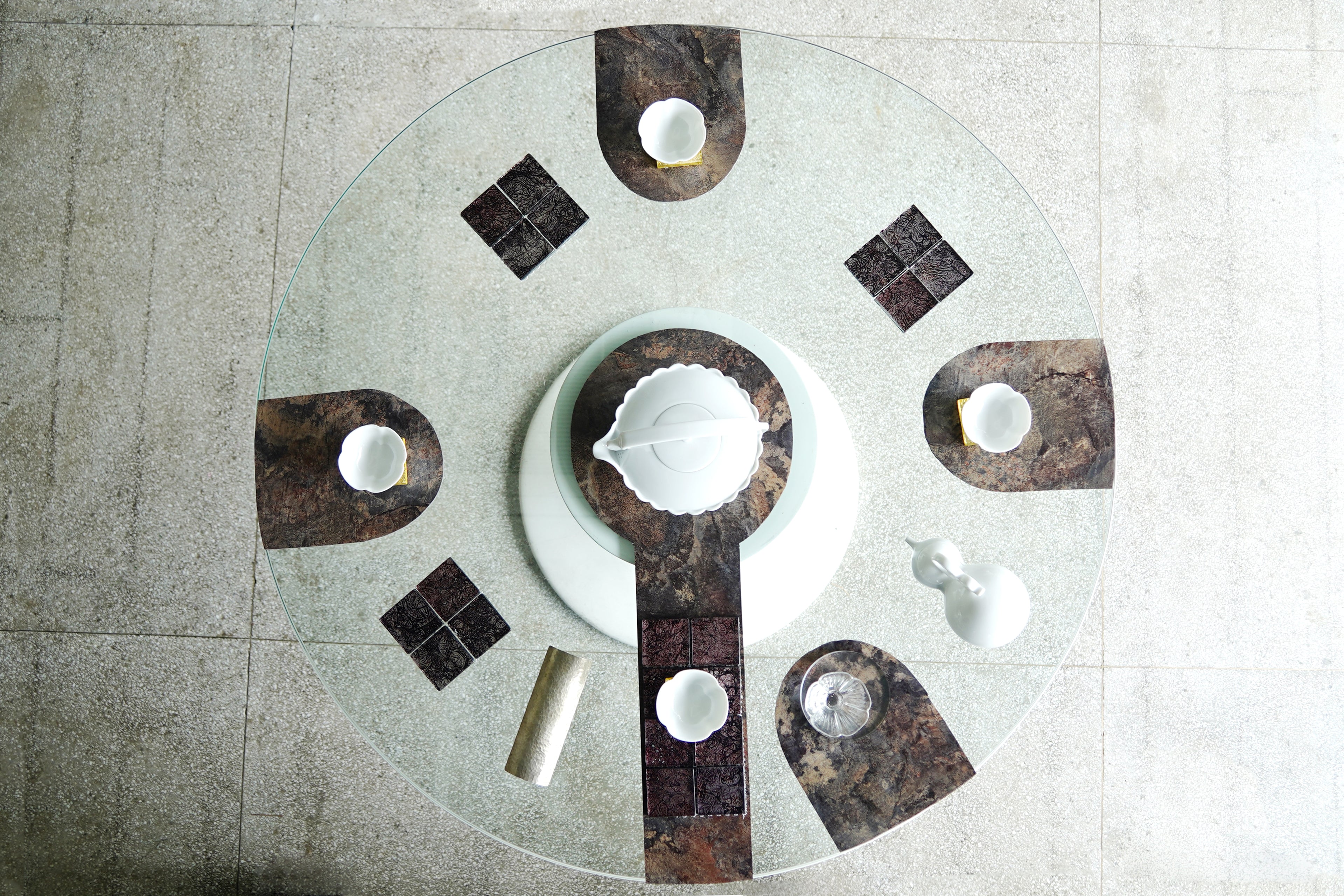
The vessel changes the experience — not just the drink. Heinrich Wang writes in his essay Dao Yu Yu Qi (道寓於器): "Begin with the novelty that function delivers to the skin and the body — give the mind and all five senses a platform of responsive pleasure." Renewed Senses is that principle made physical. The same liquid, in white porcelain, produces a different temperature sensation, a different weight, a different quality of presence at the lip. The drink does not change. Your perception of it does.
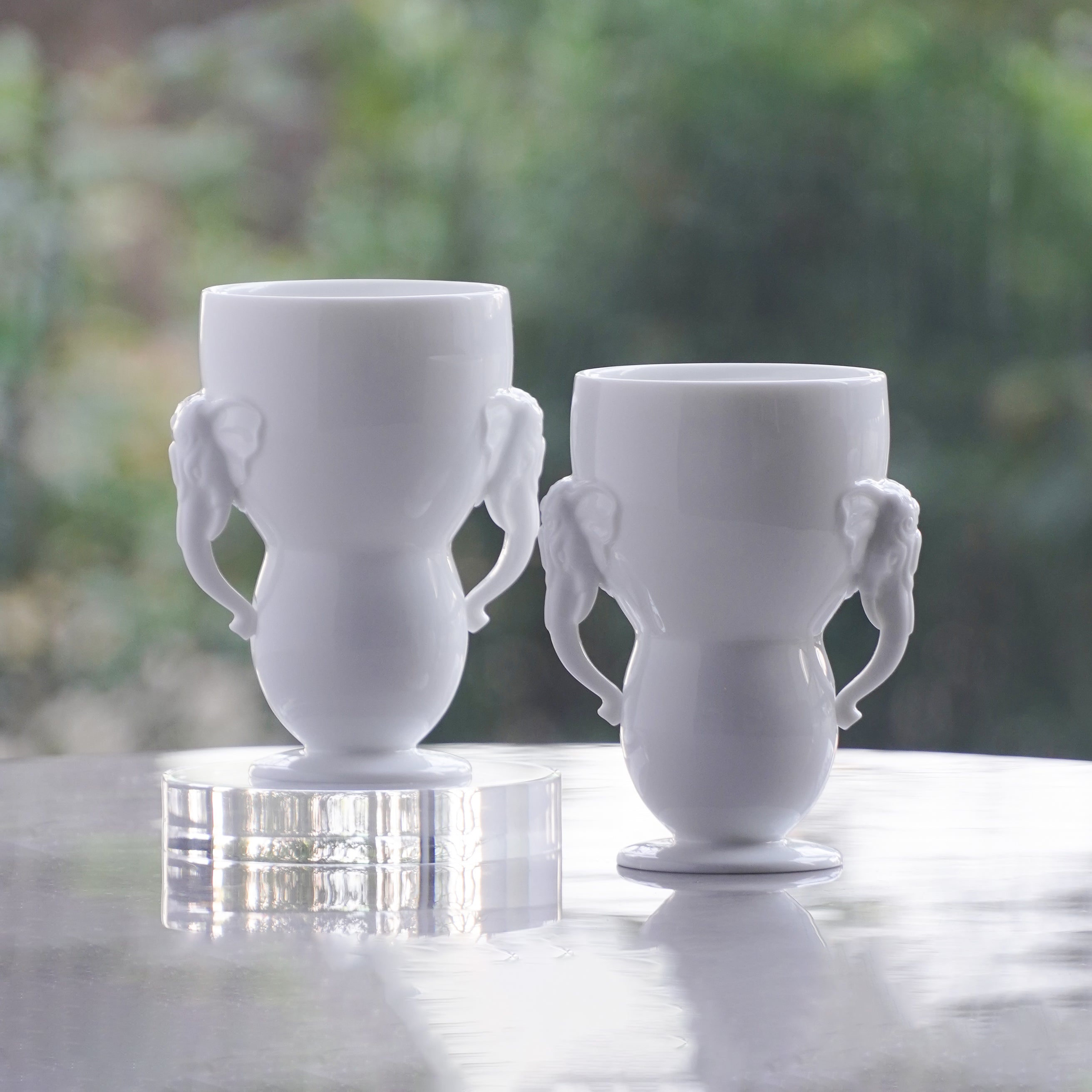
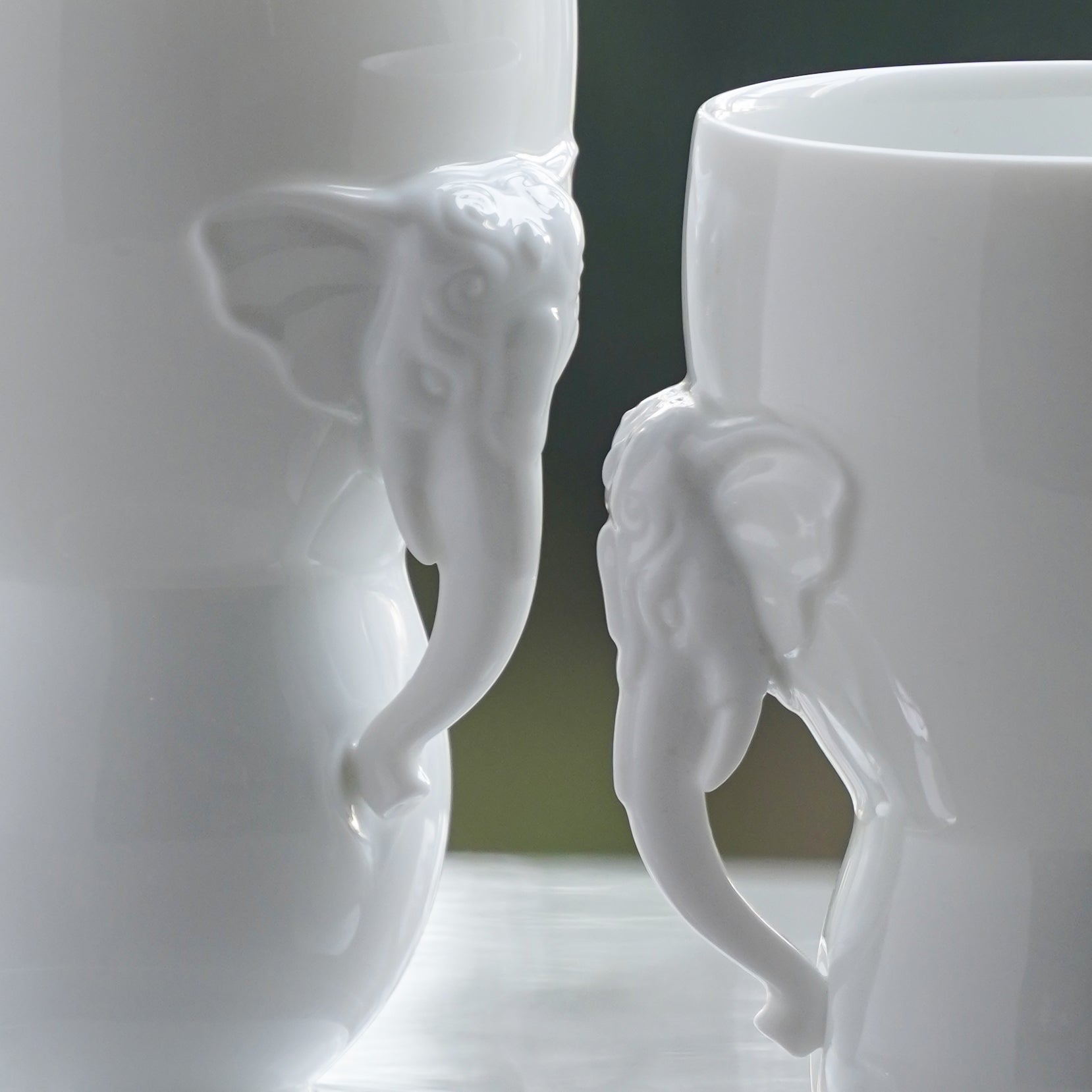
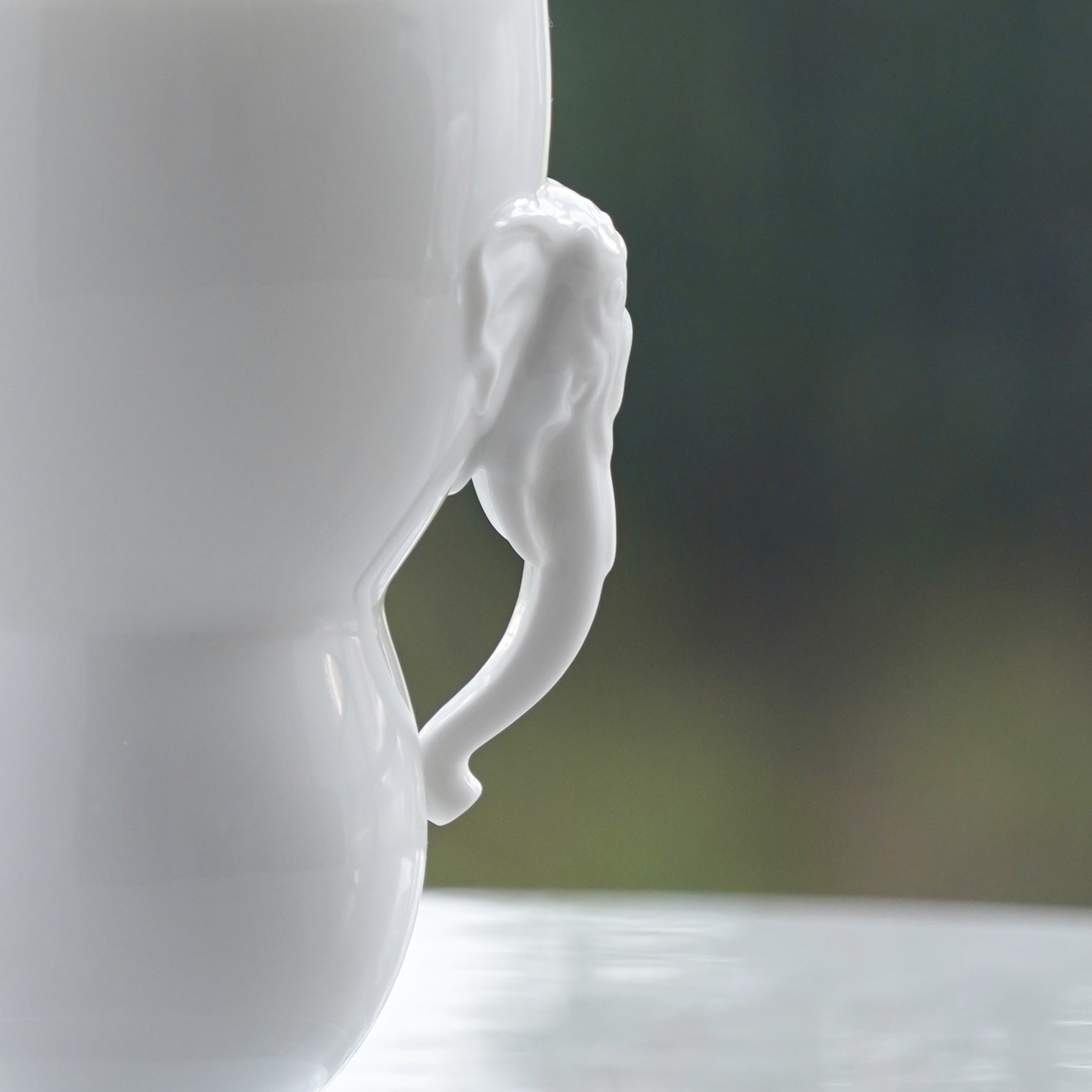
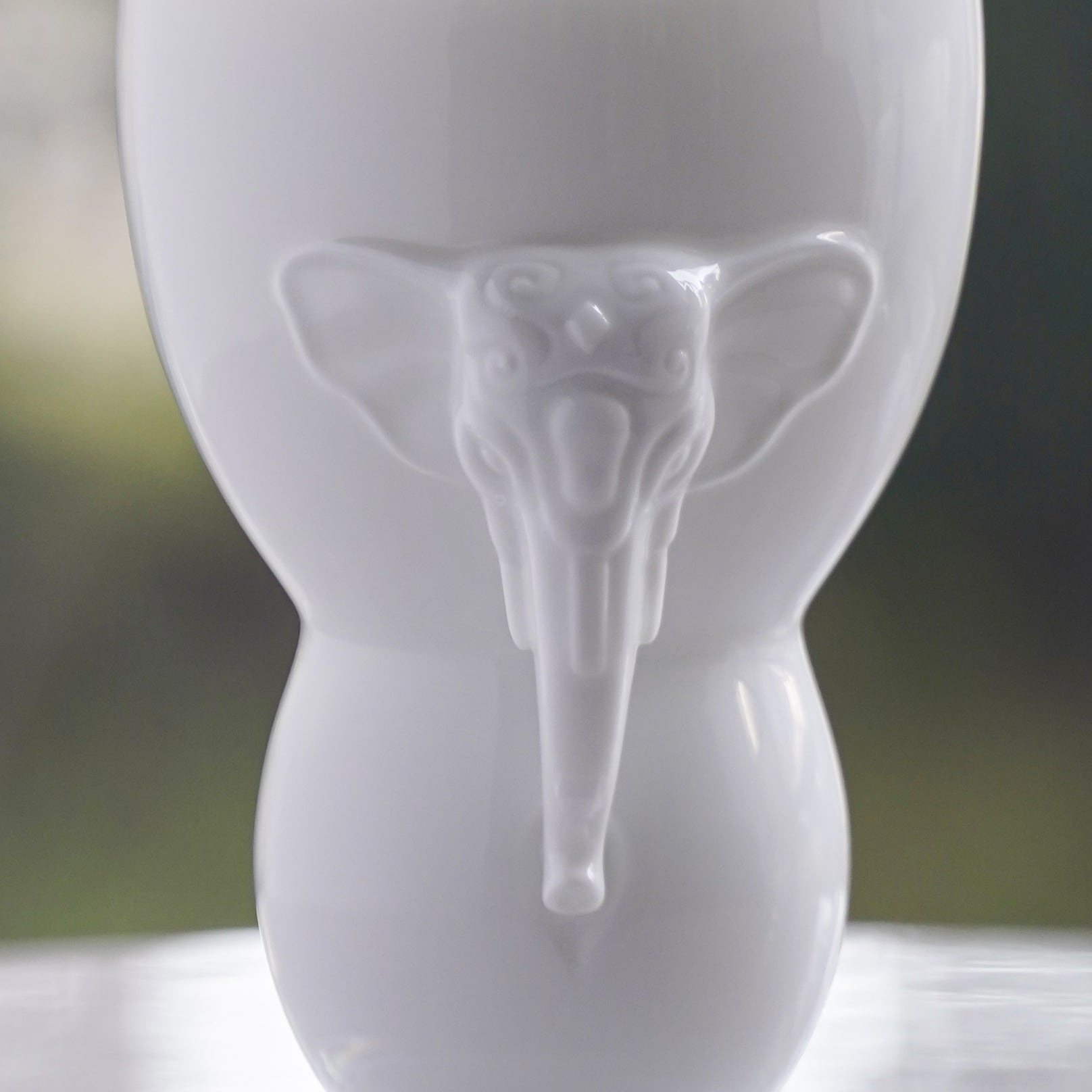
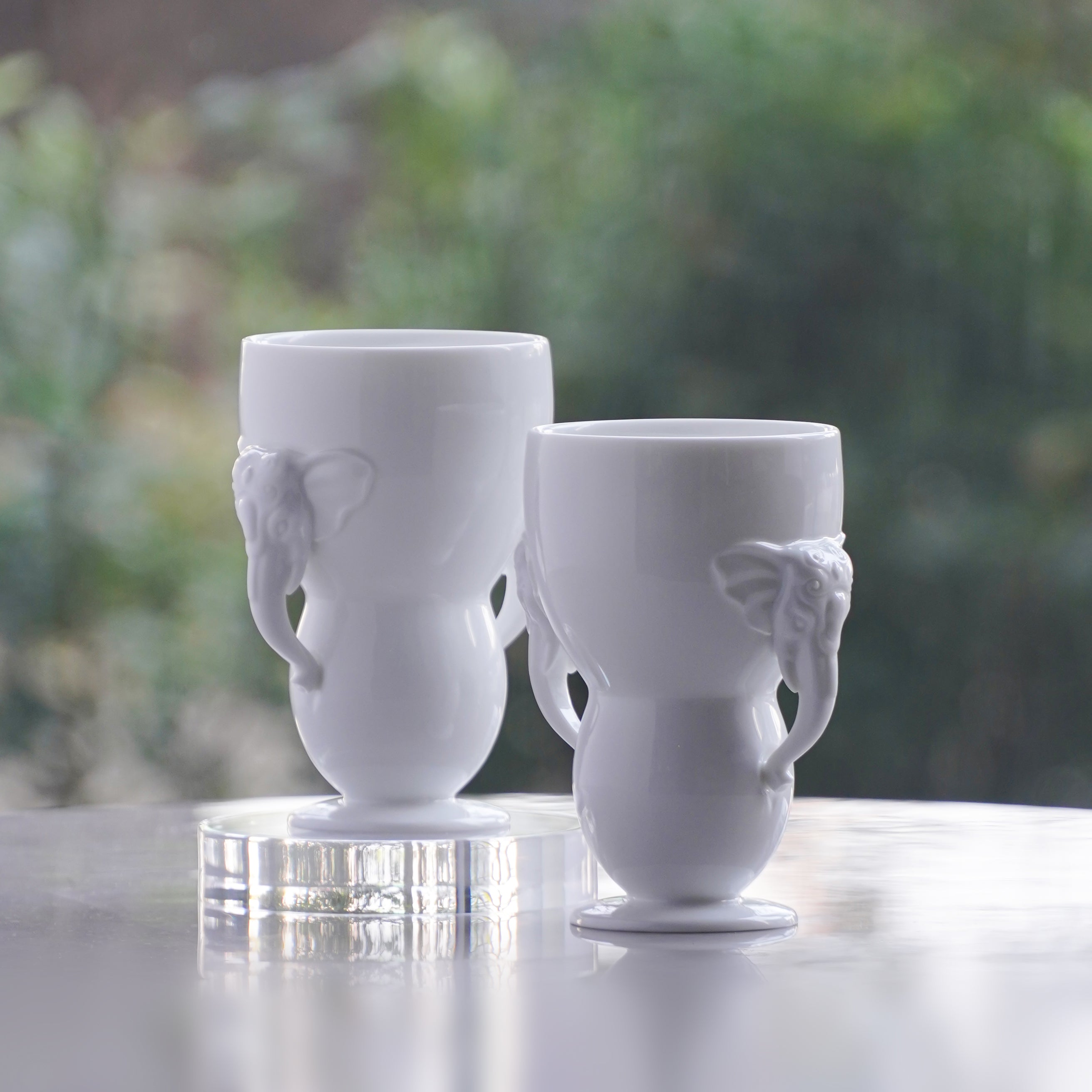
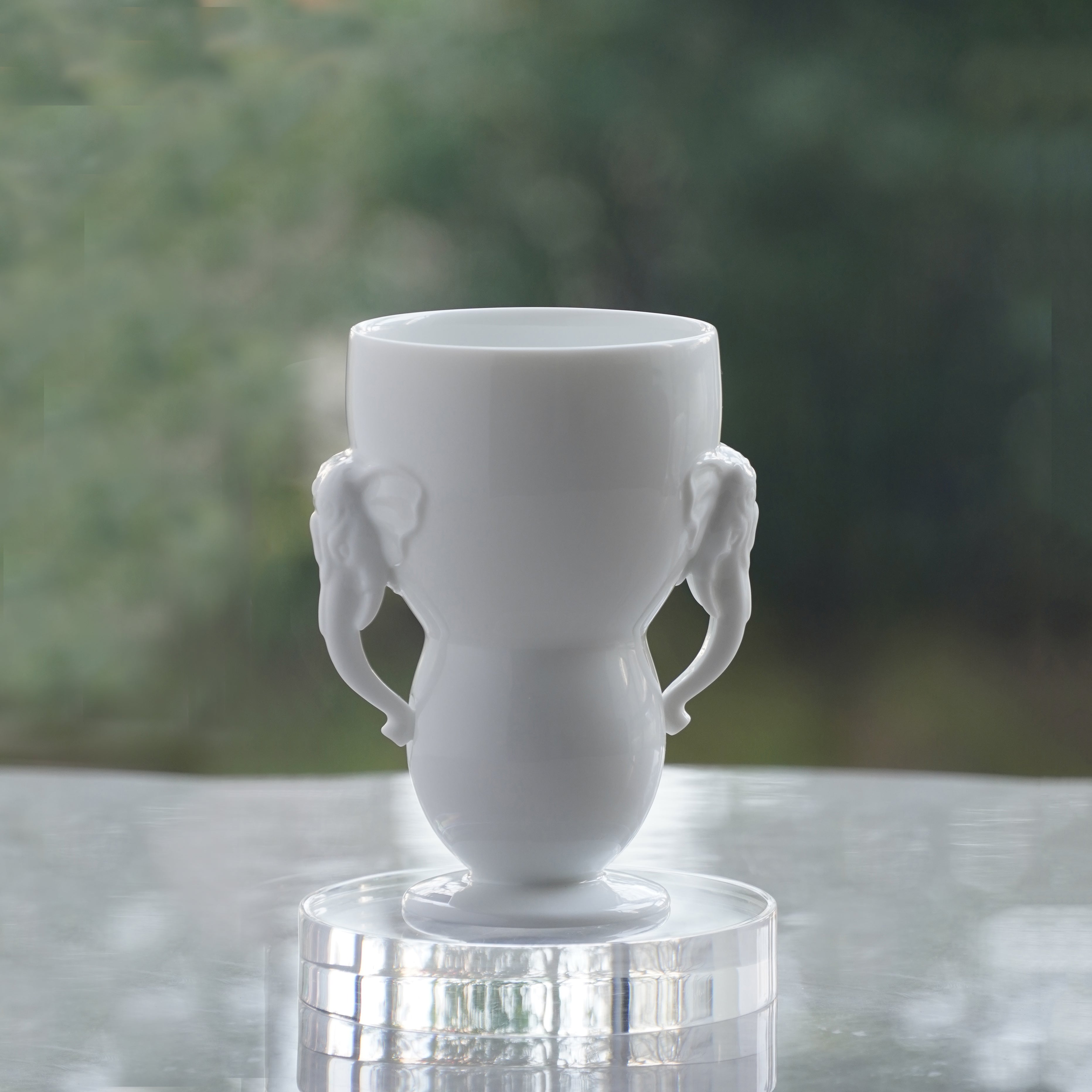
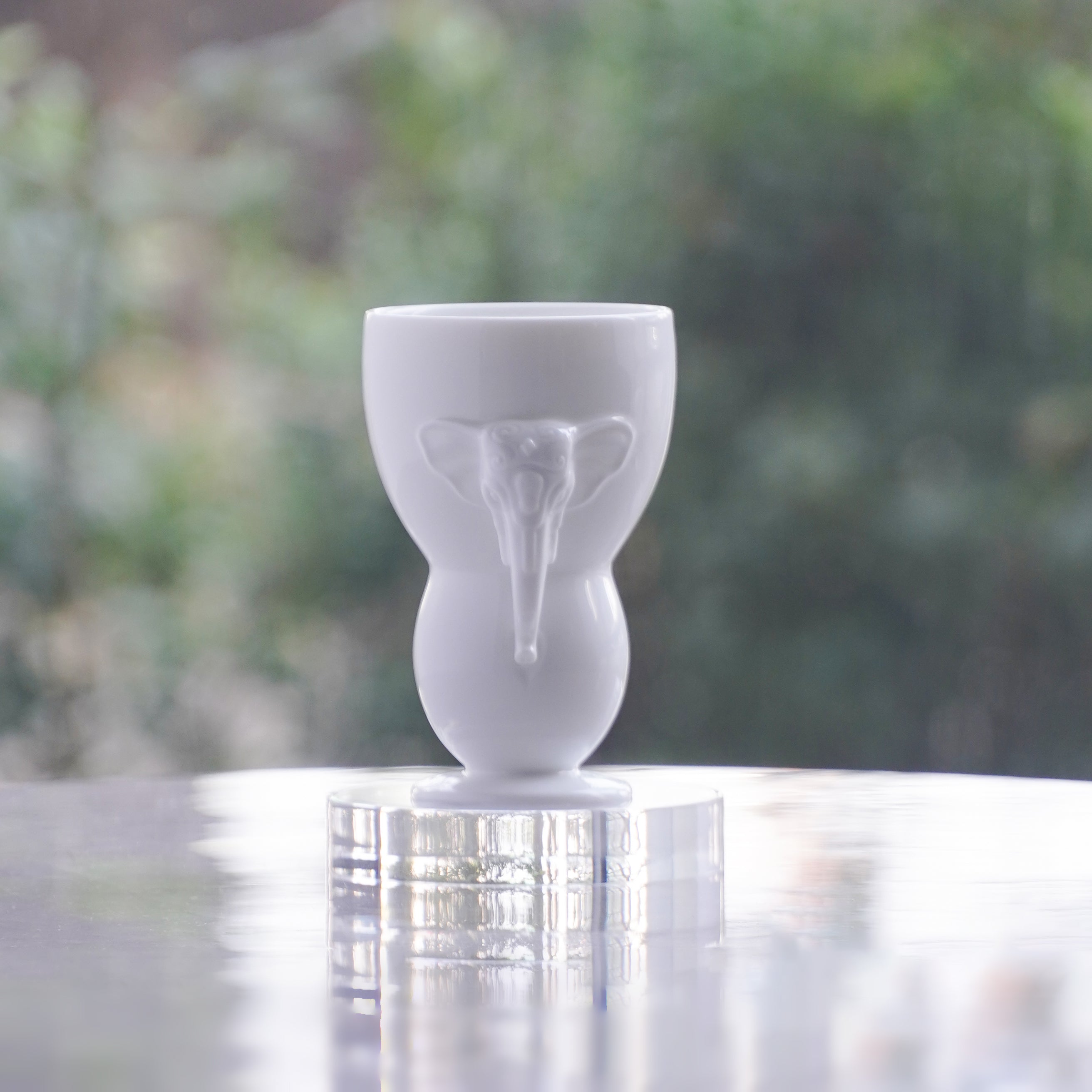
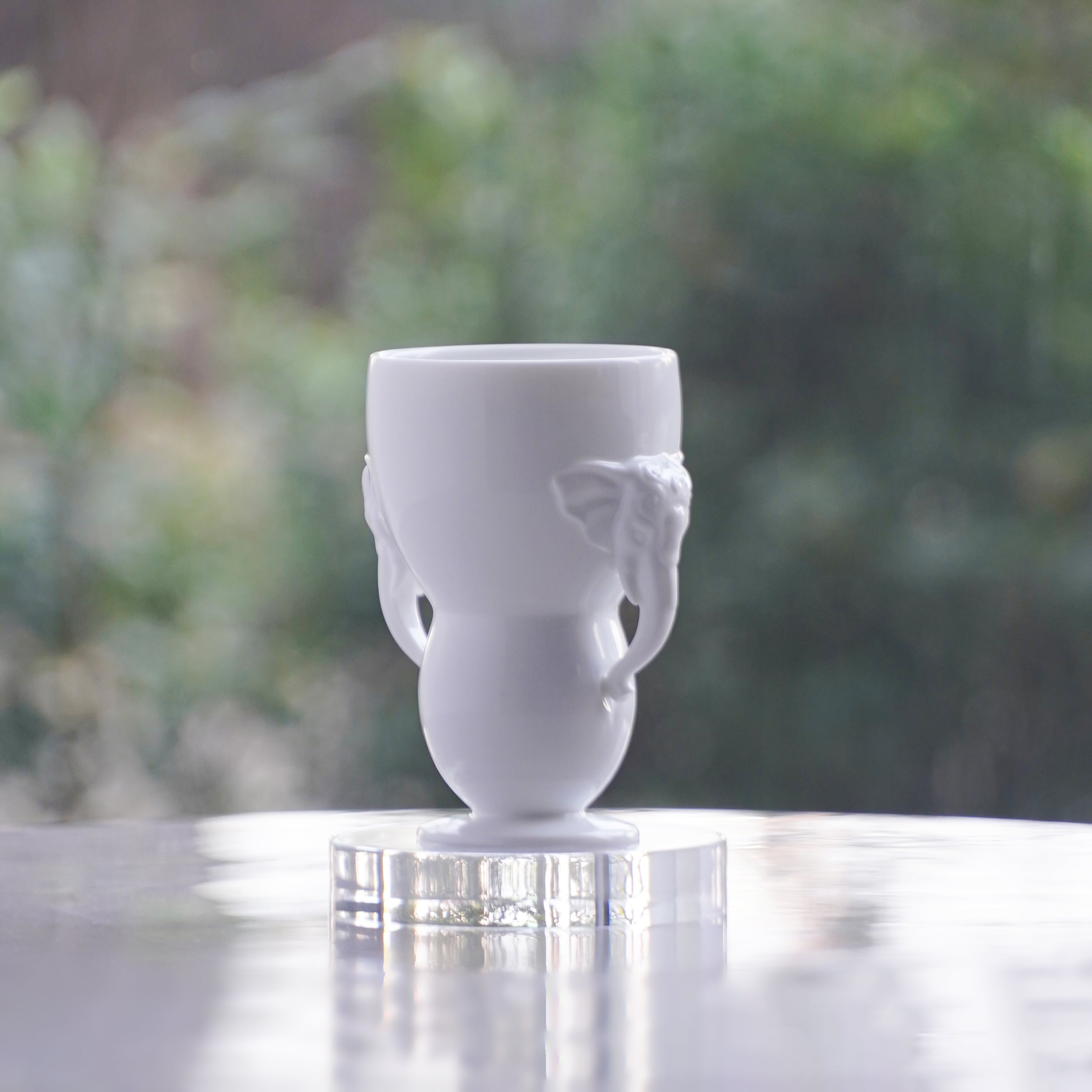
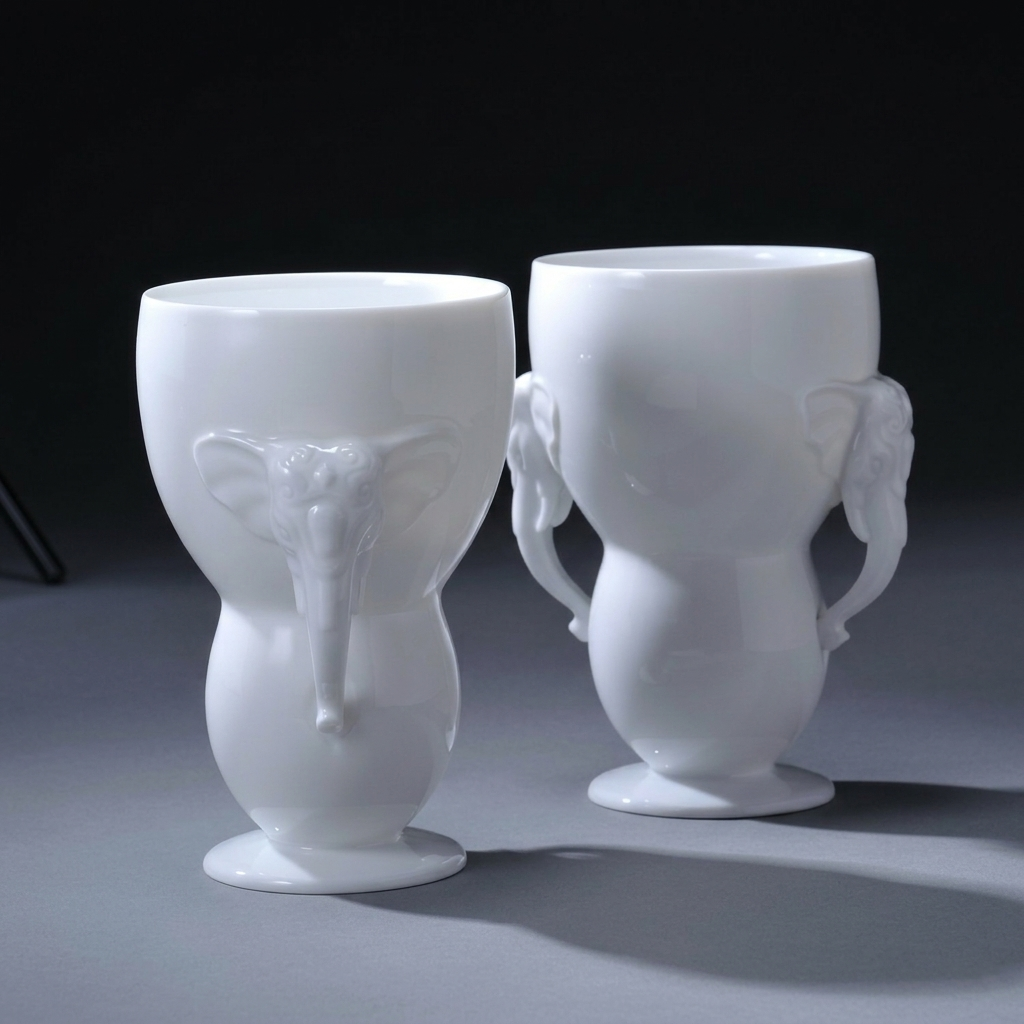
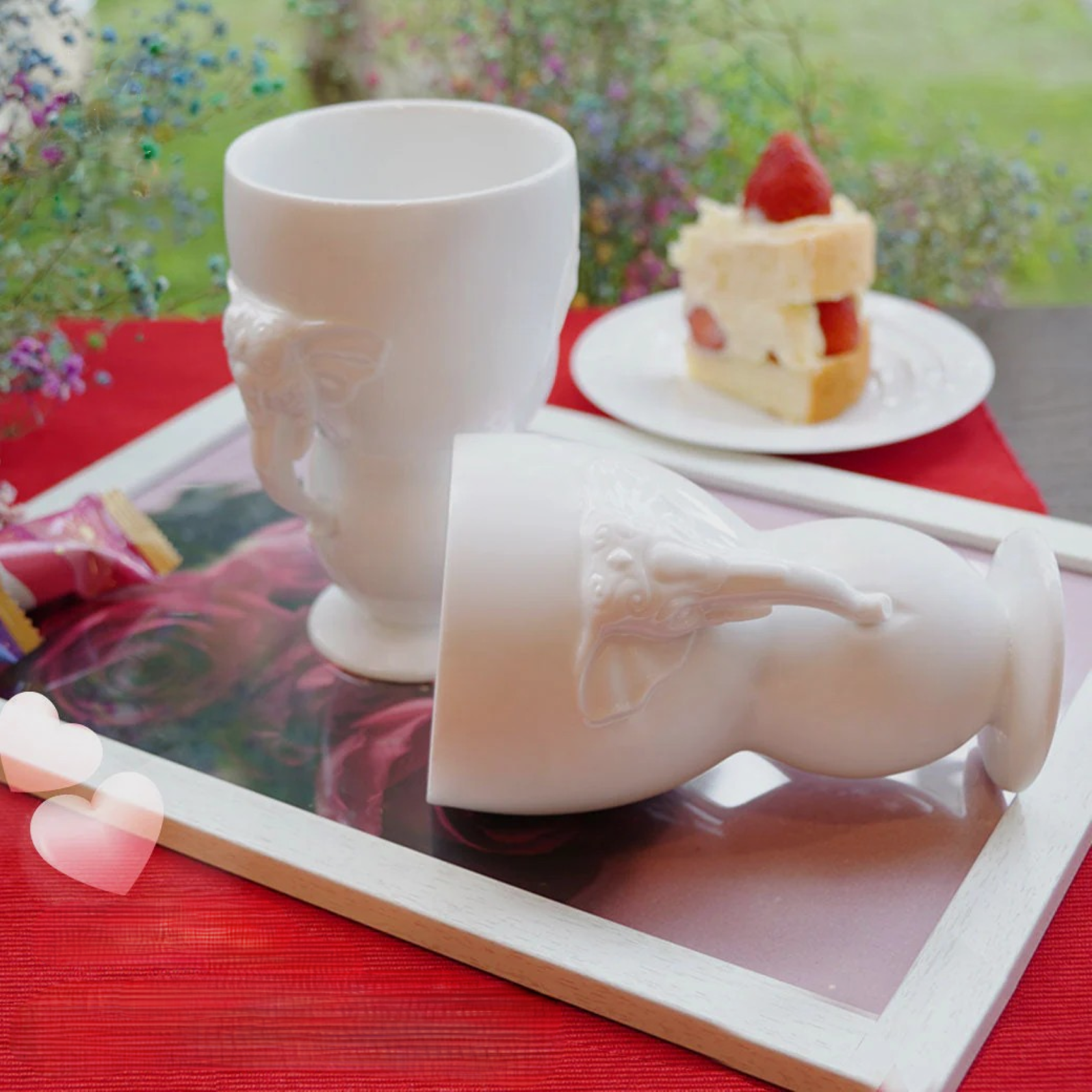
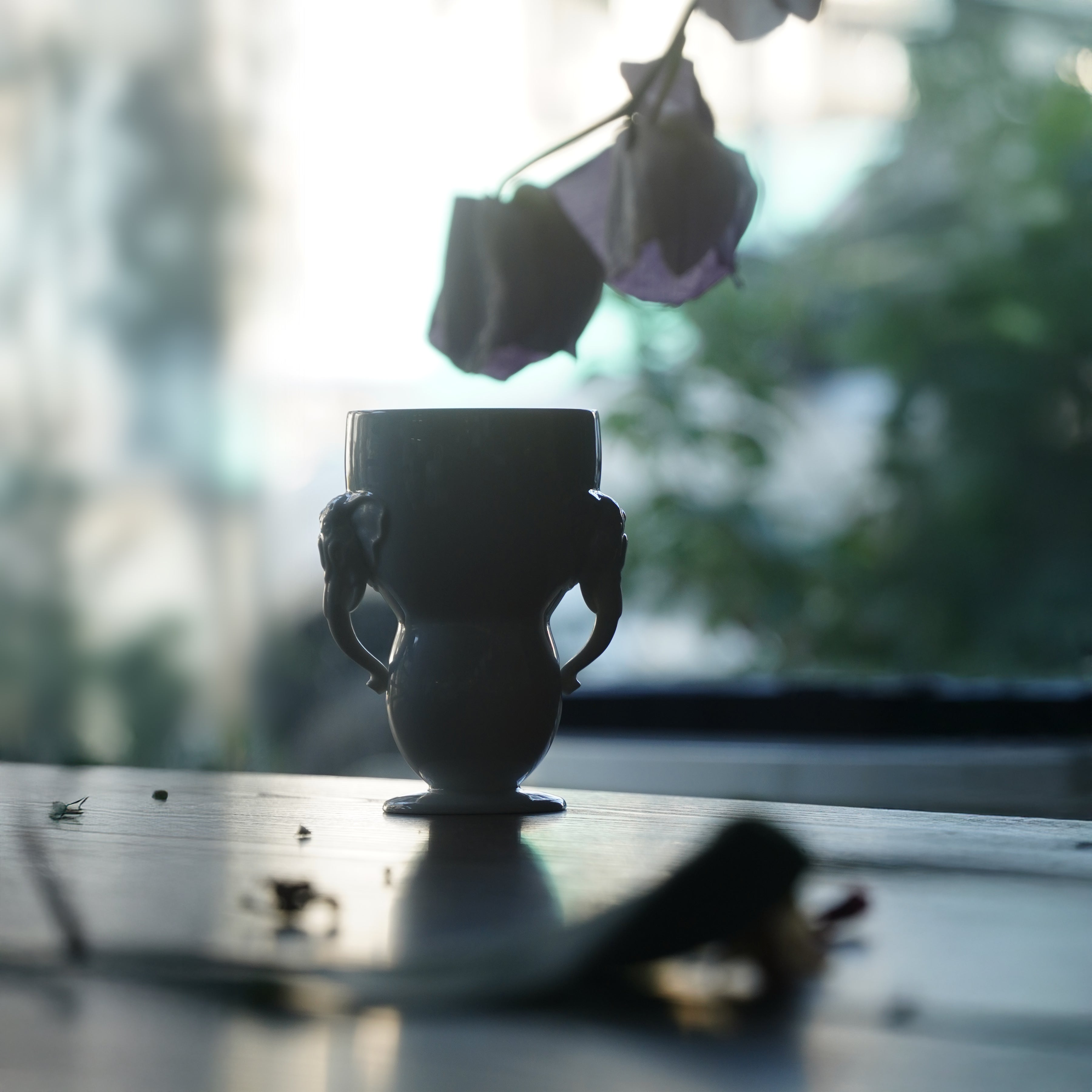
The elephant trunk as handle — two meanings in one form. The elephants grip the cup body with their trunks curved into handles. This carries two simultaneous meanings: the Chinese phrase wànxiàng yīxīn (萬象一新) — all things under heaven renewed — where xiàng (象) means both elephant and the myriad phenomena of the world; and the image of an elephant bathing, the trunk raised and pouring cool water, the summer sensation of something refreshing and alive. The handle is not decoration. It is the concept, made holdable.
The elephant carries a specific character: steady, curious, open. In Chinese cultural tradition, the elephant represents steadiness, good fortune, and considered movement through the world. Heinrich Wang gave these two elephants a contemporary quality — wěnjiàn bùzòu, jījí tǐyàn (穩健腳步,積極體驗) — steady steps, active engagement. Two elephants, one on each side, symmetrical and mutually supportive: the posture of friendship.
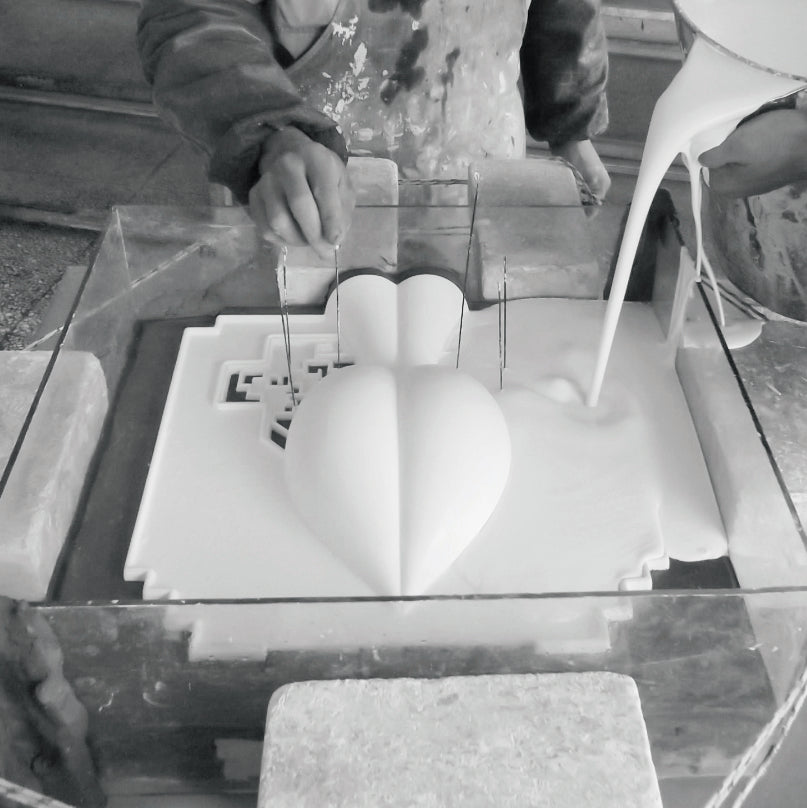
Attaching the elephants is the most demanding step in making this cup. The two elephant forms are added to the cup body as separate pieces, joined at precise positions — they must sit at exactly the same height on both sides, with no deviation. The elephant's body partially overlaps the main cup form, so the join must preserve the integrity of the complete elephant figure. Every finished cup with two elephants in true bilateral symmetry represents careful, unhurried work.