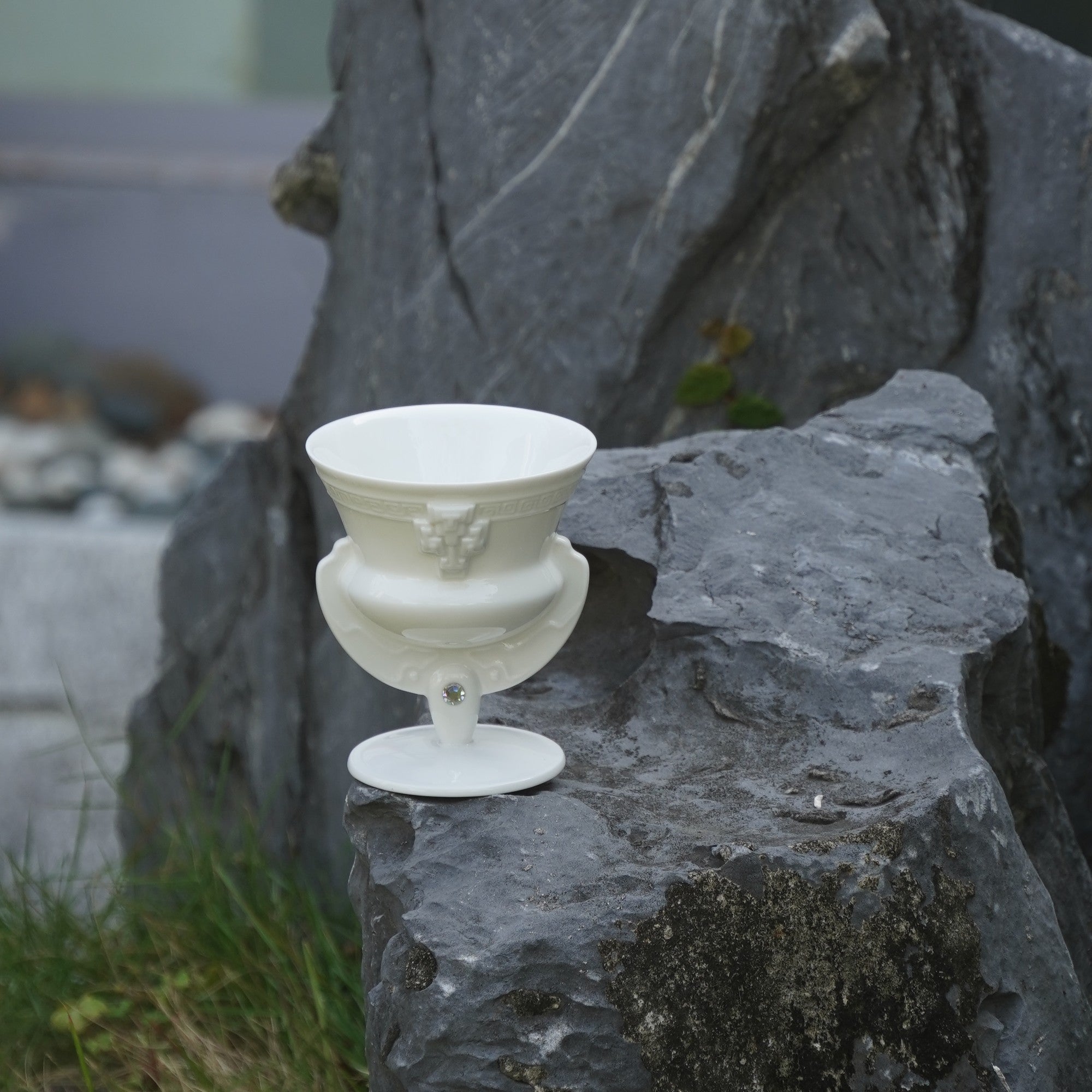
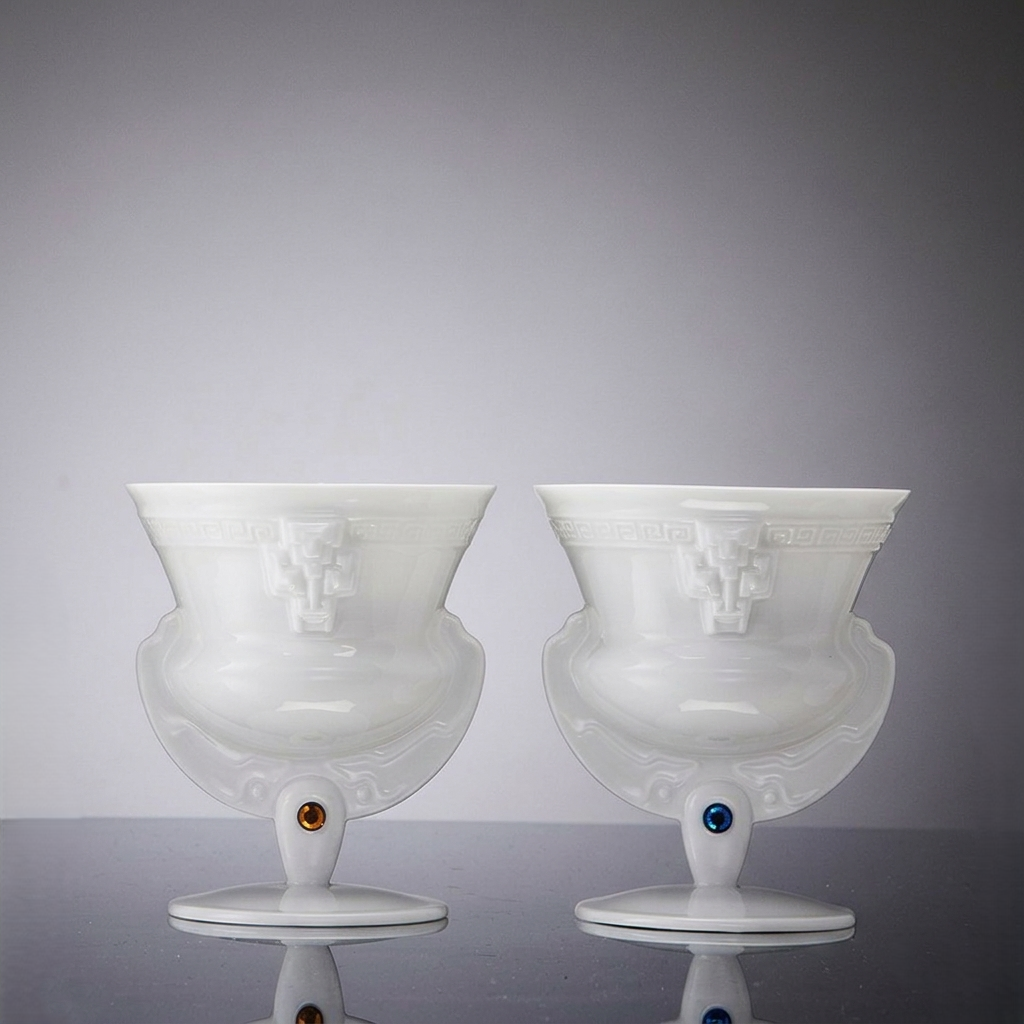
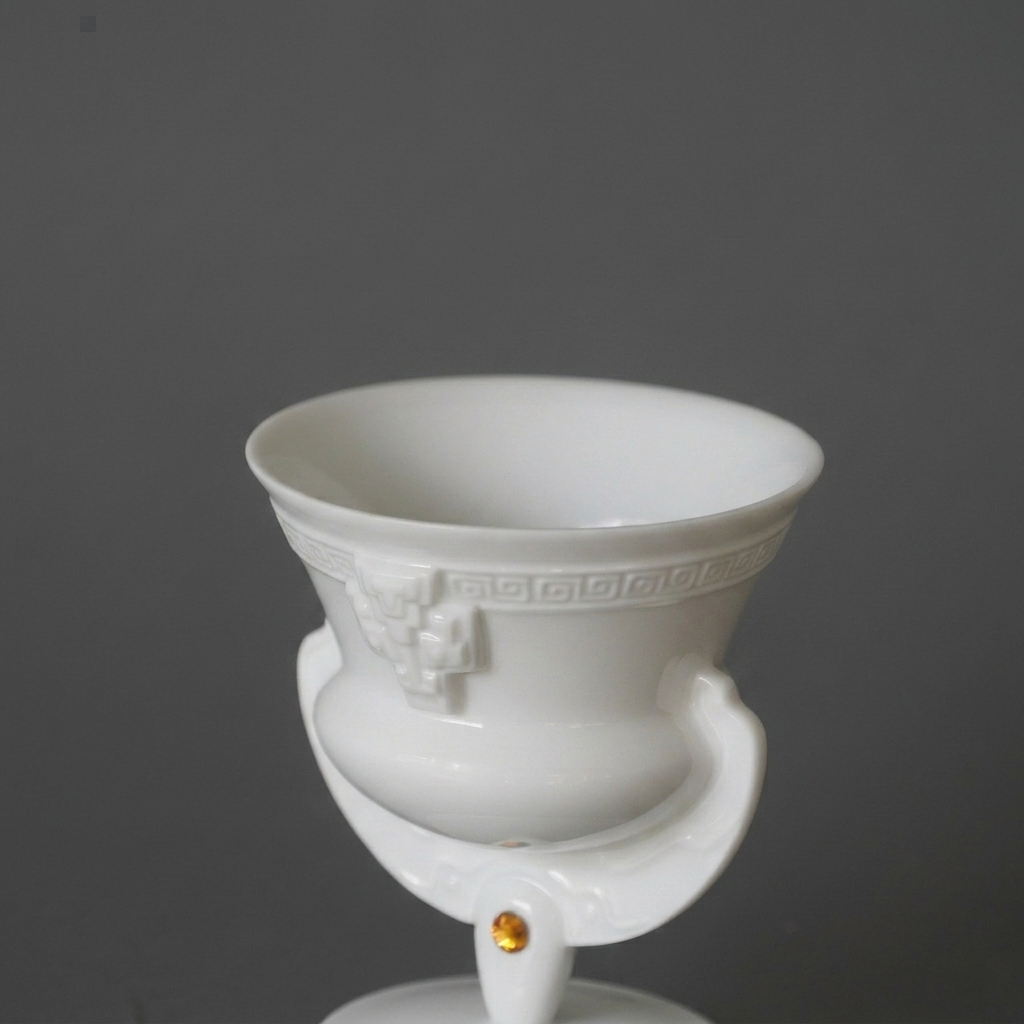
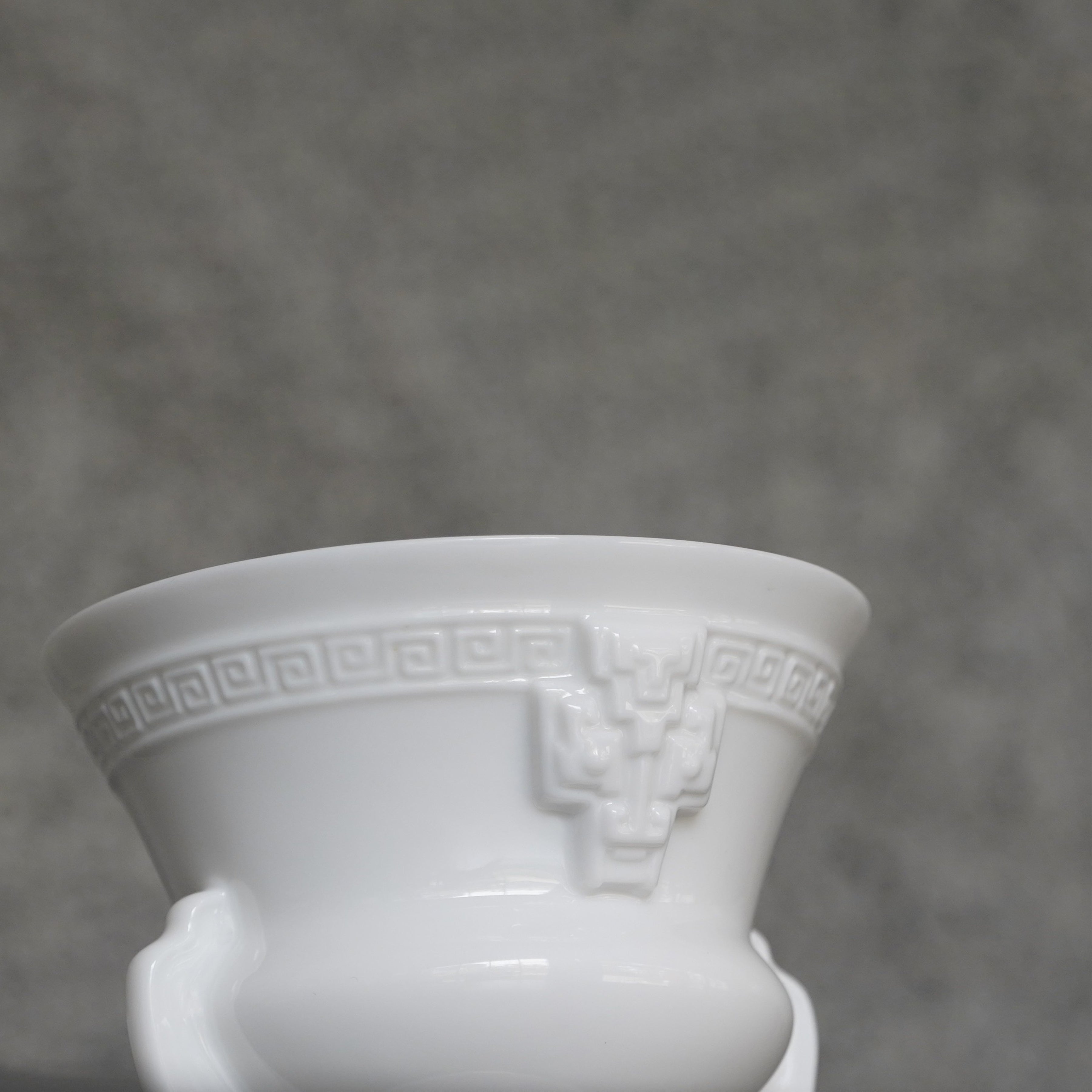
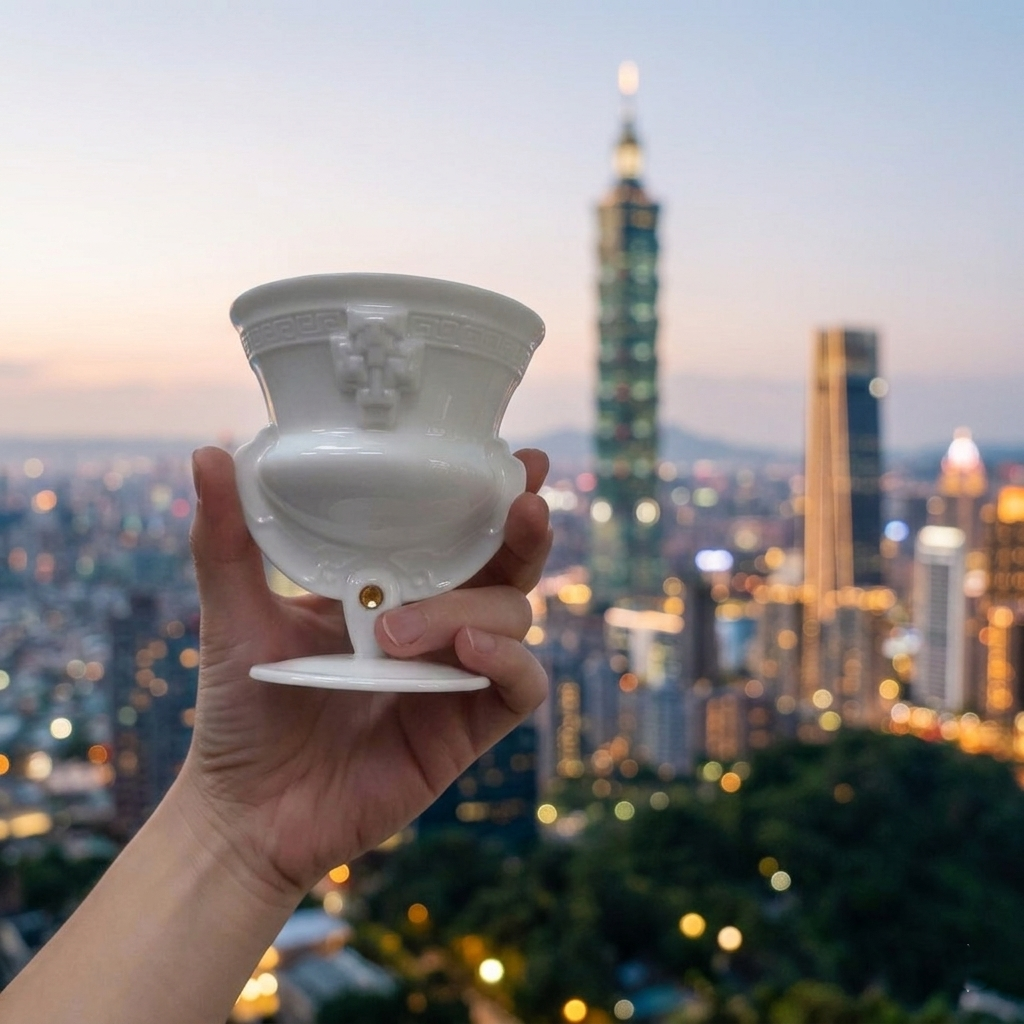
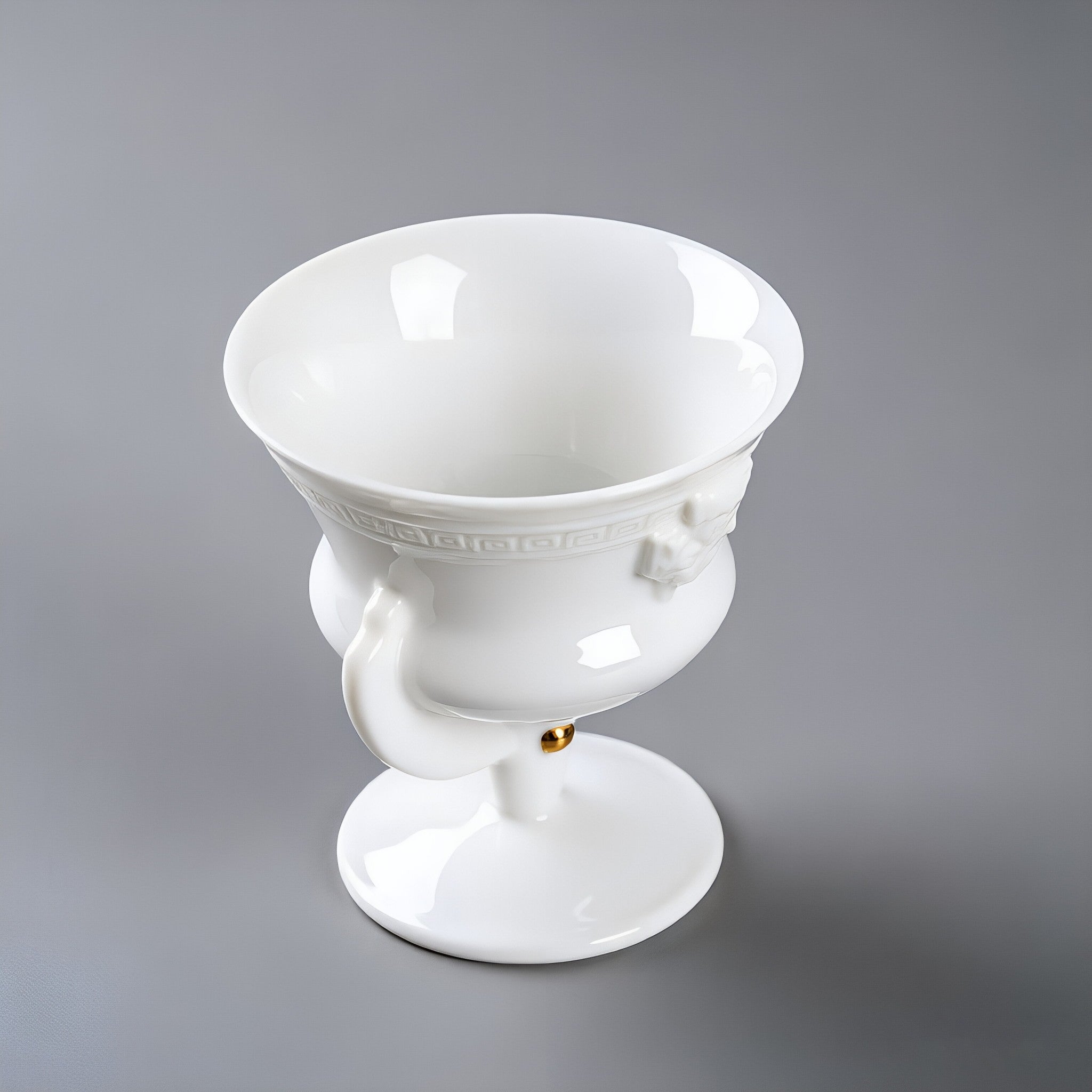
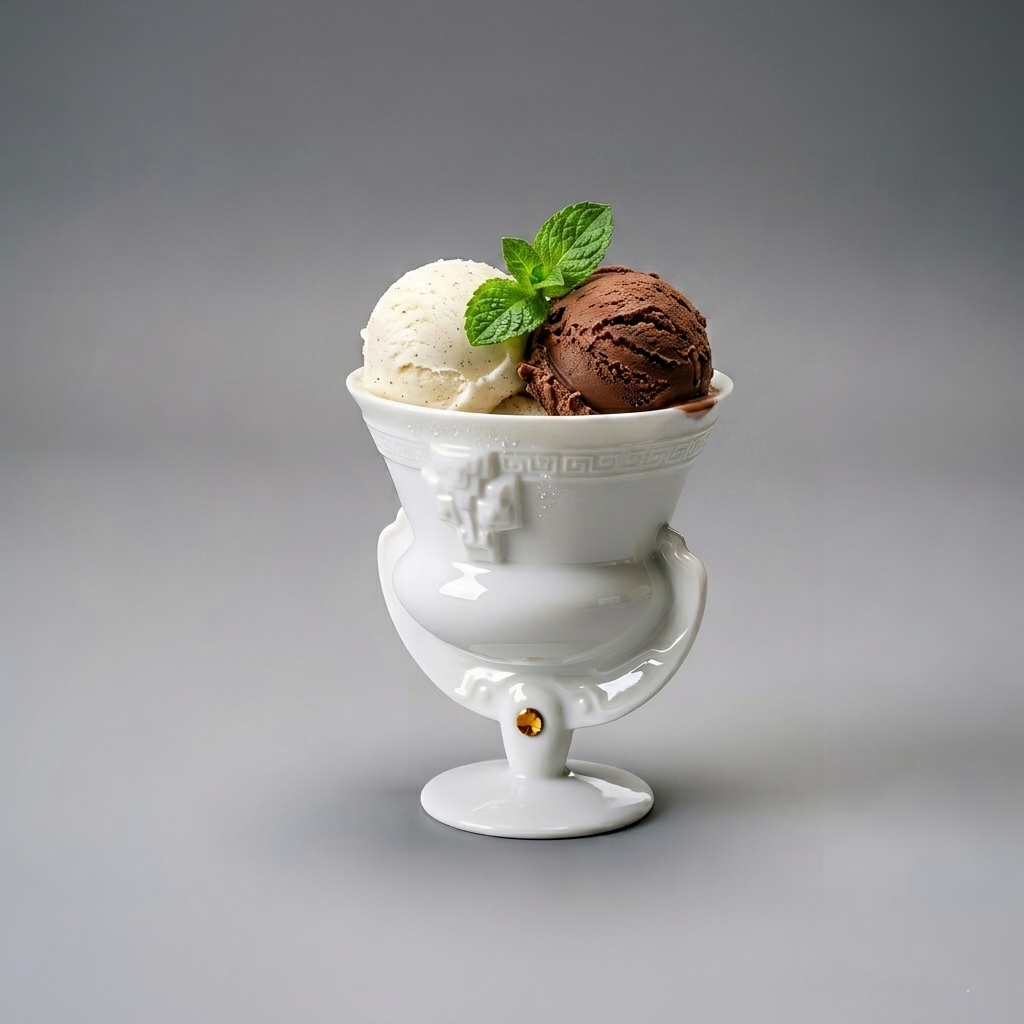
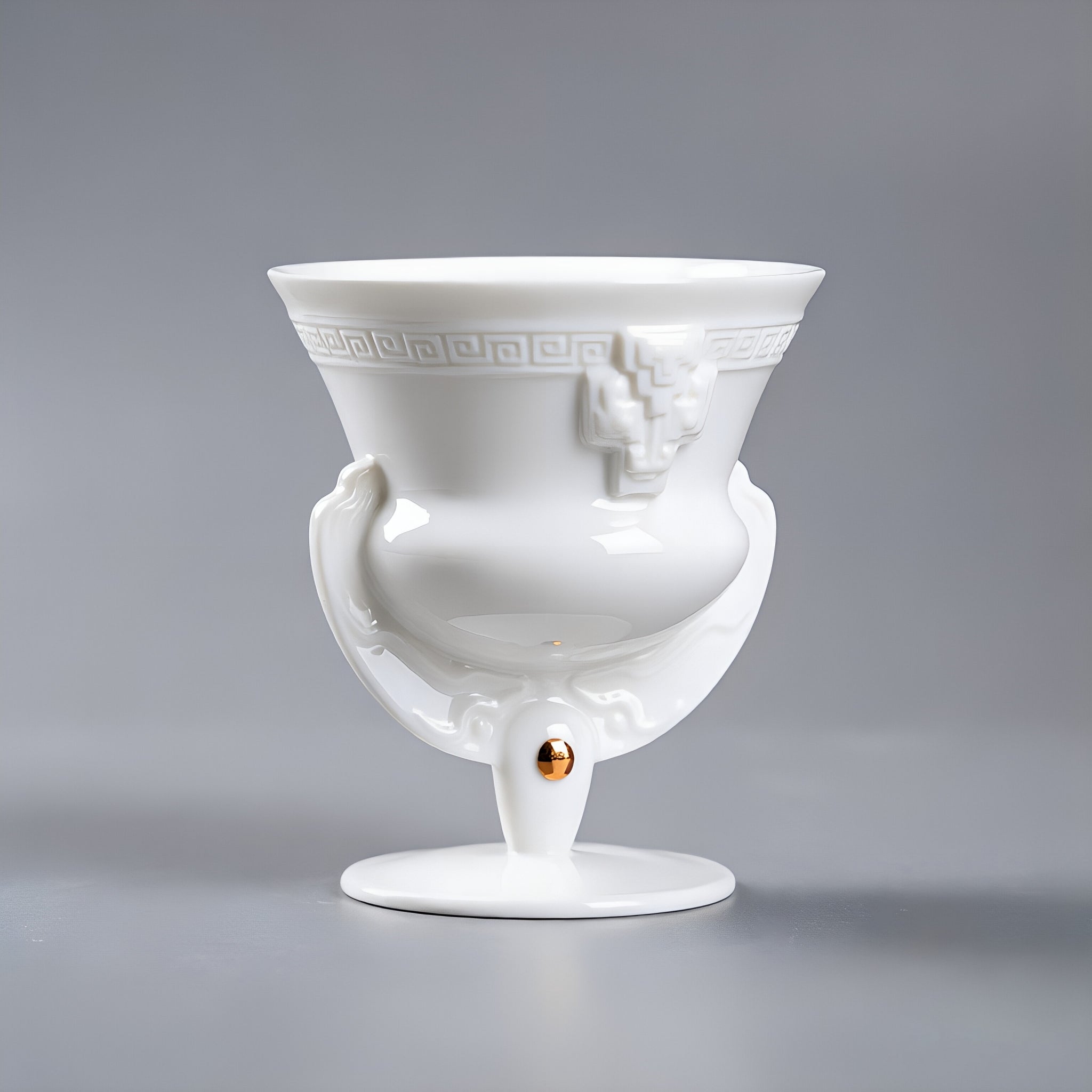
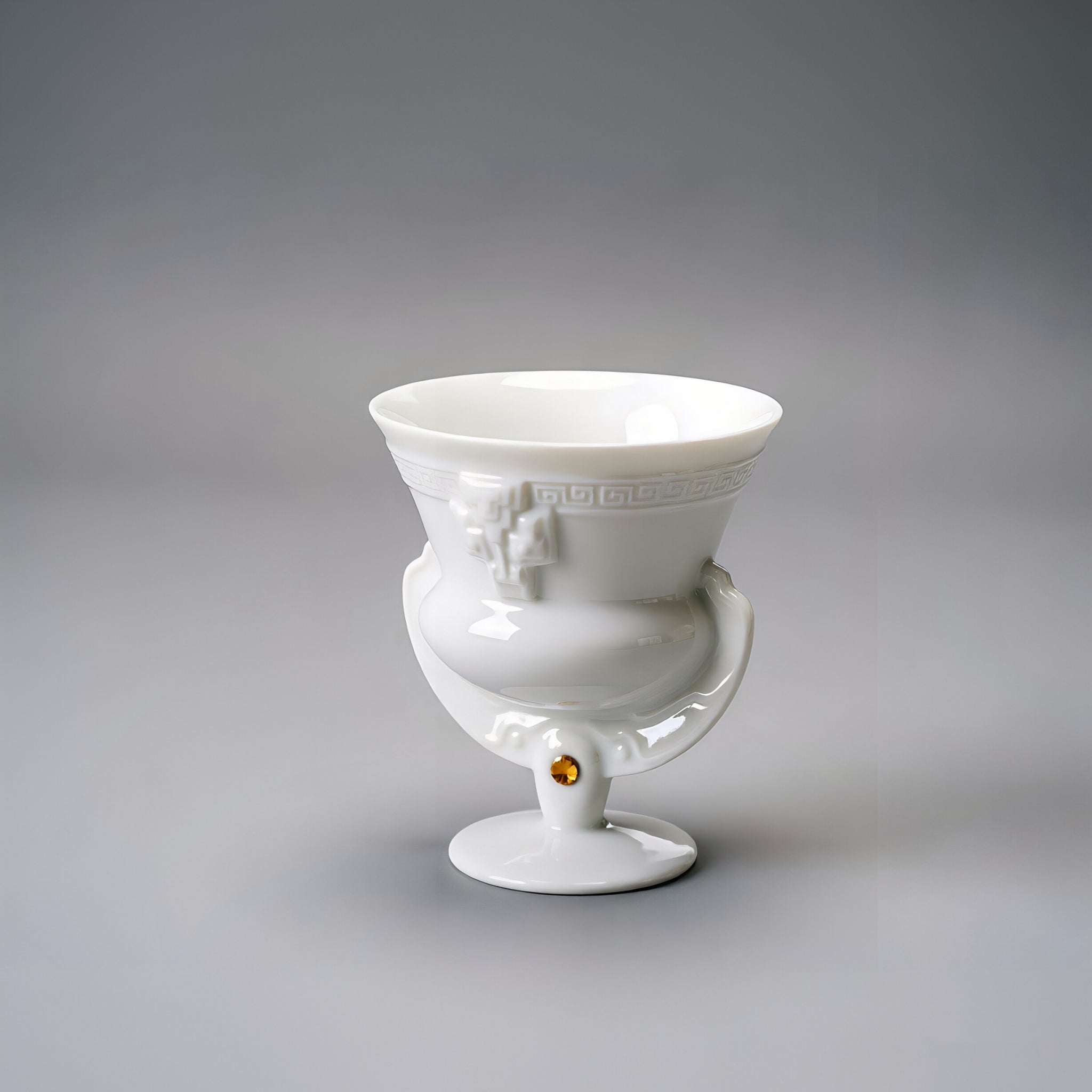
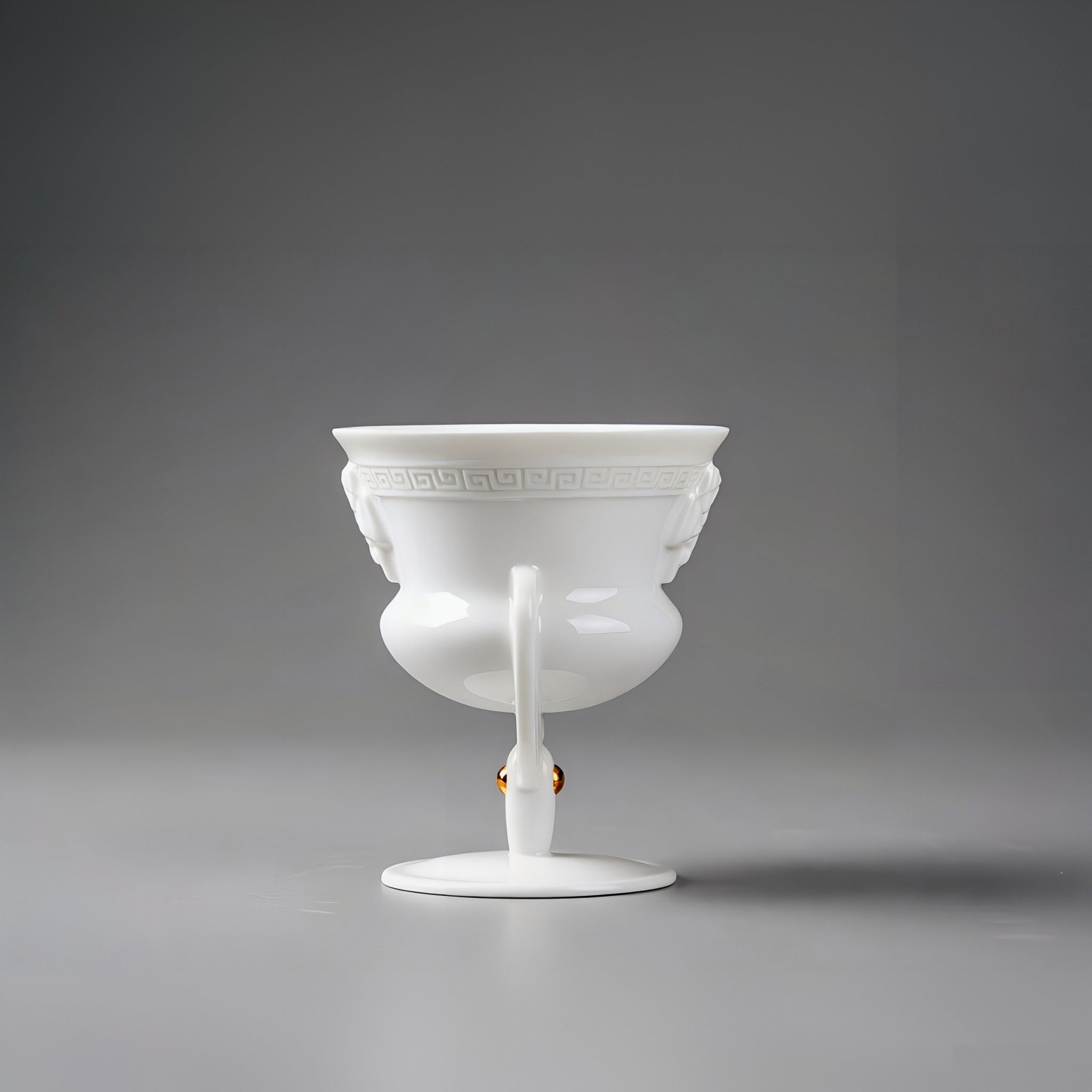
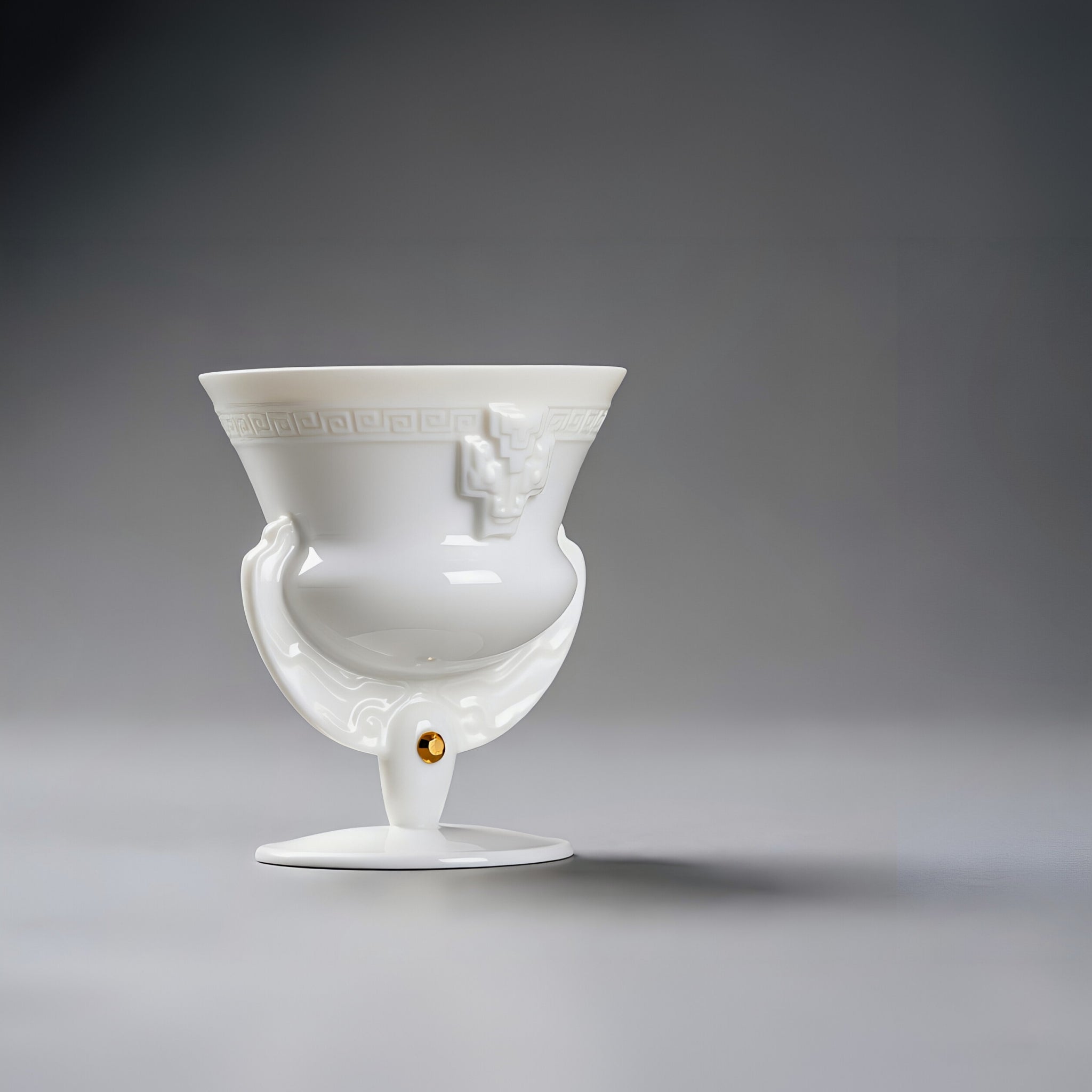
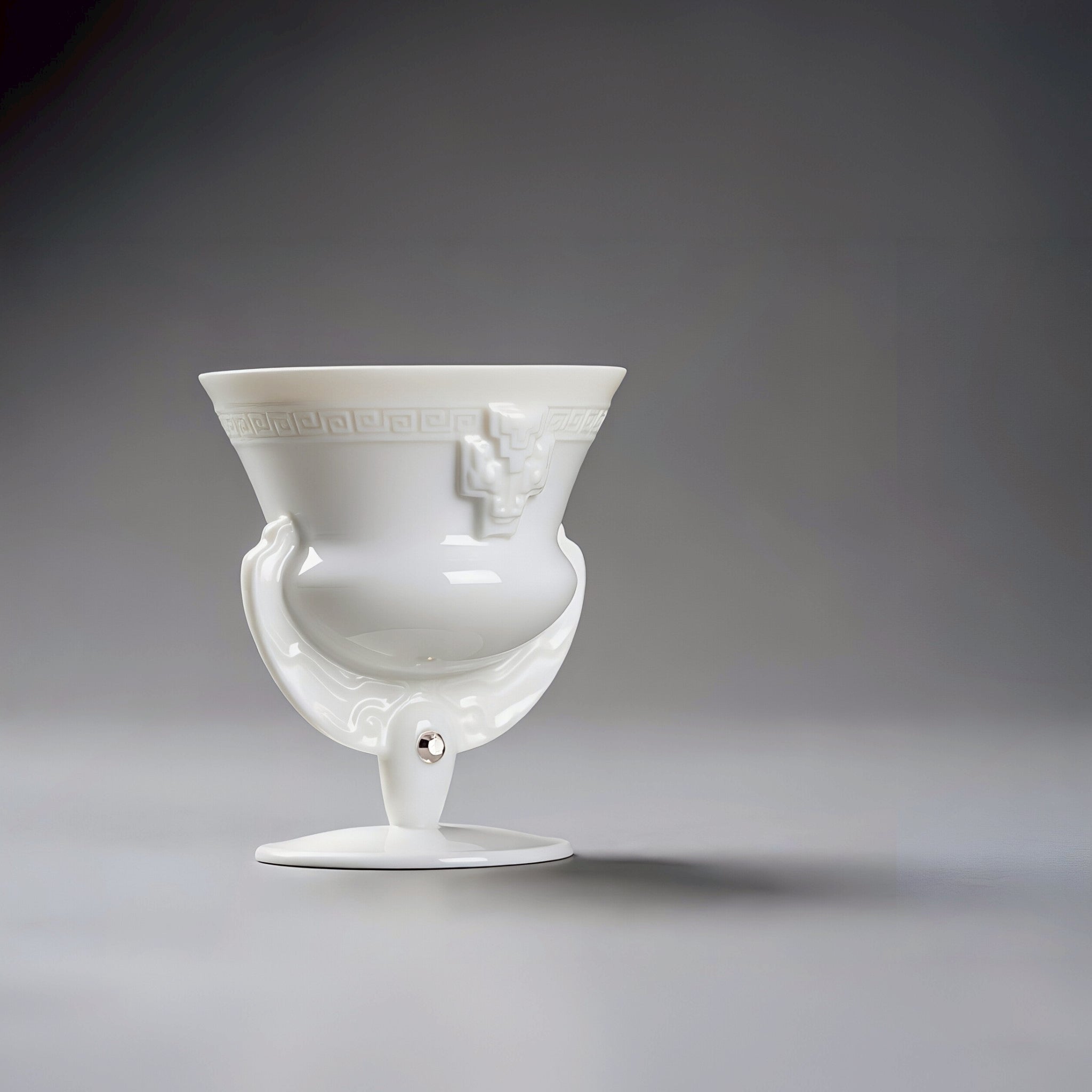
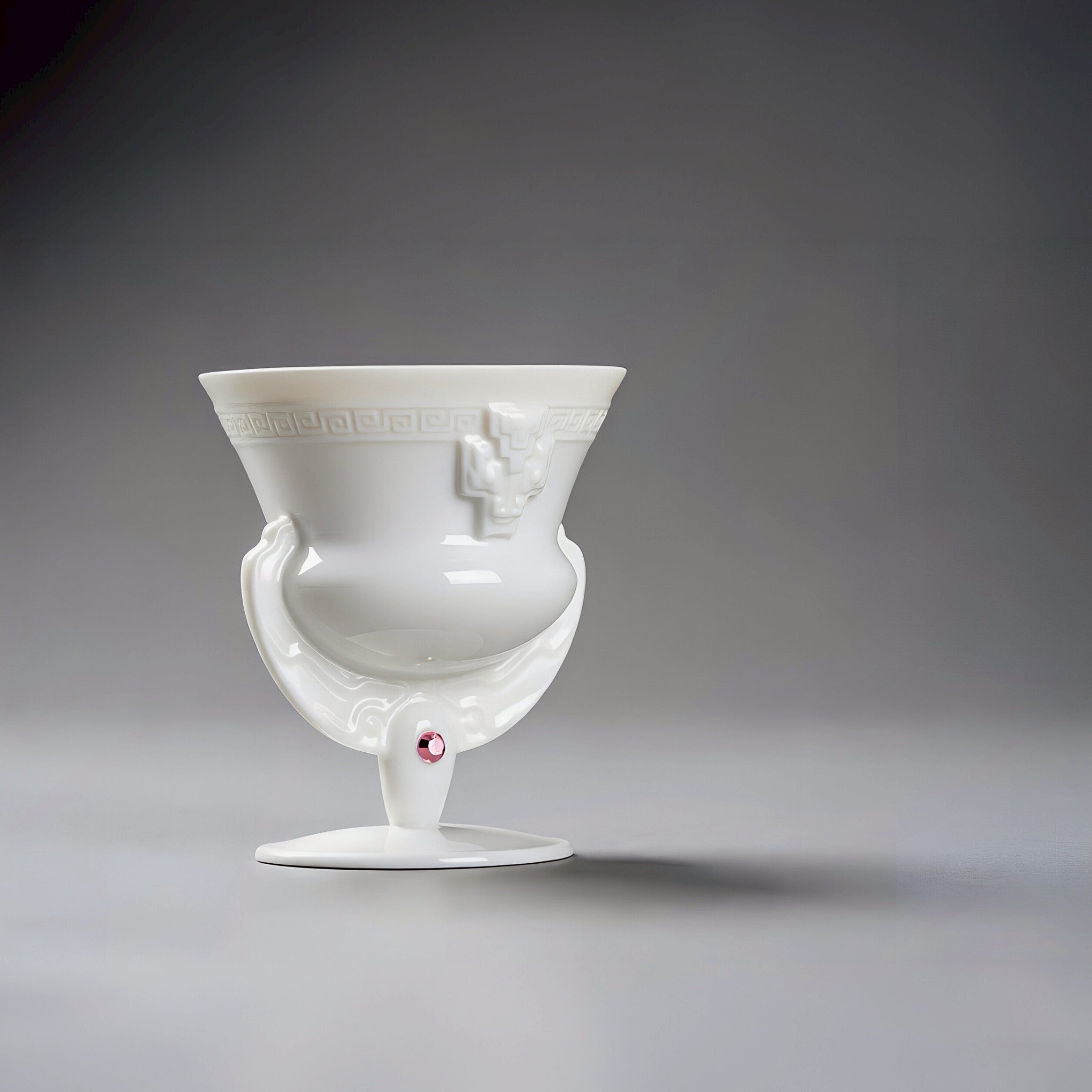
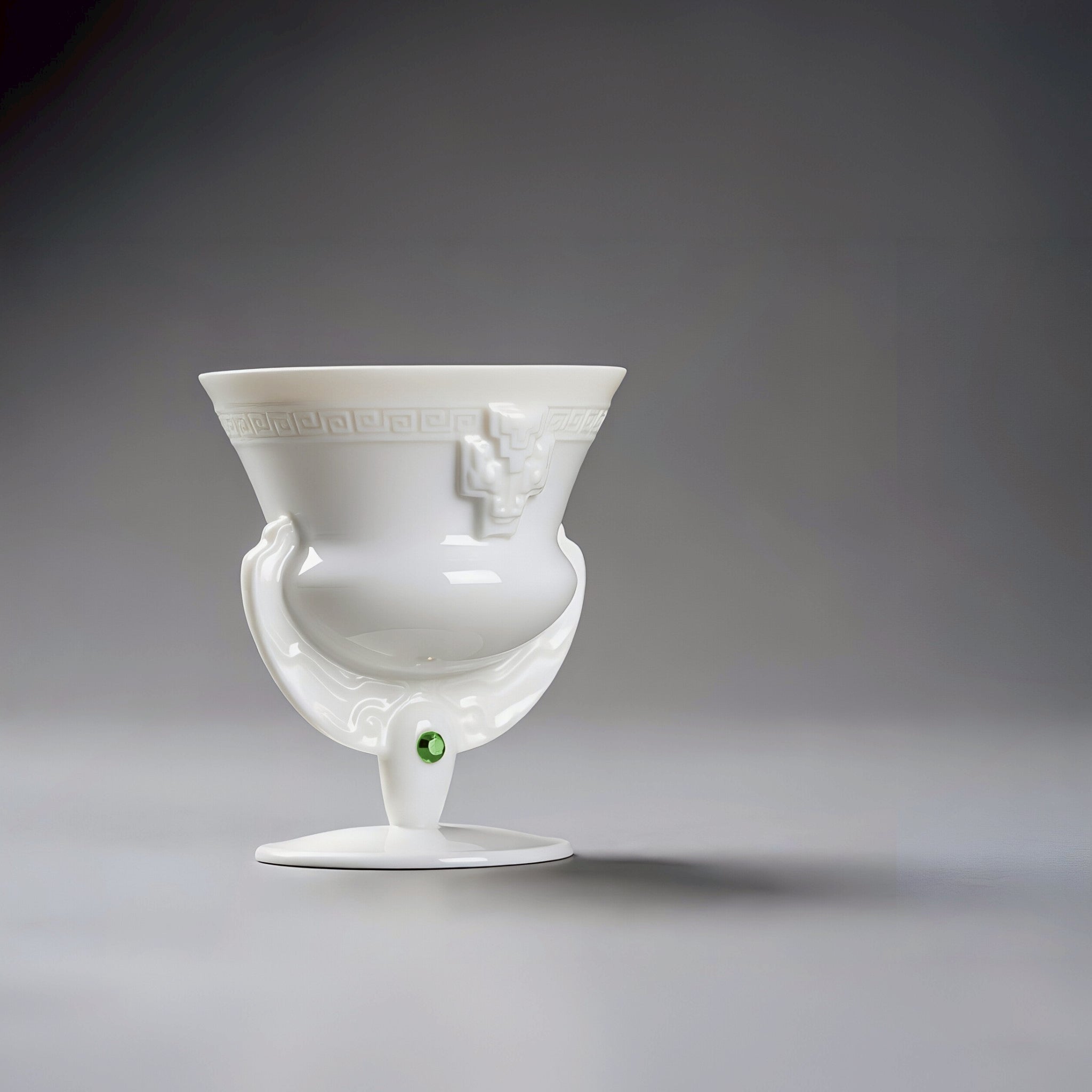
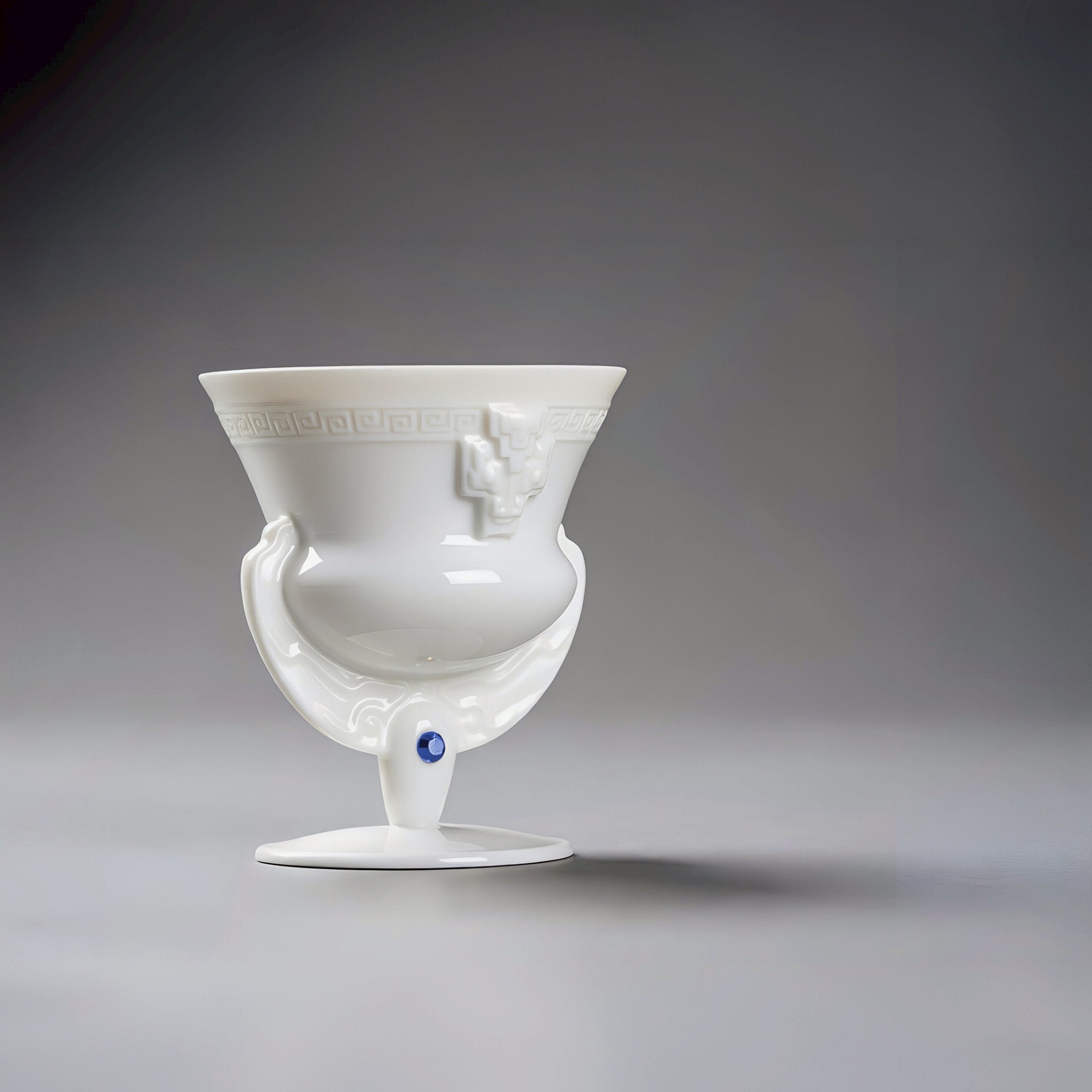
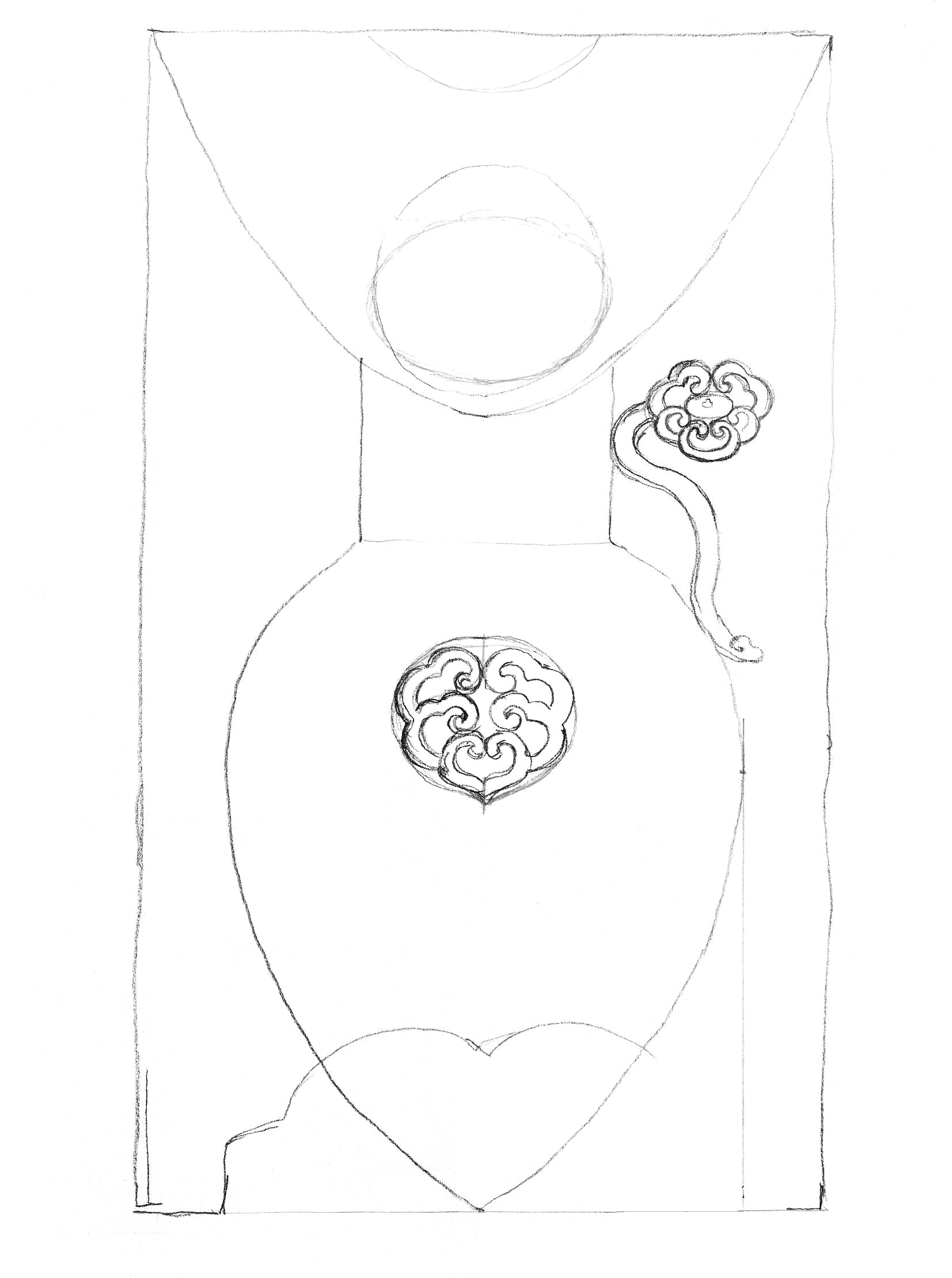
The fret pattern is reverence for Chinese cultural heritage, not decoration. The hui (回) fret pattern on the cup body draws from the taotie motifs of Shang and Zhou dynasty bronze vessels — symbols of unbroken continuity, of cycles that return to their beginning. To empty the cup is to start again. Every sip is a gesture of respect toward history.
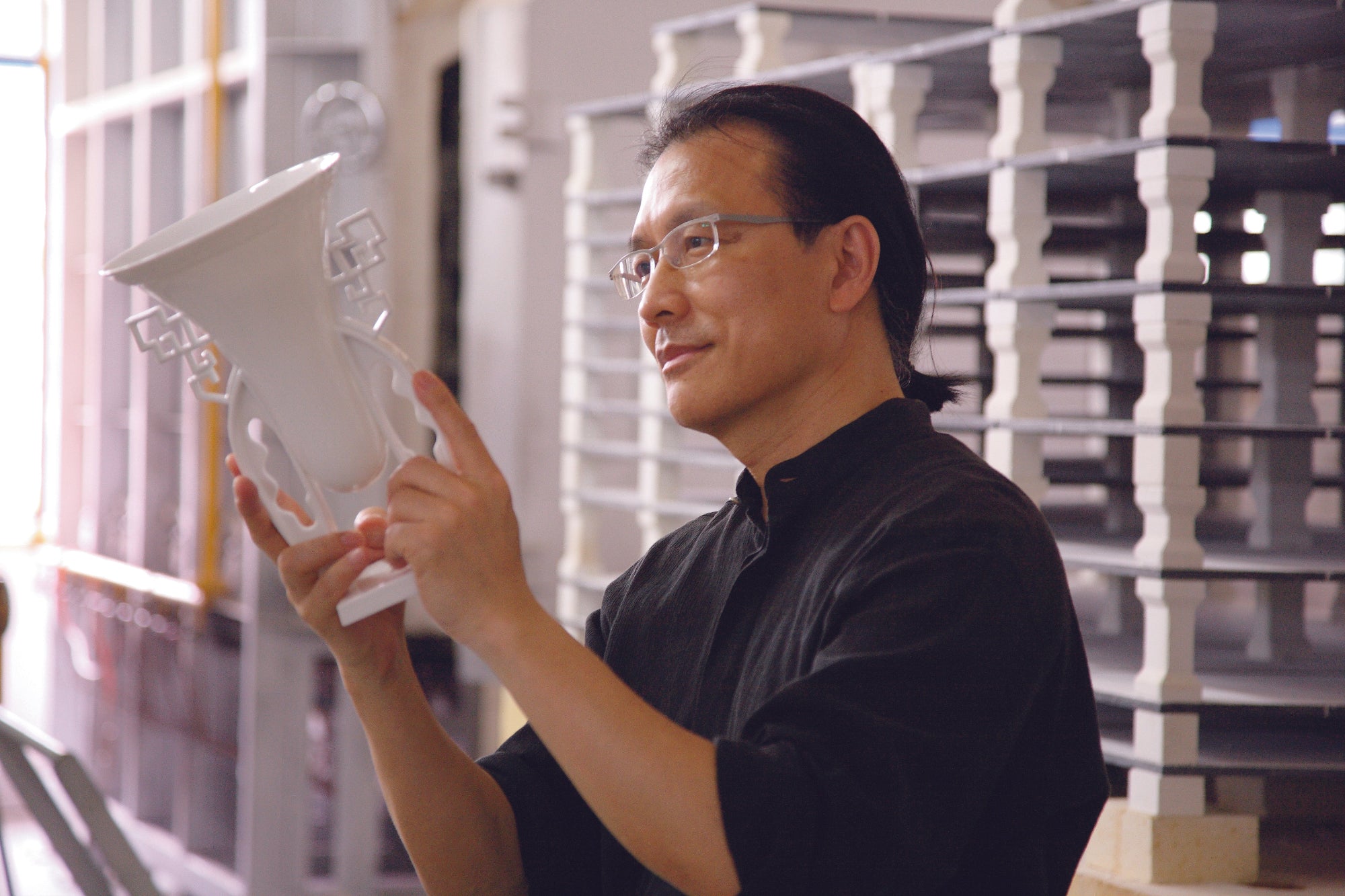
The beast heads: nobility, steadiness, ambition. Two beast heads flank the cup body — one on each side. Heinrich Wang assigned them three meanings: nobility, through the authority and gravitas of the beast's bearing; steadiness, through the visual tension of the two heads in bilateral symmetry; and ambition, through the heads' outward-facing posture — the refusal to settle, the drive to keep moving forward. All three together: the posture of a person who drinks with allies and builds something that matters.
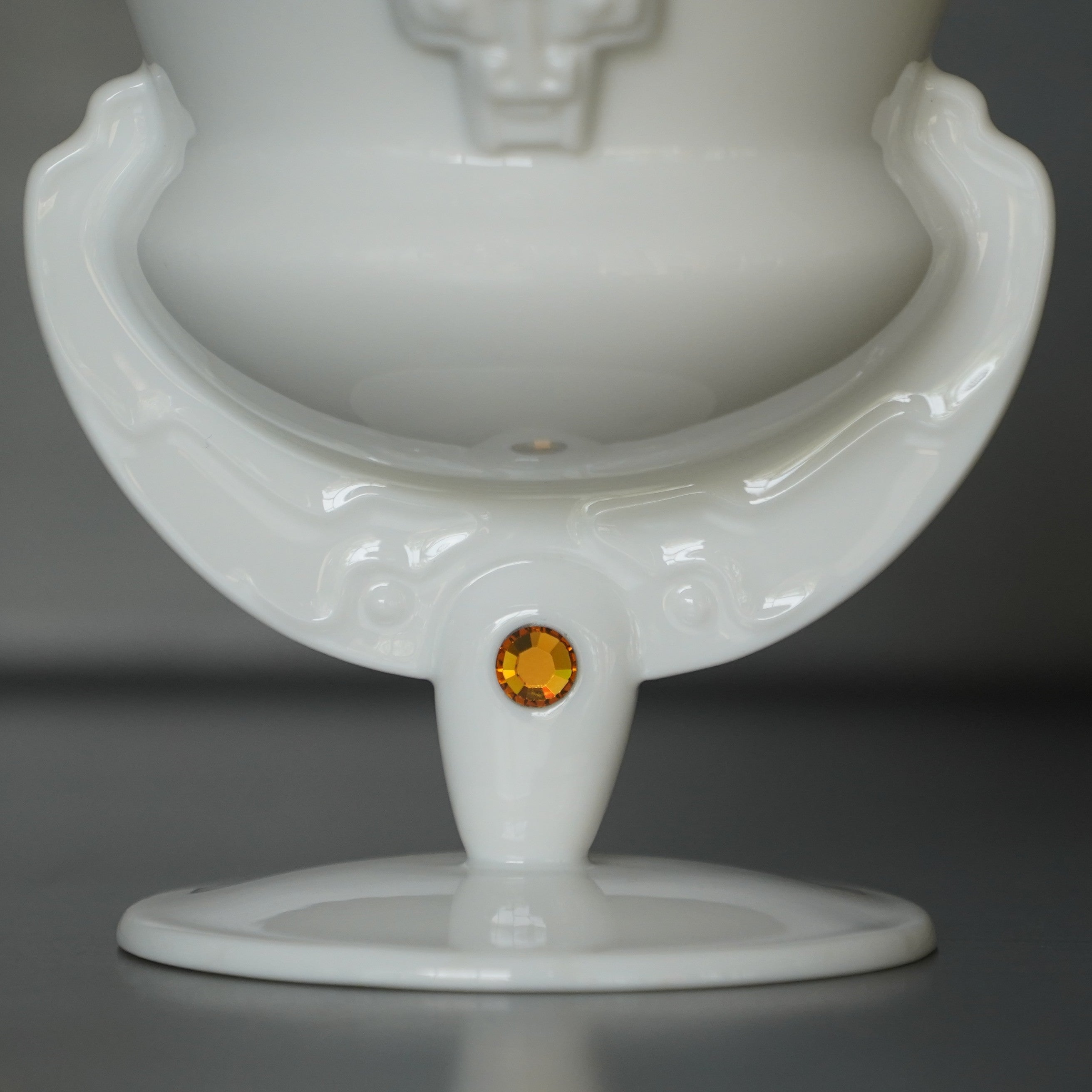
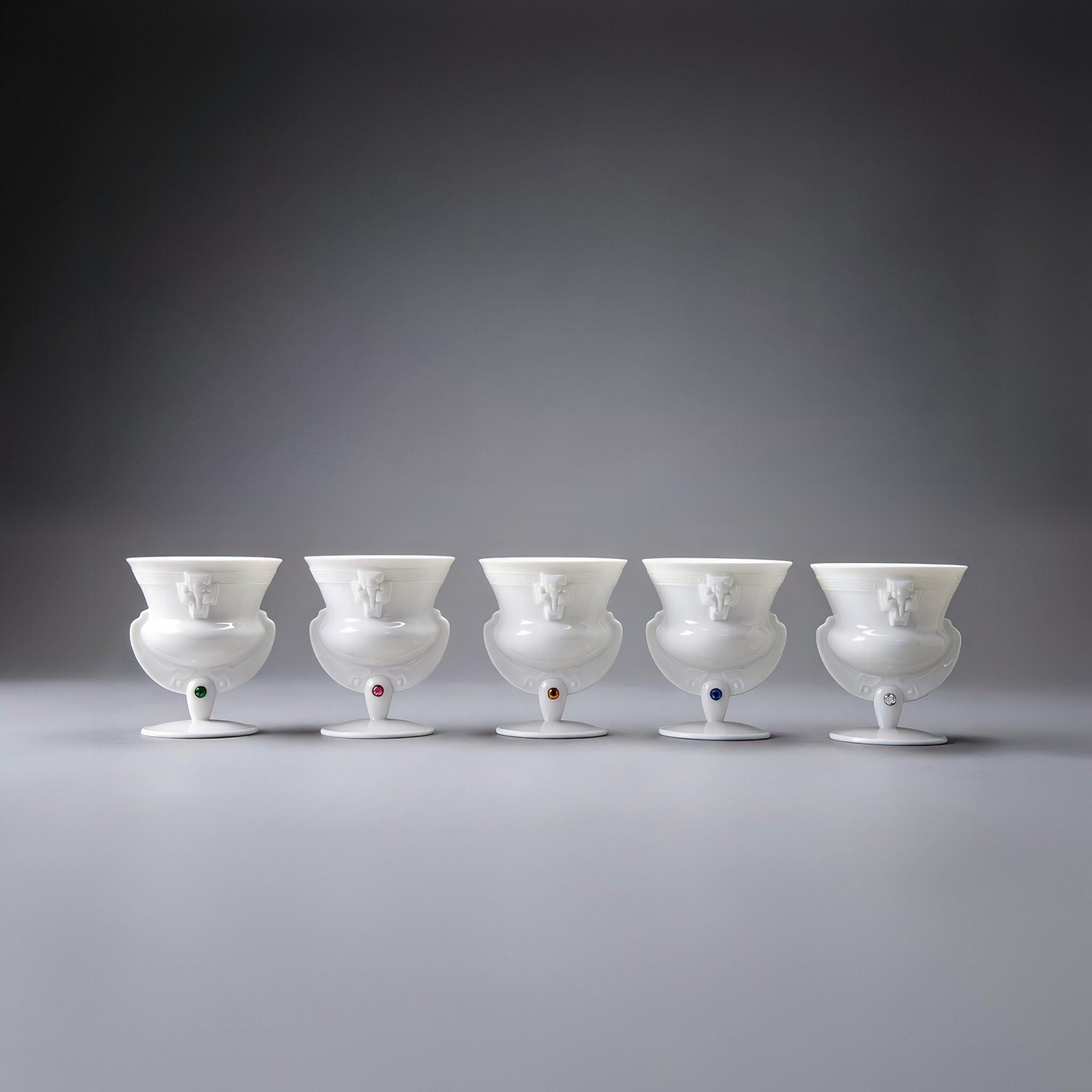
The Swarovski crystal is a choice — and a statement. Five Swarovski crystals in five colors, each representing a different quality of sentiment. The color you choose is the most private thing you can say to the person you are giving this to — without a word, the crystal on the stem has already said it.
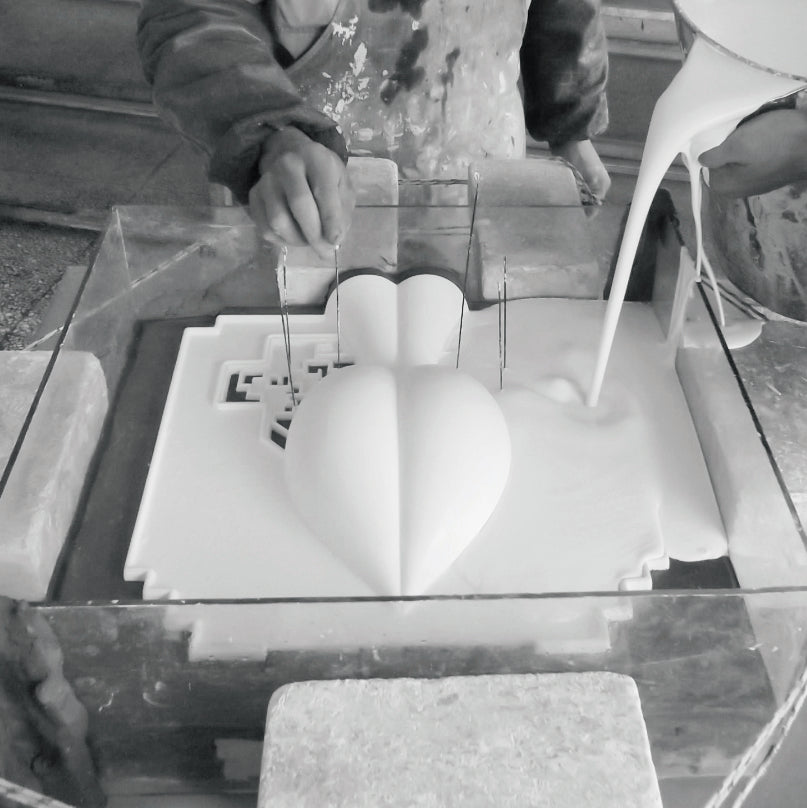
The crystal-setting process is the highest technical challenge in this piece. The socket for the crystal is reserved in the clay body before firing. White porcelain shrinks and deforms at high temperature — the socket changes shape in the kiln. After firing, each socket must be hand-ground to restore its roundness before the Swarovski crystal can be set. This cannot be batch-produced. Every crystal is set individually, by hand.
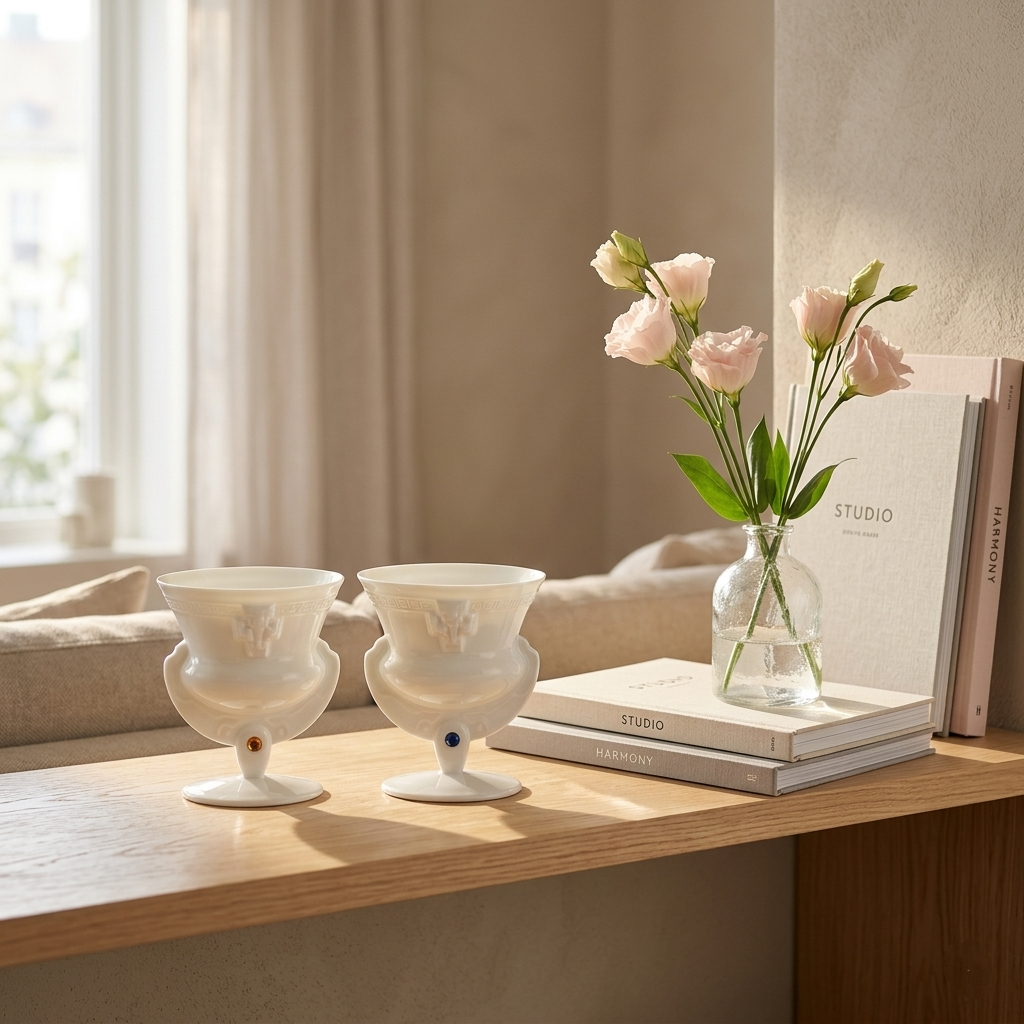
Single cup or complete set. Each of the five colors carries its own meaning. A single cup is a specific choice of sentiment. The complete set of five is the fullest possible declaration — and at the table, reaching for a different color on different occasions becomes its own ritual.