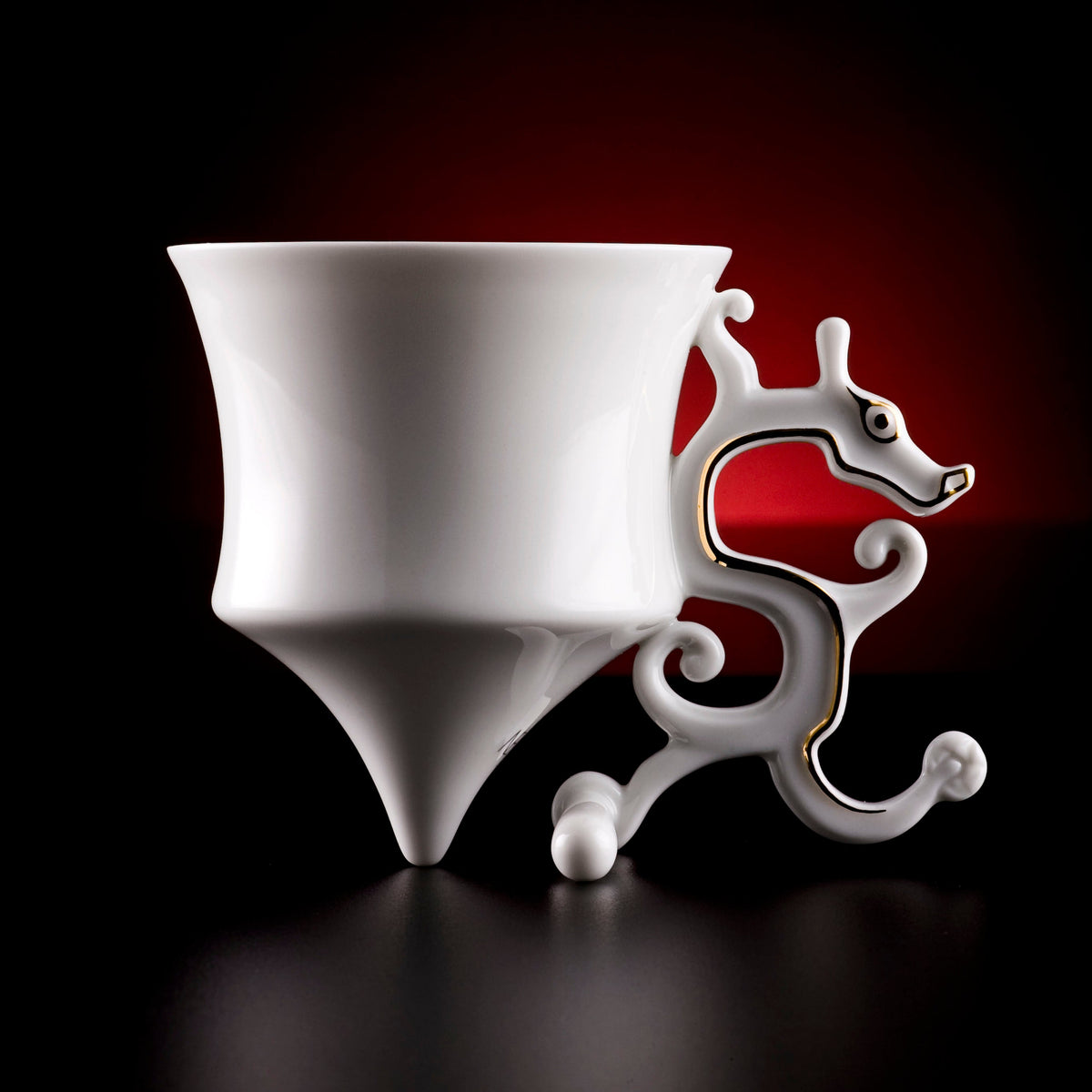
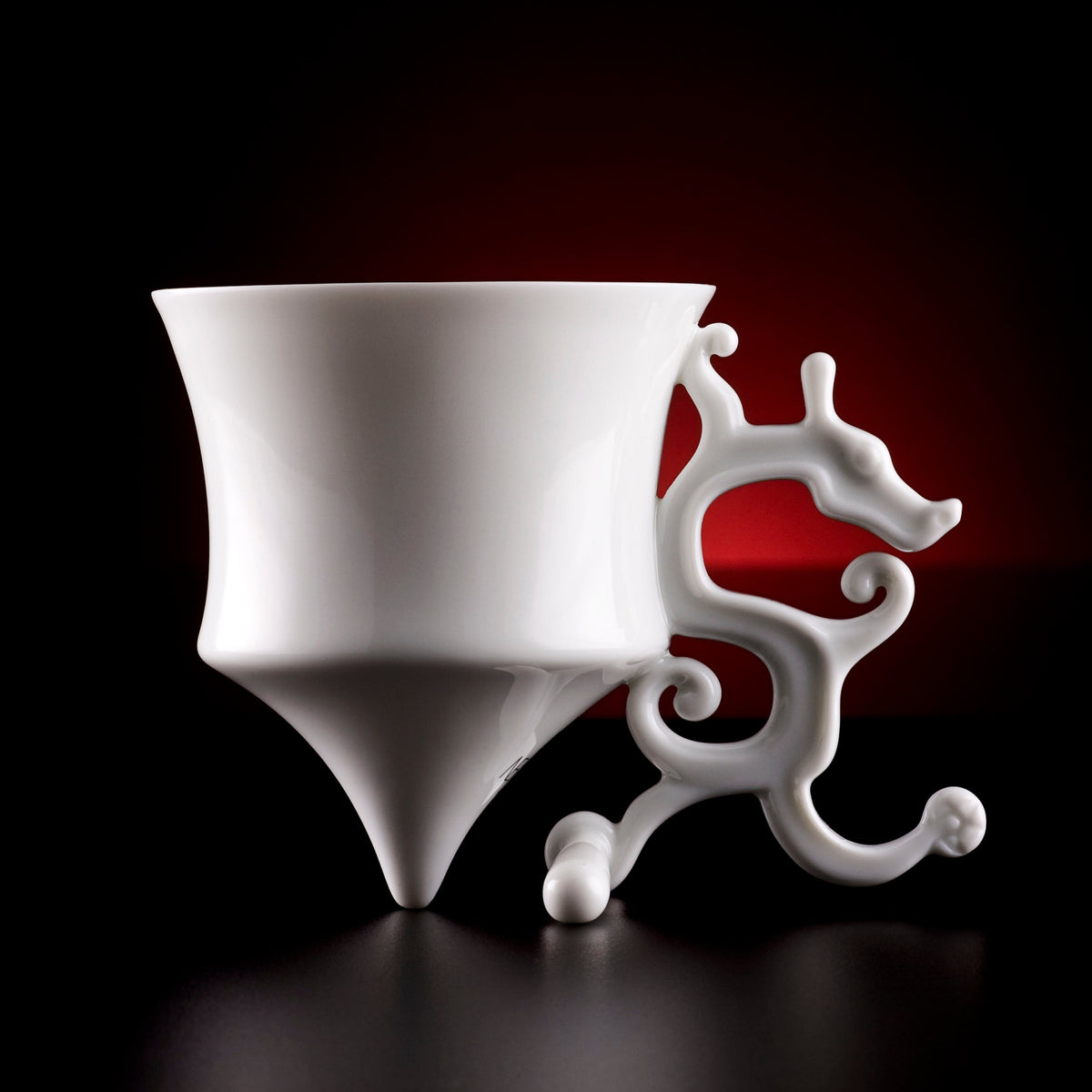
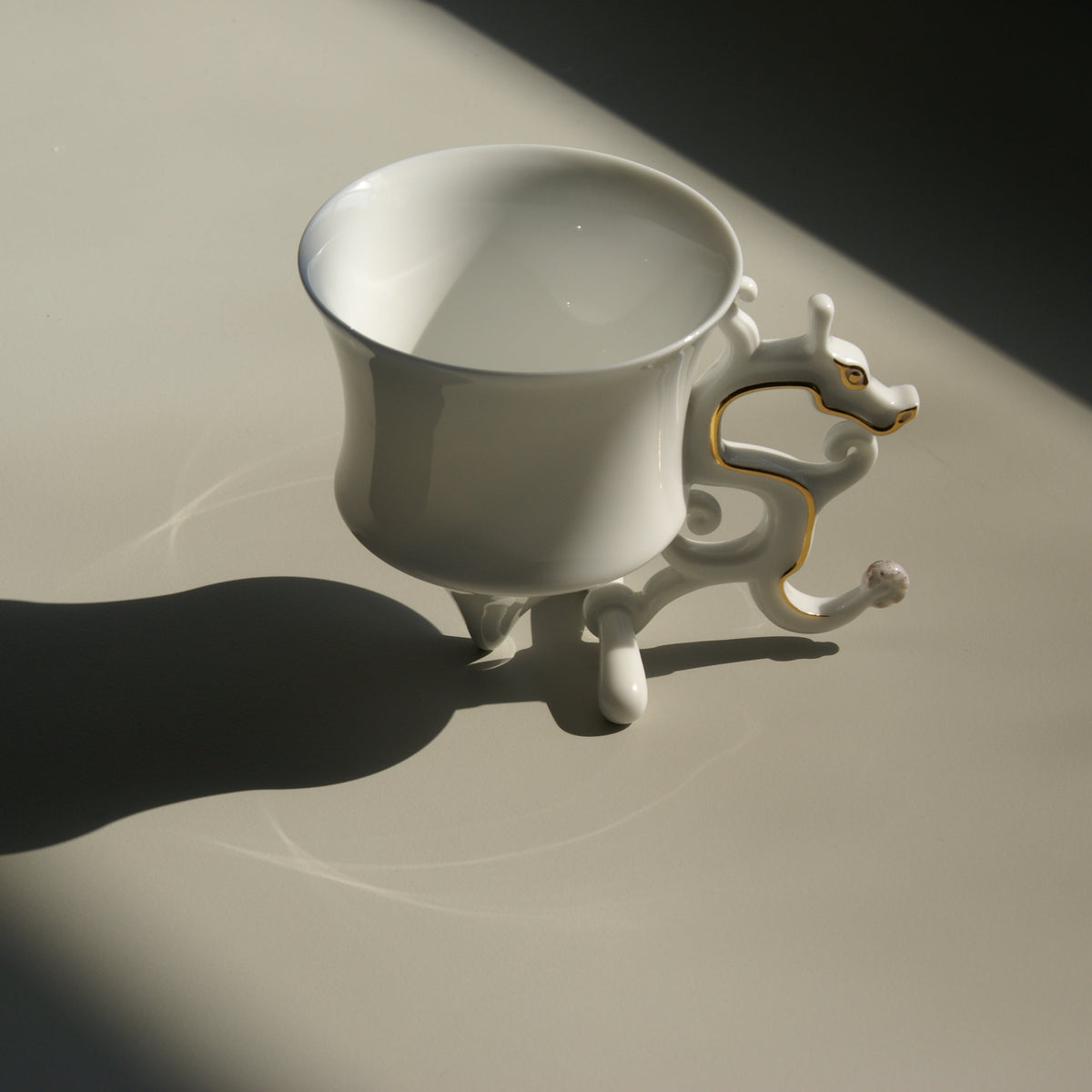
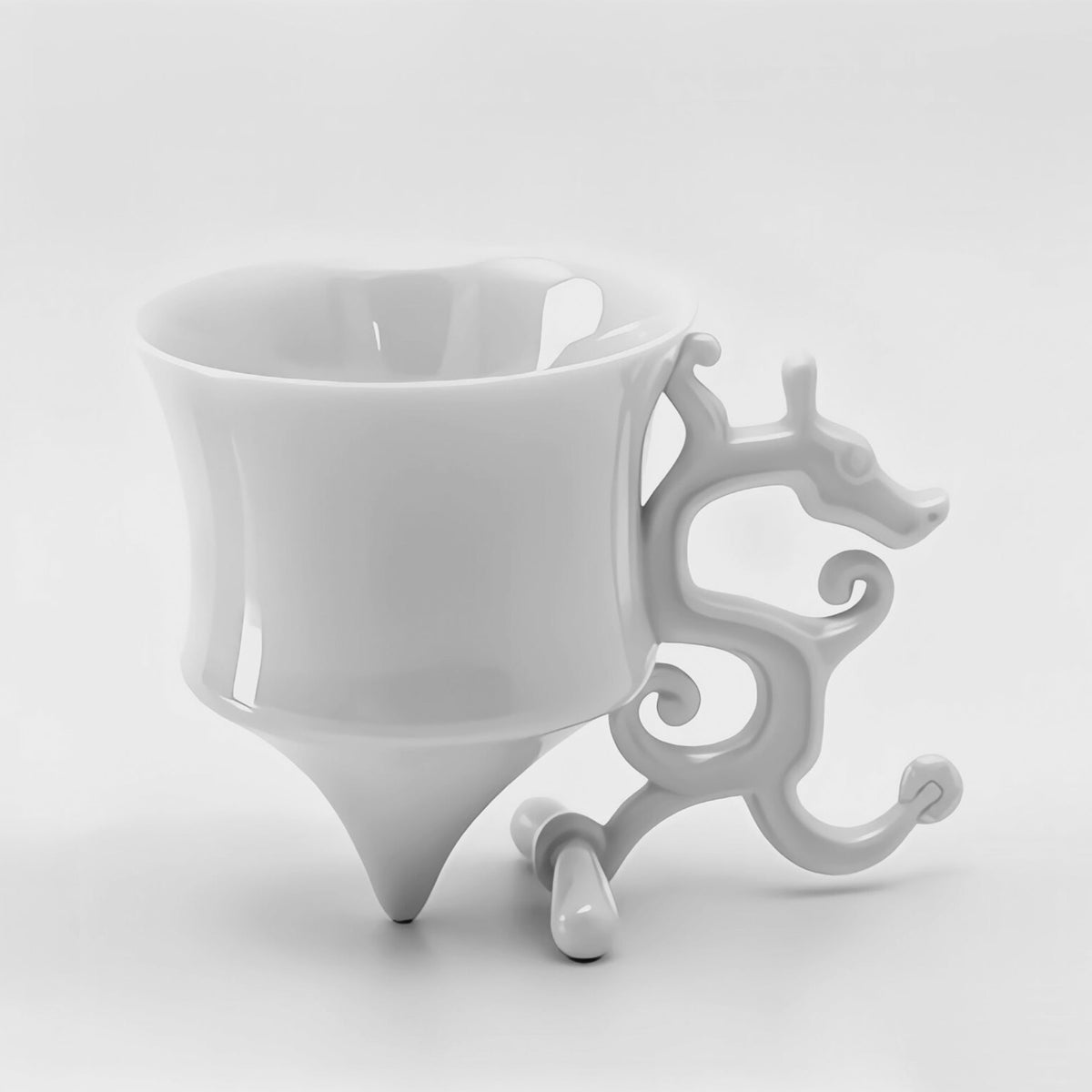
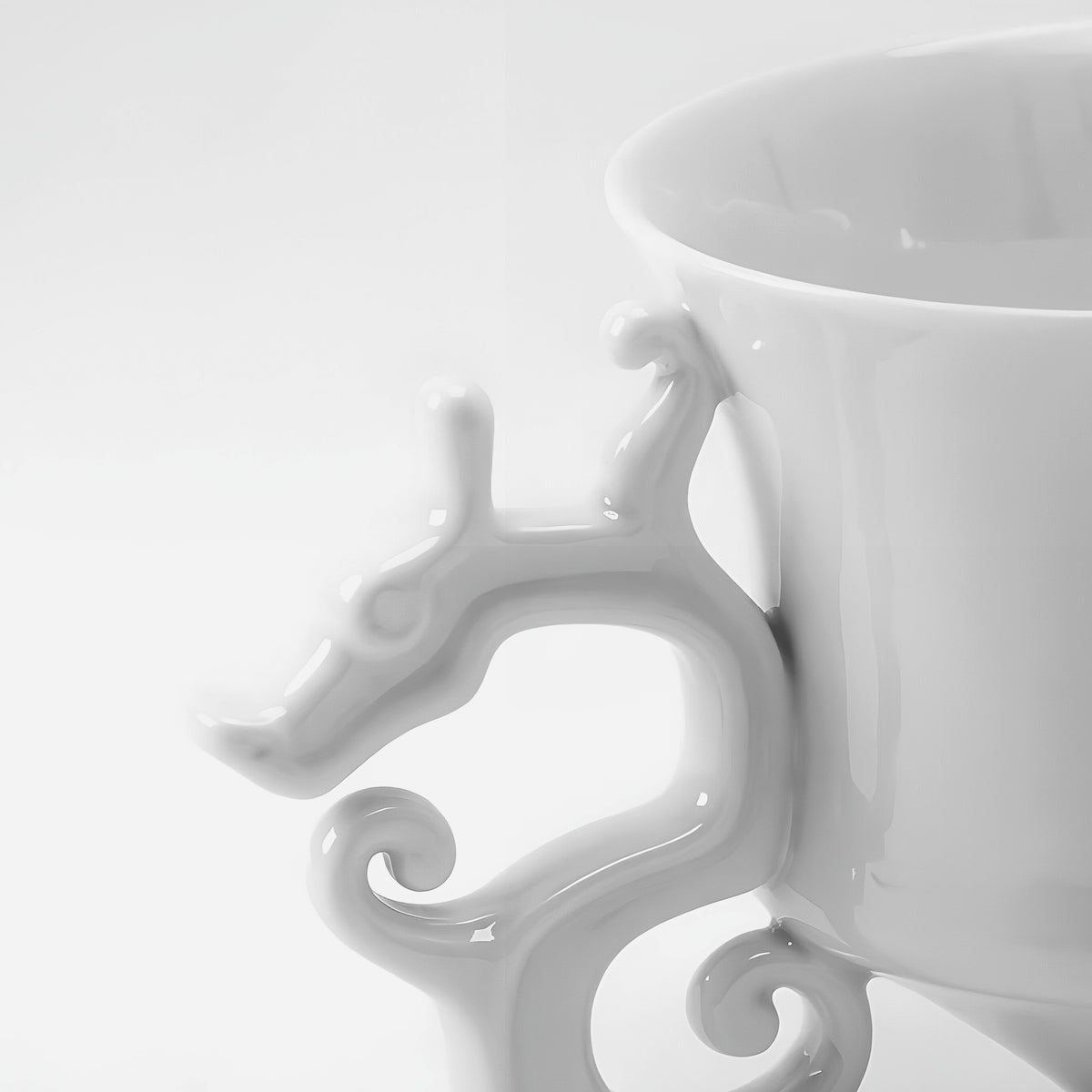
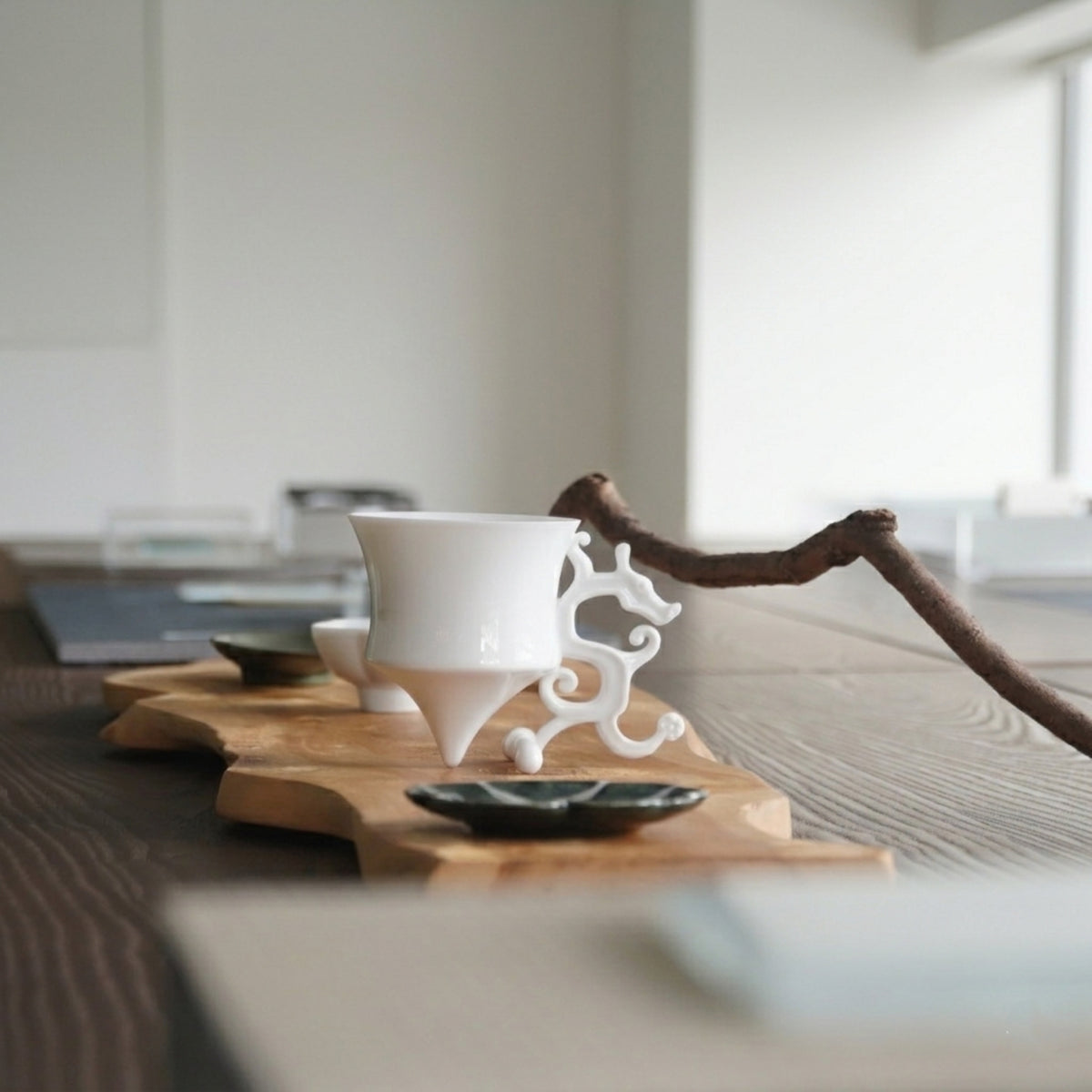
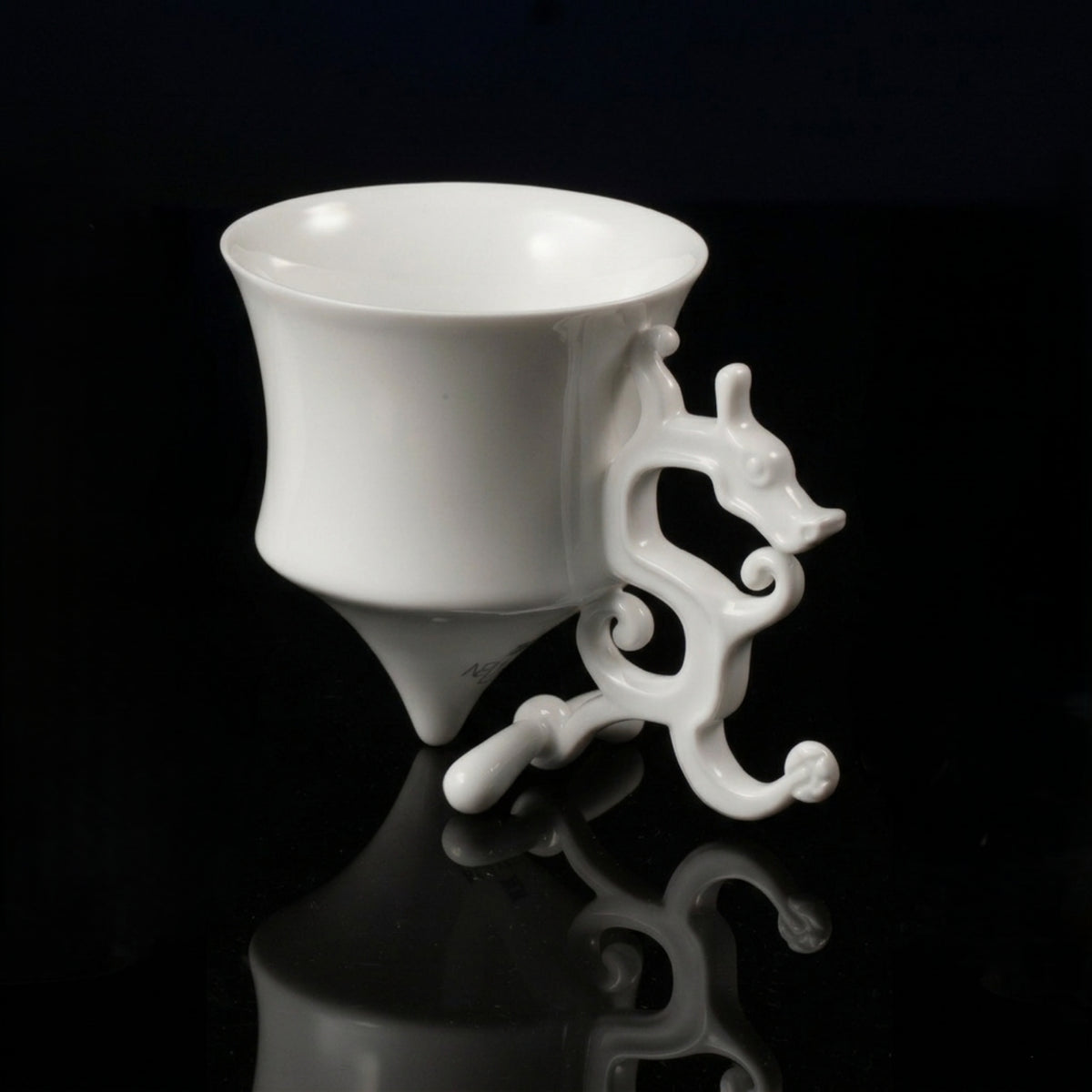
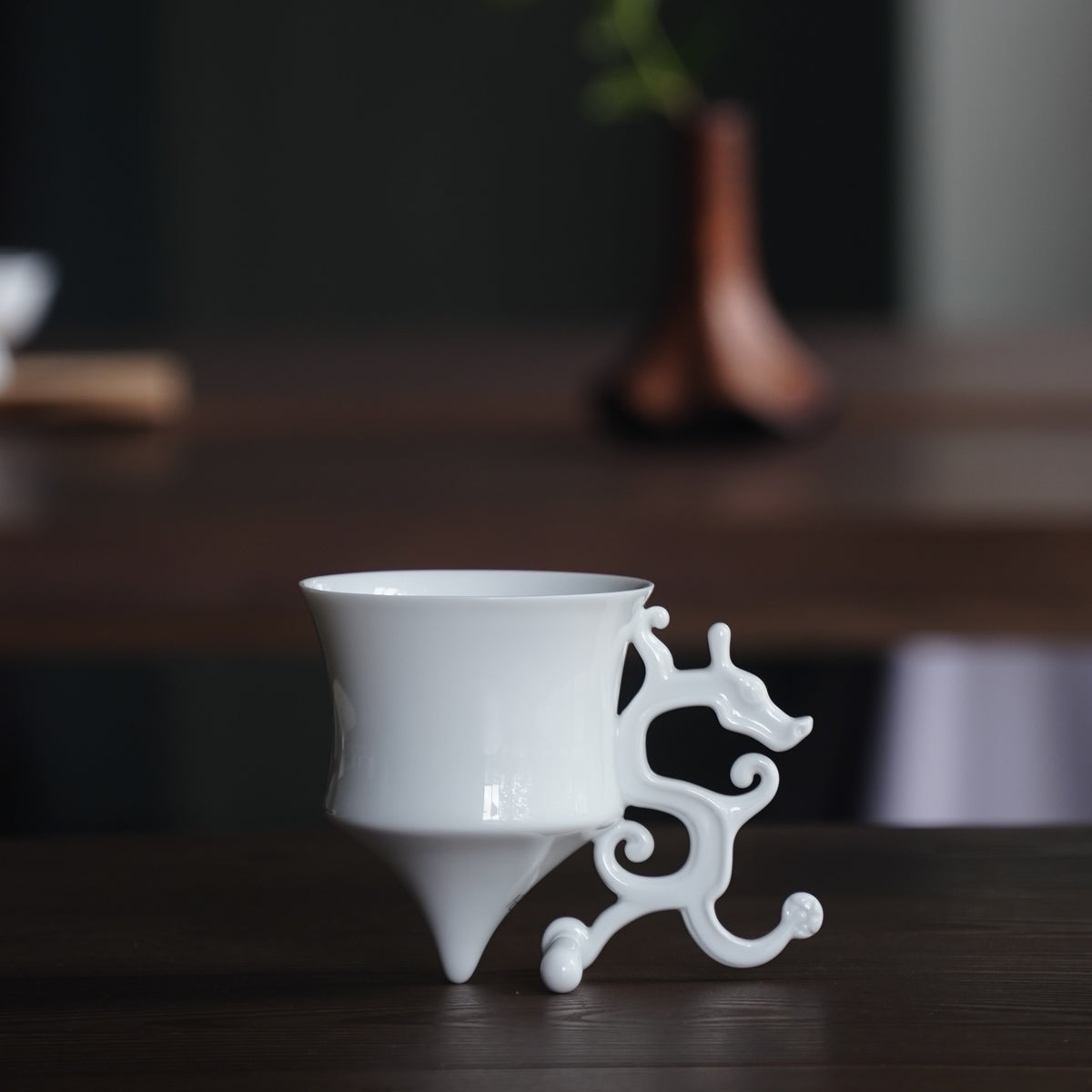
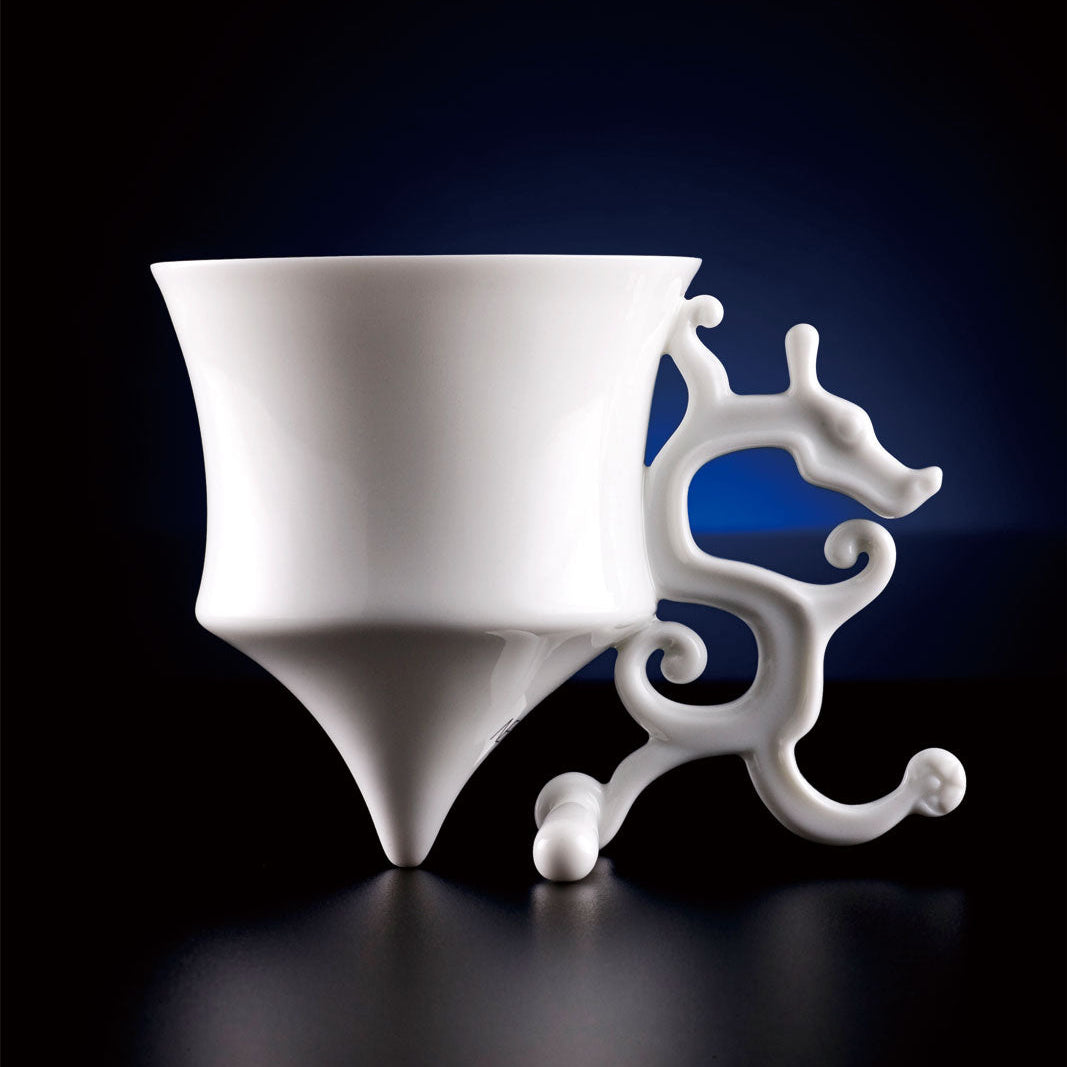
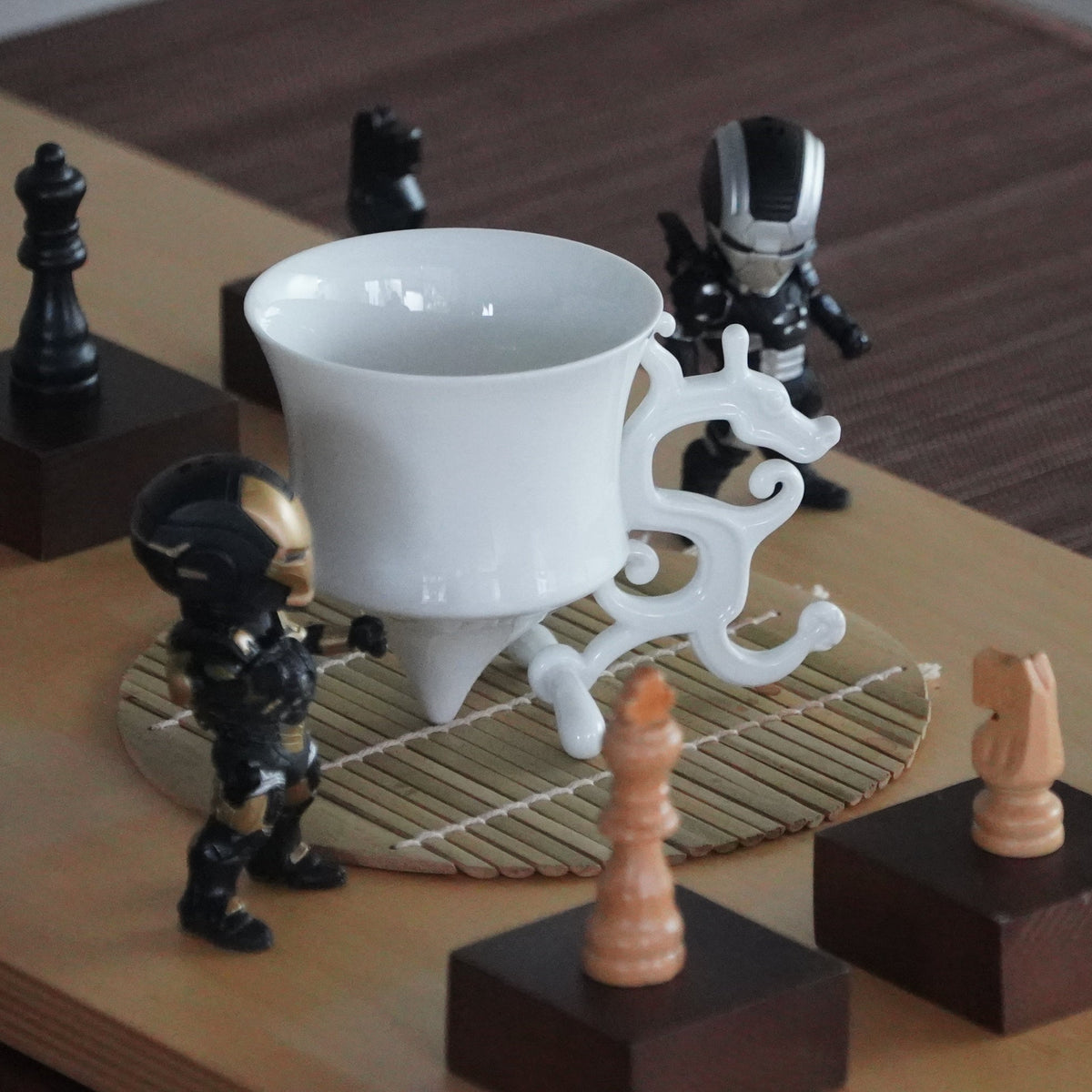
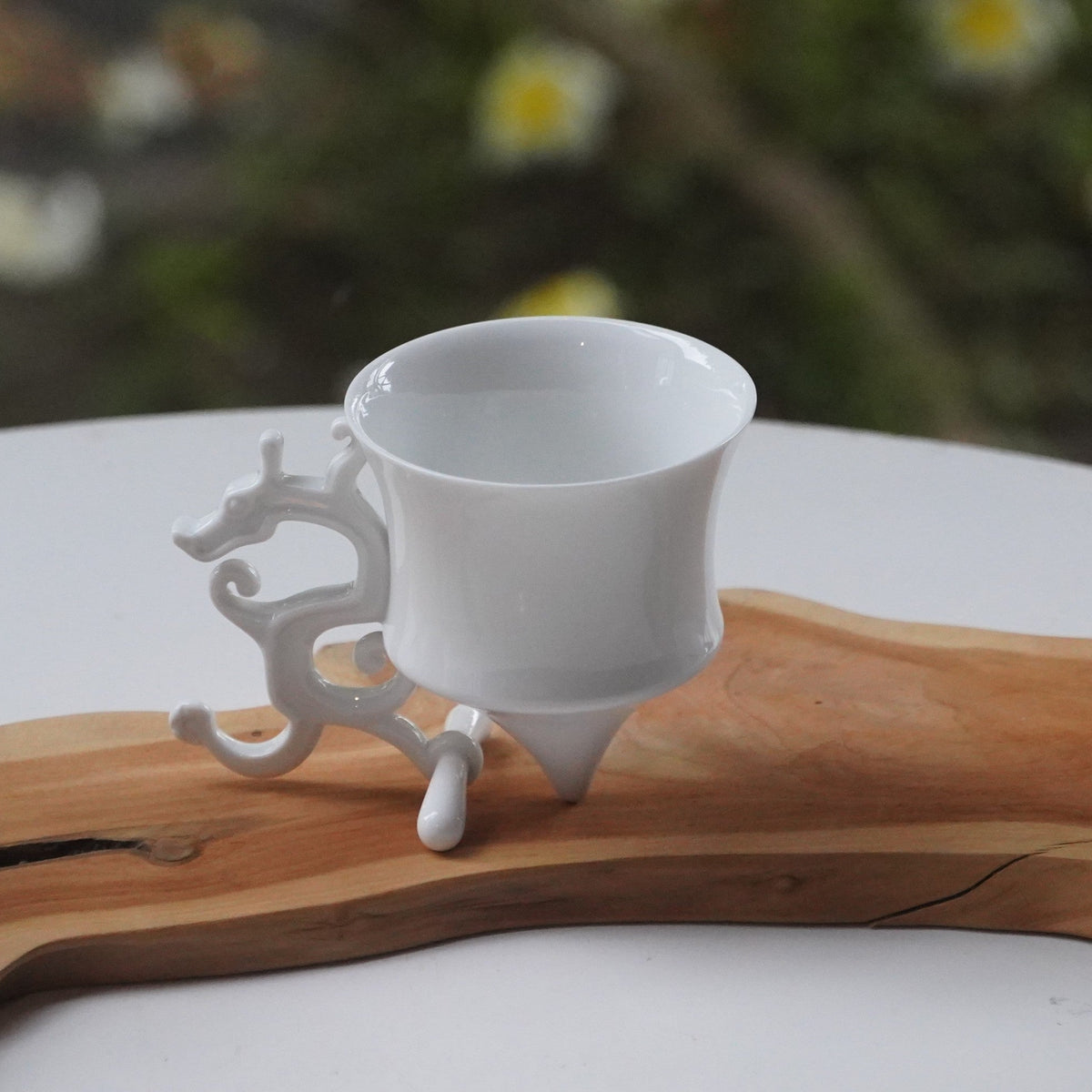
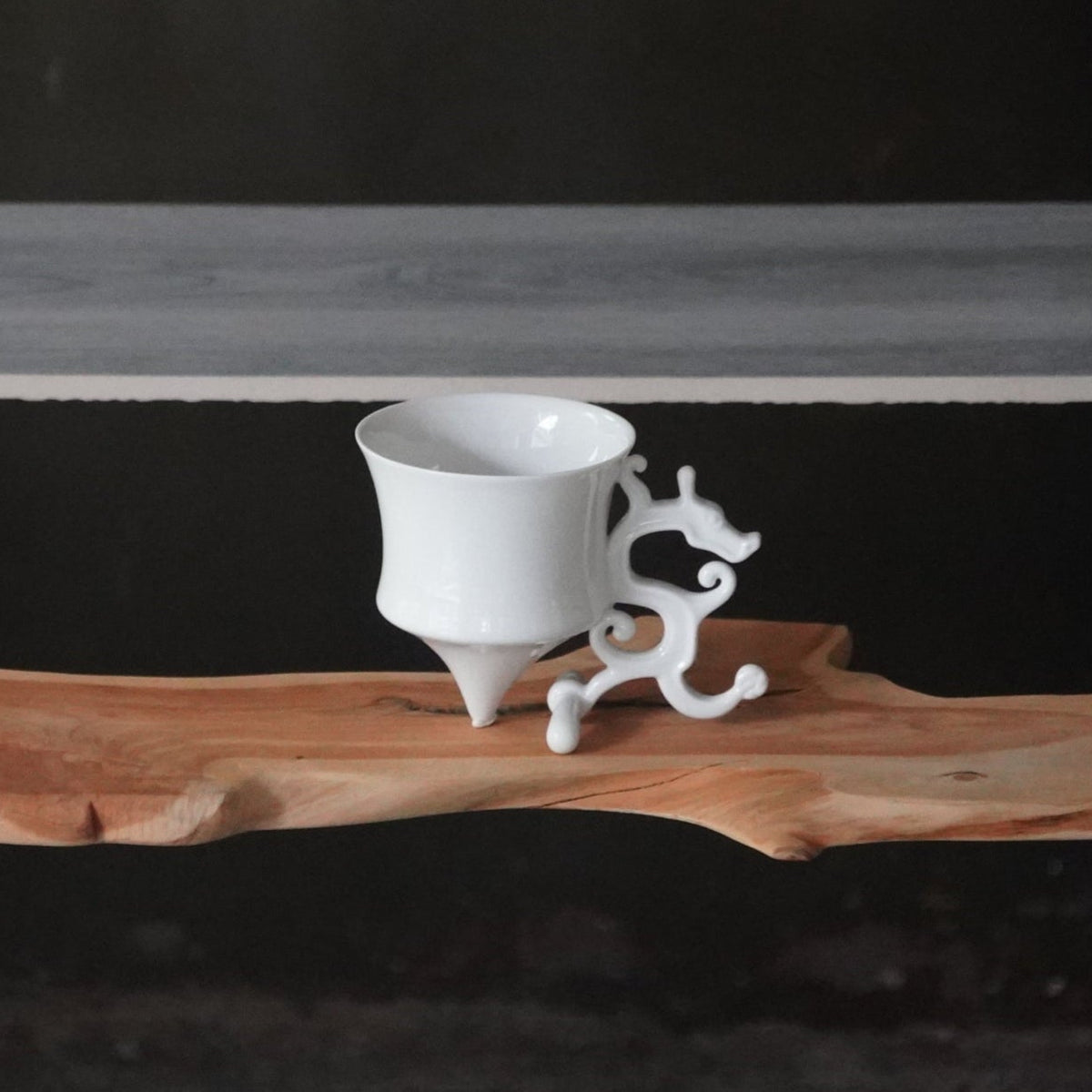
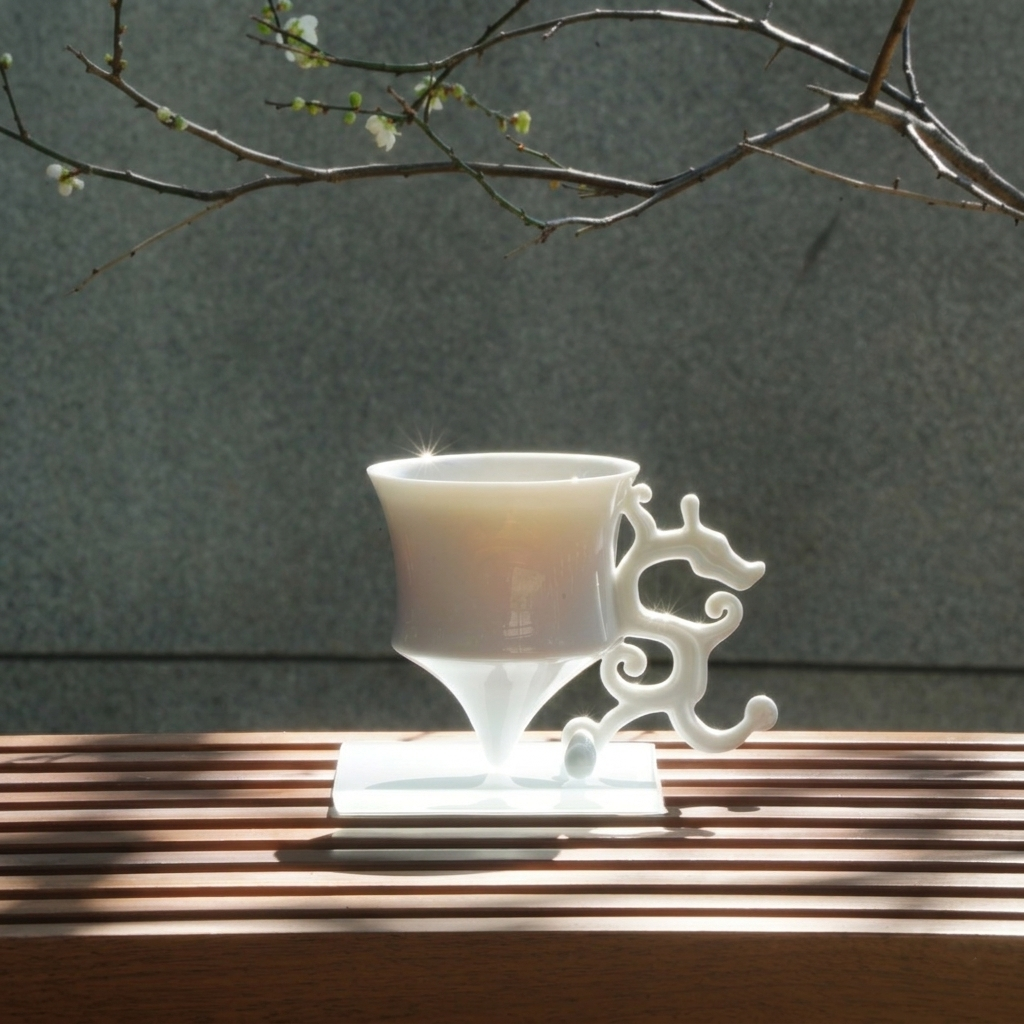
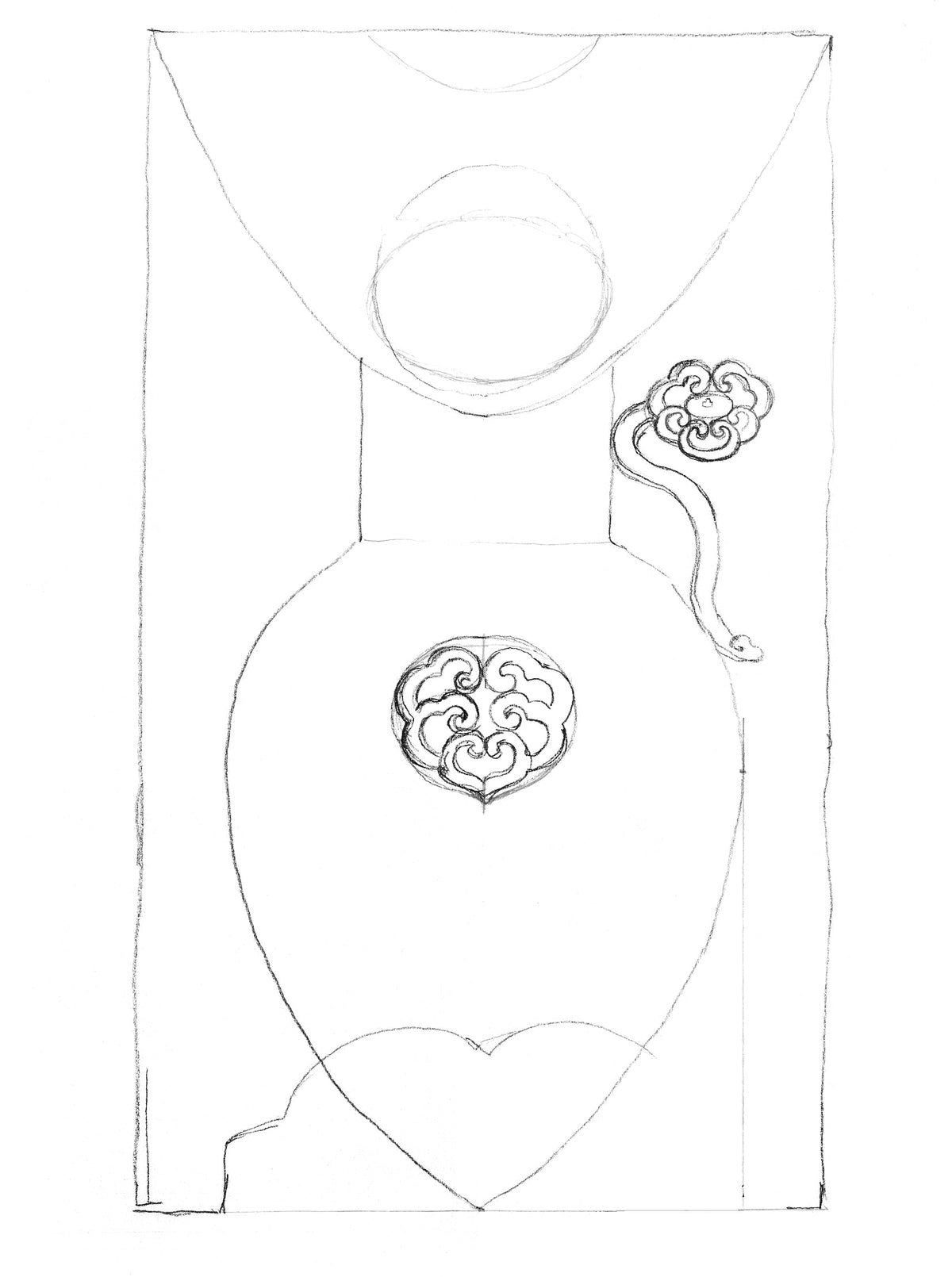
The dragon handle is an invitation to a different kind of grip. The curving dragon form guides the hand to a specific hold — fingers finding the arc of the dragon body, the thumb settling at the natural resting point. The act of picking up this cup is slightly more deliberate than picking up an ordinary one. That deliberateness is the point. Each lift is a small, conscious entry into the moment.
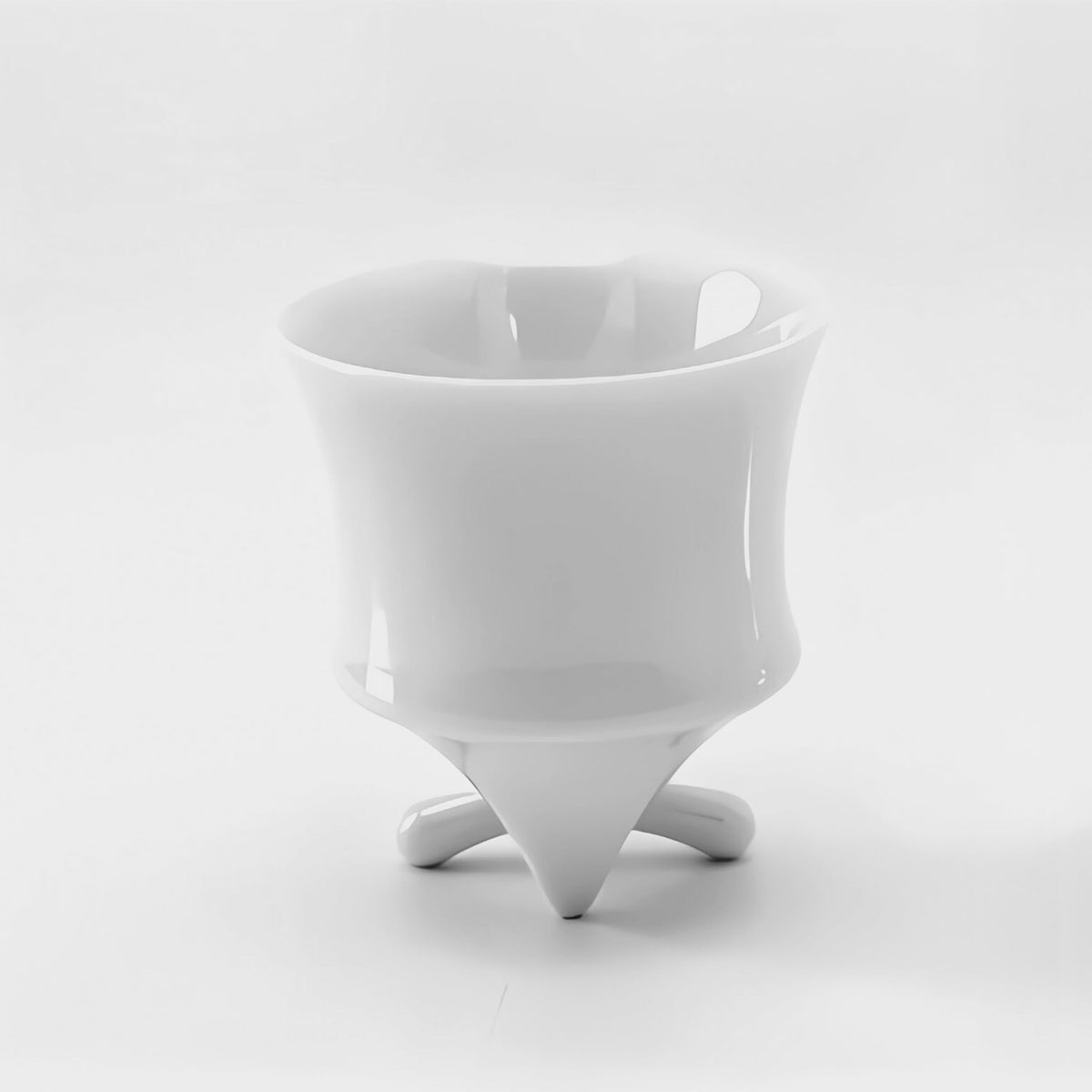
The cup body takes its form from the ancient zūn — dignity carried forward. The zūn was among the most ceremonially significant vessel forms of the Shang and Zhou dynasties, associated with ritual, rank, and the gravity of important gatherings. Heinrich Wang reinterprets this form in contemporary white porcelain — the composed, upright body preserves the zūn's quiet authority; the dragon handle injects the energy of a life fully engaged. Still and dynamic, in the same hand.
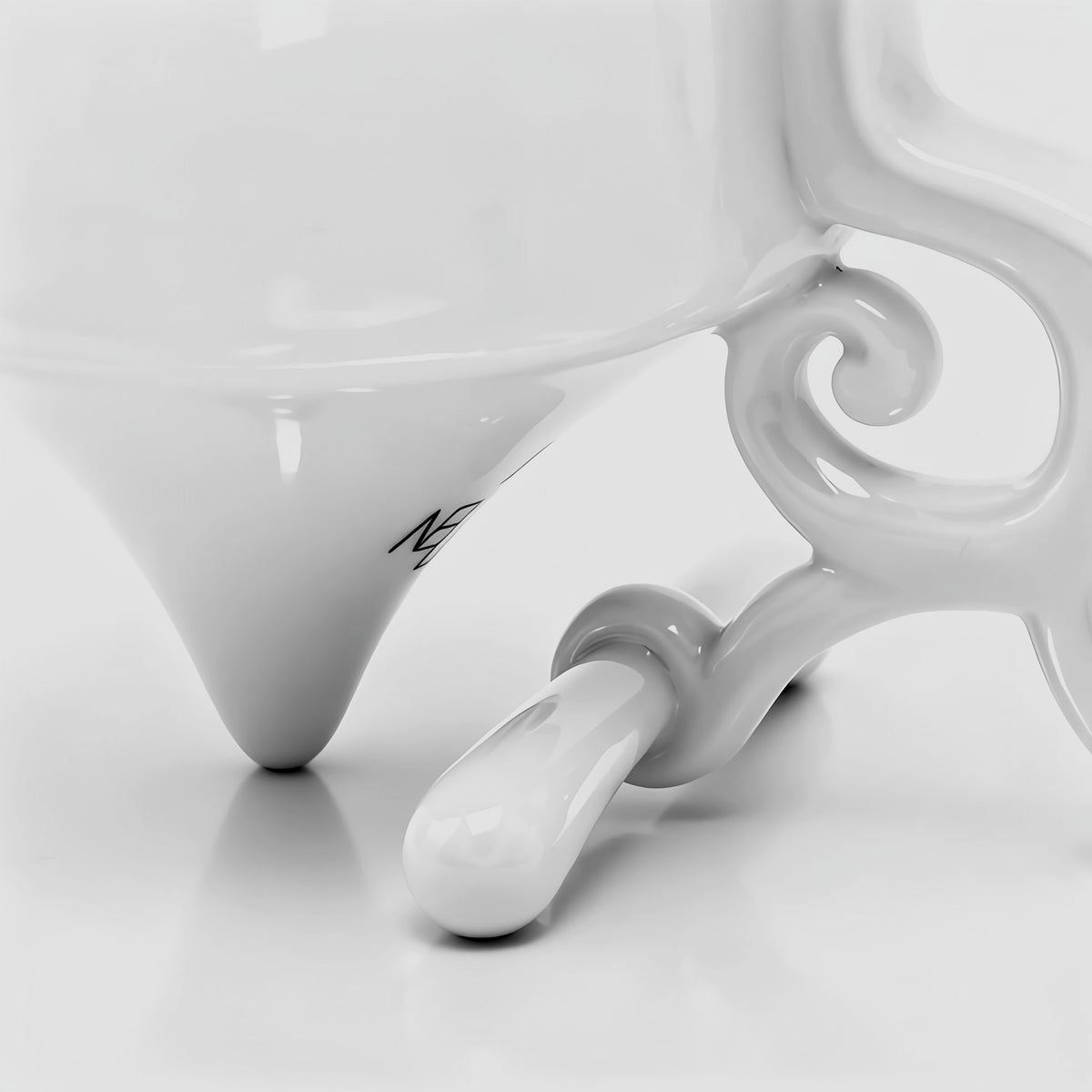
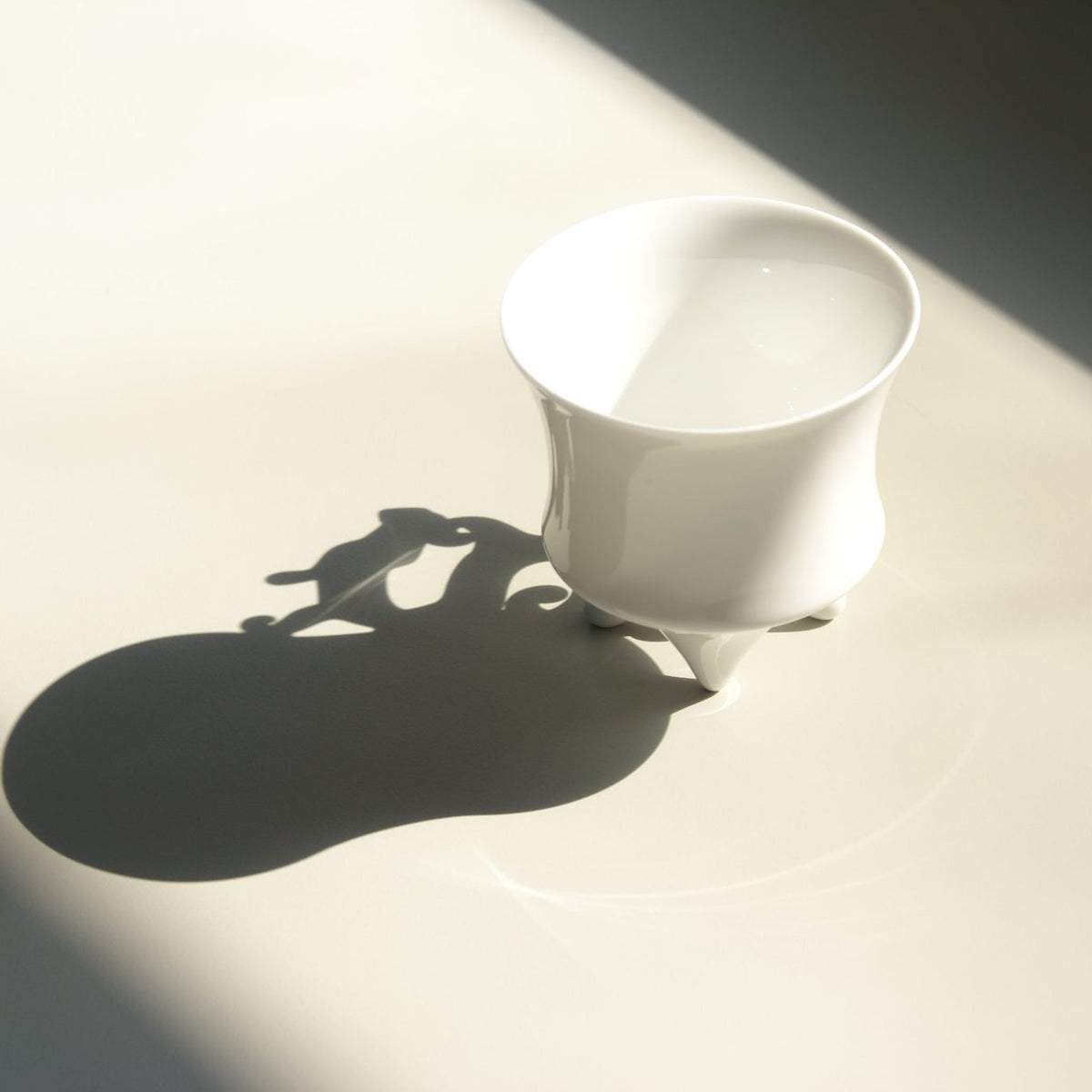
Three feet — the classical posture of standing firm. The three-footed base echoes the dǐnglì (鼎立) imagery of classical Chinese bronze vessels — the tripod stance that communicates stability, accountability, and the willingness to hold one's ground. The detail is understated. Its cultural resonance is not.
White and gold — two different qualities of the same conviction. The white finish lets the natural warmth of high-fired porcelain speak for itself — warm, restrained, a daily companion for quiet mornings. The gold finish traces the dragon's outline in gold, giving the form a luminous presence suited to significant gifts and display. Same cup, two registers.