Skip to product information
1 of 18

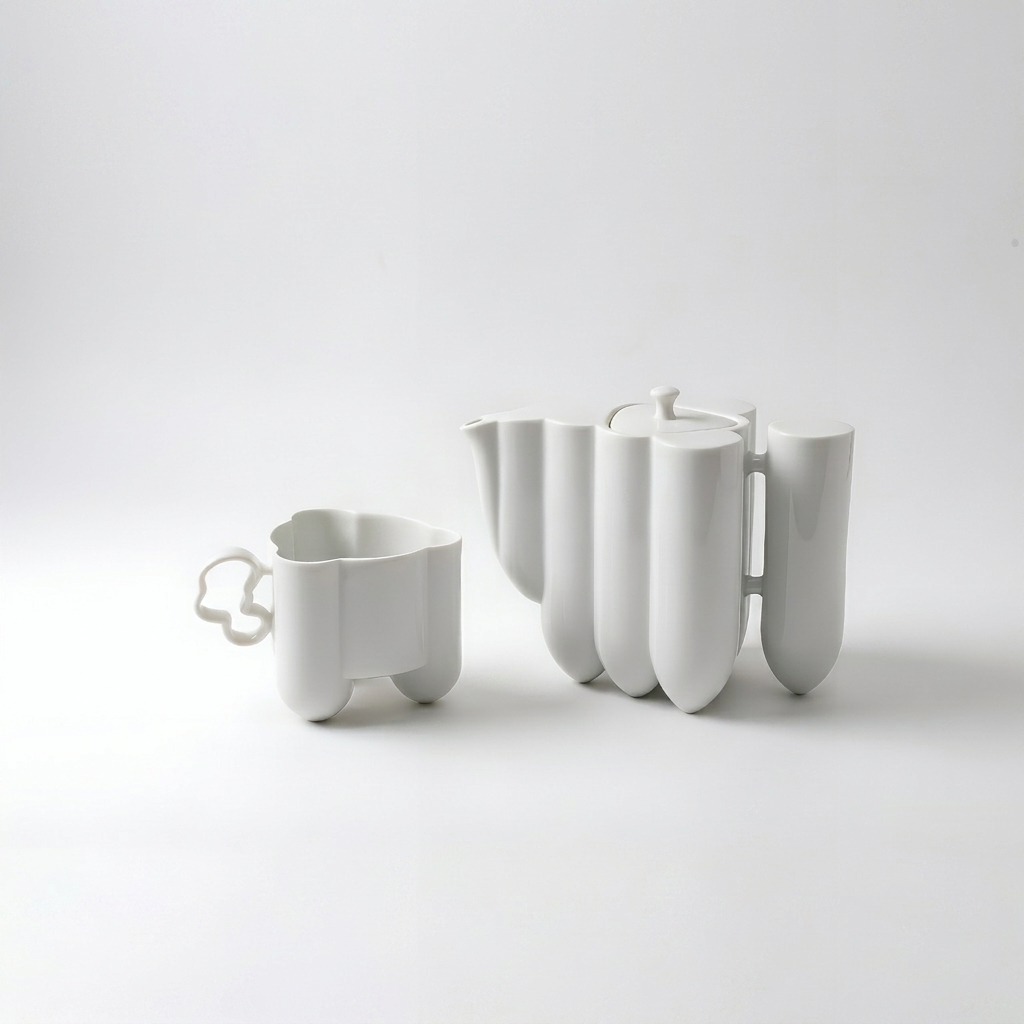
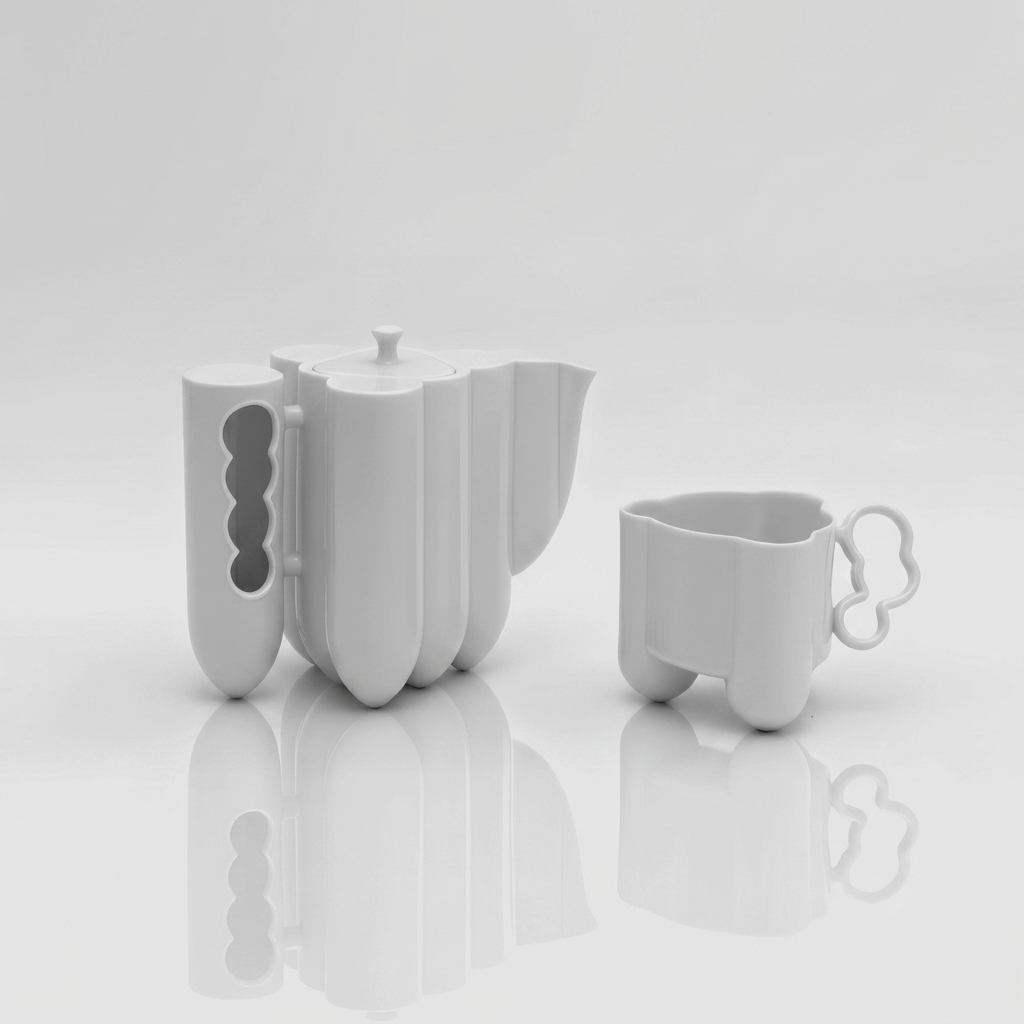
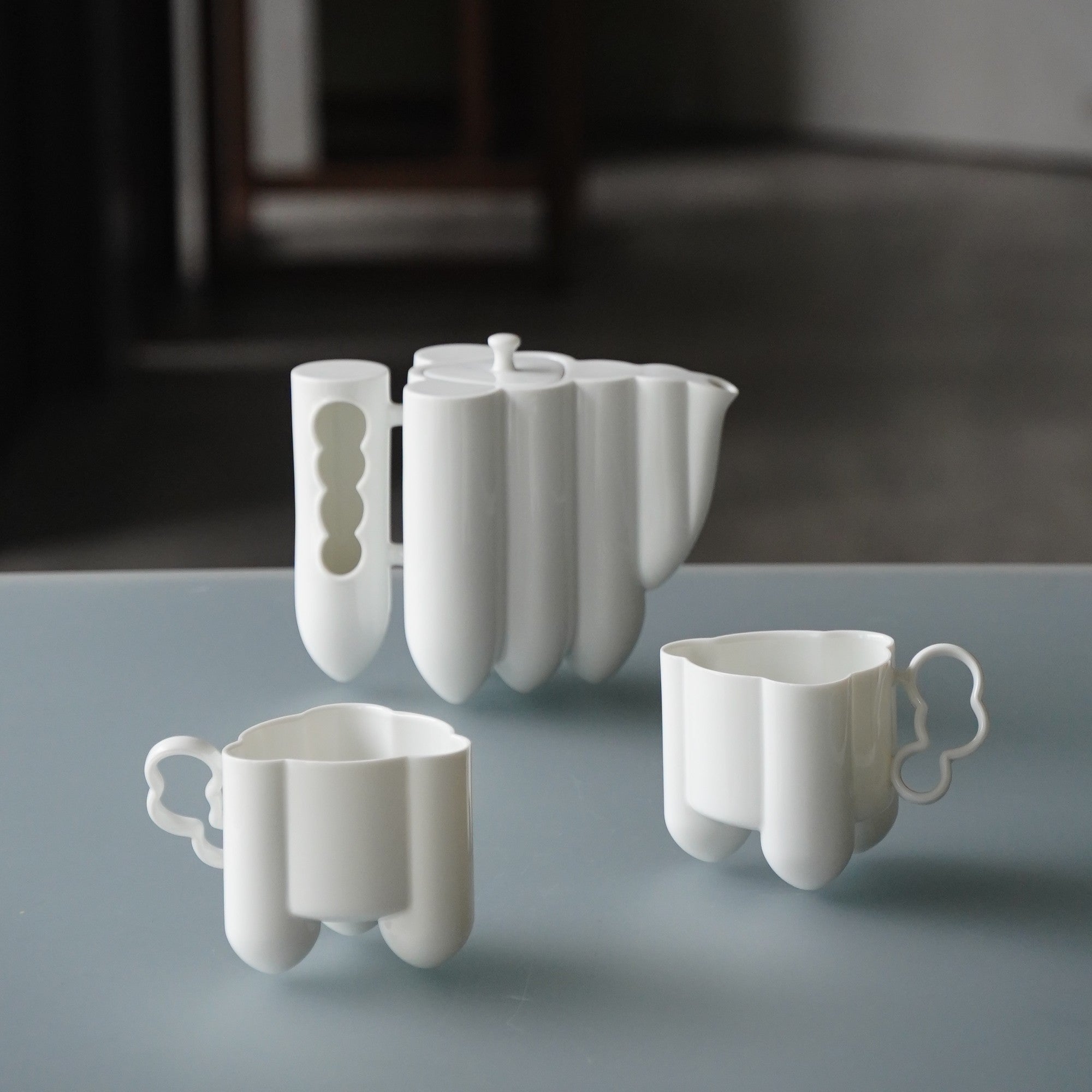
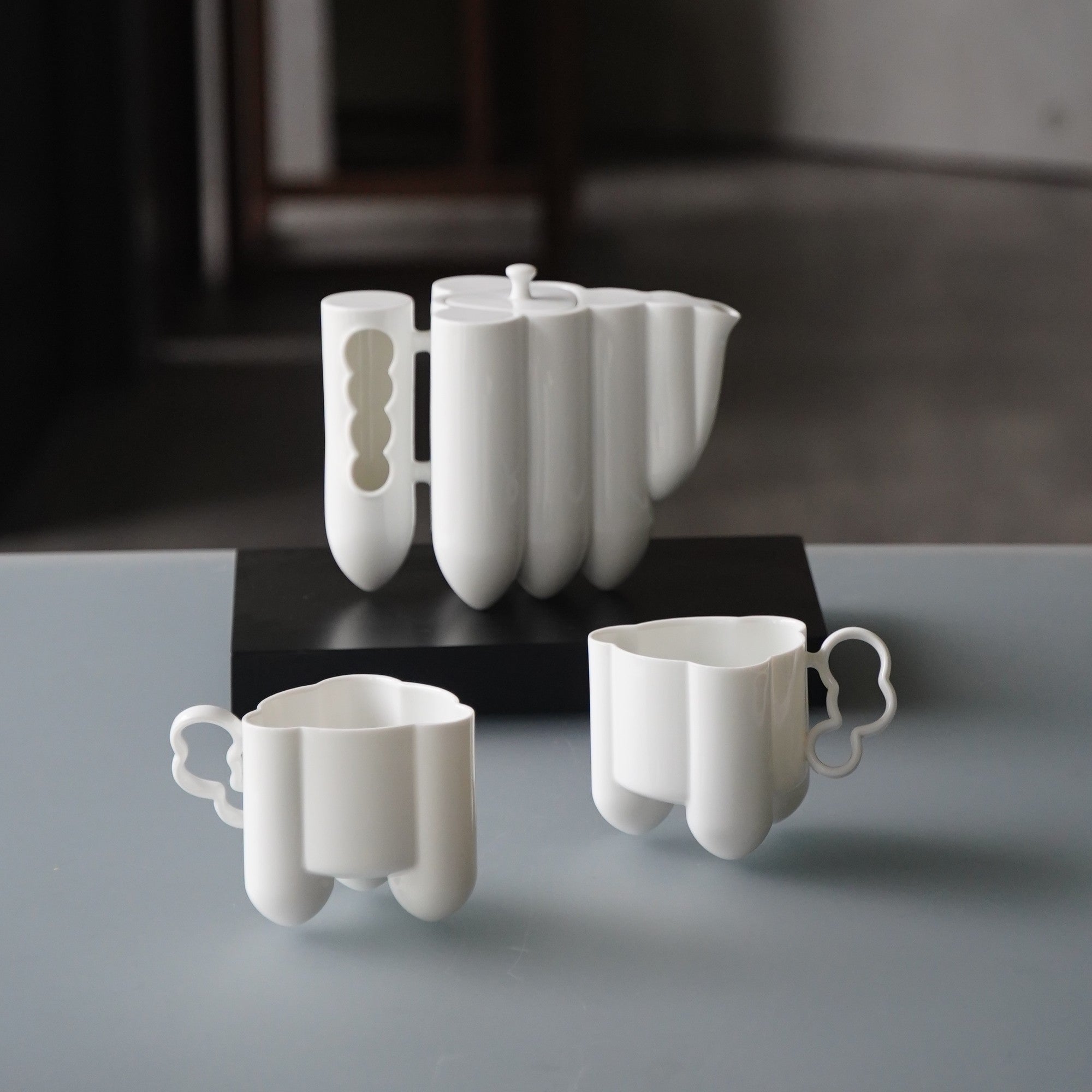
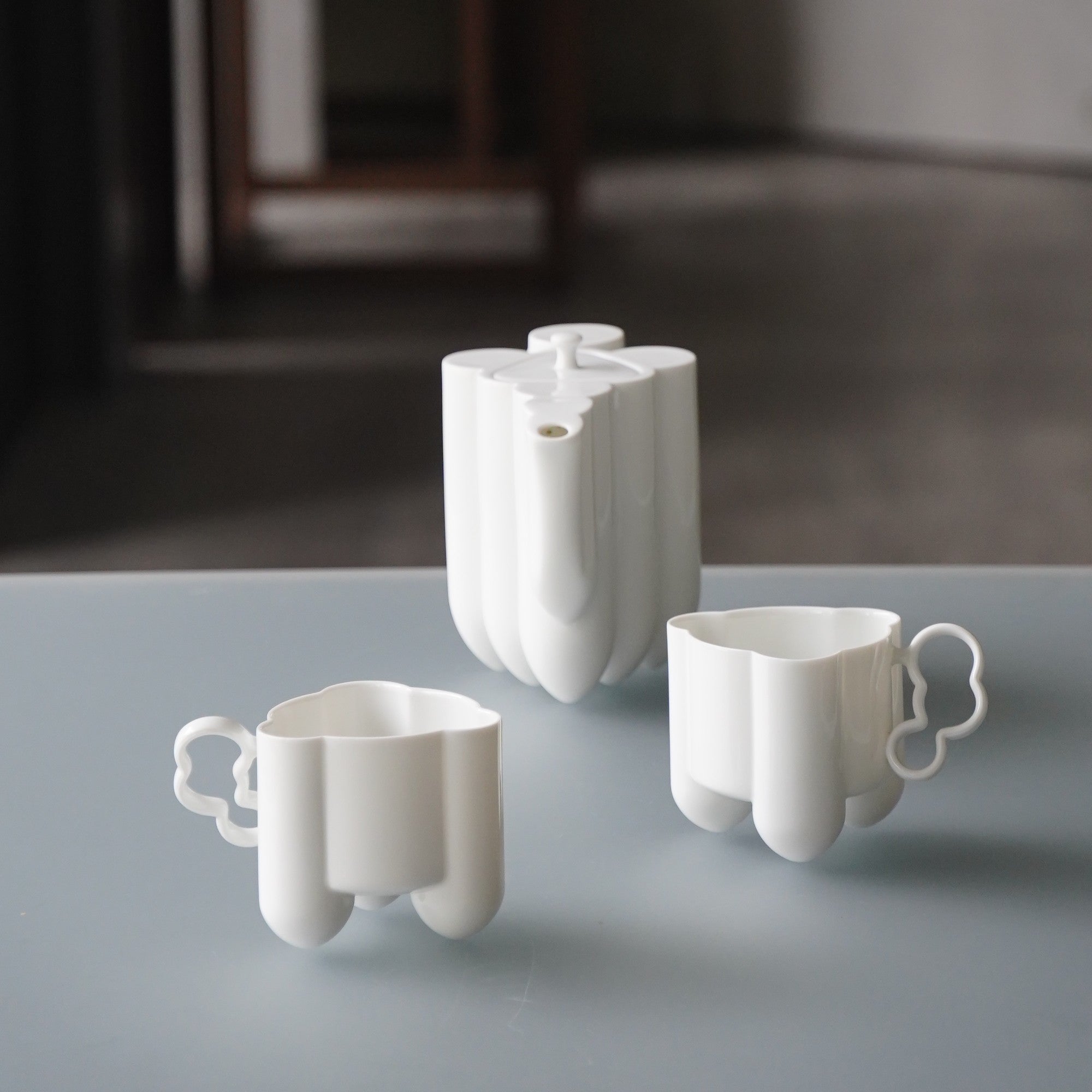
Timeless Grace | White Porcelain Teapot & Cup Set · Nine-Pillar Geometry for the Contemporary Tea Ritual

Where reason builds poetry, and time becomes the measure of grace.

The name Timeless Grace — Yōu Yōu Jiǔ Jiǔ (悠優九久) in Chinese — encodes a complete philosophy in four characters: "Yōu" (悠) is unhurried ease. "Yōu" (優) is depth of character. "Jiǔ" (九) is the number nine, carrying the cultural weight of completeness and the ultimate. "Jiǔ" (久) is endurance, the lasting. Through order, light, and the full awakening of the senses, tea becomes a practice of time, attention, and self-awareness. Teapot and cups available individually or as a complete set.

Coffee/Tea set pieces included
Regular price
$15,800.00 TWD
Regular price
Sale price
$15,800.00 TWD
Tax included. Shipping calculated at checkout.

Contemporary White Porcelain Craft · Fired at 1300°C

Designed by Taiwanese artist Heinrich Wang

Designed by contemporary white porcelain artist Heinrich Wang, each piece embodies Eastern philosophy and contemporary form.

Discover more

Transforming life philosophy into functional art, conveying a Zen-inspired modern aesthetic.

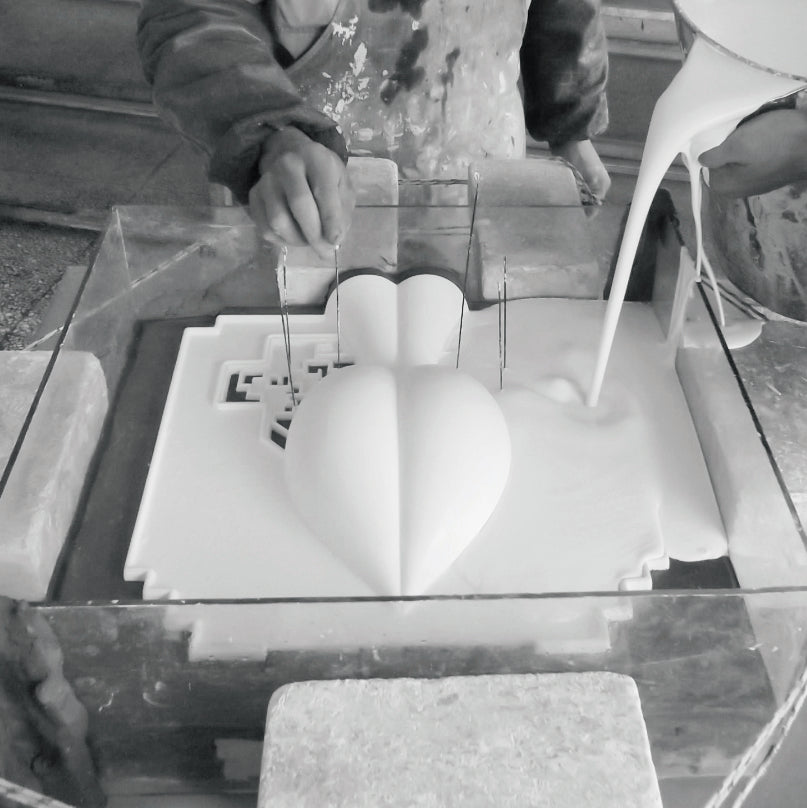
Transparent-glazed pure white porcelain | Hand crafted

Crafted with a transparent glaze technique, revealing the pure beauty of porcelain’s natural white after firing.

Learn more


Only human hands can convey their warmth — every NewChi Porcelain piece is handmade, embracing the challenges of fine porcelain craftsmanship.

Learn more

Gift Box & All-Occasion Card

Perfect for important festivals, greetings to elders, corporate gifting, and art collections — conveying taste and blessings. If you would like a handwritten all-occasion card, please note your request in the remarks field at checkout.

Learn more


For custom wooden or acrylic bases, please contact customer service.

Learn more

  • Hurry, only 2 items left in stock!
悠優9久茶壺側視圖|幾何把手與垂直線條的當代美學
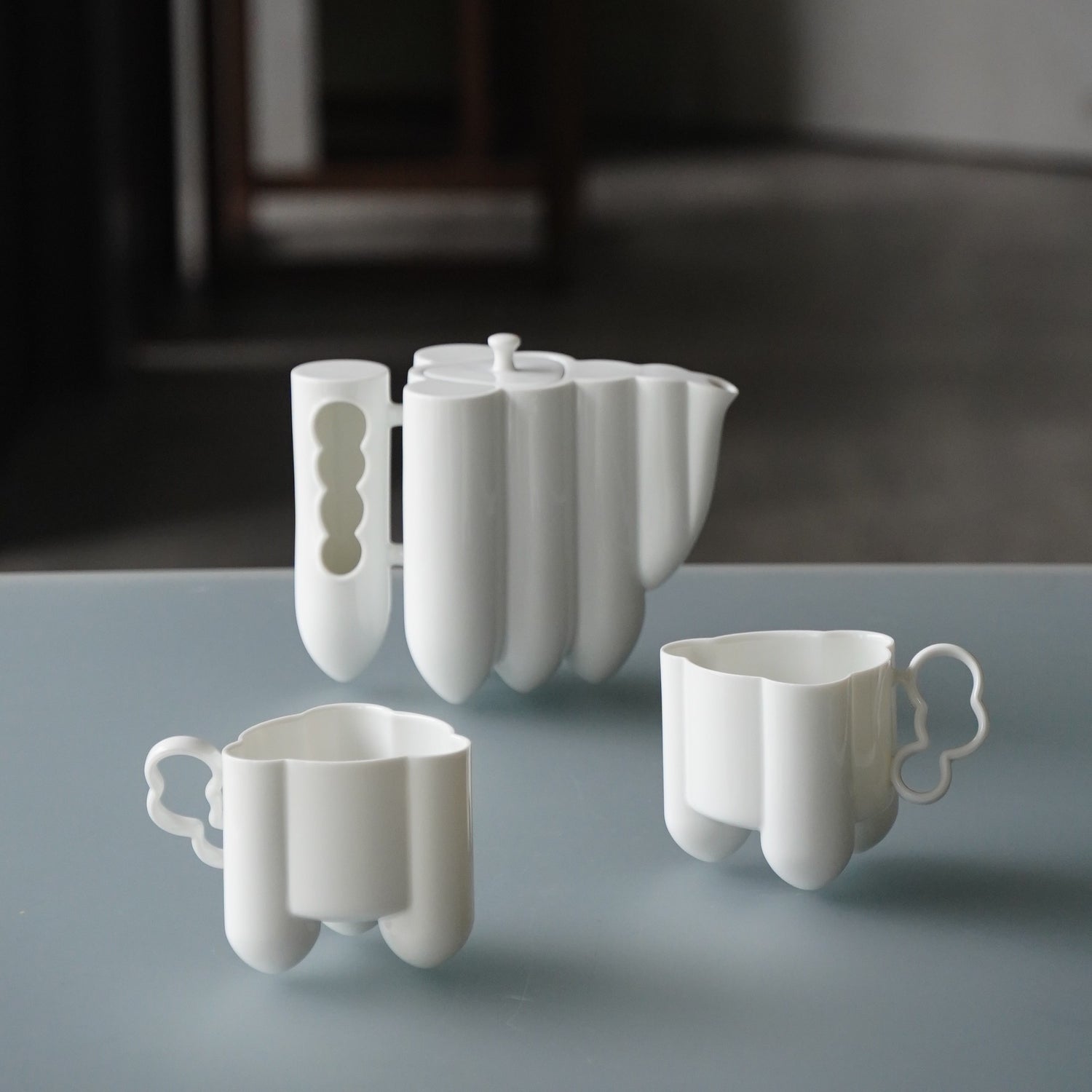
悠優9久 Timeless Grace 白瓷壺杯組|九柱幾何構築的當代白瓷茶器
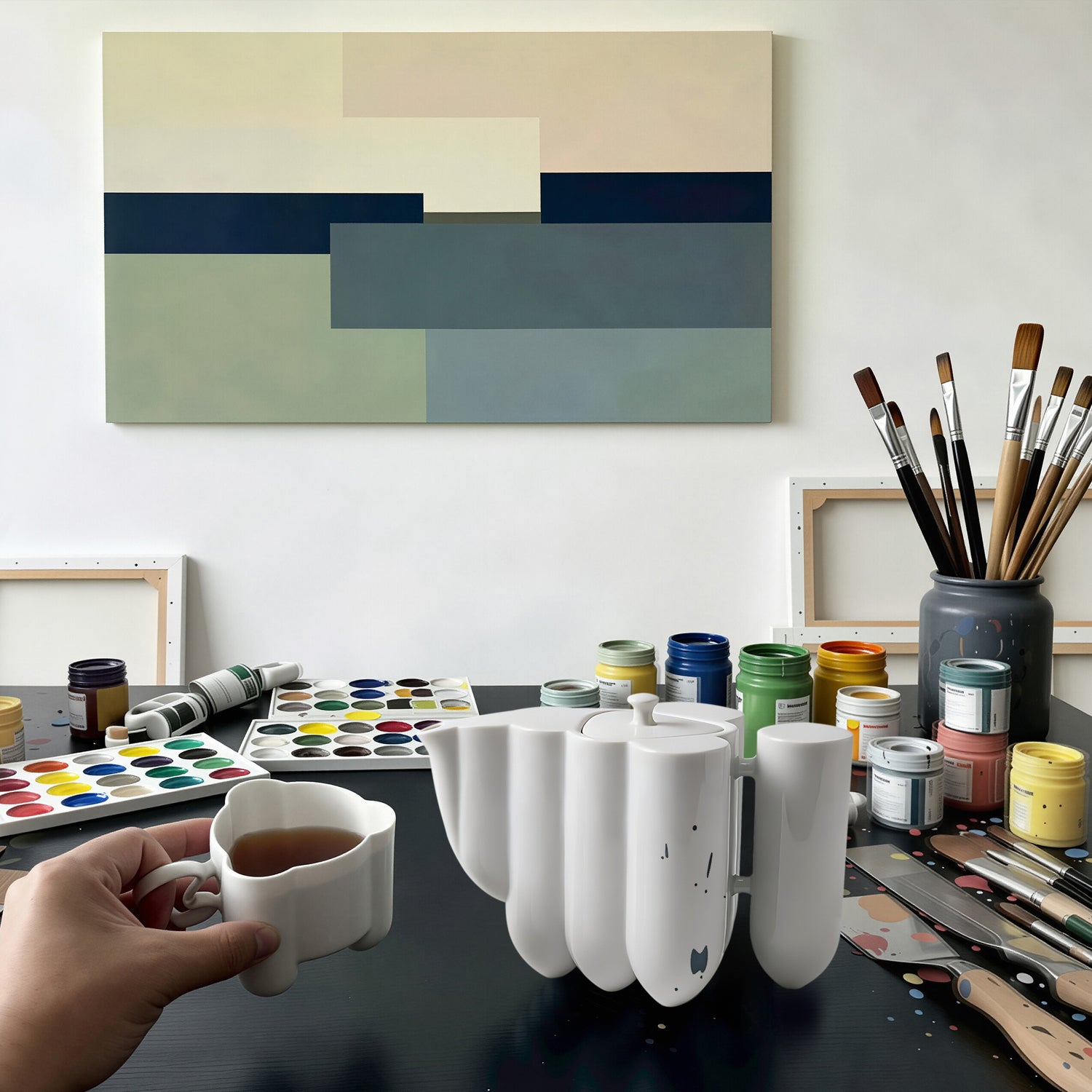
悠優9久白瓷茶壺手持情境|以建築感幾何重新詮釋當代茶席
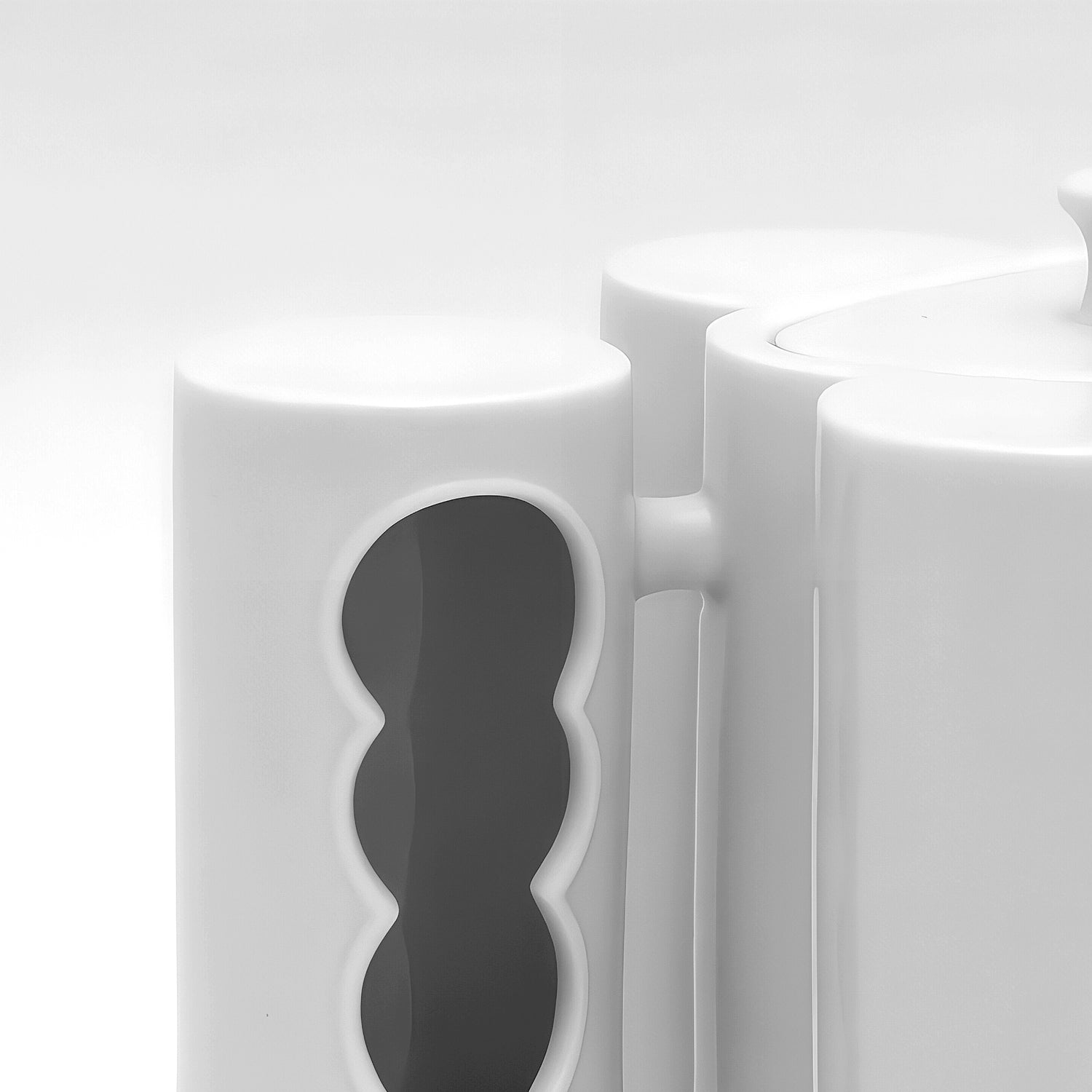
九柱幾何把手特寫|鏤空設計展現白瓷工藝與光影層次
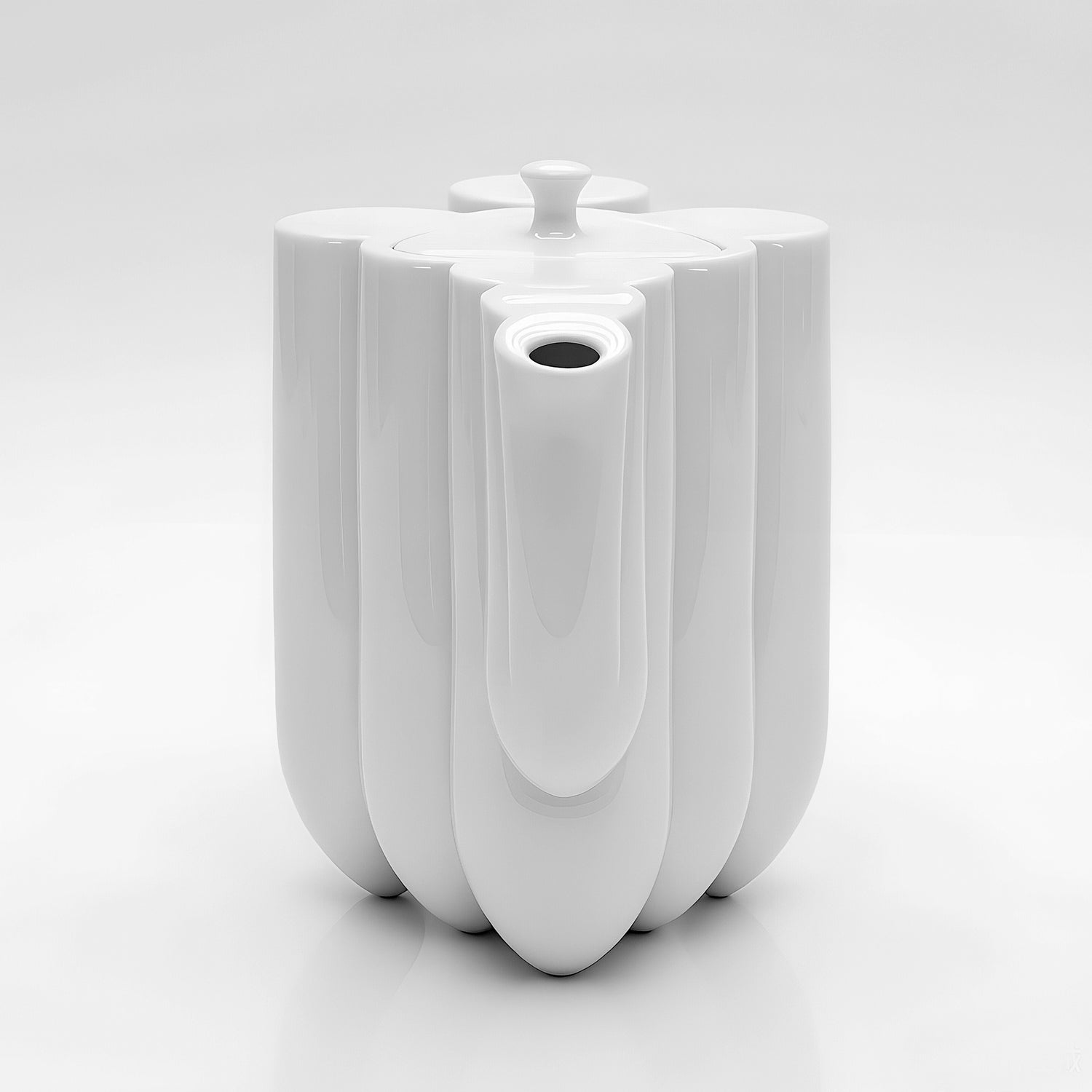
悠優9久白瓷茶壺正面圖|九柱結構與圓潤支腳設計
悠優9久白瓷壺杯組|當代東方茶器與幾何秩序之美
悠優9久 手作感白瓷造形壺杯組 設計師款白瓷 八方新氣
悠優9久花藝茶席情境|白瓷茶具與生活美學的日常風景
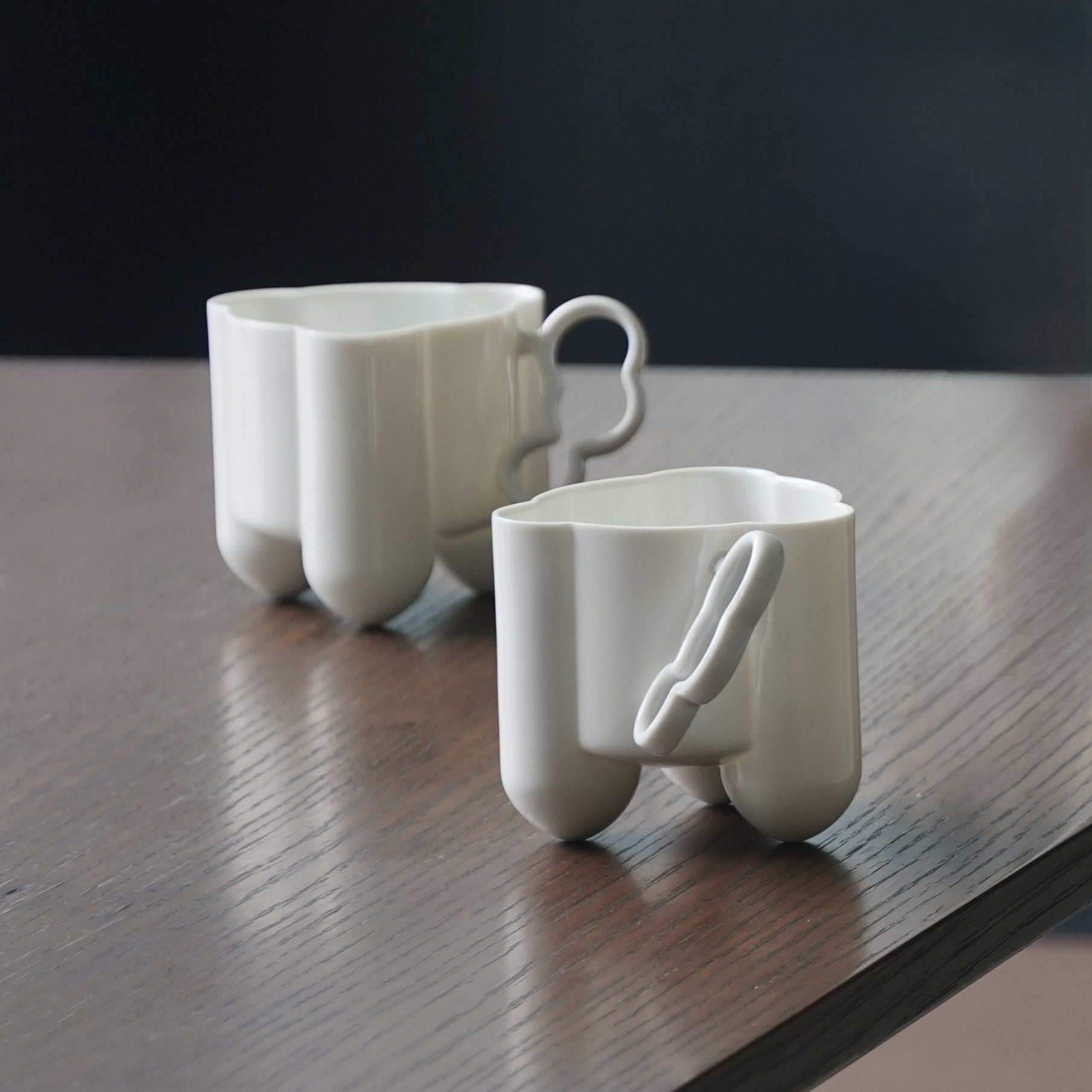
白瓷壺杯組近景|九柱幾何與雲形杯口設計
悠優9久白瓷茶壺特寫|九柱壺身與高溫燒製白瓷工藝
悠優9久雲形茶杯特寫|波浪杯口與幾何把手設計
悠優9久茶杯組|不同光線下展現白瓷光影層次
悠優9久白瓷壺杯組陳列|理性構築的詩意茶席
悠優9久茶杯組|幾何比例與當代生活美學
悠優9久 手作感白瓷造形壺杯組 完整茶席器物展現器度之美
悠優9久白瓷茶器陳列|九柱幾何與光影流動
悠優9久茶杯結構特寫|三足支撐展現建築感設計
悠優9久茶杯組近景|從容與優雅的白瓷器物
悠優9久 手作感白瓷造形杯組 設計師款白瓷 八方新氣
悠優9久茶杯組|極簡線條與當代東方設計
悠優9久 手作感白瓷造形壺杯組 完整茶席器物展現器度之美

為什麼是《悠優9久》|Why This Piece

Nine pillars — translating time into order

In Chinese cultural tradition, the number nine (jiǔ, 九) carries a weight that goes well beyond arithmetic. It is the highest single digit — the point at which counting reaches its natural ceiling before beginning again — and has been associated for millennia with completeness, the ultimate, and the enduring. The Emperor of China was surrounded by nine: the Forbidden City was built with 9,999 rooms; imperial robes were embroidered with nine dragons; offerings were arranged in multiples of nine. In the Chinese language, jiǔ (九, nine) is a homophone of jiǔ (久, lasting, enduring) — the two characters share a sound, and that sonic overlap carries meaning: nine is not just complete, it is permanent.

Heinrich Wang placed nine pillars at the heart of Timeless Grace. Each one echoes this cultural resonance — nine interdependent columns, each supporting the others, together forming something that is more than the sum of its parts. The teapot does not just contain tea. It contains time.

Reason builds poetry

An unfamiliar form dismantles habit. Within the order of the geometry, the restless pace of urban life finds somewhere to settle.

Light becomes part of the object

The convex and concave surfaces of the white porcelain move with the light, giving a monochrome object a quality of time — the piece shifts through the hours without changing at all.

From the senses to qì dù

Timeless Grace responds to the pace of modern life. In an era of information overload and fragmented time, an object can become an anchor for the mind — a moment of stillness in which, briefly, one returns to oneself.
Usage Scenarios

  • A moment of stillness in urban life

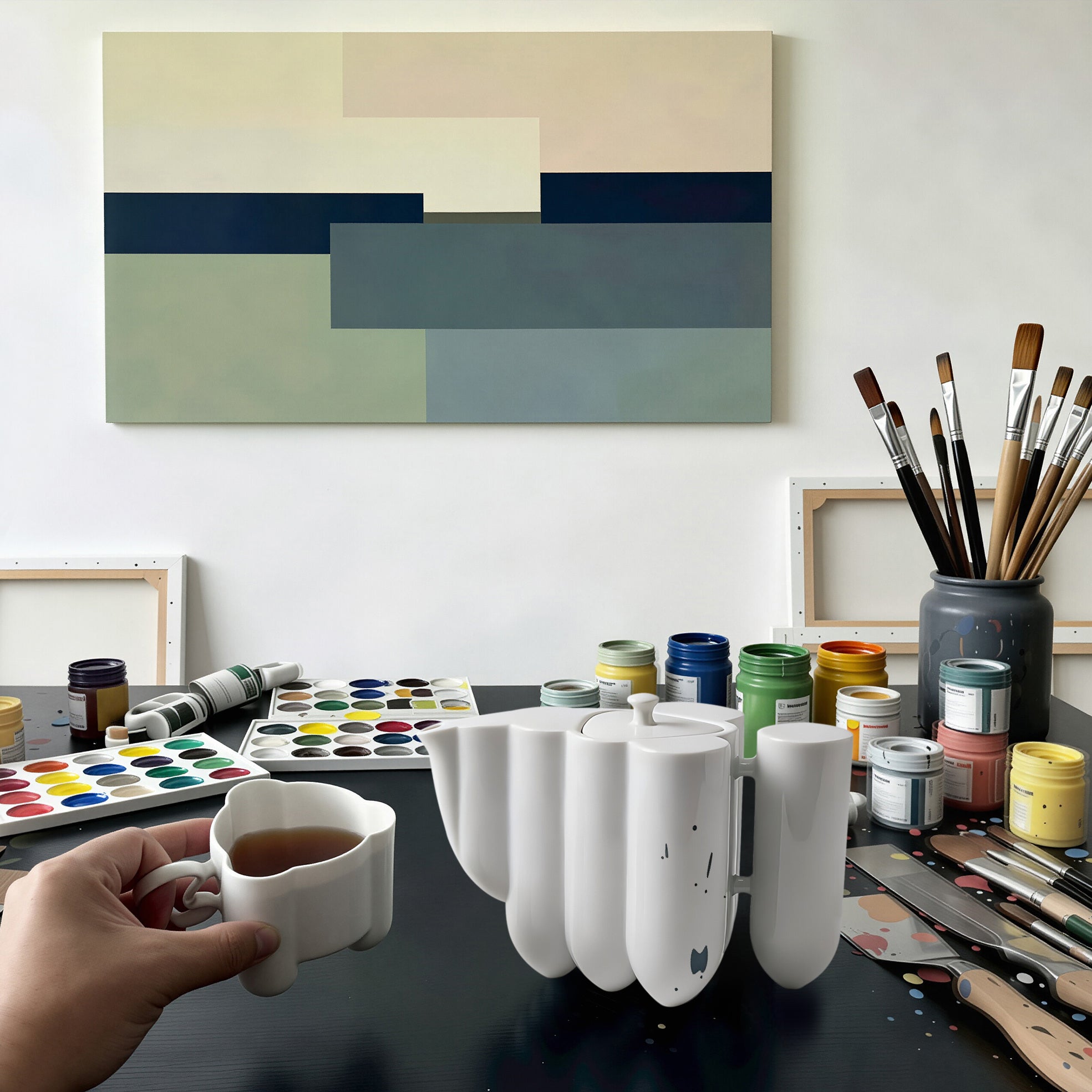
    The nine-pillar geometry of Timeless Grace begins its work the moment the teapot is lifted from the table. Light, line, and order awaken the six senses — sight, hearing, smell, taste, touch, and awareness — and what was restless settles into ease.

  • Tea with someone worth the time

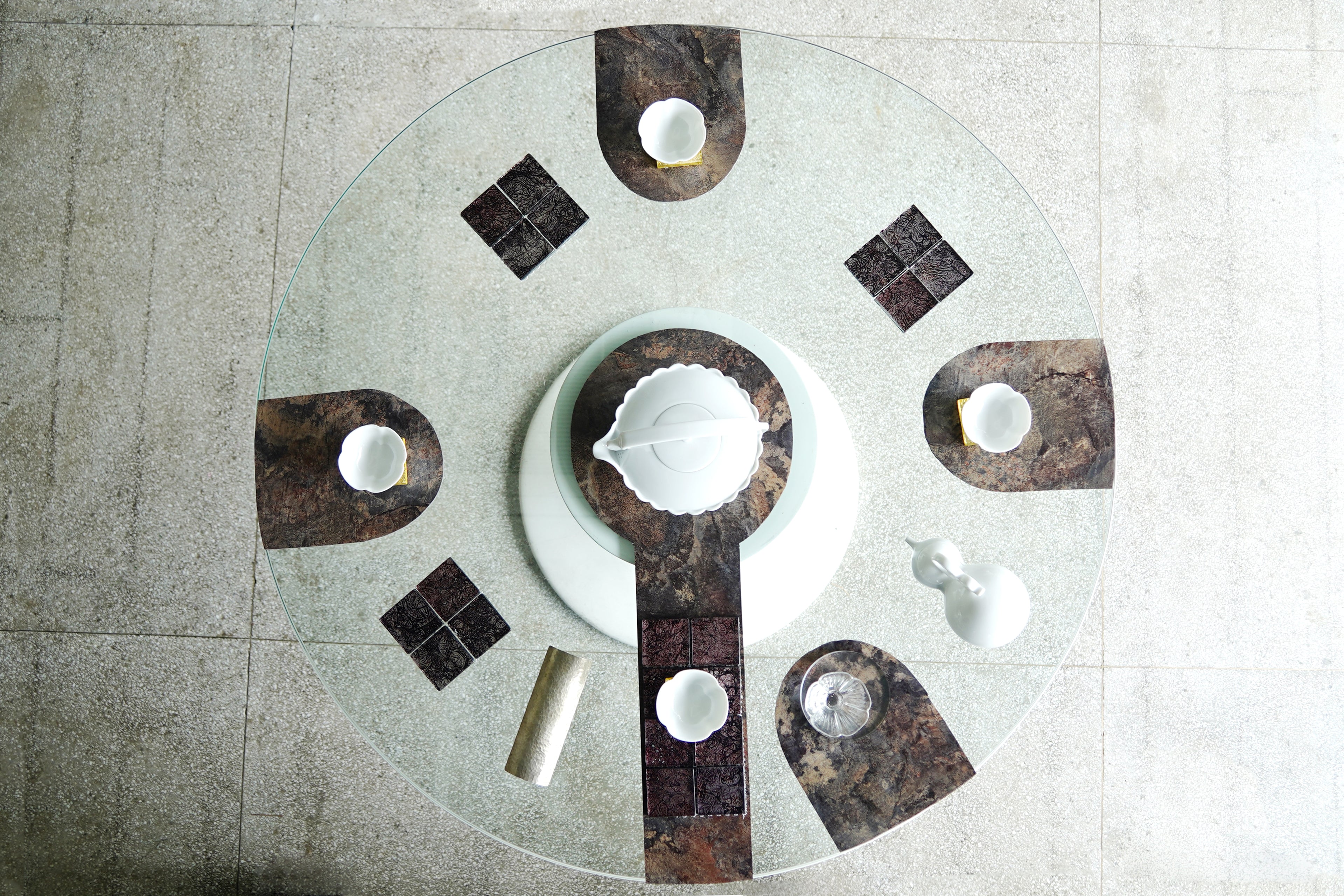
    "Pour the universe. Sip the seasons." Timeless Grace gives the act of drinking tea a quality of depth. The pot floats lightly above the table; the cup stands on its three feet. Two people, seated across from each other, the warmth of the tea working slowly through the order of the objects between them — "the mind follows the moment, naturally at ease, elegantly itself."

  • Study, living room, and contemporary home display

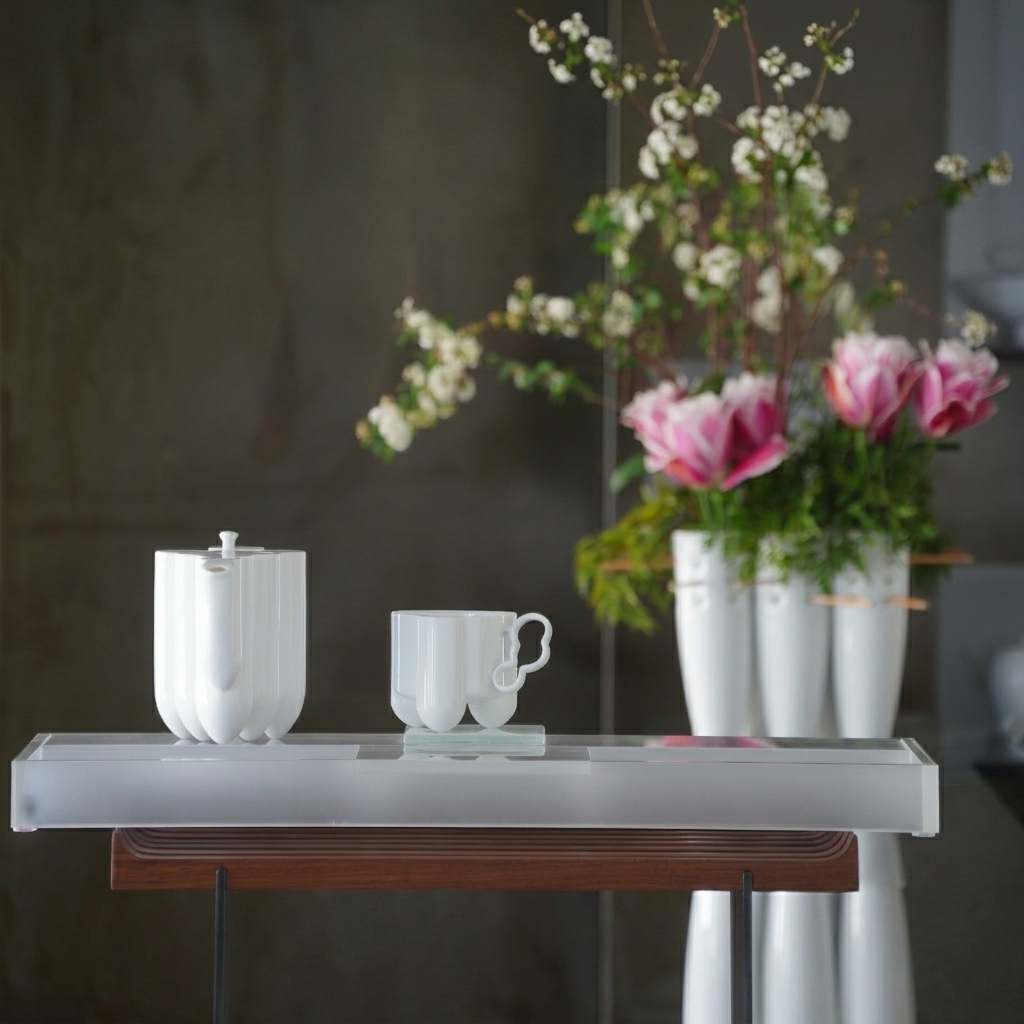
    The nine-pillar geometry of Timeless Grace has strong sculptural presence in a study or modern interior. When not in use, light moves between the pillars and the piece continues to speak. For spaces that favor a contemporary design vocabulary.

白瓷壺杯組近景|九柱幾何與雲形杯口設計

設計細節|Design Detail

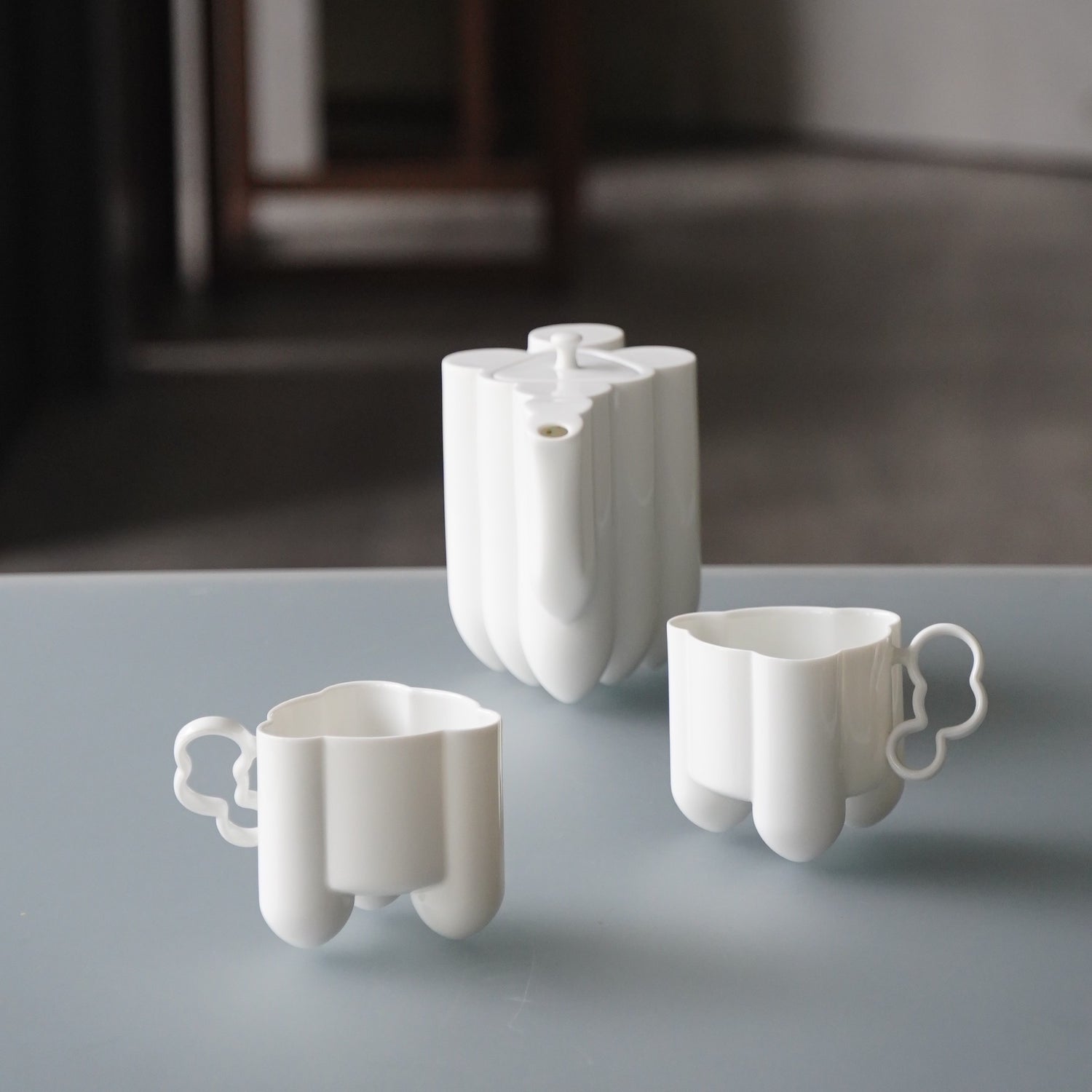
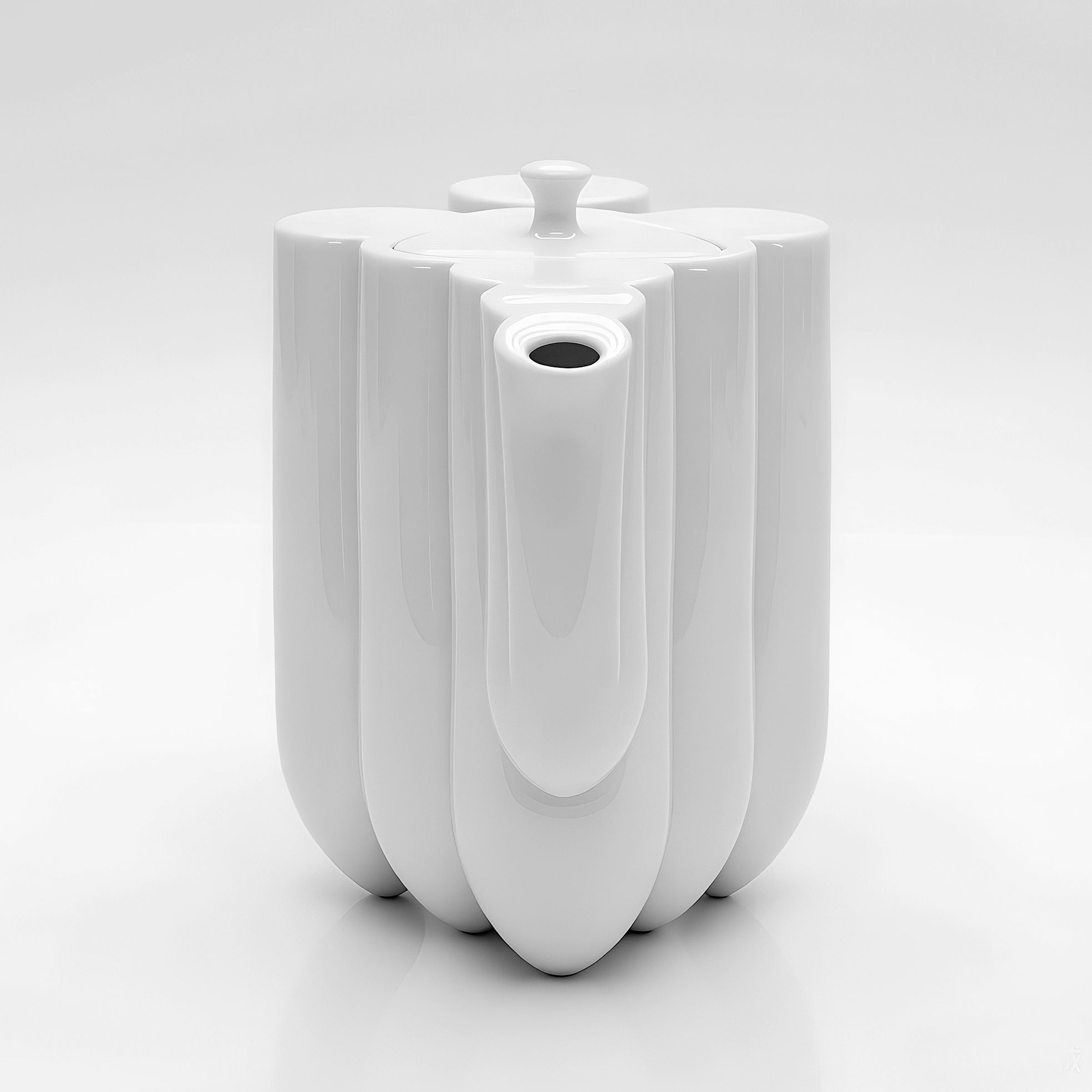
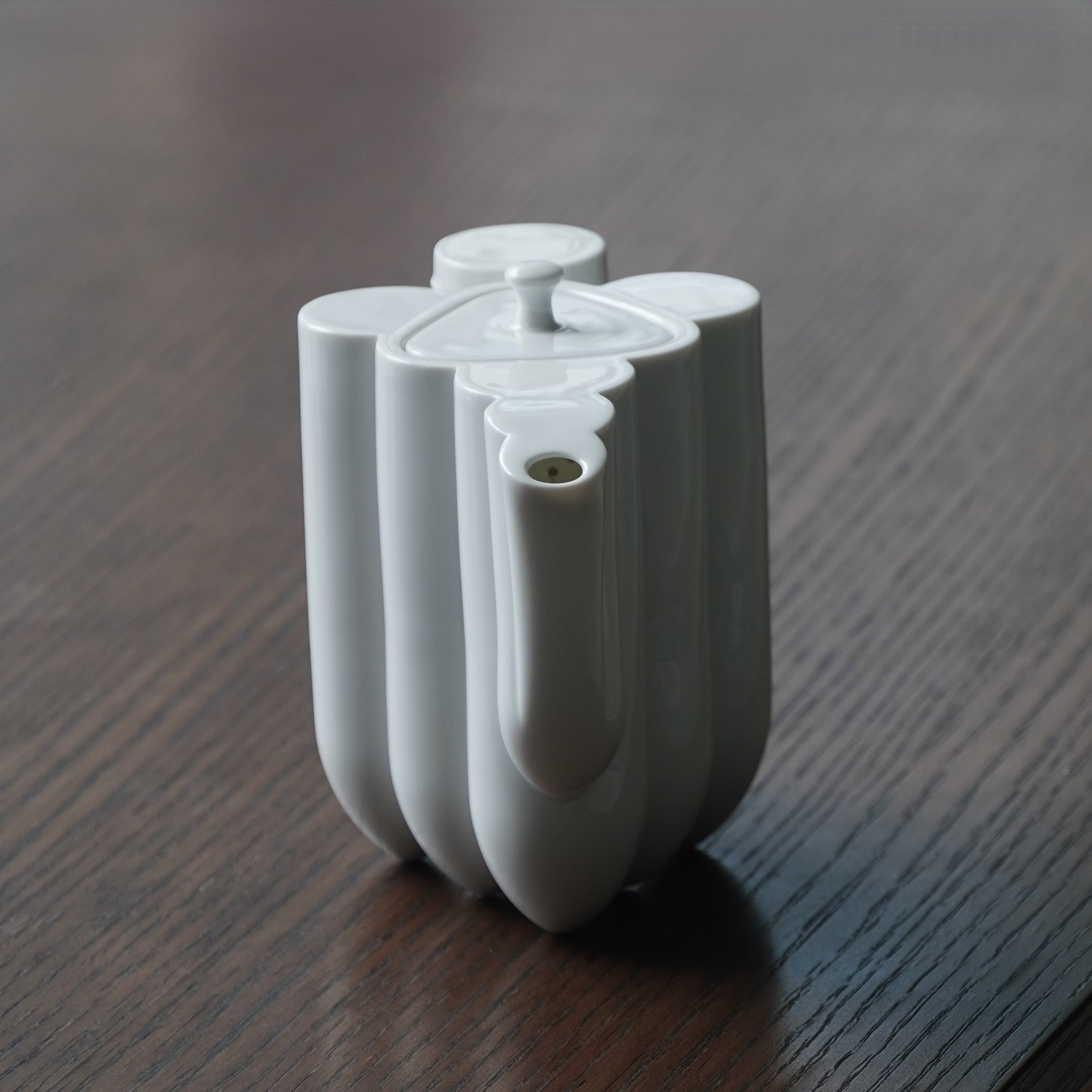
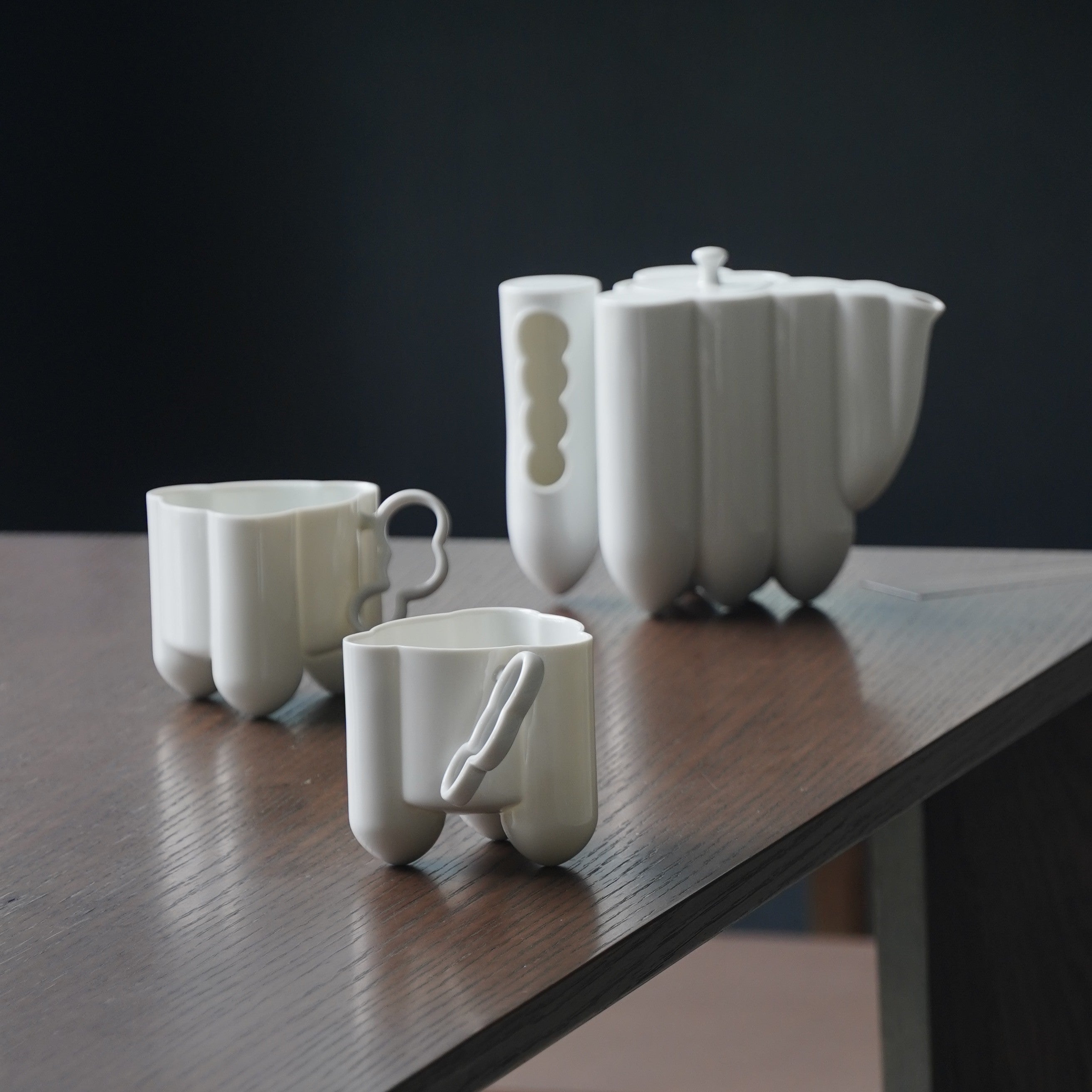
The nine-pillar teapot body

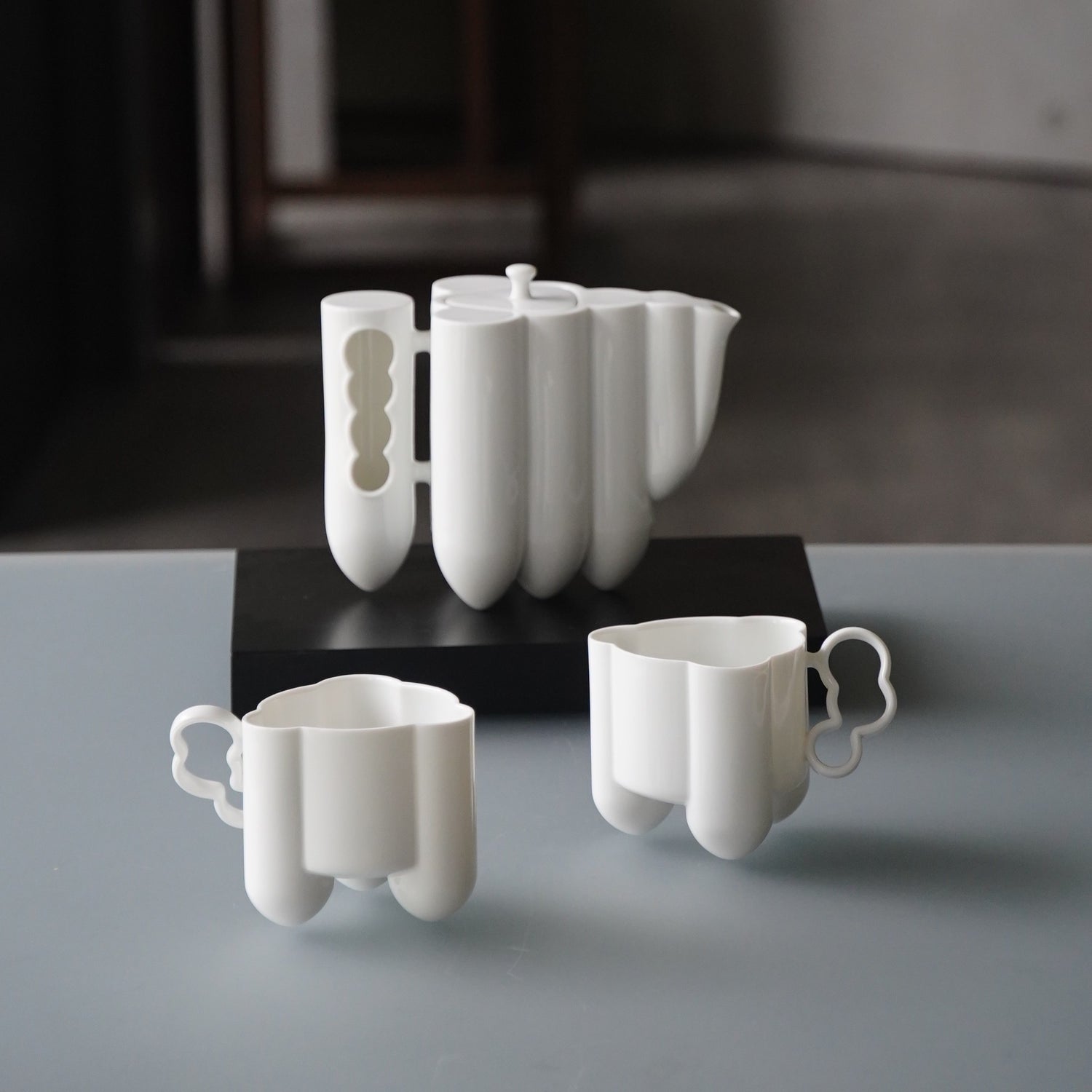
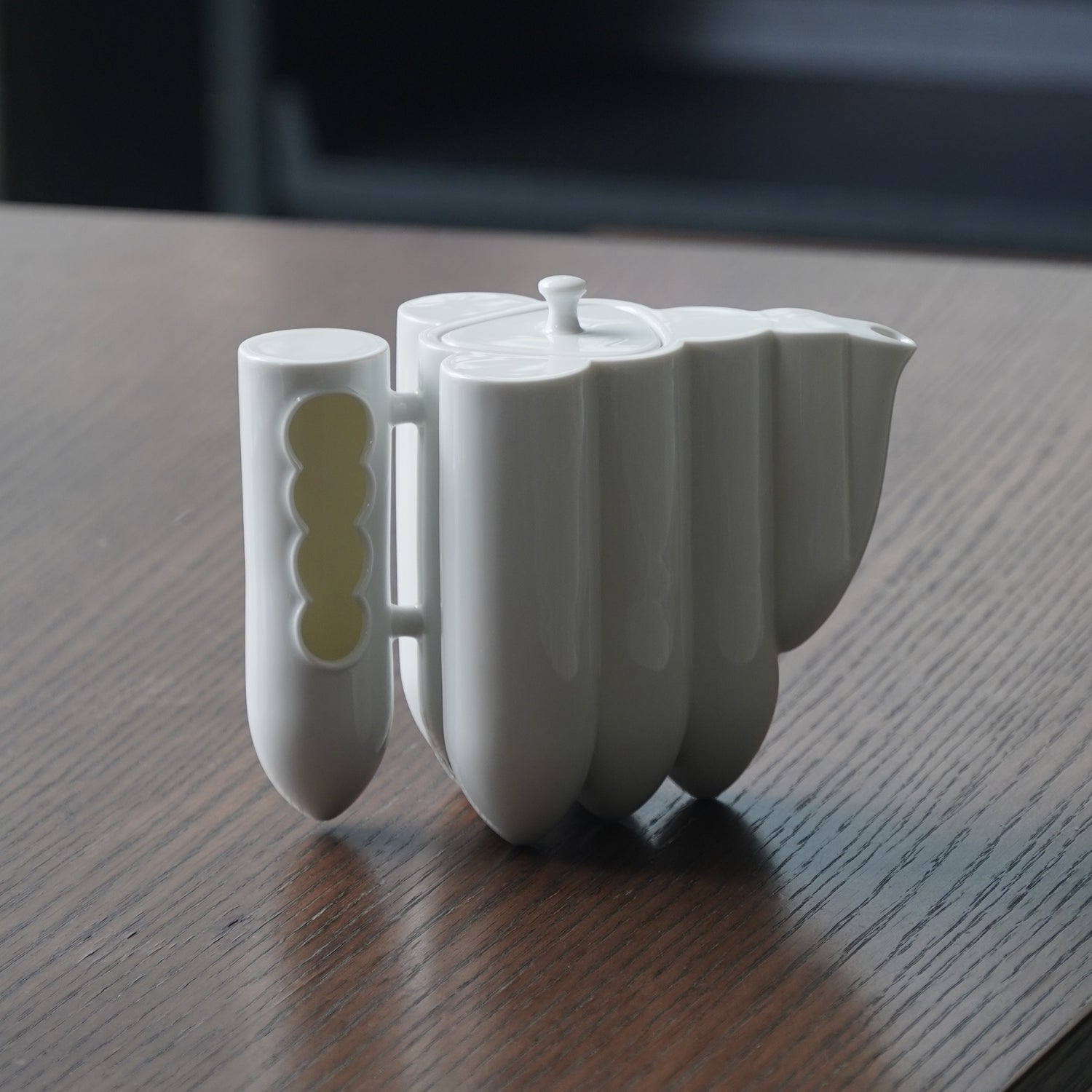
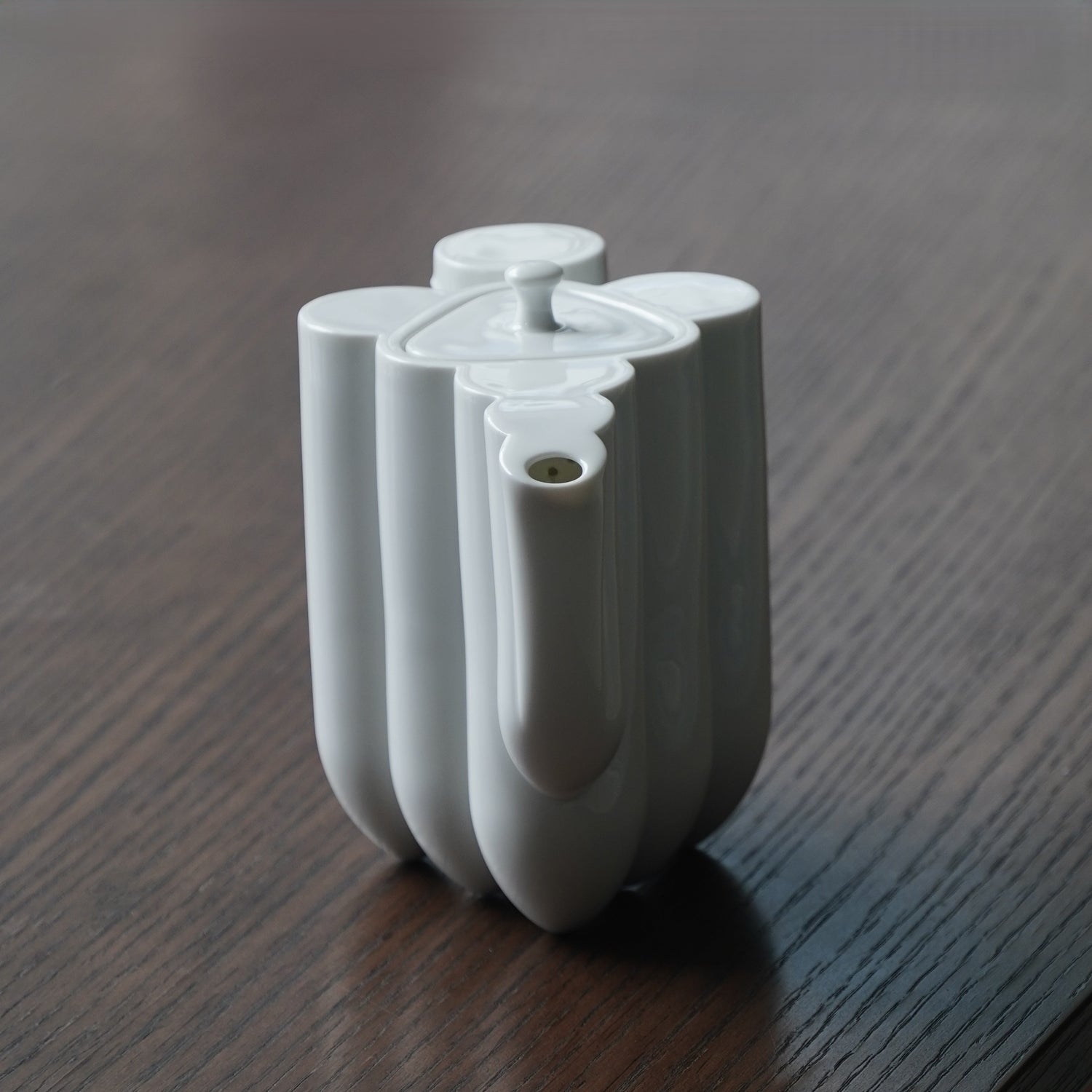
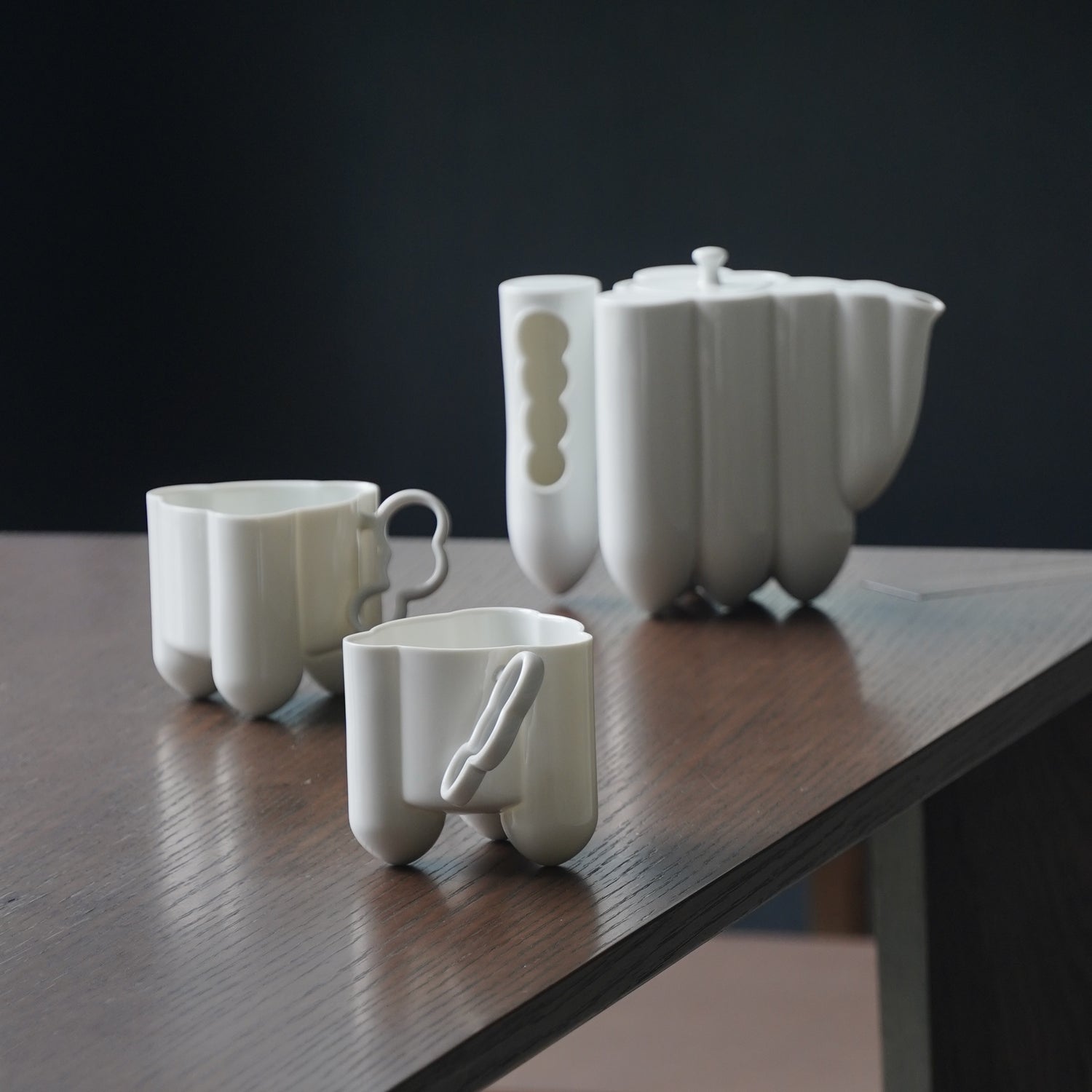
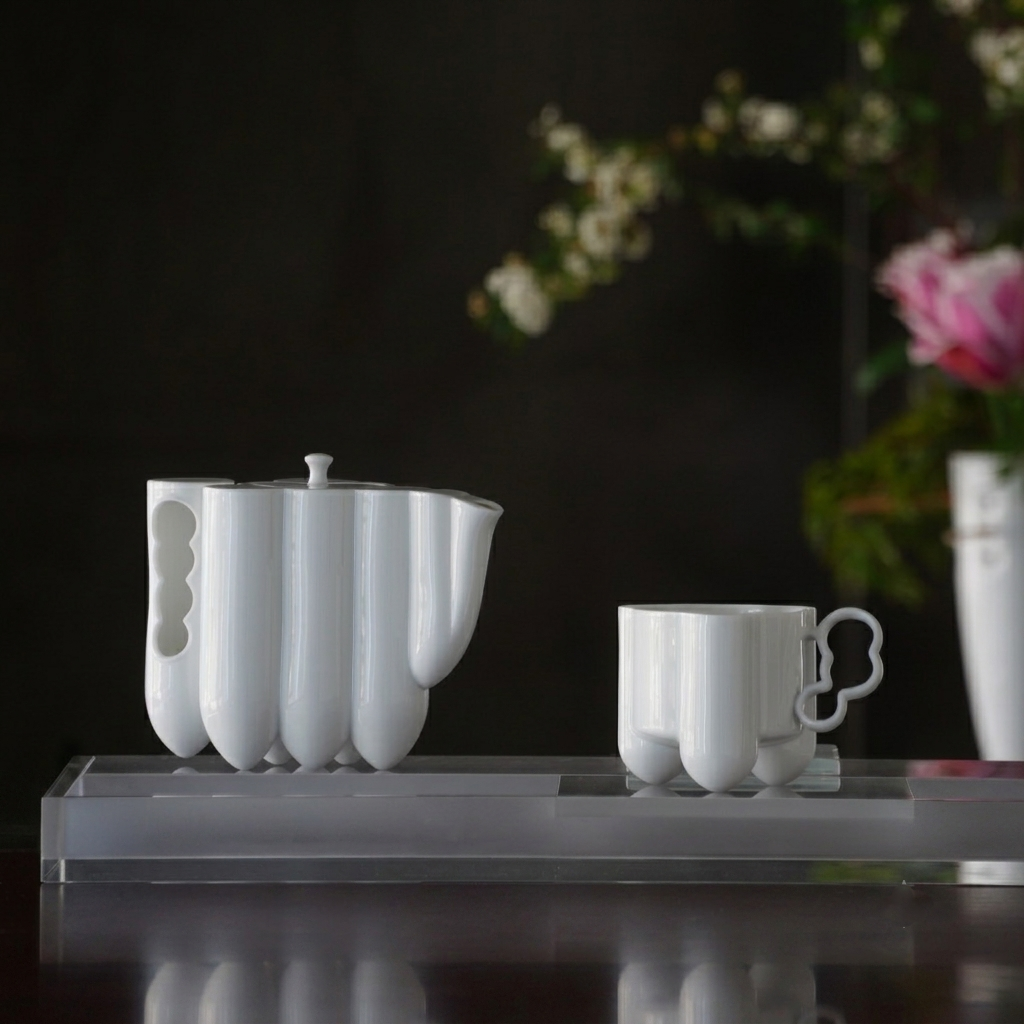
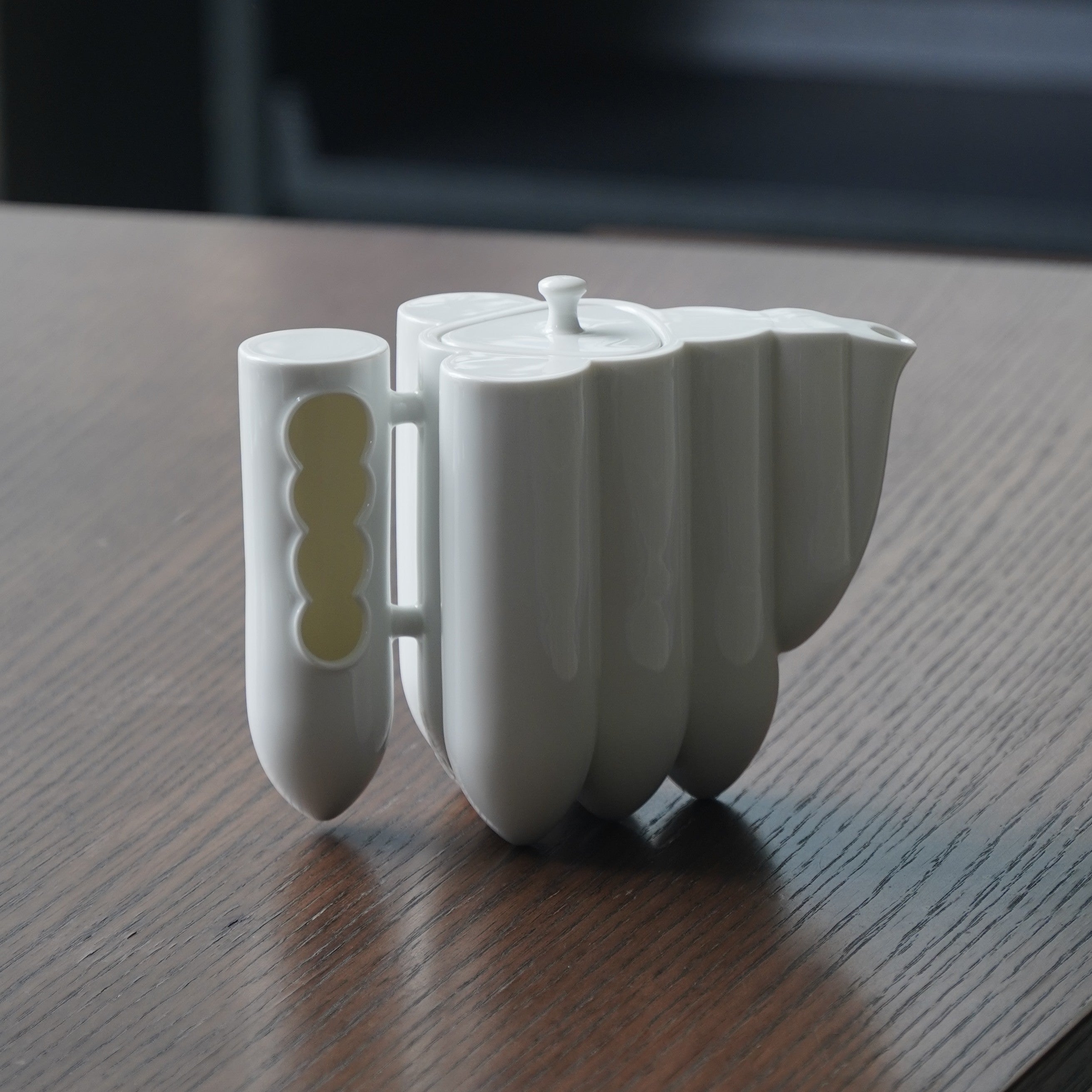
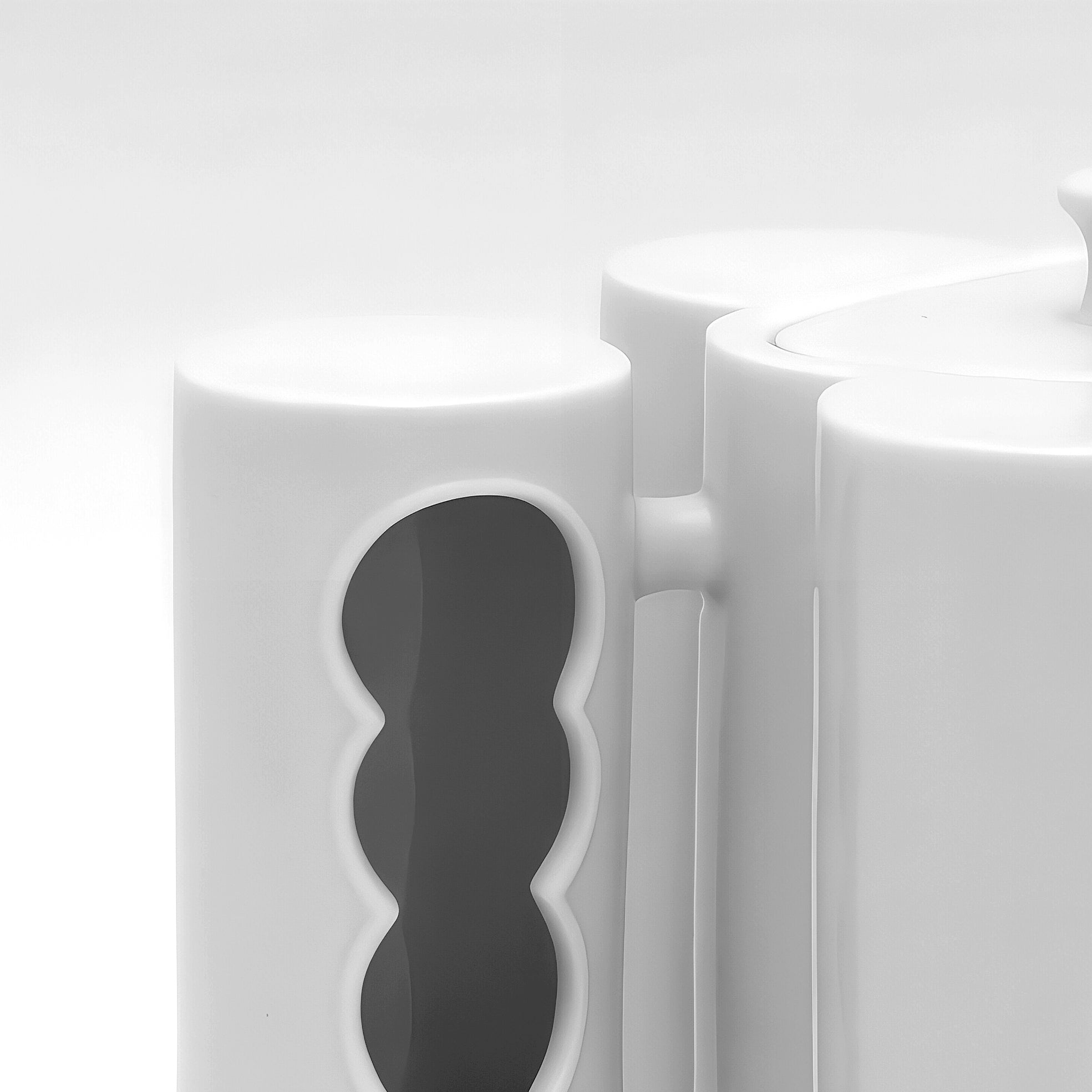
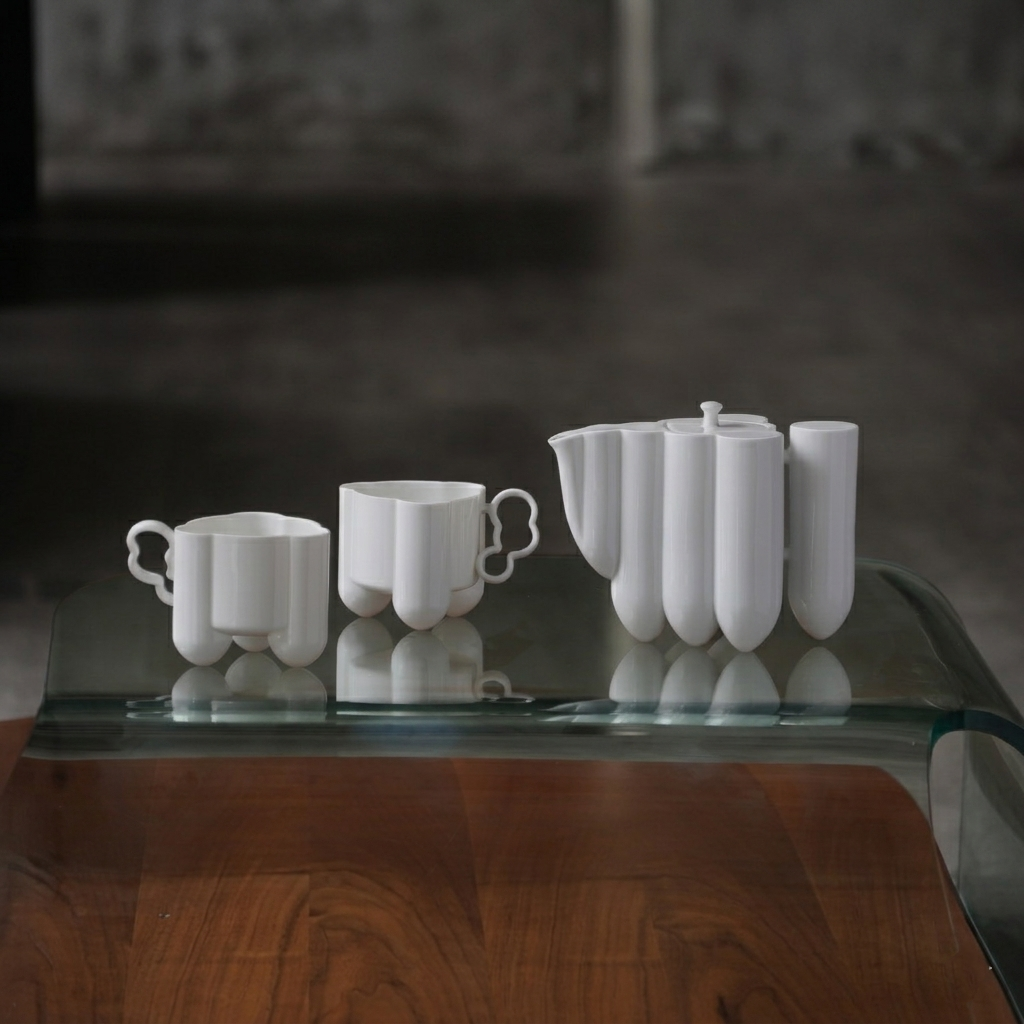
The nine cylinders that form the body of Timeless Grace are not uniform in height — they rise and fall in natural steps, with the quality of a modern architectural elevation. The spout extends from the line of one of the cylinder groups, tracing a flowing arc like the contour of a mountain range. The spout is not added to the body. It grows from the structure.

Cloud-rim cup and three-footed base

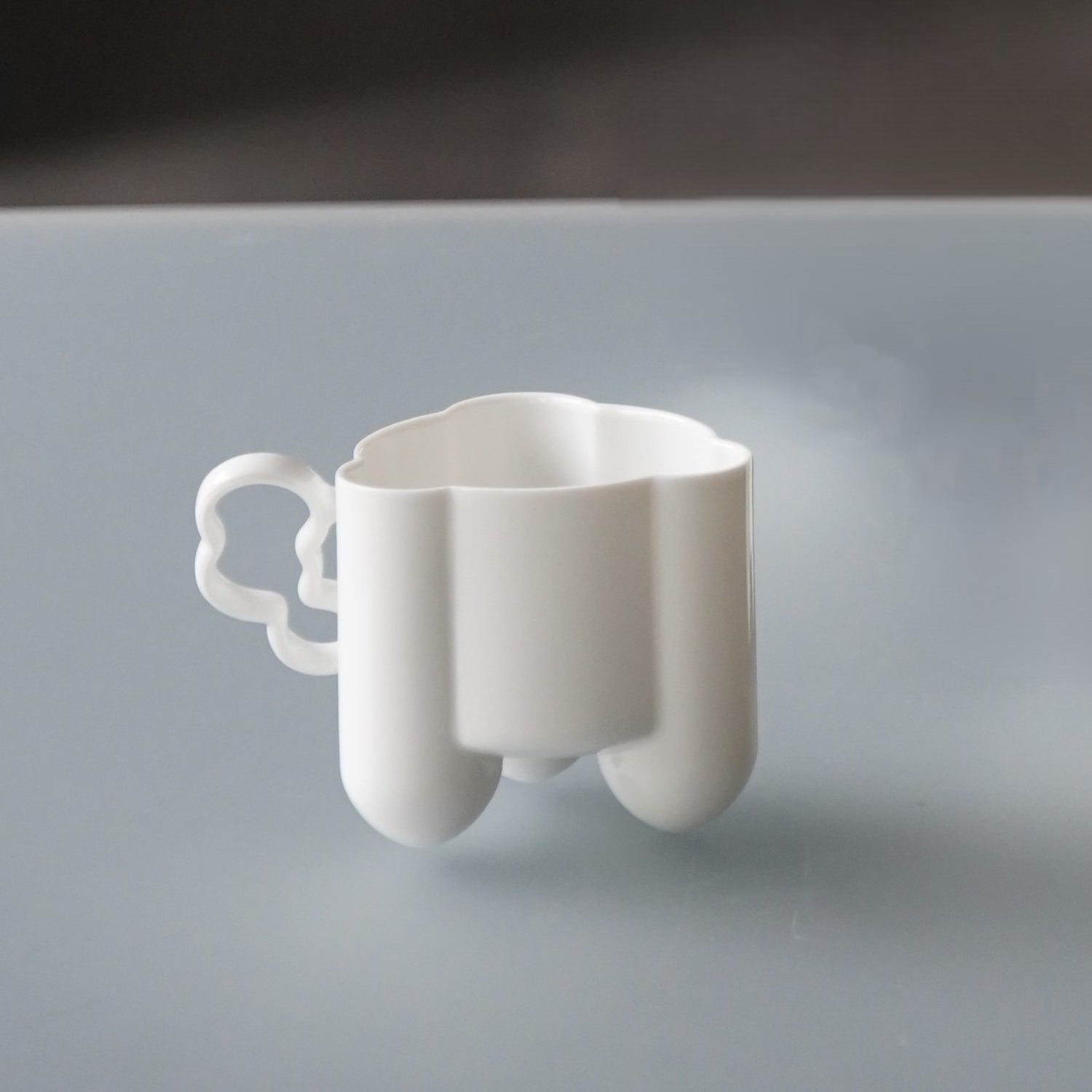
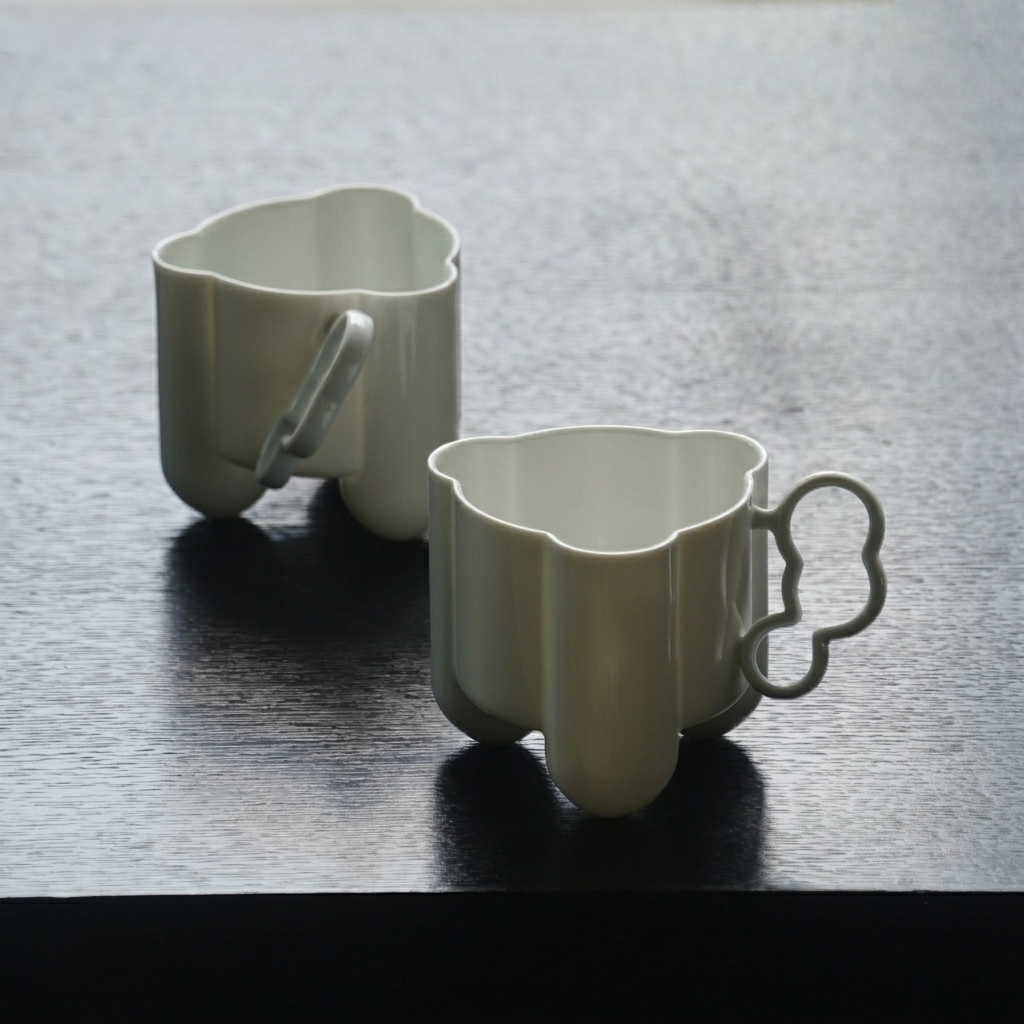
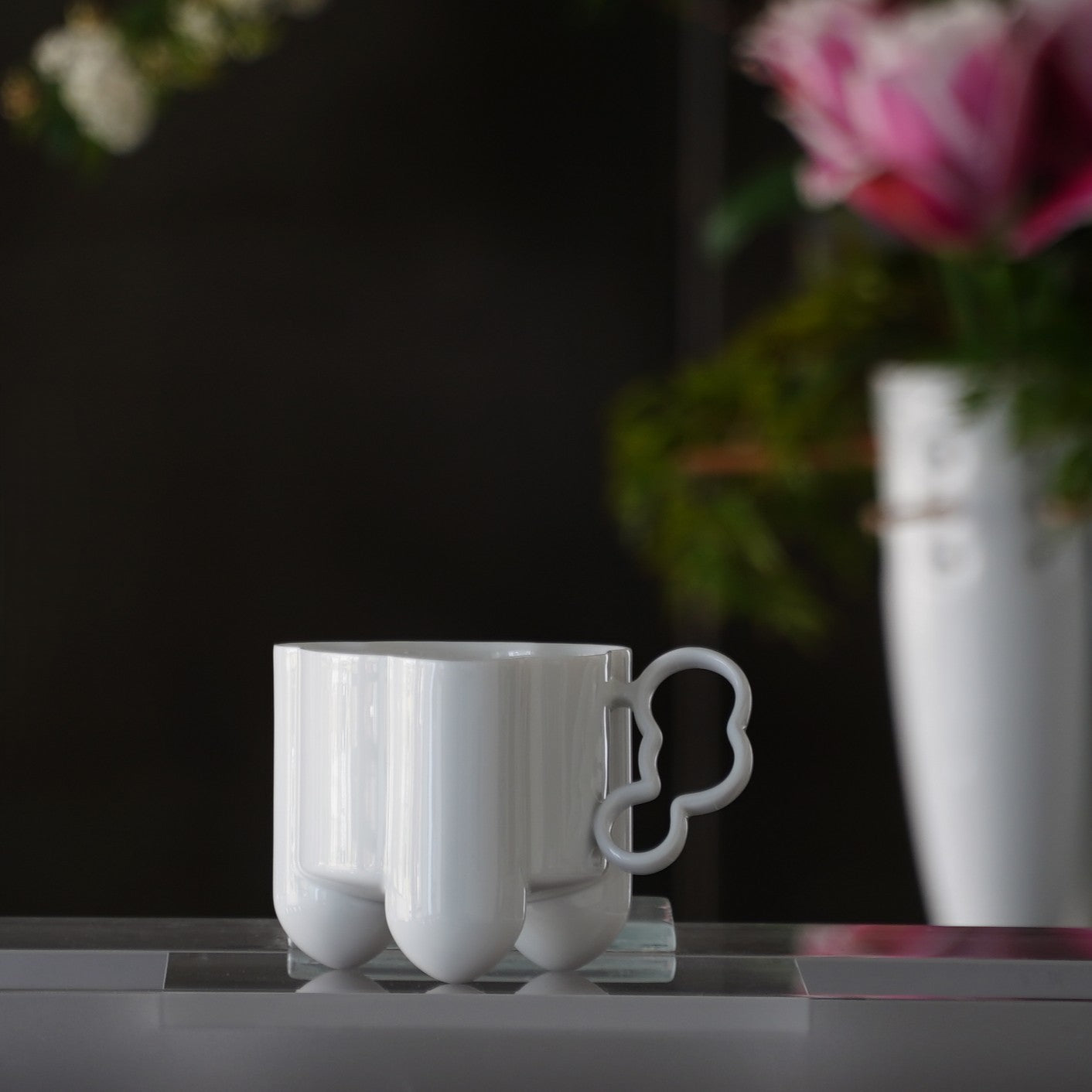
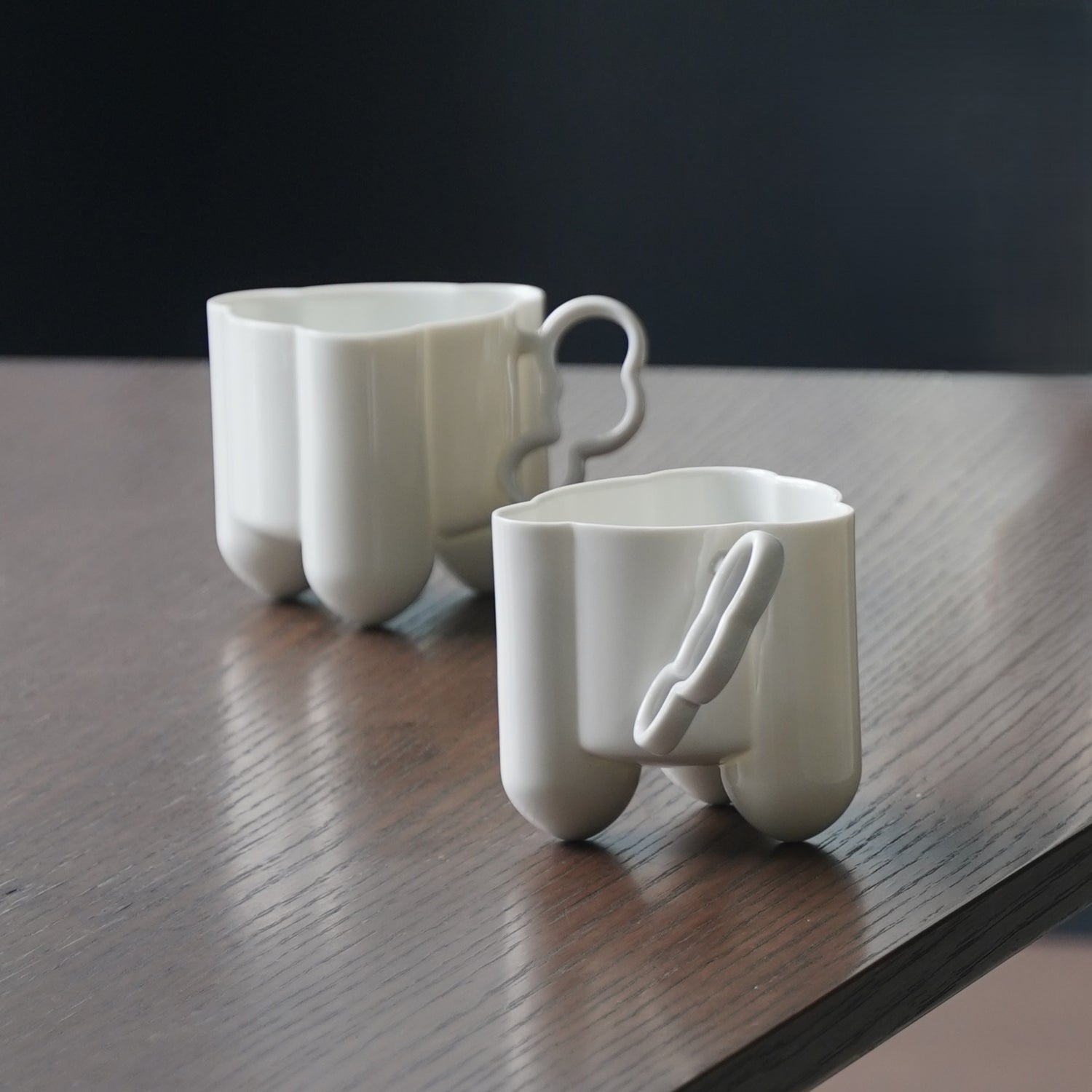
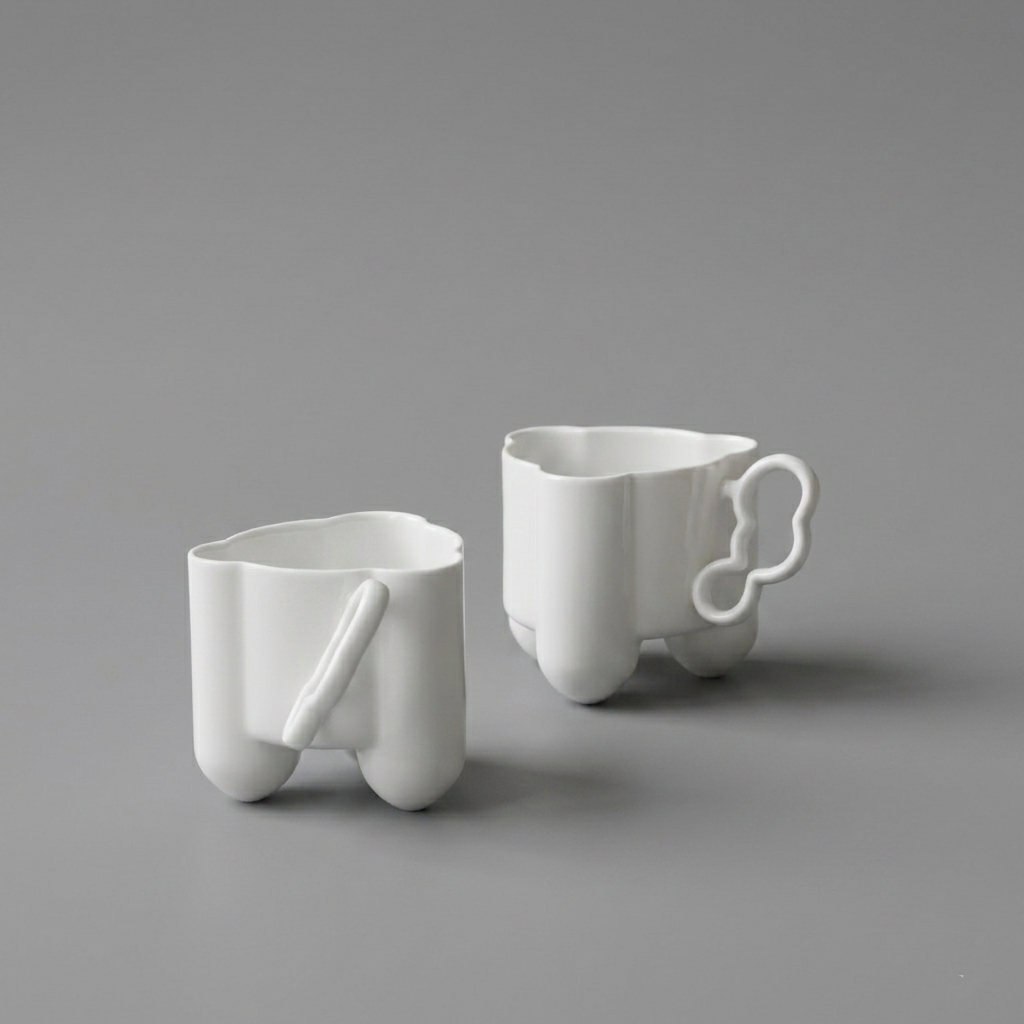
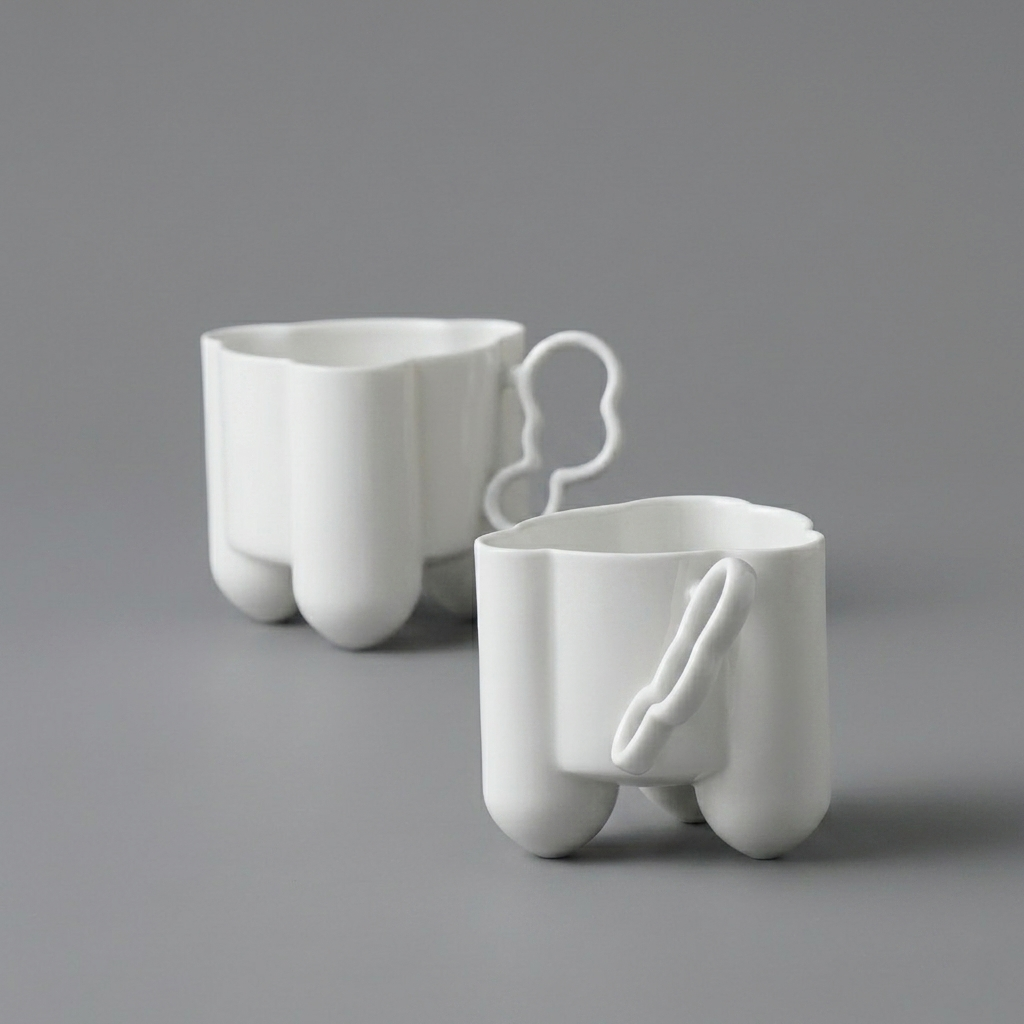
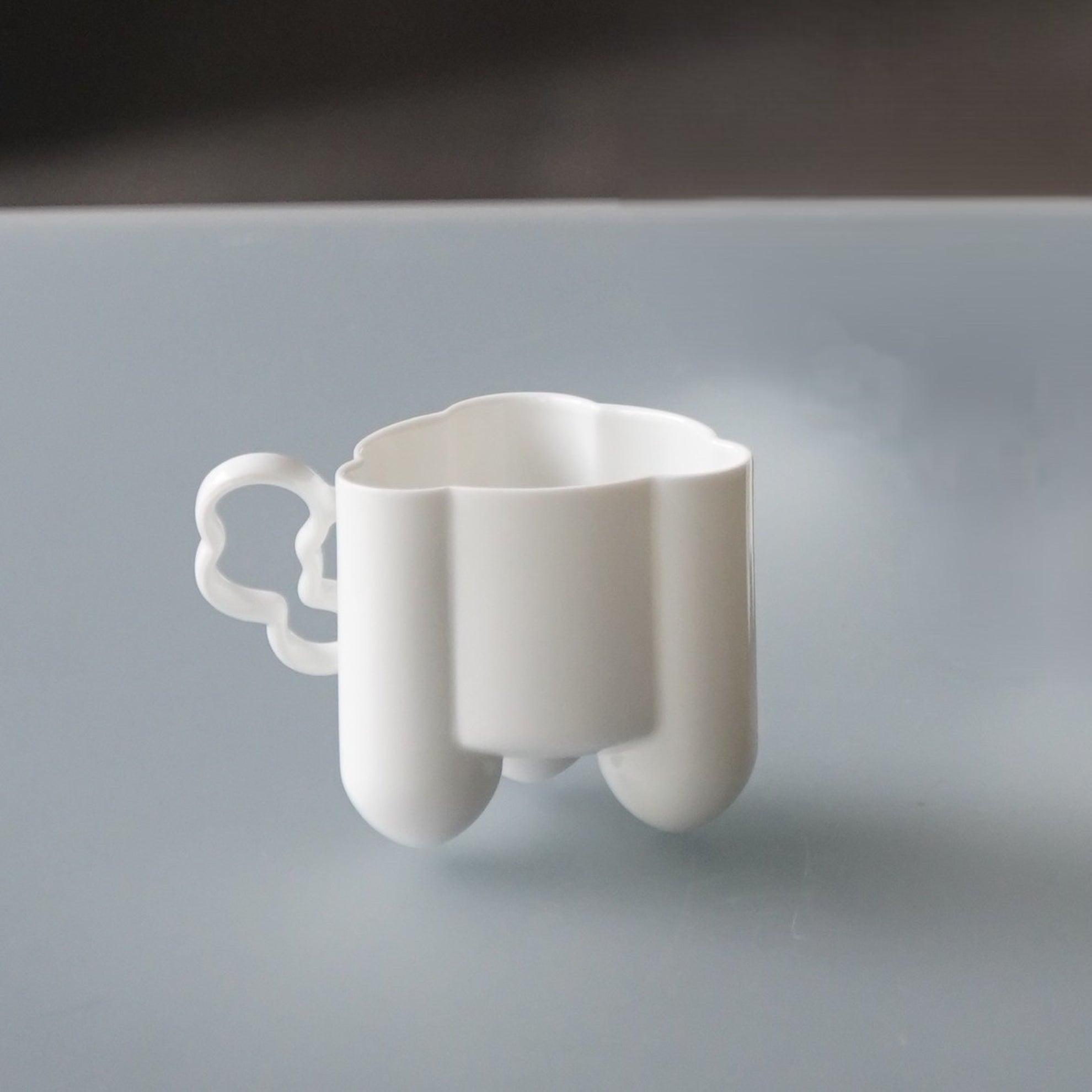
The cups continue the cylinder logic of the teapot body — the rim moves in elegant wave-cloud curves that echo the teapot's crown. The base is supported by three full conical cylinders, creating a tripod stance of immediate visual identity: stable, and full of contemporary ease. Each time the cup is set down, the three feet touching the table surface is itself a small ceremony.

The play of light

In the refraction of light and shadow, the convex and concave surfaces of the nine-pillar form produce an exceptionally rich range of gradations — turning a monochrome porcelain object into a three-dimensional sculpture of moving light. Morning sun, afternoon angle, evening lamp: Timeless Grace continues to evolve under different conditions, a piece that breathes with time.

Product Detail

Design Concept

To understand Timeless Grace, it helps to begin with the question Heinrich Wang poses in Qì Dù (器度 — The Measure of the Object): tea culture has evolved for a thousand years, yet the form of the teapot has barely moved. "The long-stalled evolution of teaware has held back the development of tea culture itself. How to draw out the essence of tradition and reconstruct it in a contemporary language — this is the challenge that today's drinking vessels must face directly."
Wang describes the aesthetic of the contemporary urban professional in terms of "regulated geometric imagery, industrial hard materials, rhythmic fragmented arrangements" — self-disciplined and composed, yet alive. Timeless Grace is the complete expression of this vision: the nine-pillar geometry is the "regulated geometry"; the stepped variations in height are the "rhythmic arrangement"; the light moving across the white porcelain surfaces is the meeting of "industrial precision" and "poetic perception."
"The object is the starting point; the measure is the destination. The measure is not only a quantity — it is a change in the state of mind produced by the object shaping a world. It encompasses ease of bearing, warmth of feeling, active attitude, orderly principle, and the reach that connects past to present."

Timeless Grace holds all of this: "Yōu" (悠) is ease of bearing; "Yōu" (優) is depth of character; "Jiǔ/Jiǔ" (九/久) is the reach that connects past to present. In the act of drinking tea, one enters the realm of "reason building poetry" — Heinrich Wang's most complete statement on what a contemporary drinking vessel can be.

Philosophical context drawn from Heinrich Wang, Qì Dù (器度), 2025.

Occasions or Usage

Personal use: The contemporary practitioner who wants the daily act of tea to carry intention; the collector drawn to geometric aesthetics and the play of light

Gifting: A close friend who values both design and tea culture philosophy; a significant milestone gift worthy of long-term keeping

Collecting: The craft difficulty of the nine-pillar geometry and its complete embodiment of the Qì Dù philosophy make this one of the most formally adventurous pieces in the NewChi Porcelain range

Ideal For

Those who love modern Eastern aesthetics. Those who collect considered white porcelain design. Those who value the rhythm and ritual of daily life. Those seeking a meaningful gift for a new home, a promotion, or a significant occasion.

Dimension

Teapot: L18.6 × W10.7 × H14.8 cm
Cup: L12.4 × W8.8 × H8.3 cm

  • Pour — the universe.

    Receive the radiance of mountains, rivers, sun, and moon.

    Gather the spirit of pine, cypress, ridge, and hill.

    Sip — the seasons.

    Let eye, ear, nose, tongue, body, and mind

    taste sensation and knowing, unhurried and refined.

    Composed and self-possessed,

    savoring the aftertaste: 9 · 9.

    — Heinrich Wang

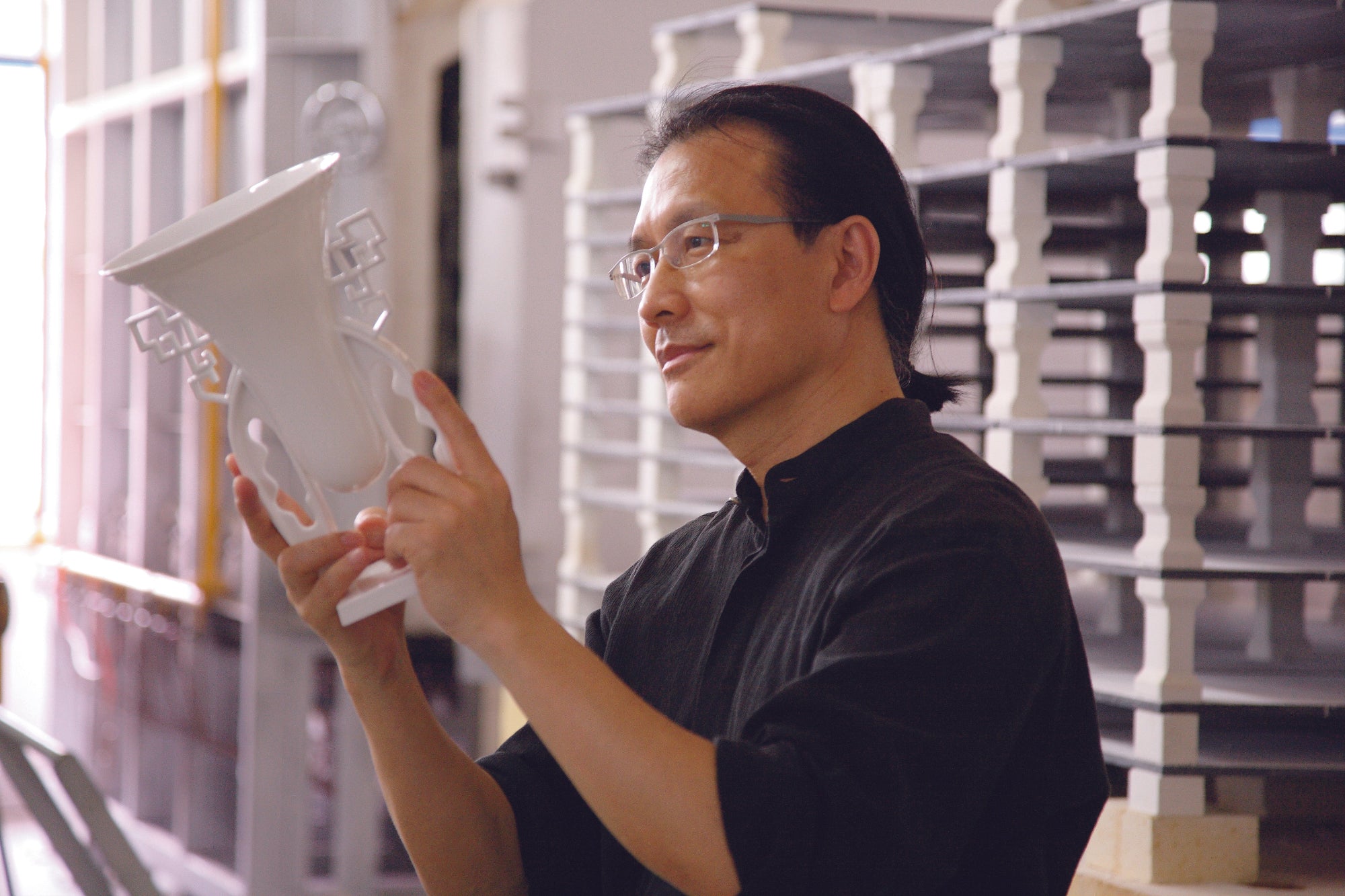
八方新氣與琉園創辦人王俠軍

About the Artist | Heinrich Wang

Heinrich Wang, founder of NewChi Porcelain and Tittot, is one of Taiwan’s most representative contemporary artists in white porcelain and liuli glass. Renowned for infusing philosophy and poetry into object design, his works have been exhibited at the National Museum of History in Taiwan, the Taiwan Craft Research and Development Institute, and the Triennale di Milano, earning recognition from collectors worldwide. Every porcelain piece is personally overseen by Wang, offering an aesthetic choice that unites artistry, cultural depth, and practical function.

What is the significance of the nine pillars in Timeless Grace?

In Chinese cultural tradition, nine (jiǔ, 九) is the highest single digit and one of the most auspicious numbers in the culture. It represents completeness, the ultimate, and the enduring — emperors surrounded themselves with it, and the imperial palace was designed around multiples of nine. Crucially, the Chinese character for nine (九, jiǔ) is a homophone of the character for "lasting" or "enduring" (久, jiǔ) — the two words sound identical, and Chinese culture has long treated that sonic overlap as a meaningful one: nine is not just complete, it lasts.

Heinrich Wang built nine pillars into the teapot body to carry all of this. Each pillar supports the others; none stands alone. Together they form an order that is both structural and philosophical — the nine-pillar geometry embodies jiǔ (九, completeness) and jiǔ (久, endurance) simultaneously, making the act of holding the teapot an encounter with both meanings at once.

How does the light effect work? Is it added or designed in?

It is entirely structural — no additional decoration, coloring, or treatment is applied to the surface. The nine-pillar form creates a landscape of convex and concave surfaces across the body of the teapot and cups. As light moves across these surfaces — or as you move around the piece — the angles of incidence change, and the shadows that fall between the pillars shift in depth and gradation. The same piece reads differently in morning light than in afternoon light, and differently again under artificial light in the evening. This quality is intrinsic to the geometry: the design is the light effect.

What is Timeless Grace suitable for as a gift?

Timeless Grace carries the meaning of yōu (悠, unhurried ease), yōu (優, depth of character), and jiǔ/jiǔ (九/久, the completeness and endurance that nine represents in Chinese culture) — a combination of aspirations that suits any occasion marking a significant threshold. New home, career promotion, retirement, a significant birthday, or the kind of milestone that deserves an object worth looking at for decades: Timeless Grace is a gift with a philosophy inside it. Ships in a gift box. Teapot and cup available individually or as a complete set.

Why does Timeless Grace look so different from a traditional teapot?

Timeless Grace deliberately steps away from the familiar rounded silhouette of the traditional teapot.

Heinrich Wang believes that when an object becomes too familiar, it is easy to follow it on autopilot — and that an unfamiliar form has the power to reawaken the ability to truly look and truly feel.

Timeless Grace therefore reconstructs the visual language of the teapot through nine-pillar geometry, so that drinking tea is no longer simply a repetition of the everyday, but a practice of perception and self-awareness.

What tea works best in Timeless Grace?

The open form of the Timeless Grace teapot suits any type of tea without restriction. From a design philosophy perspective, Heinrich Wang describes the ideal tea experience as "pouring the universe, receiving the radiance of mountains, rivers, sun, and moon, gathering the spirit of pine, cypress, ridge, and hill, sipping the seasons" — this is a vessel without limitation, and the right tea depends entirely on the mood of the person brewing it. For practical guidance, a high mountain oolong or a light-roast tieguanyin — both rich in fragrance and layered in complexity — pair naturally with the visual richness of the nine-pillar geometry, making the full sensory experience more complete.

Dragon Boat Festival Selections

Creativity

Keeping pace with modern style, crafting moving stories of our era through contemporary aesthetics and emotion.

Craftsmanship

Exquisite mastery shapes each piece into a refined creation that carries both tradition and innovation.

Poetry

With symbolic blessings and a sense of solemn ceremony, exploring an aesthetic dialogue that unites body and soul.