
Editor’s Note
Timeless Grace is one of the signature works from Heinrich Wang’s Vessel & Measure collection.
In this design note, Wang begins with a vessel composed of nine cylindrical forms to explore the relationship between order, time, and perception. Through a contemporary geometric language, he reflects on how design can awaken the senses—allowing rational structure to give rise to poetic experience, and transforming the ritual of tea into a quiet awareness of everyday life.
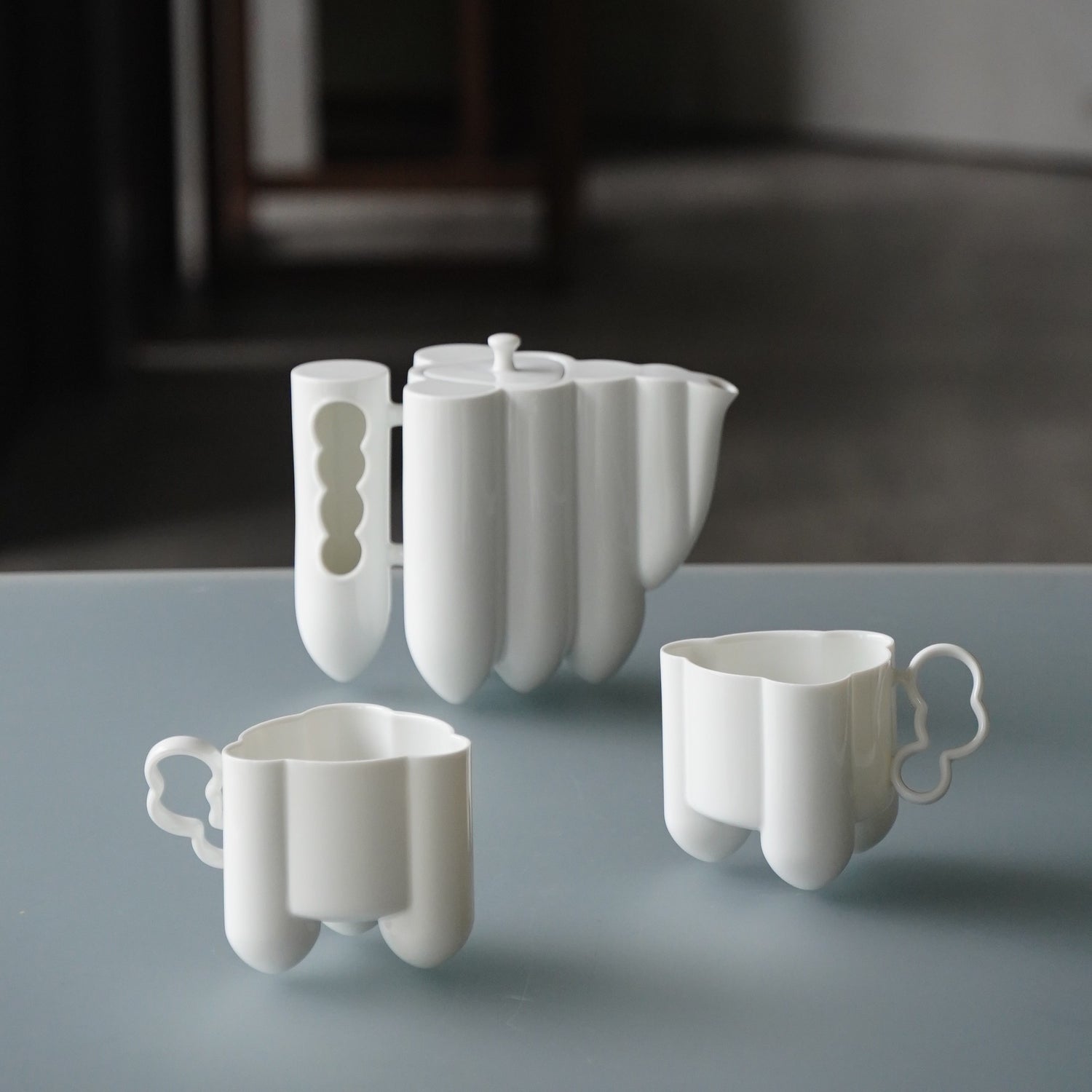
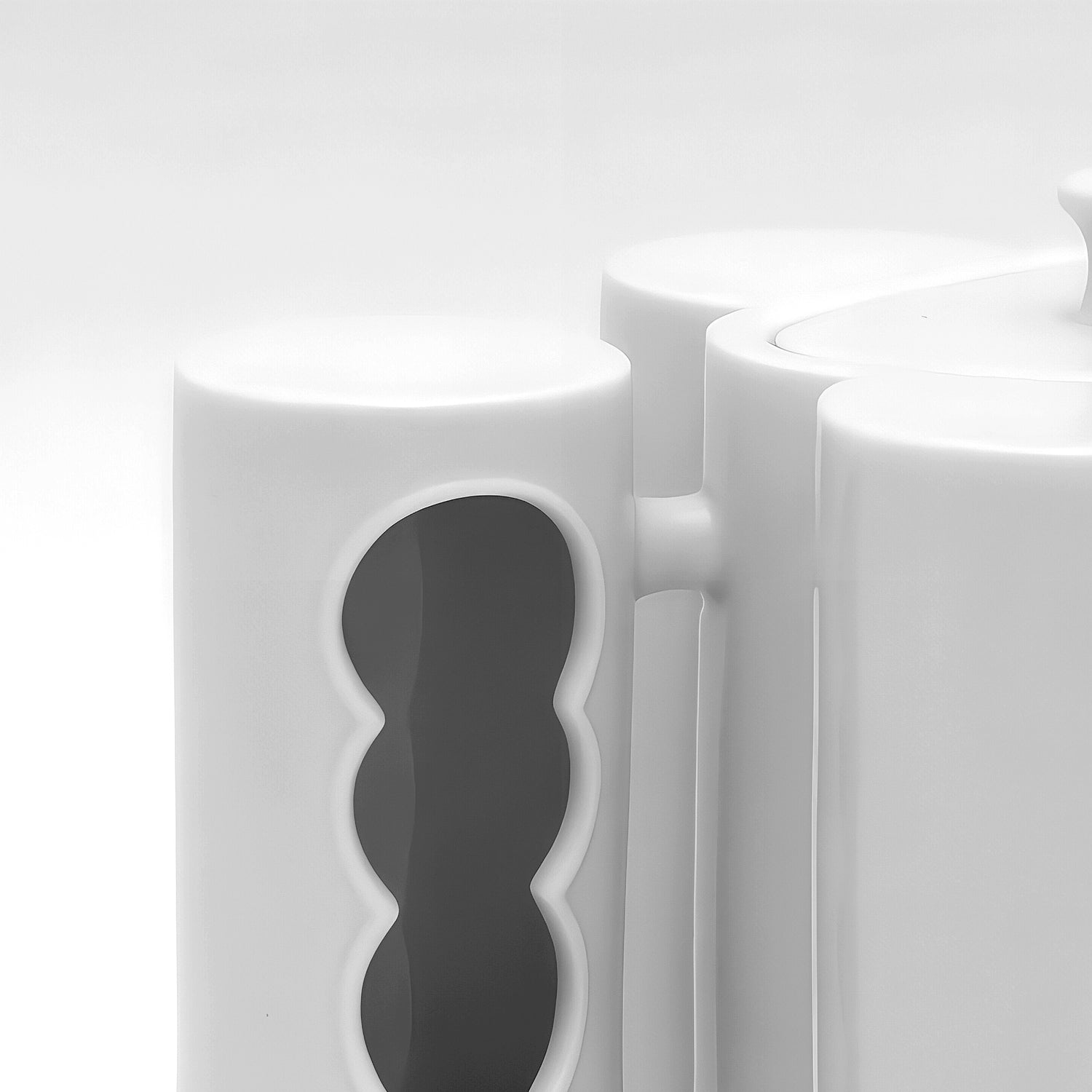
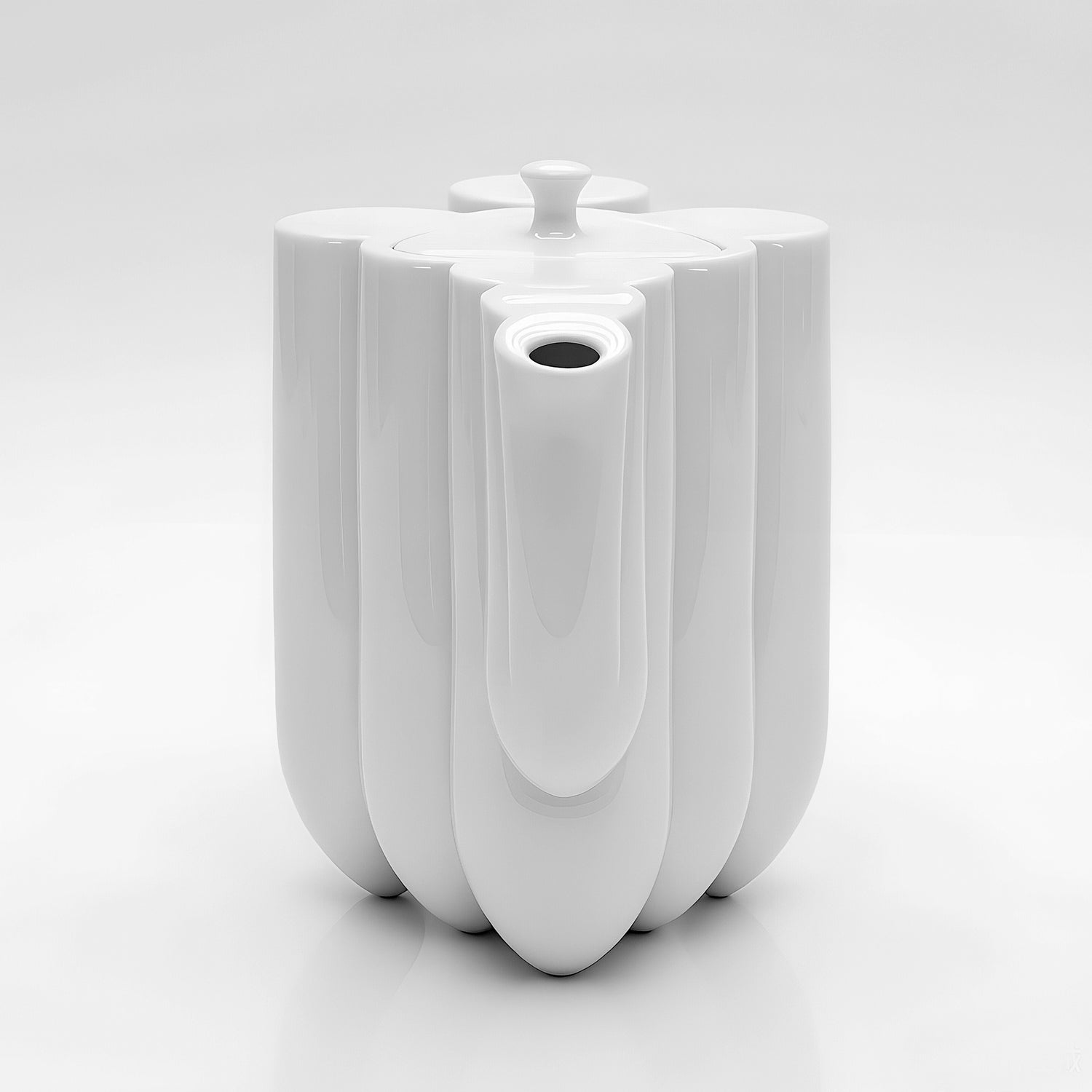
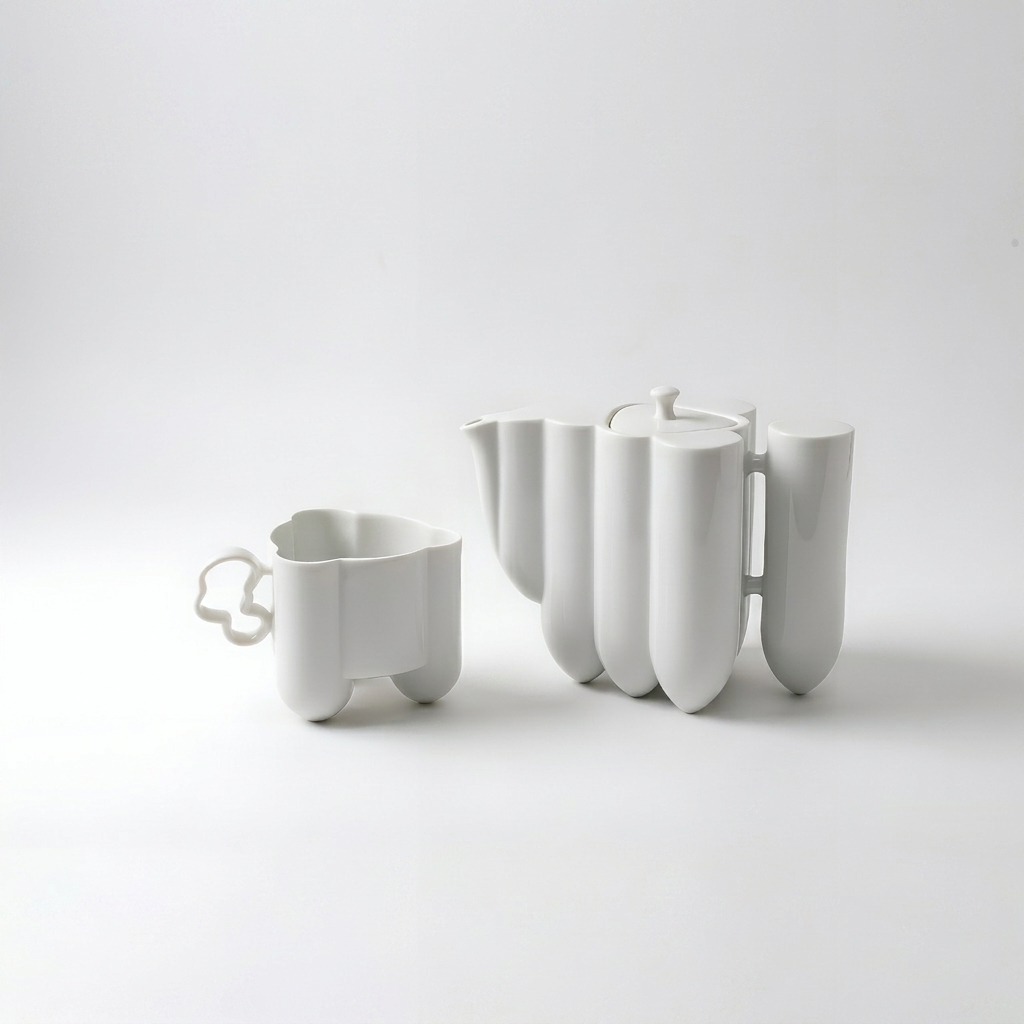
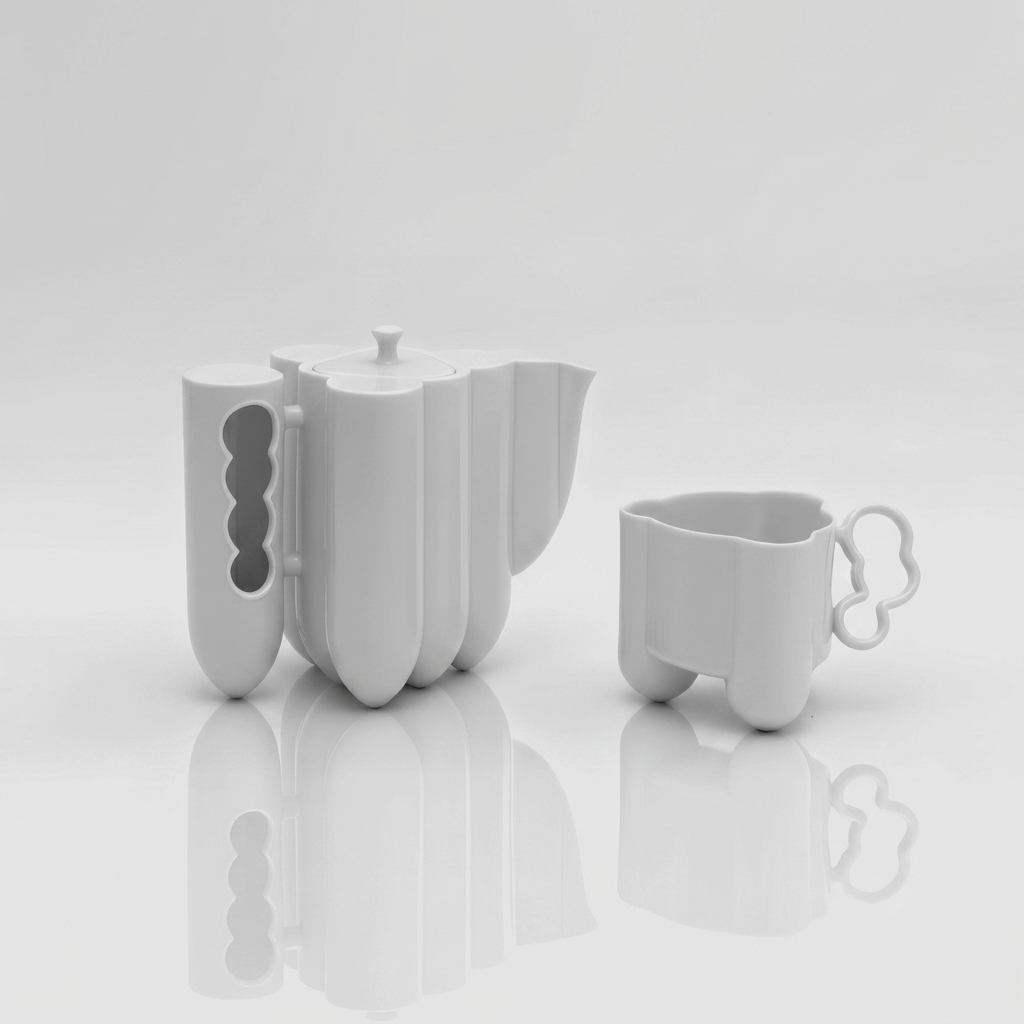
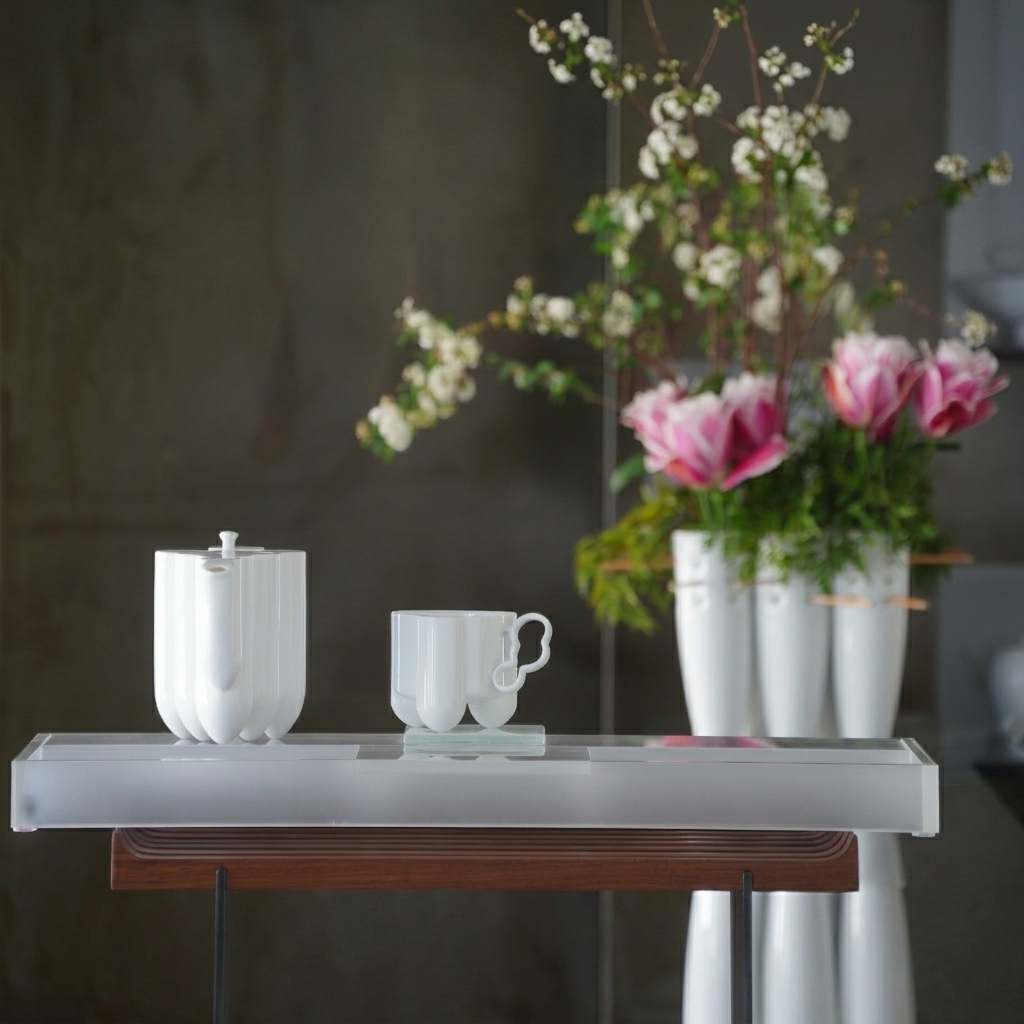
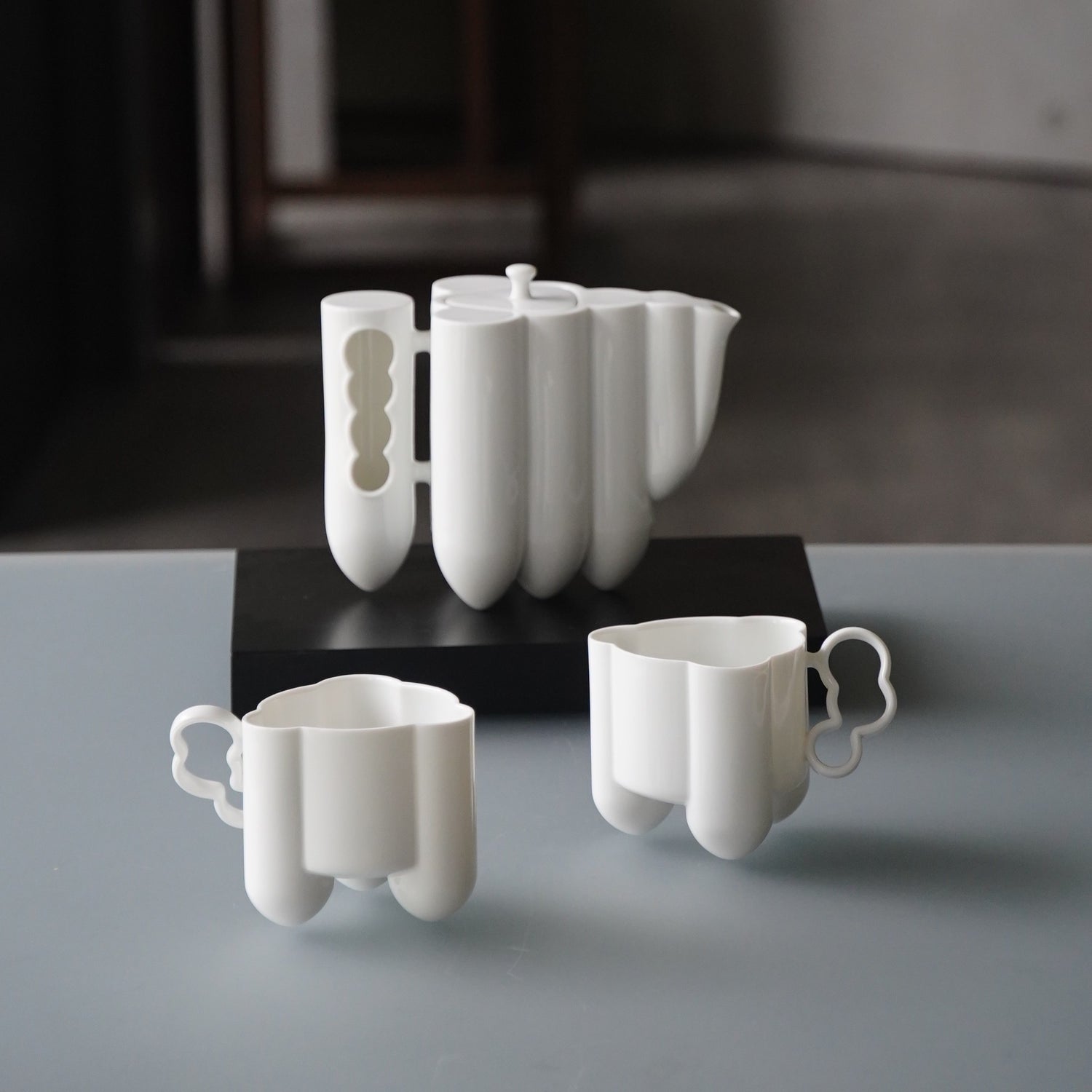
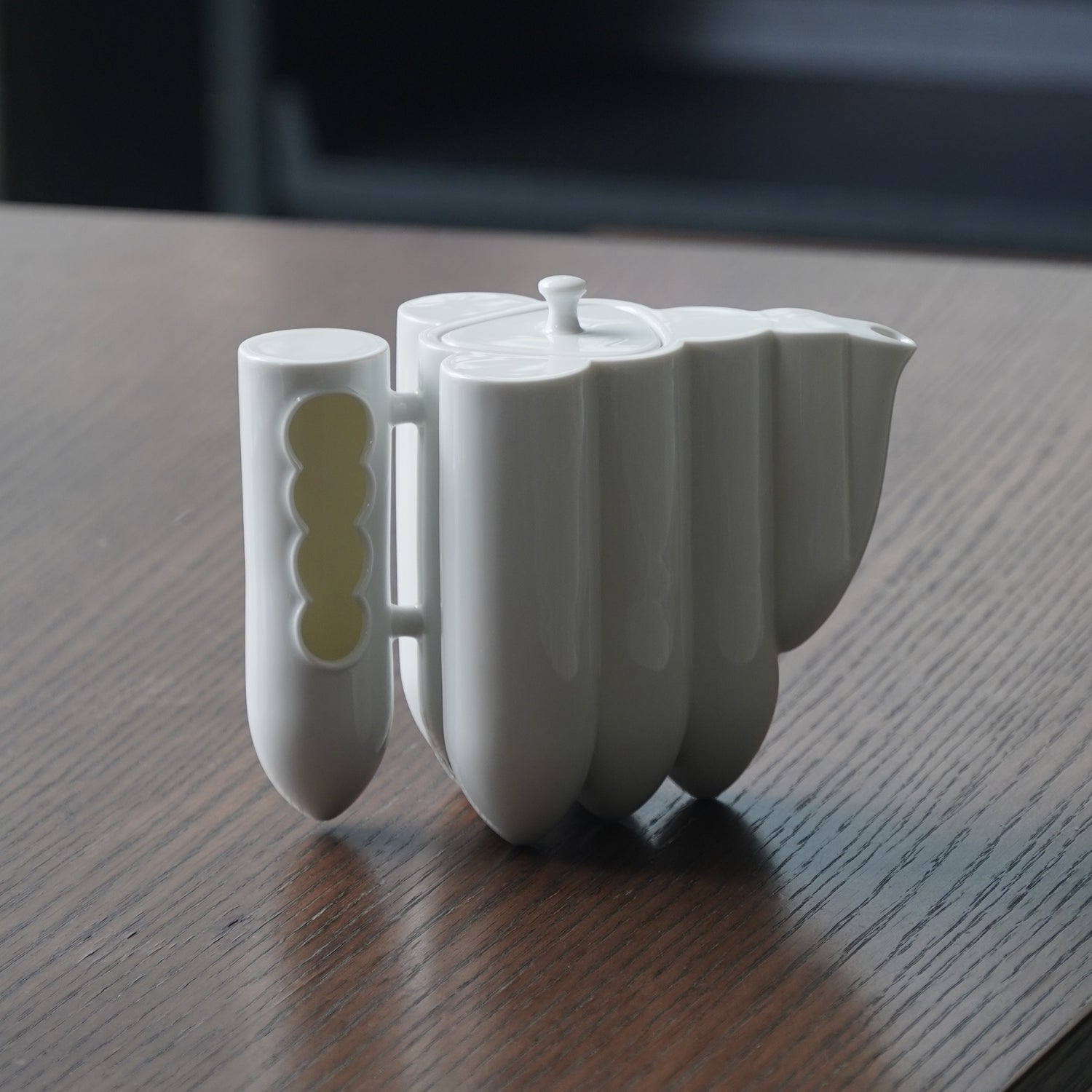
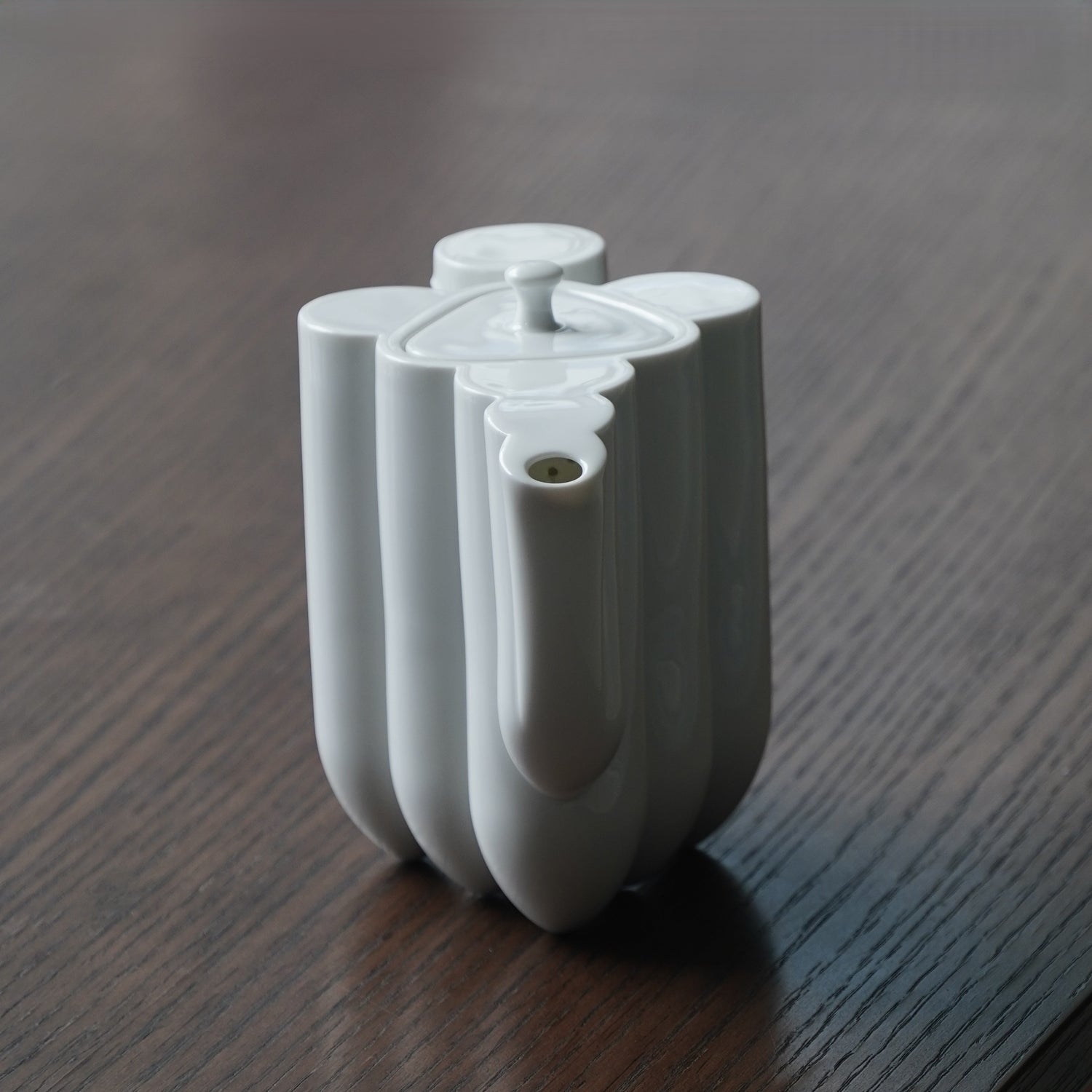
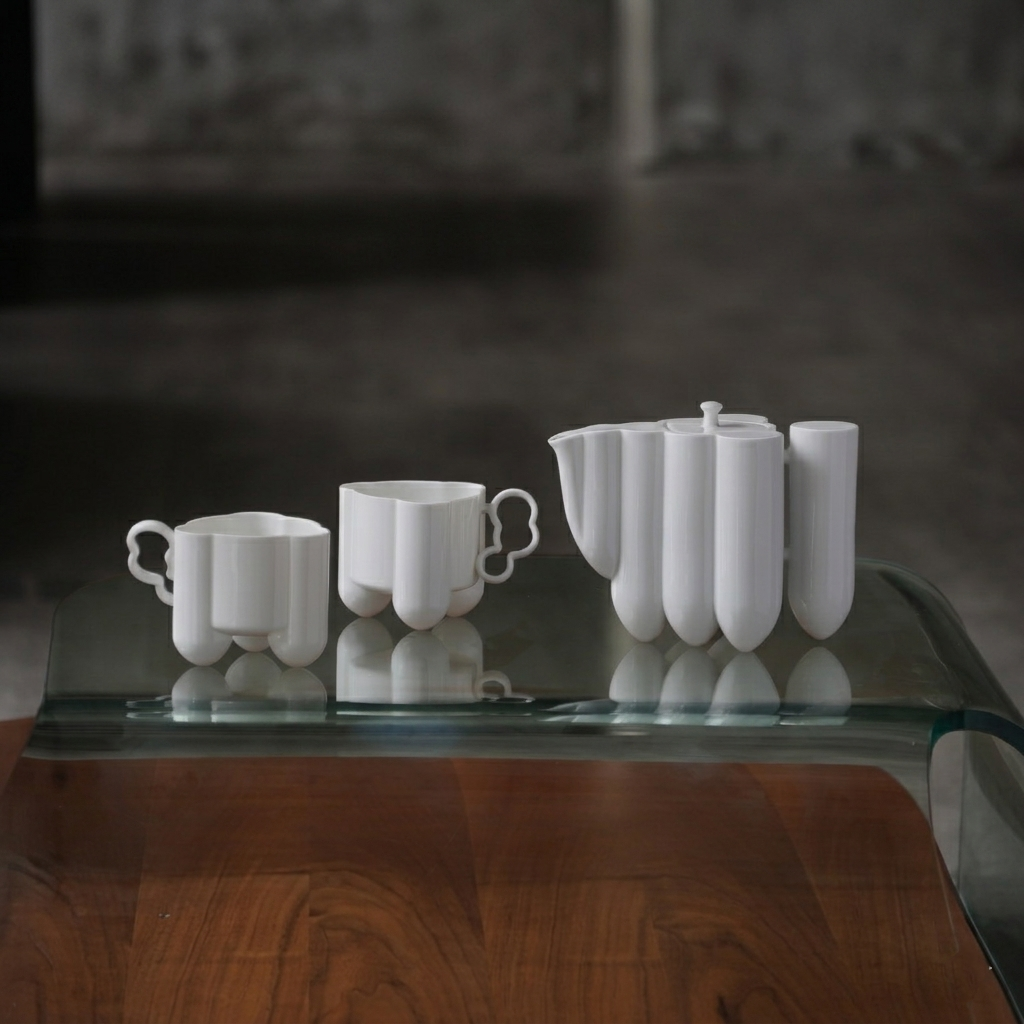
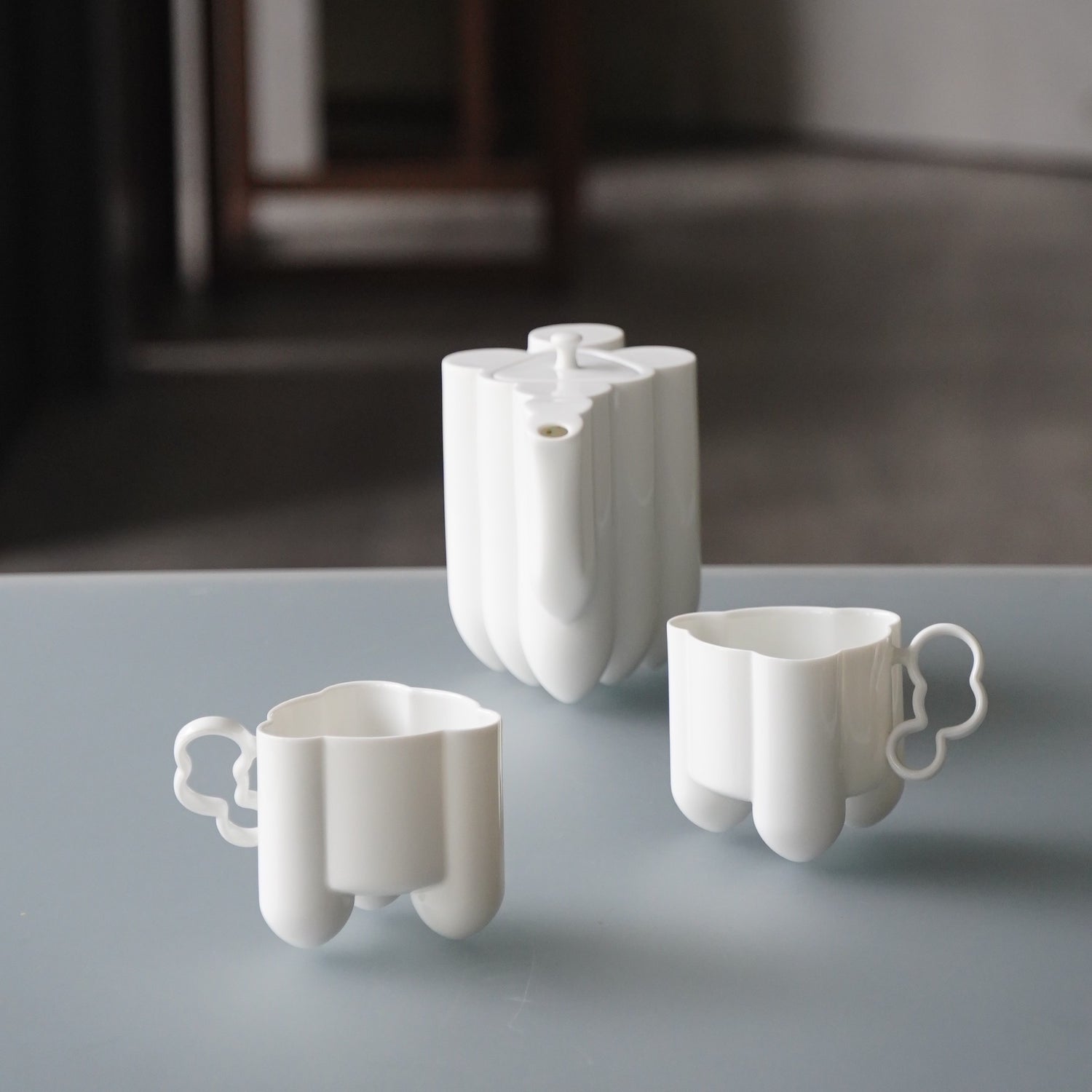
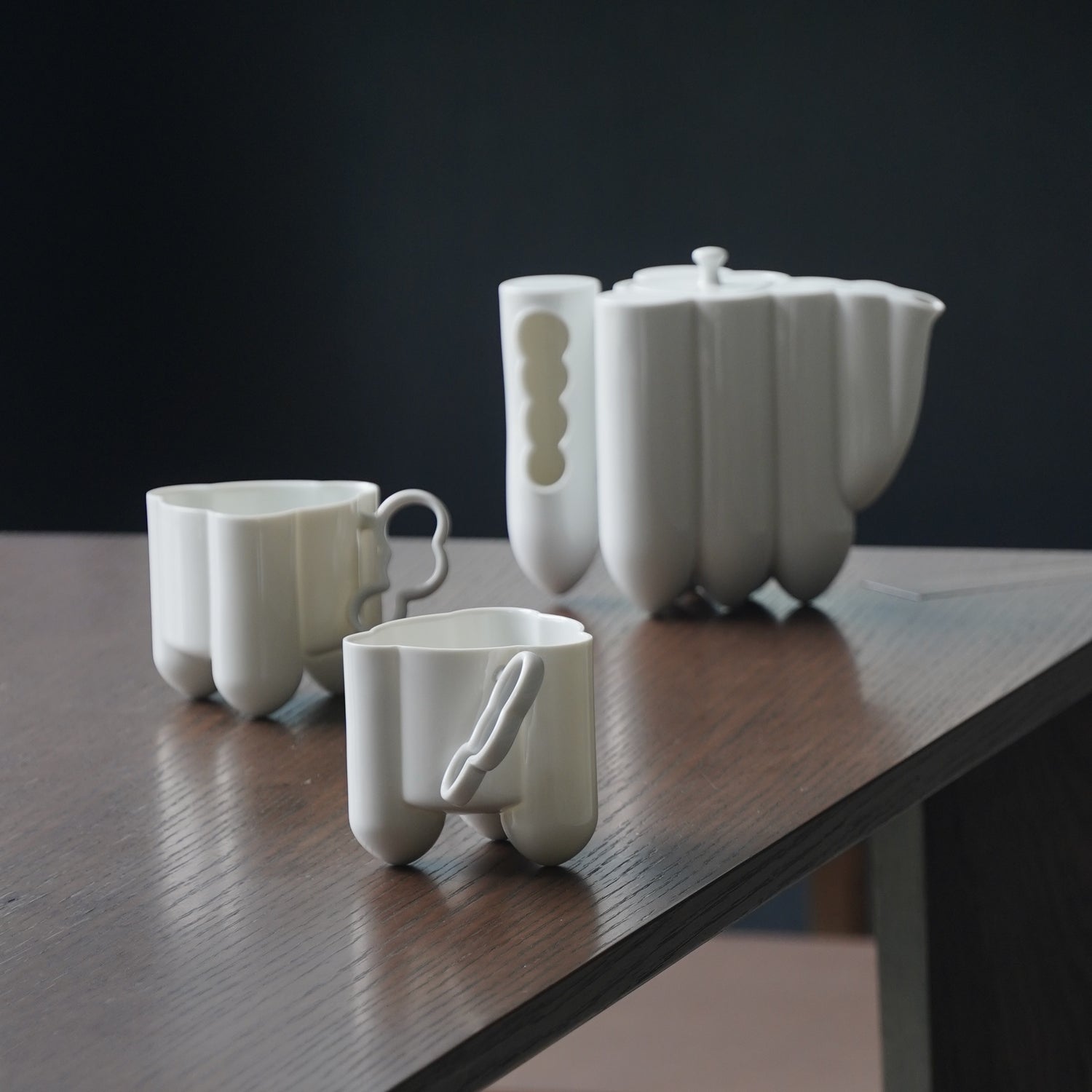
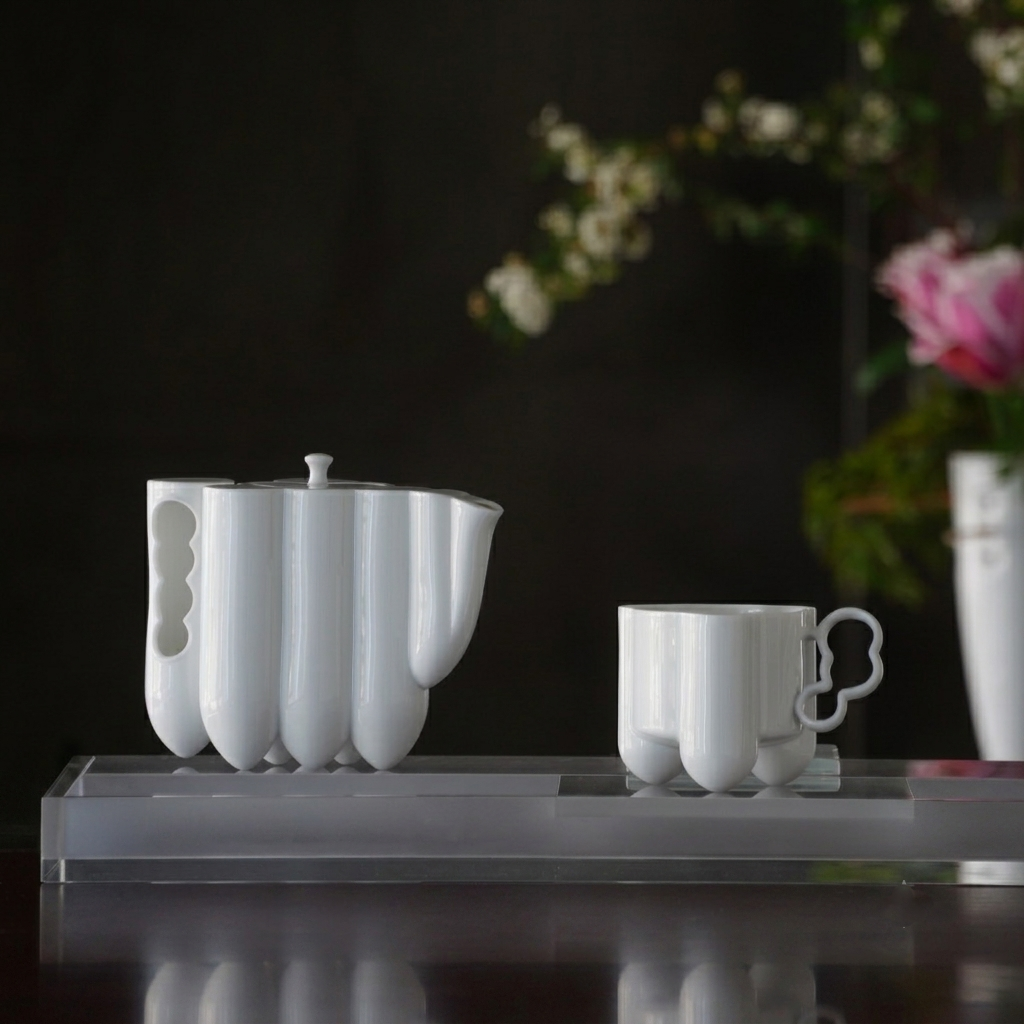
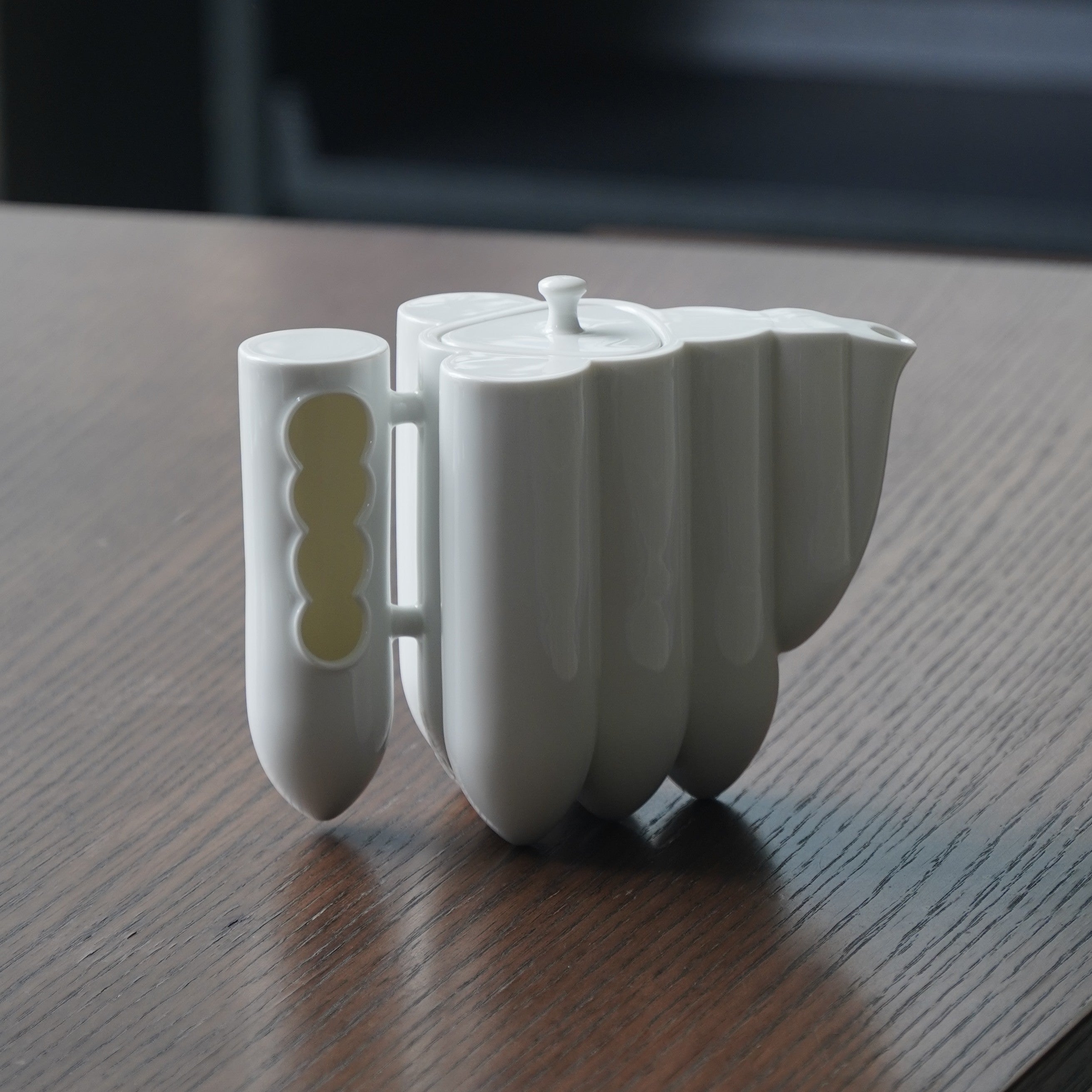
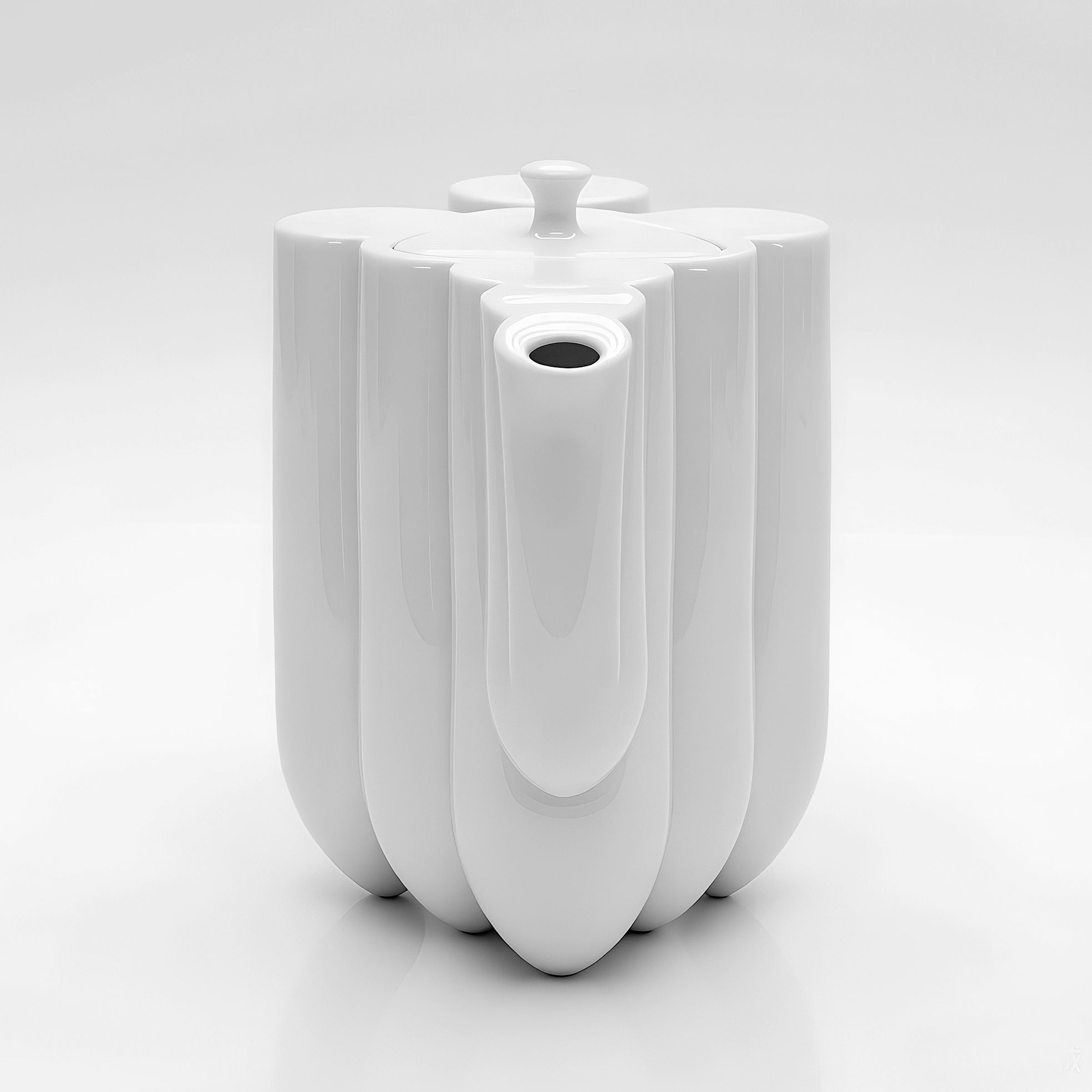
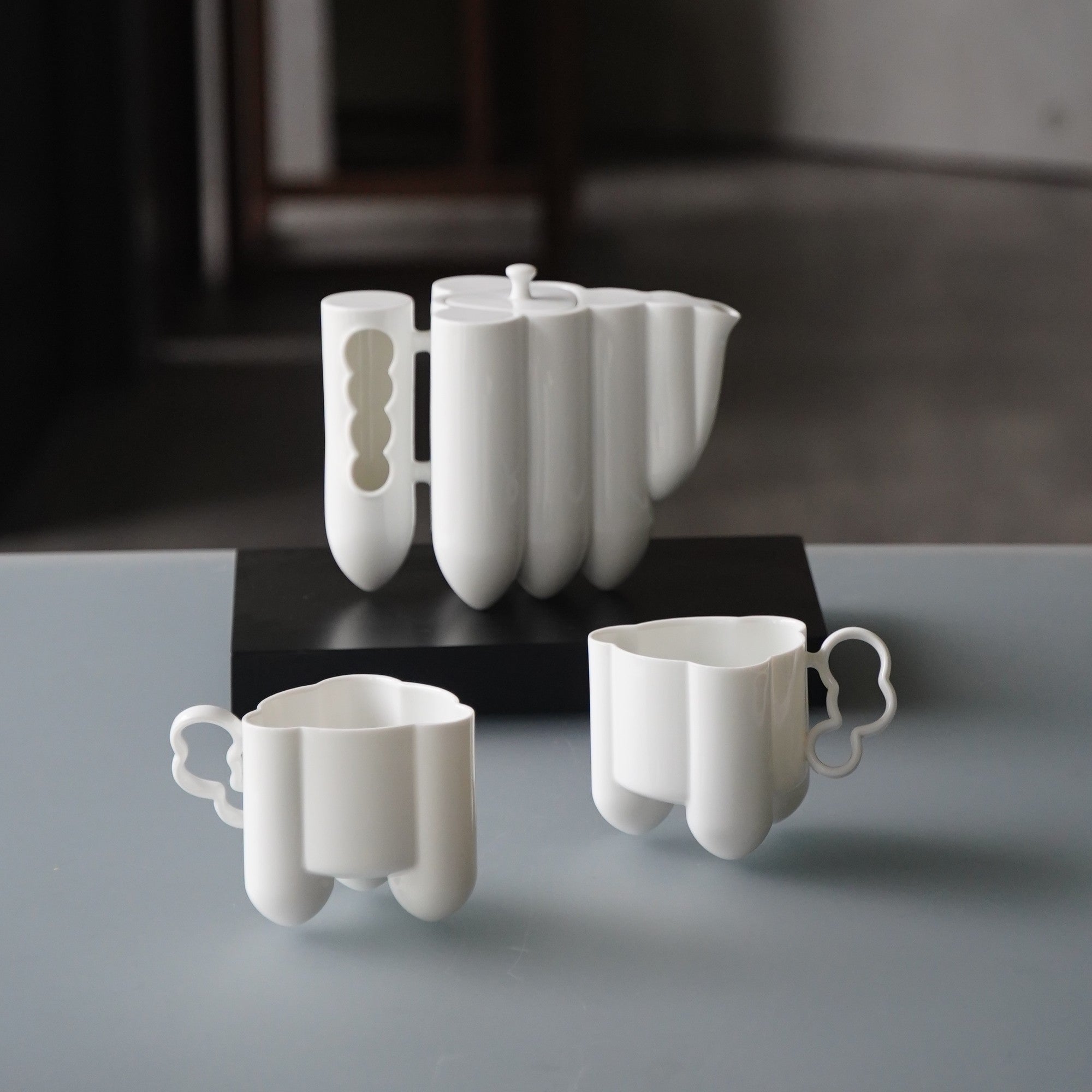
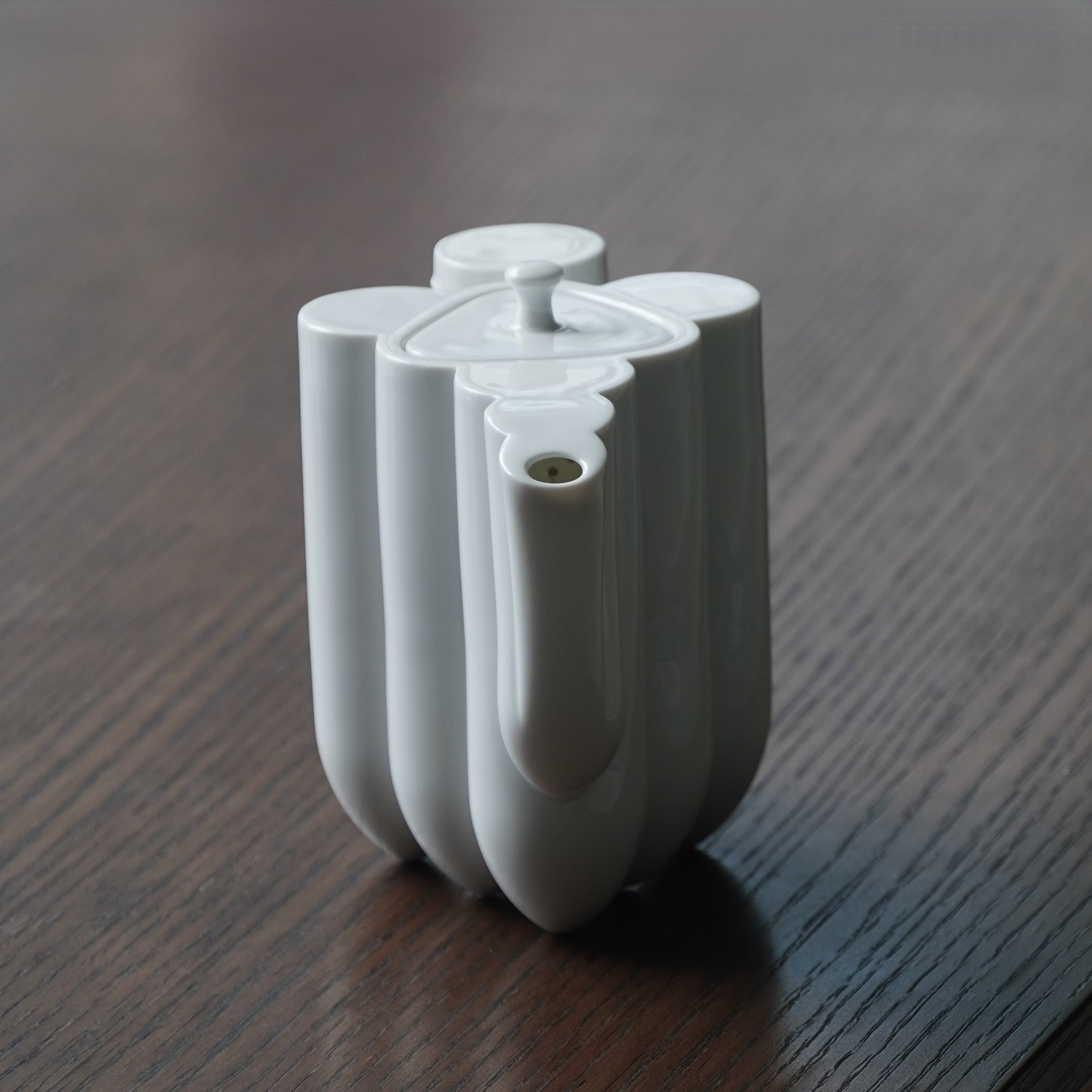
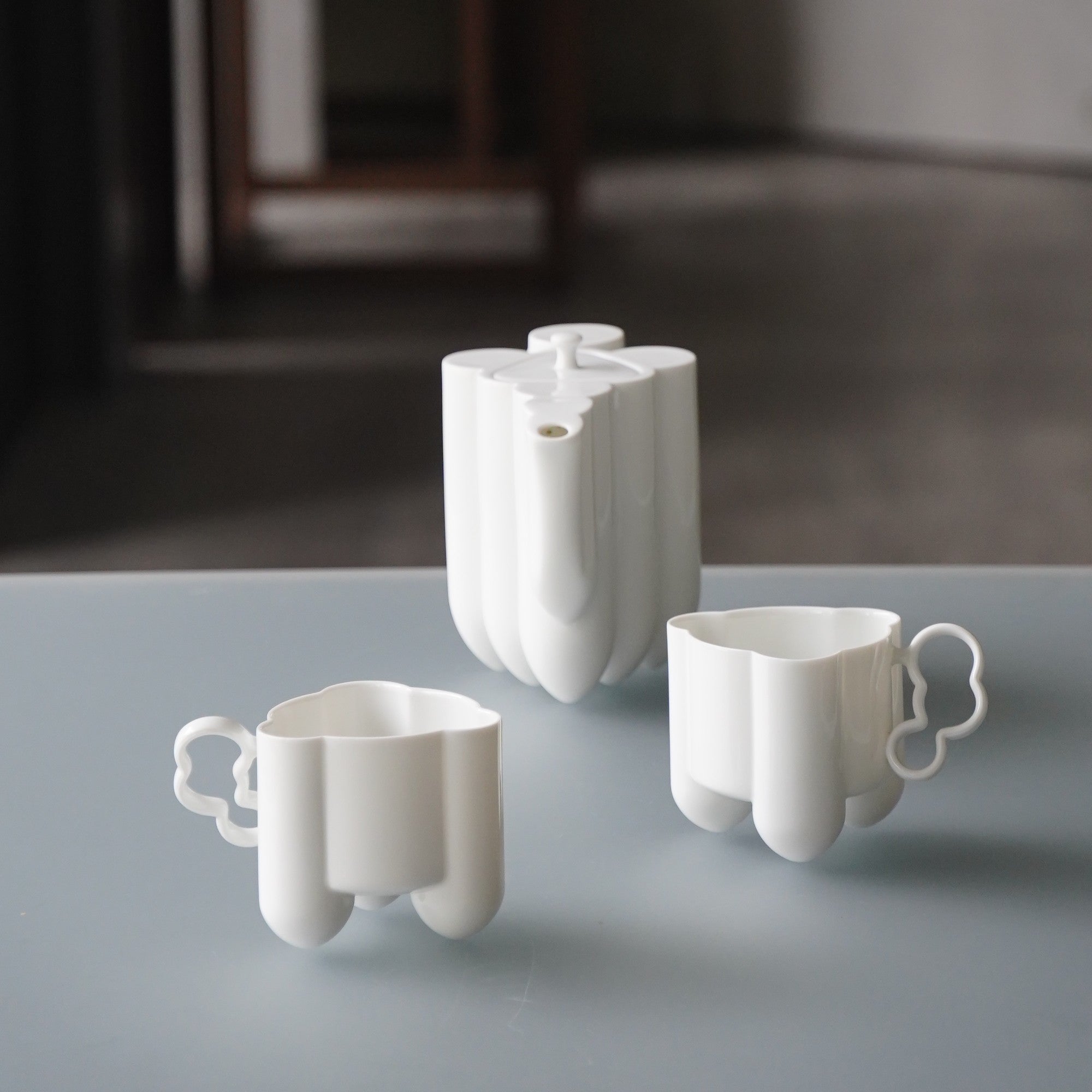
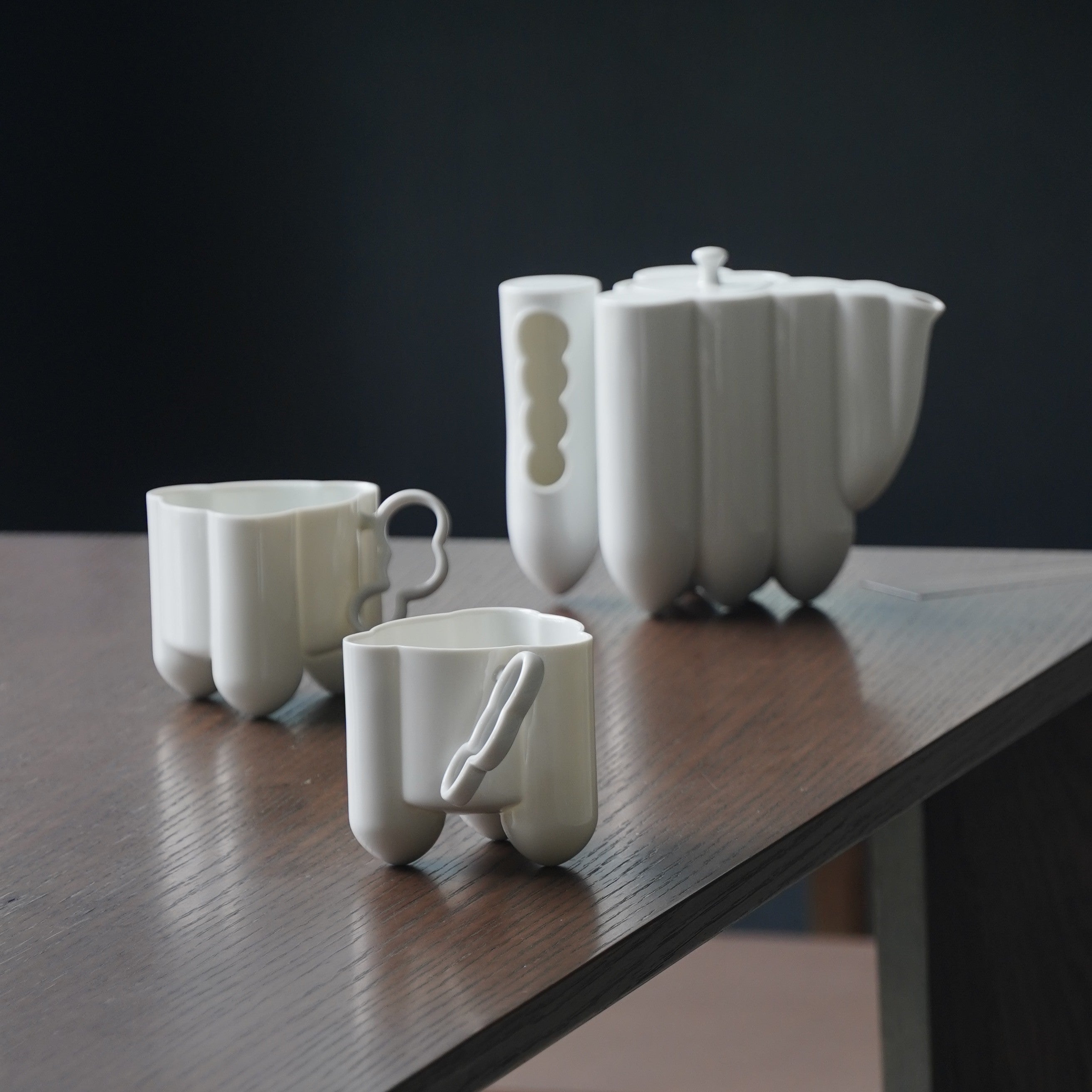
The form of Timeless Grace is built upon a three-dimensional composition of nine cylindrical columns. Together—including the spout and handle—they create a complete and harmonious structure centered on the symbolism of the number nine.
This unconventional composition resembles a quiet grove of upright trees: orderly in their arrangement, yet alive with subtle movement and resilience. Each column becomes a pulse within the whole, carrying both the precision of architecture and the rhythm of music. The teapot is no longer simply a vessel; it becomes a dialogue between form and momentum, where linear geometry gives shape to the passage of time, and rational order gives rise to poetic perception.
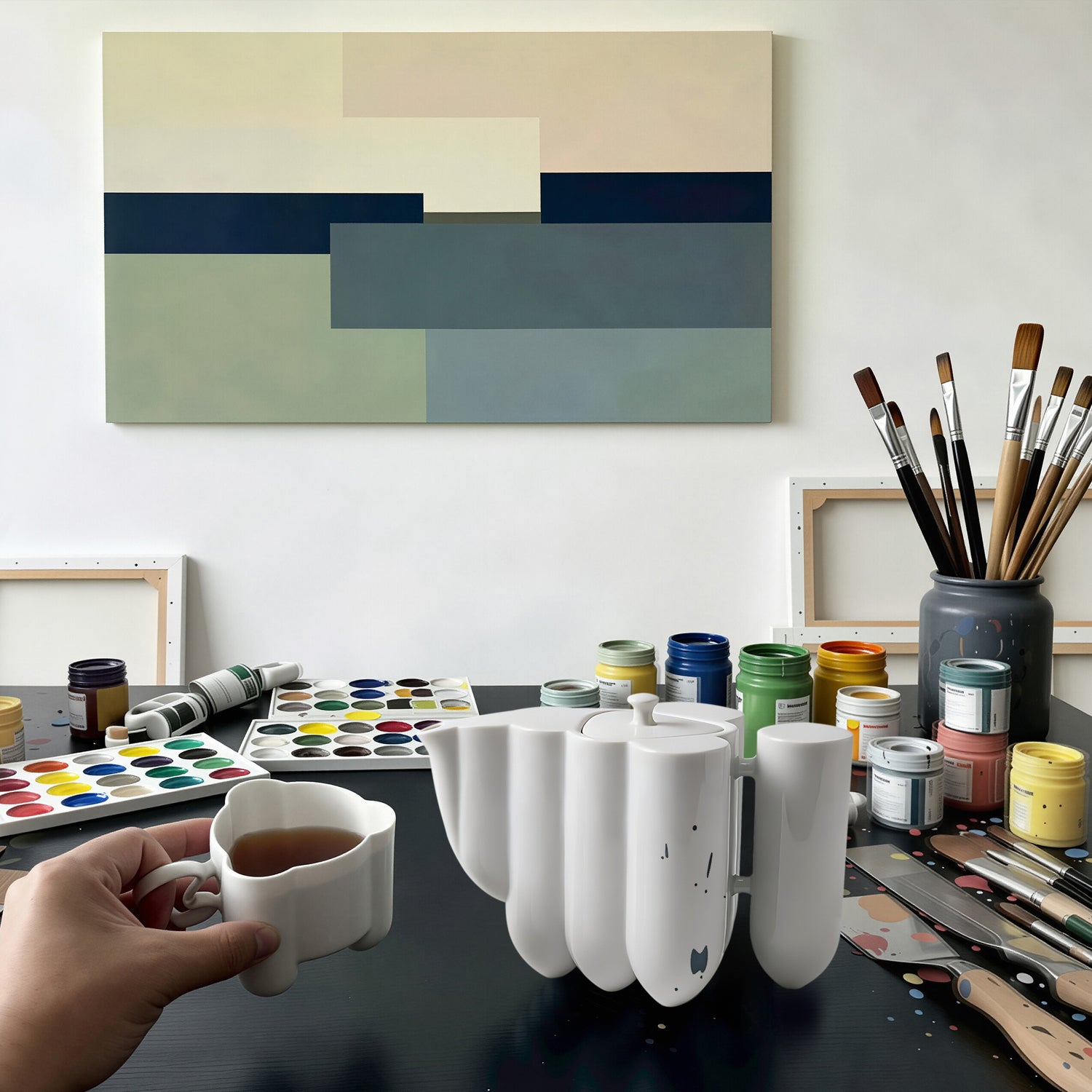
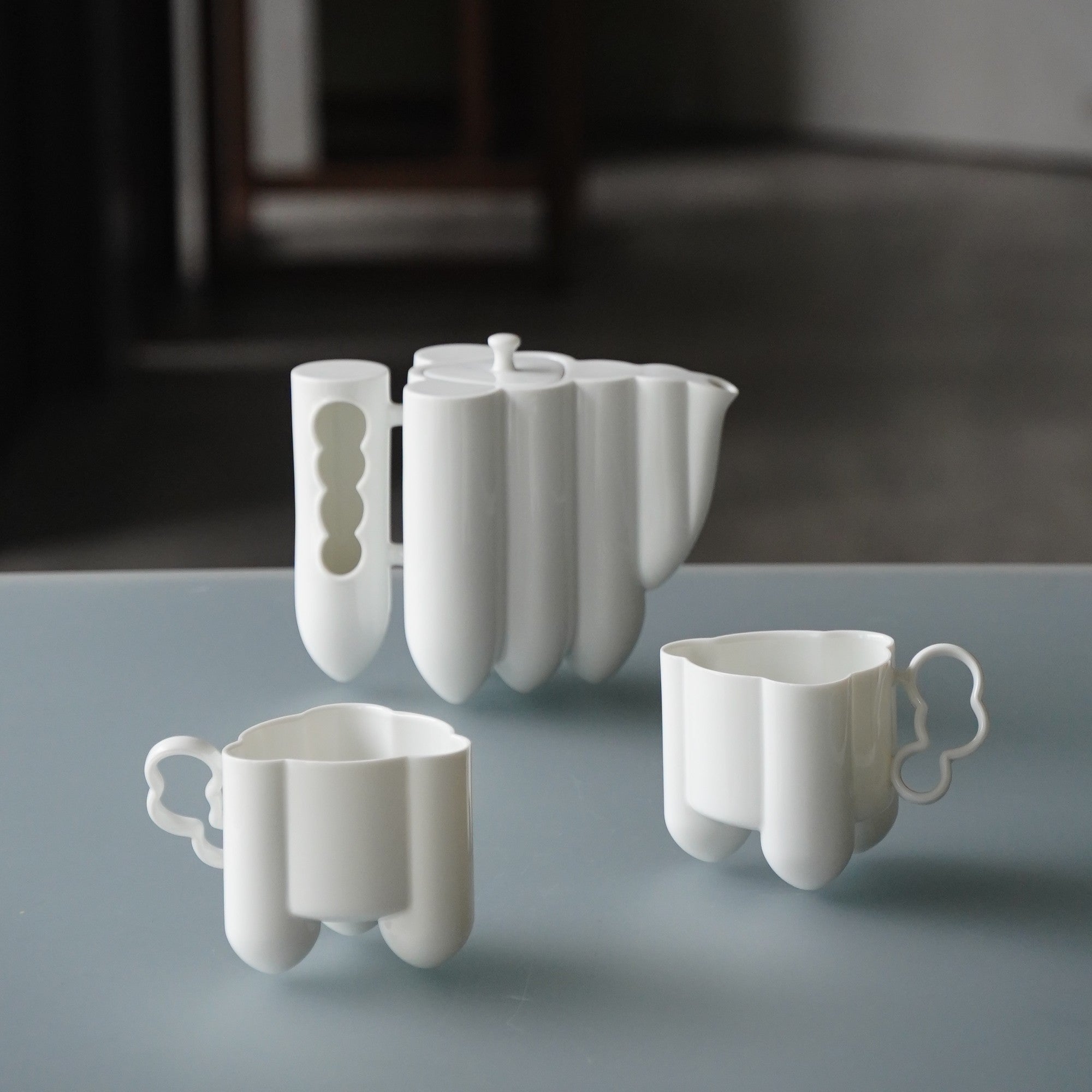
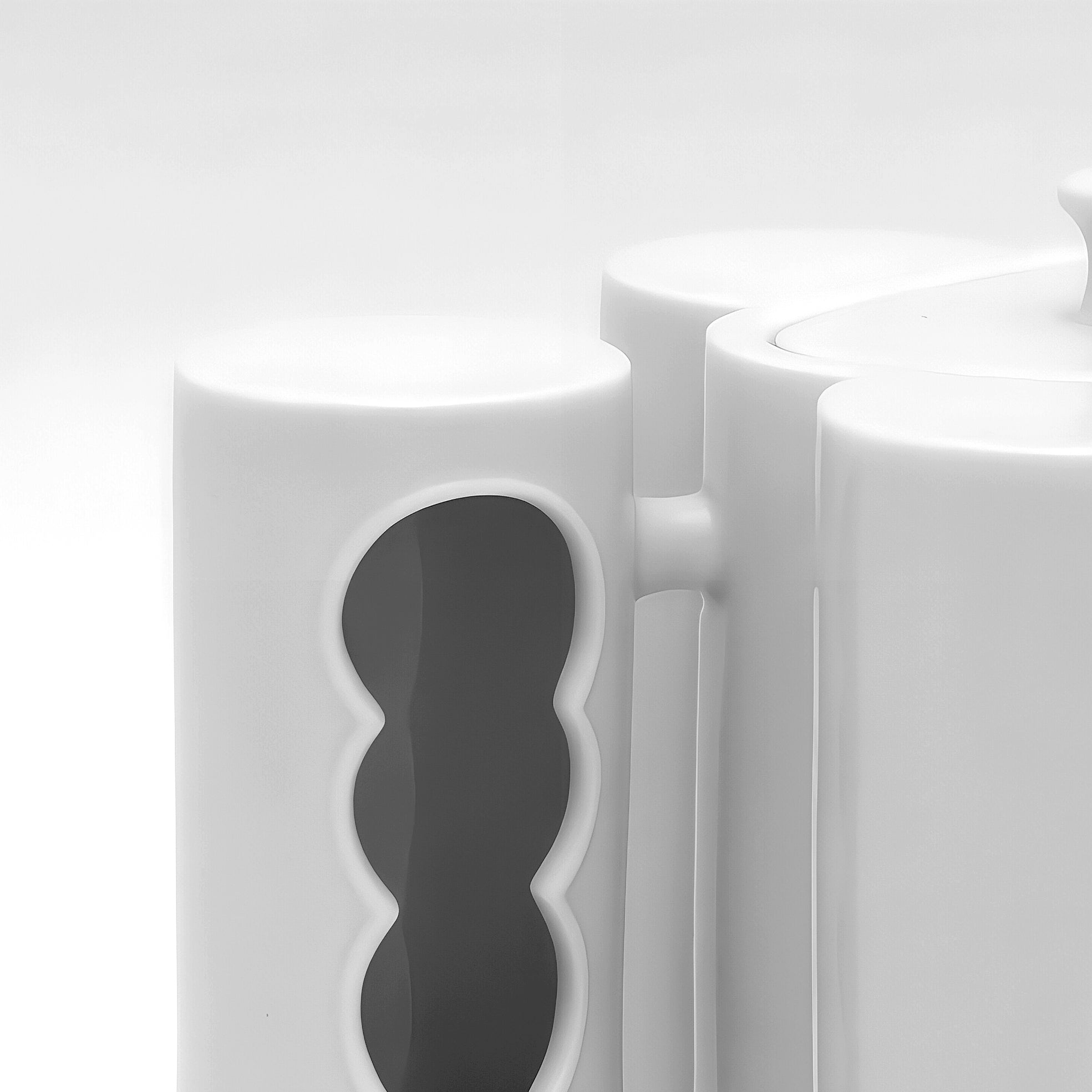
As light moves across the smooth white porcelain, gentle highlights emerge from the alternating ridges and recesses, like moonlight shimmering across still water—calm, yet never motionless. The spout extends naturally from the rhythm of the columns, while the handle is formed by an open cloud-like silhouette, allowing empty space itself to become part of the structure.
Within this careful balance between tension and release, the design remains composed while quietly in motion, disciplined while filled with emotion.
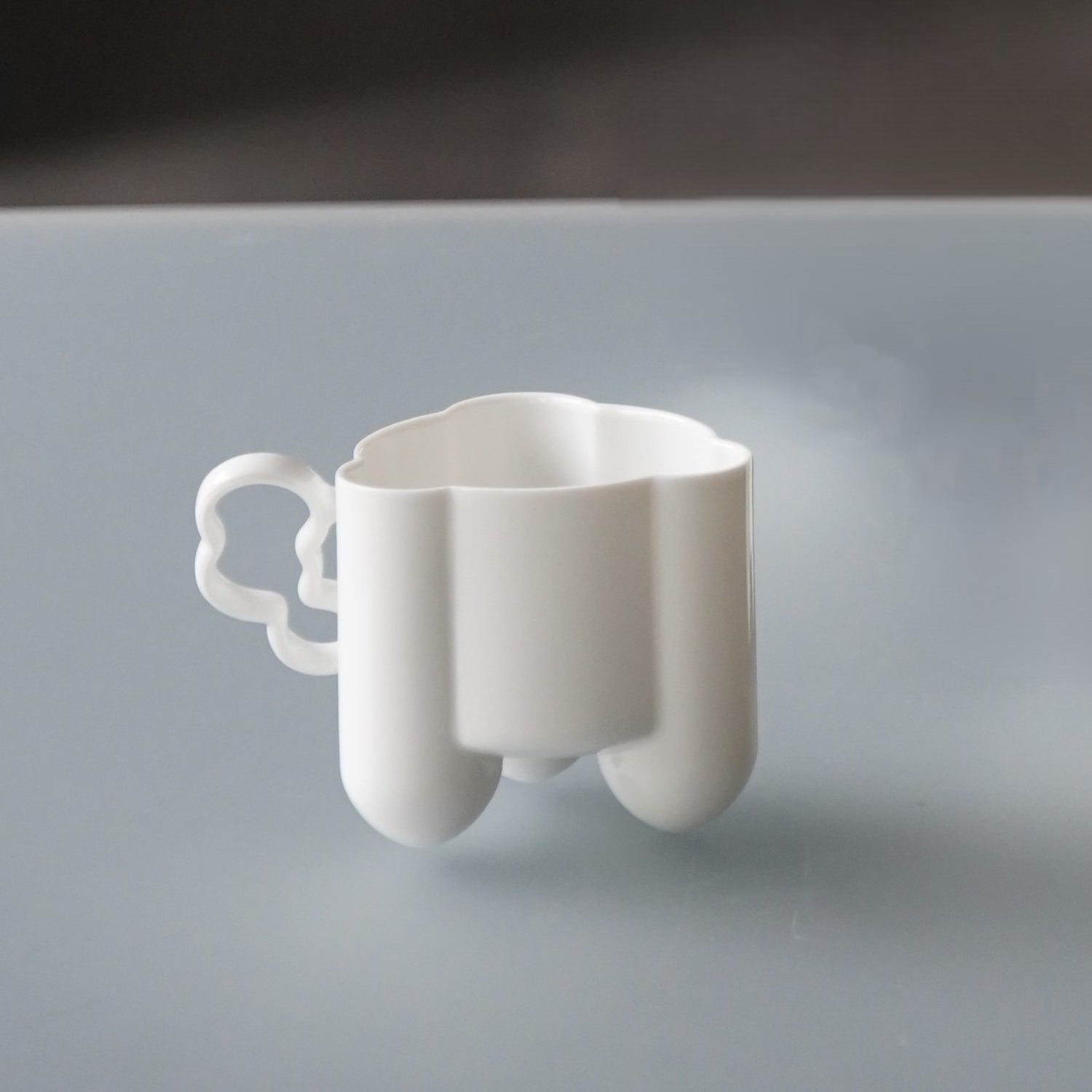
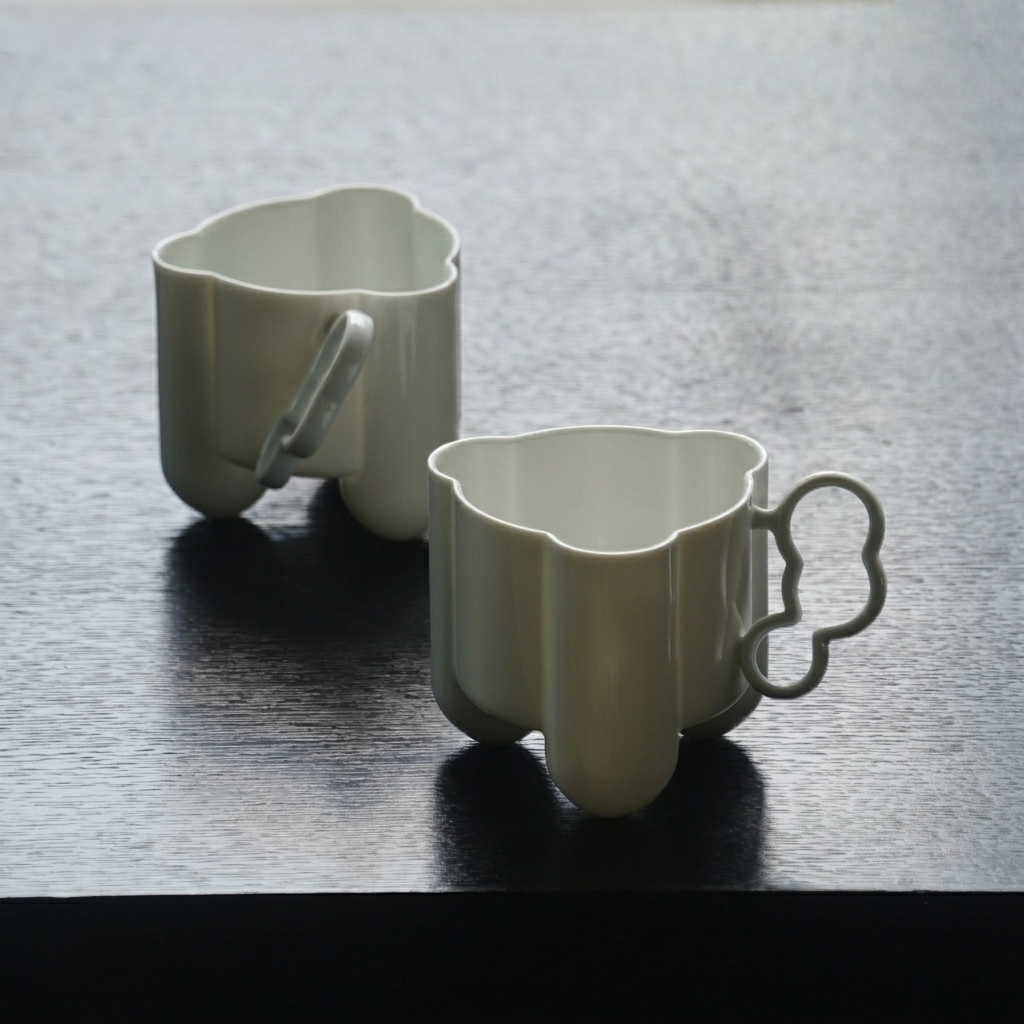
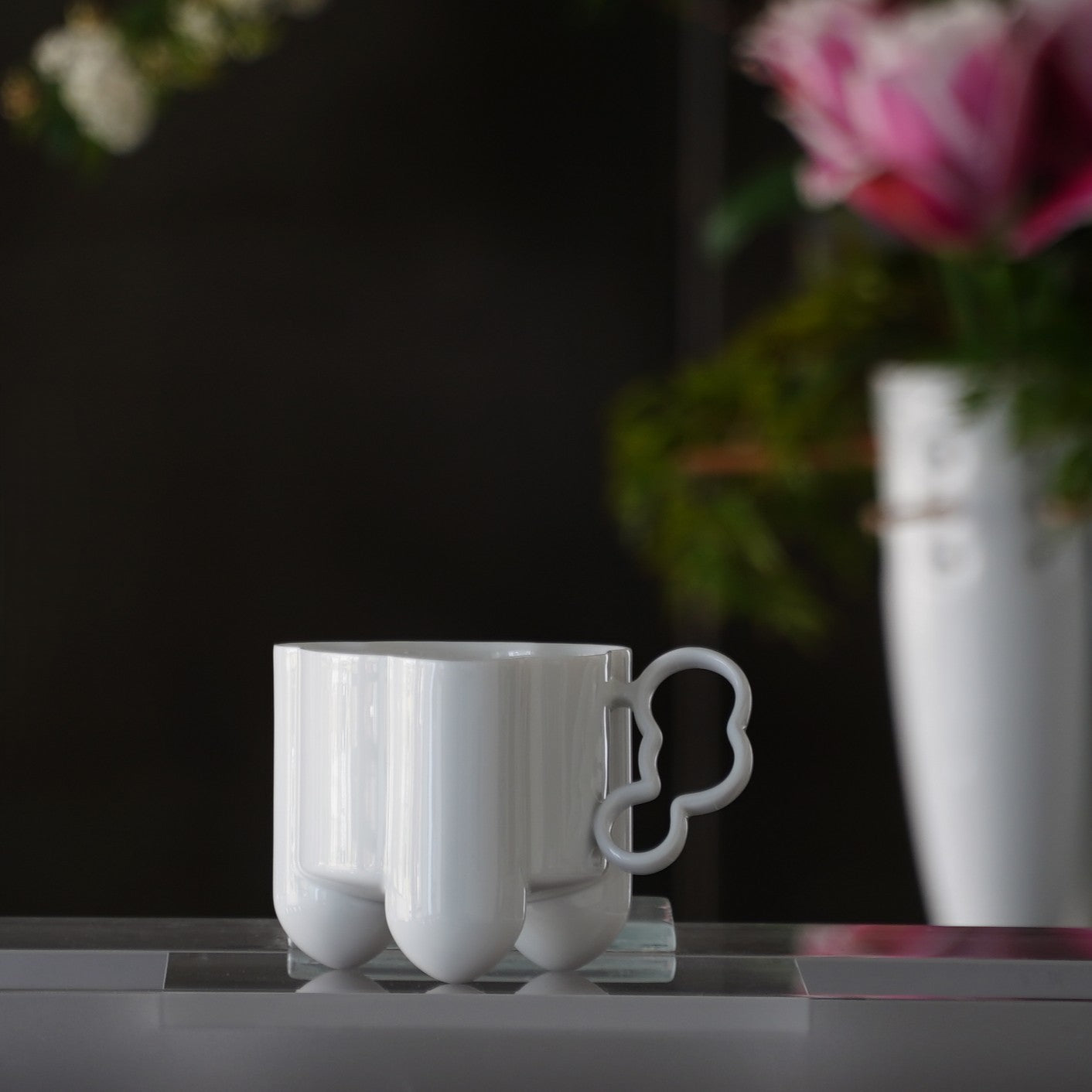
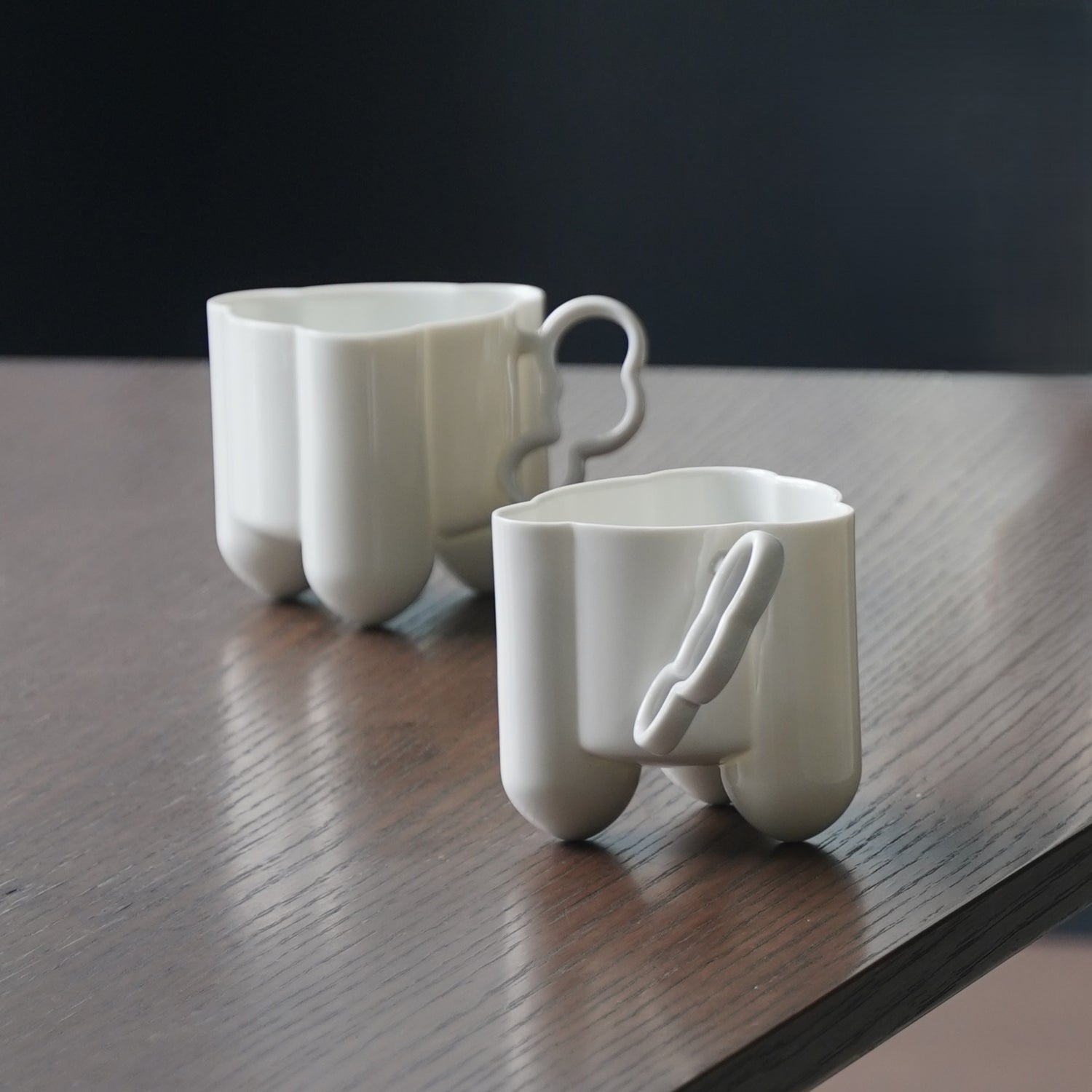
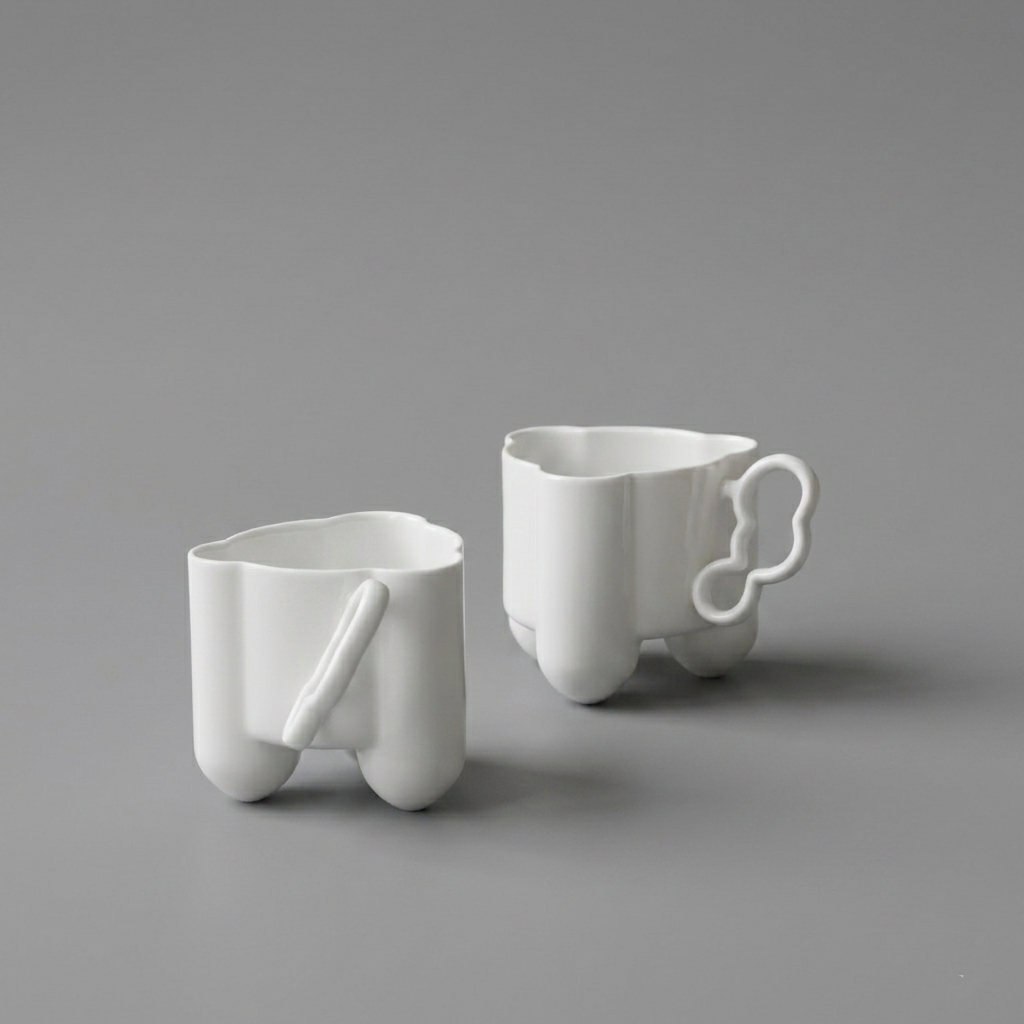
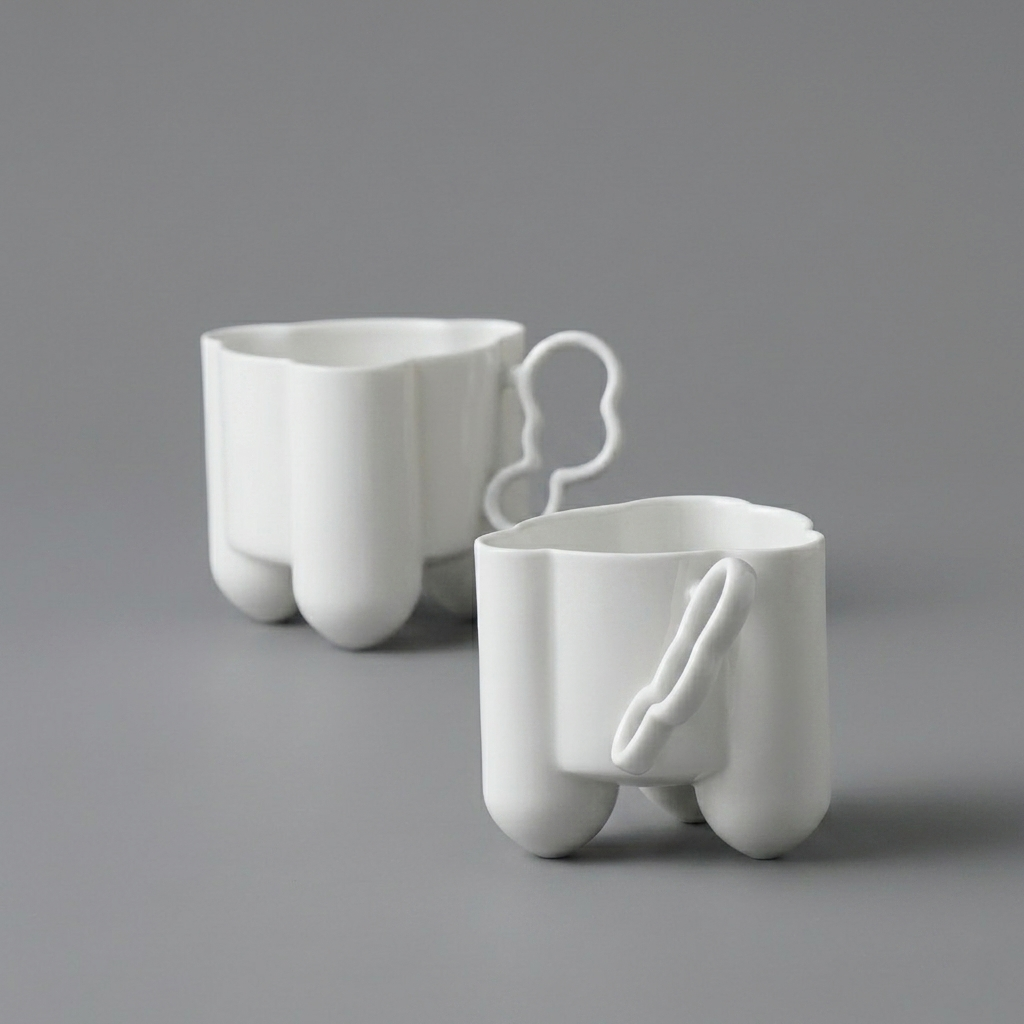
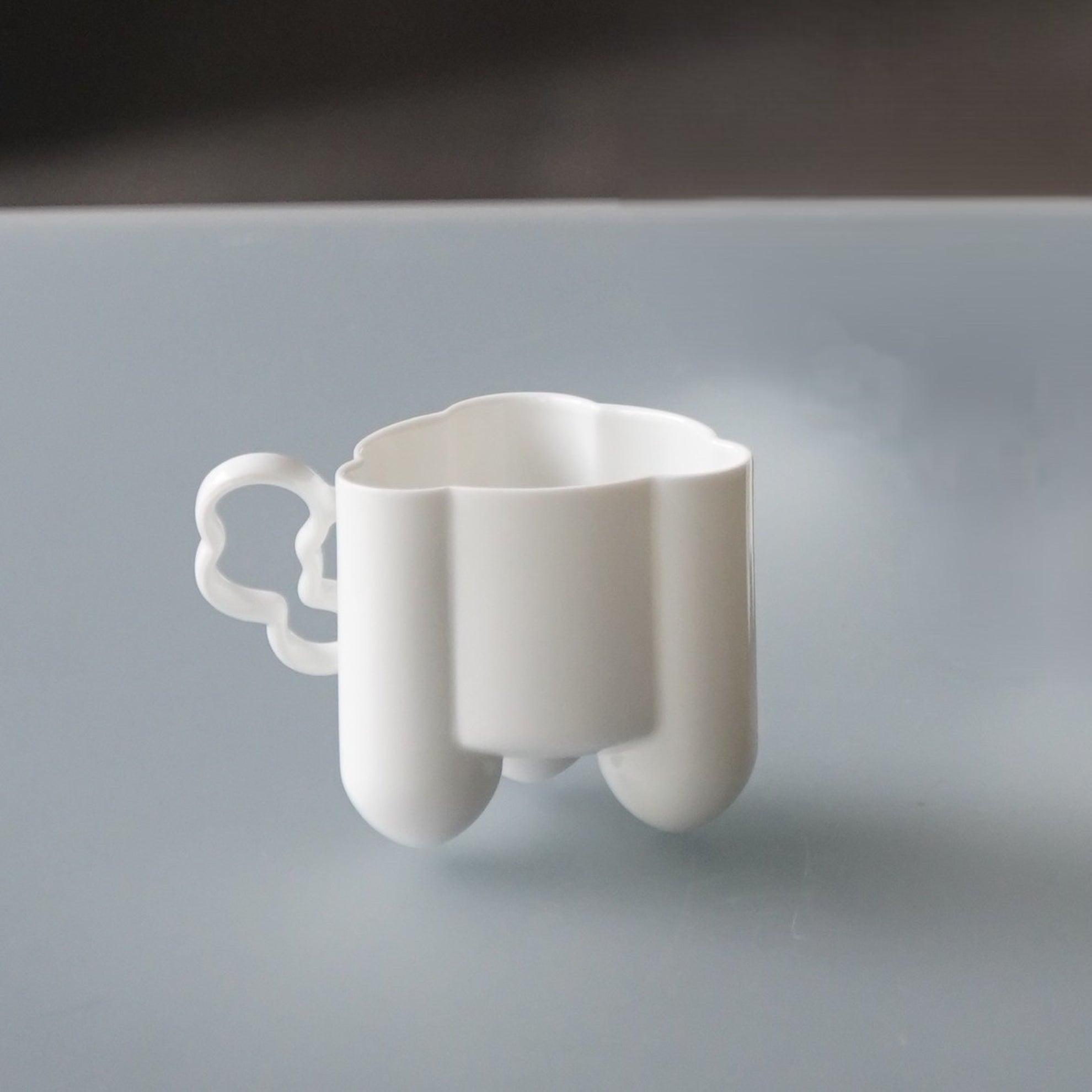
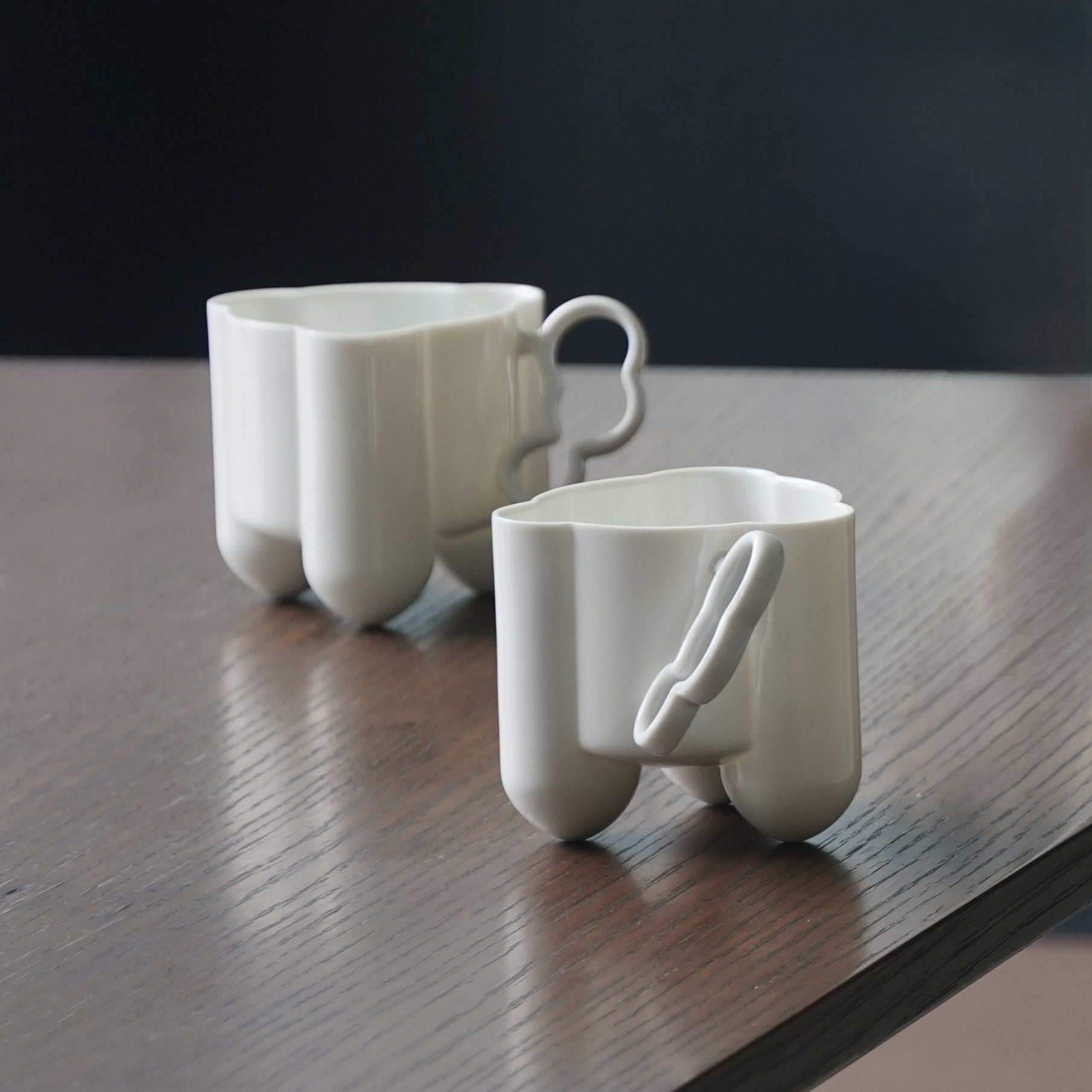
The cups continue the same visual language established by the teapot. Their cylindrical rhythm echoes the body of the vessel, while the angled opening of each handle offers a subtle reinterpretation of the teapot’s open form. The solid responds to the void; asymmetry answers symmetry.
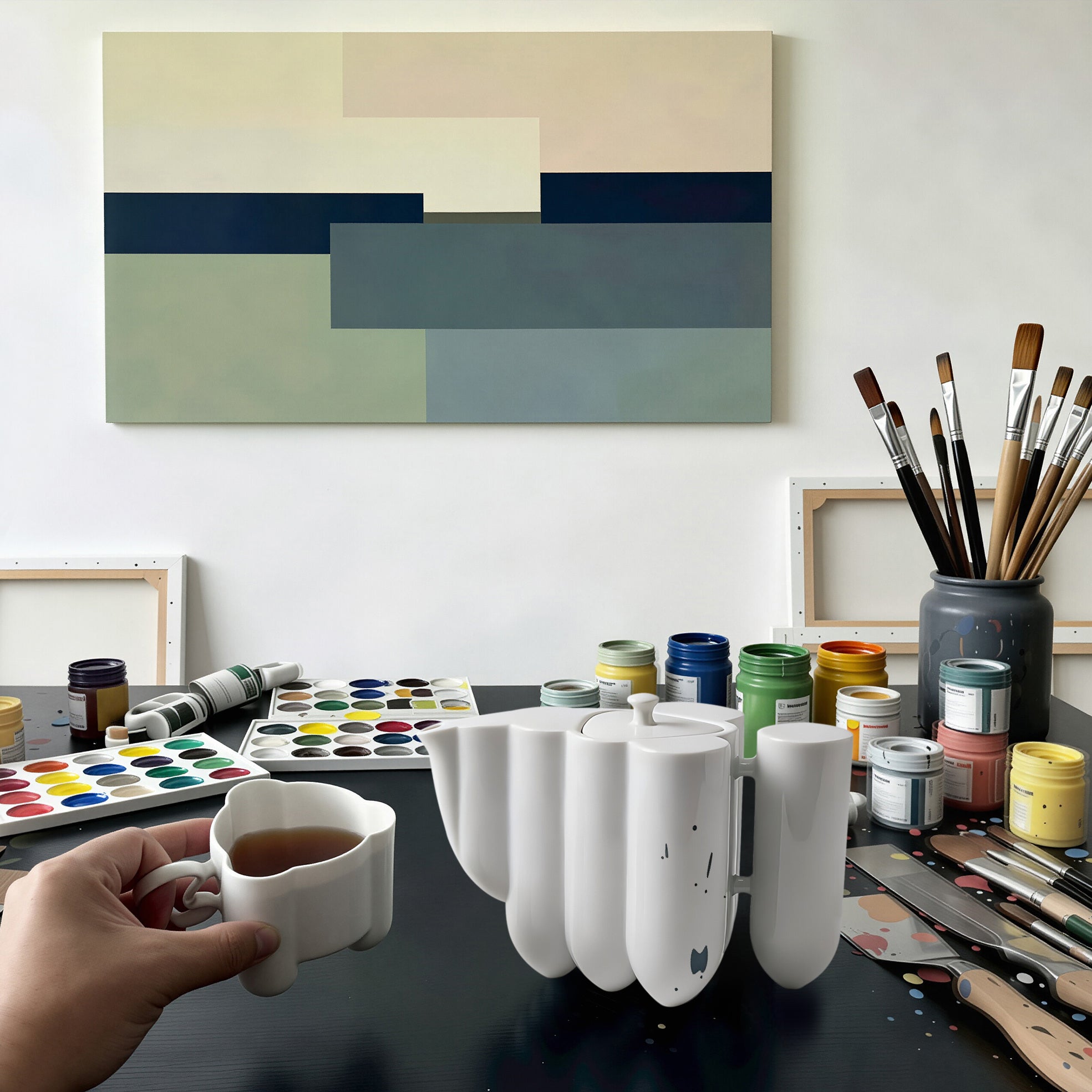
This delicate imbalance introduces an unfamiliar beauty, interrupting habitual gestures that have long gone unnoticed. As a finger slips through the opening and lifts the cup, awareness returns to the body. In that brief moment, design reminds us of our own presence. The senses awaken.
The title Timeless Grace embodies the philosophy of the work.
Grace speaks of composure and quiet elegance.
Timeless suggests endurance beyond passing trends.
The symbolic nine represents completeness, continuity, and fulfillment.
Together they express more than the identity of an object—they propose an ongoing practice of living with time, order, and self-awareness. Through the simple act of drinking tea, one enters a state where rational structure and poetic imagination naturally coexist.
Timeless Grace deconstructs habit through unfamiliar form while calming the mind through ordered rhythm. It awakens not only the palate but the entire field of perception. Within its silent geometry emerges a contemporary interpretation of Vessel & Measure—where the mind follows the surroundings, composure arises naturally, and elegance becomes a way of being.