

Editor's Note
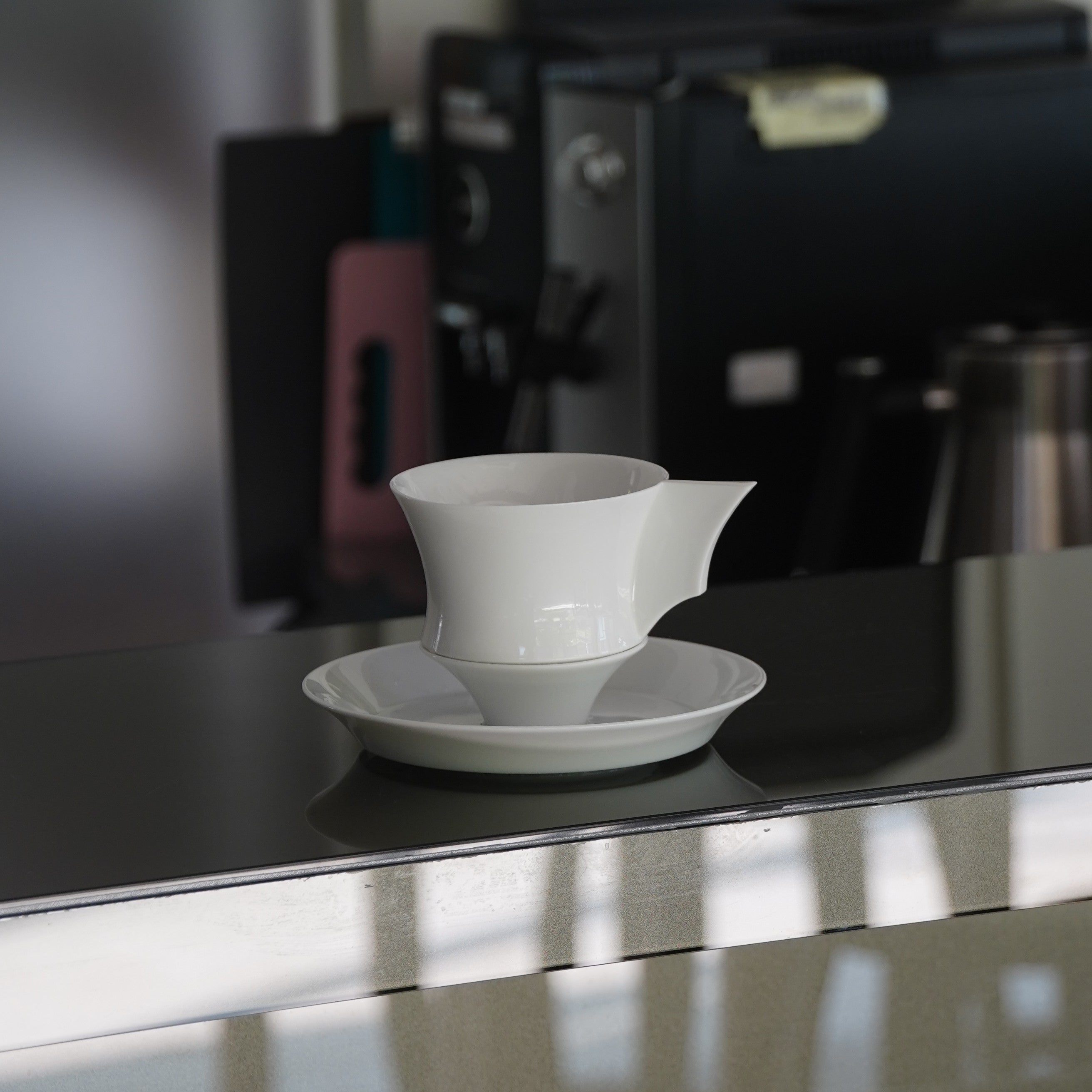
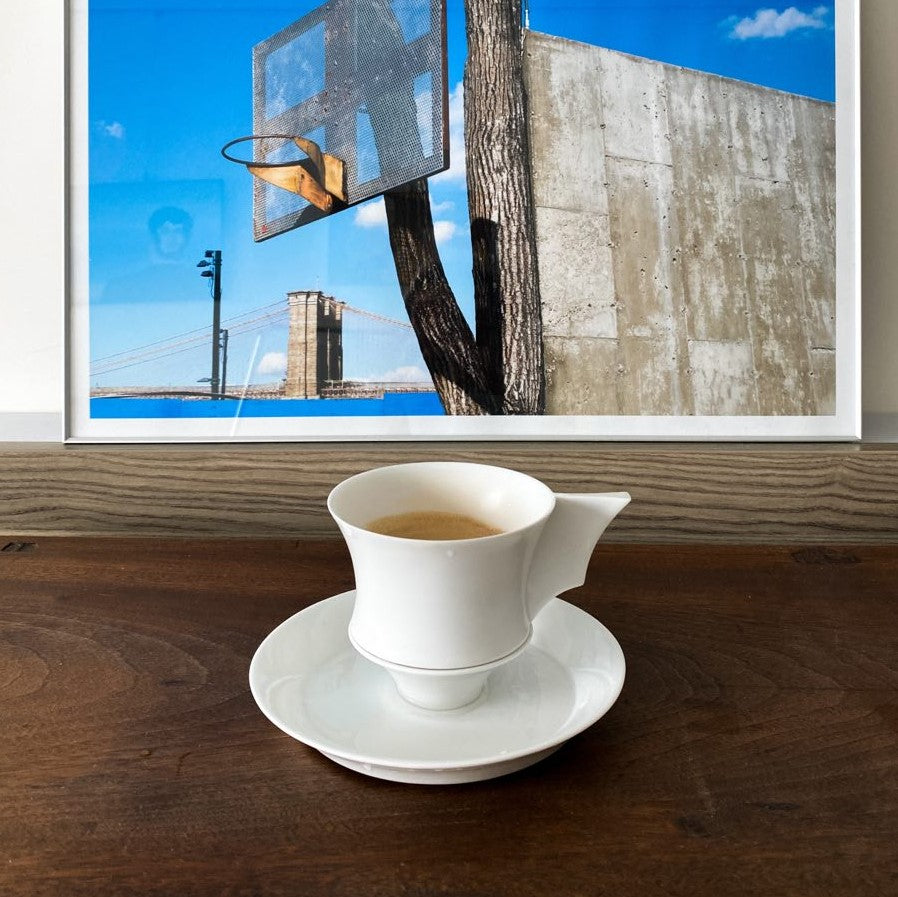
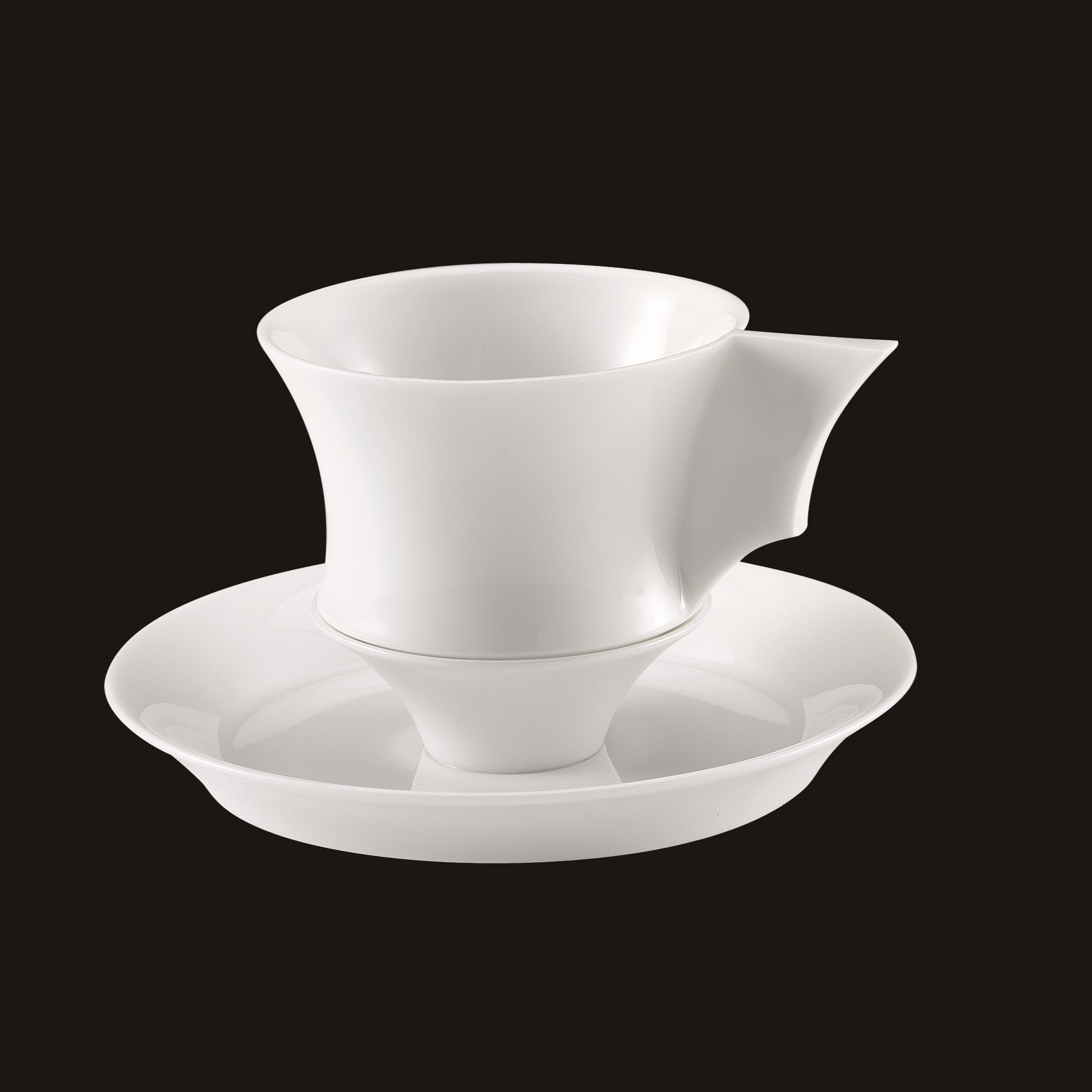
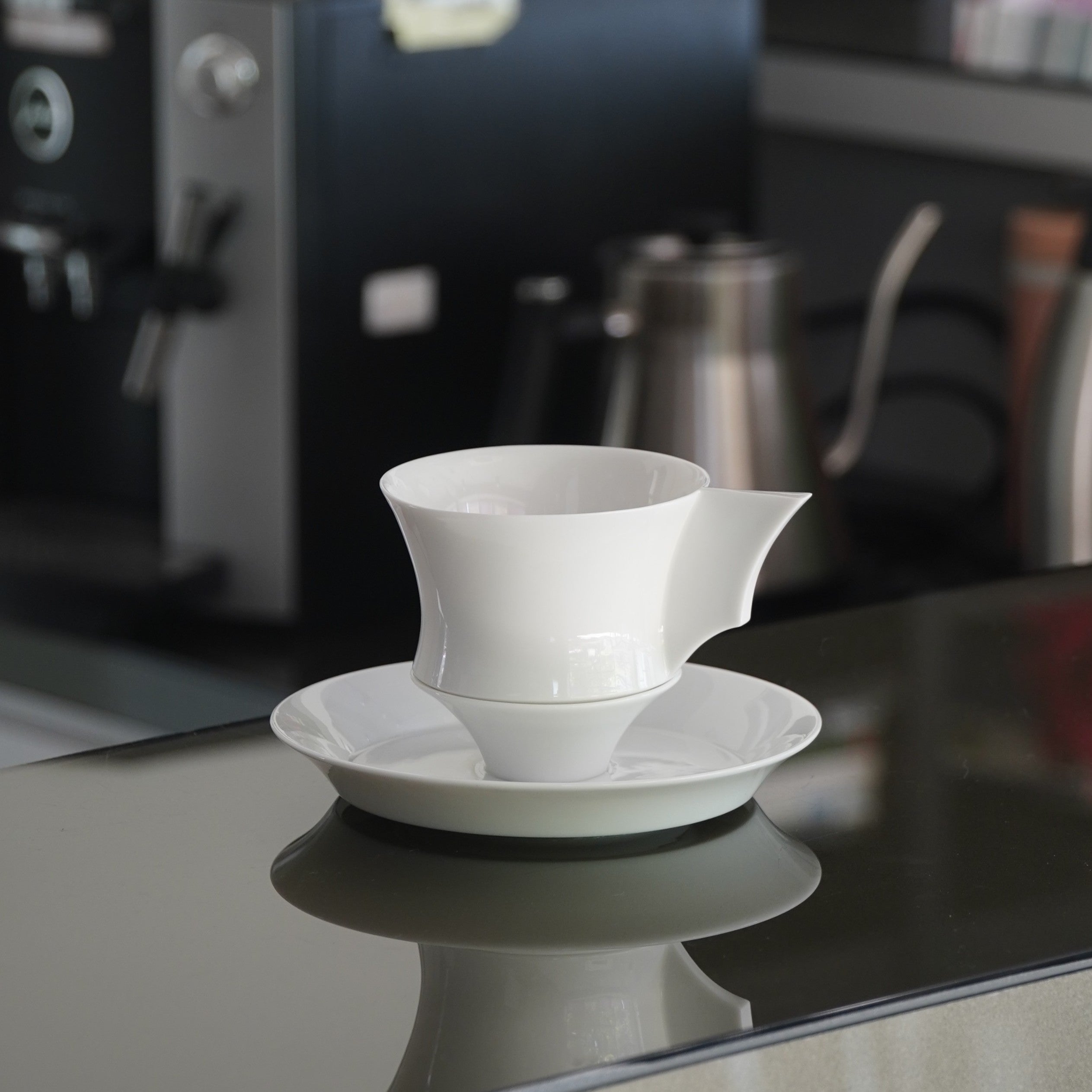
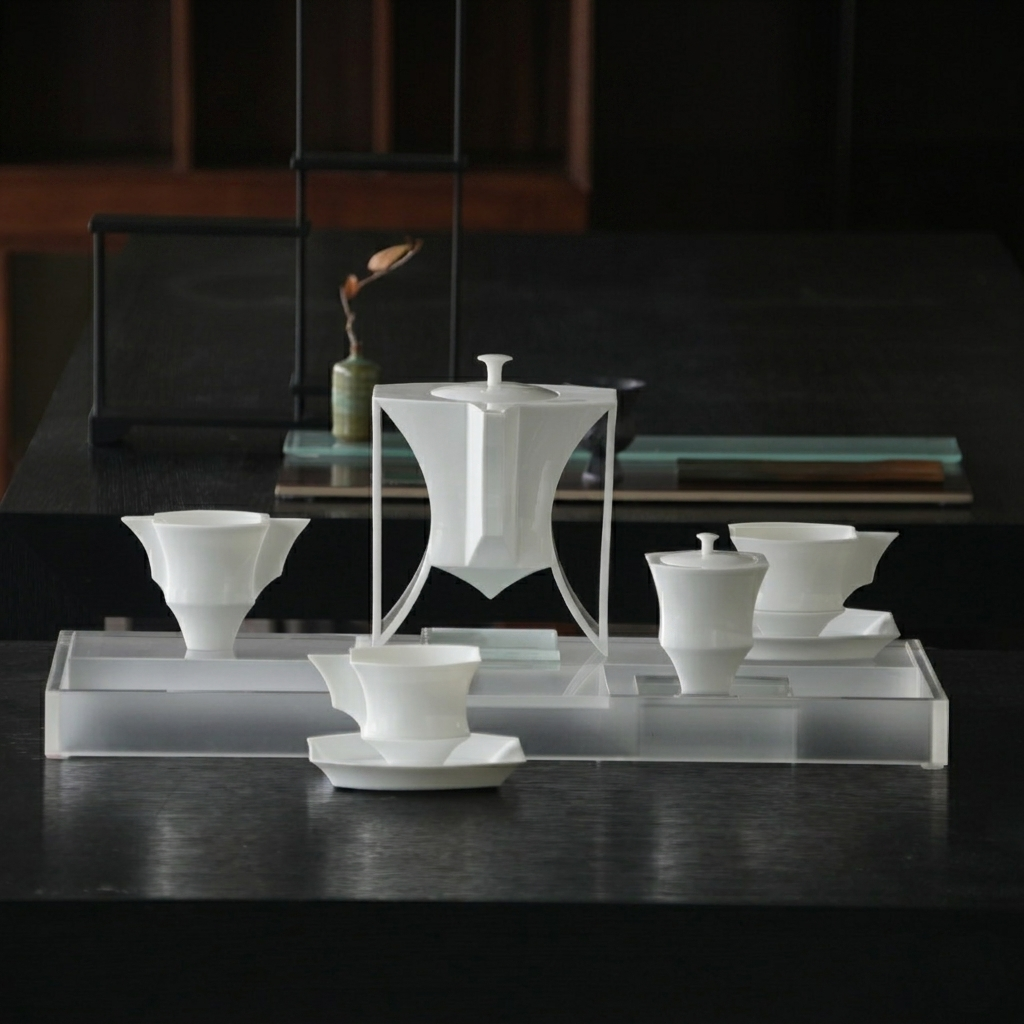
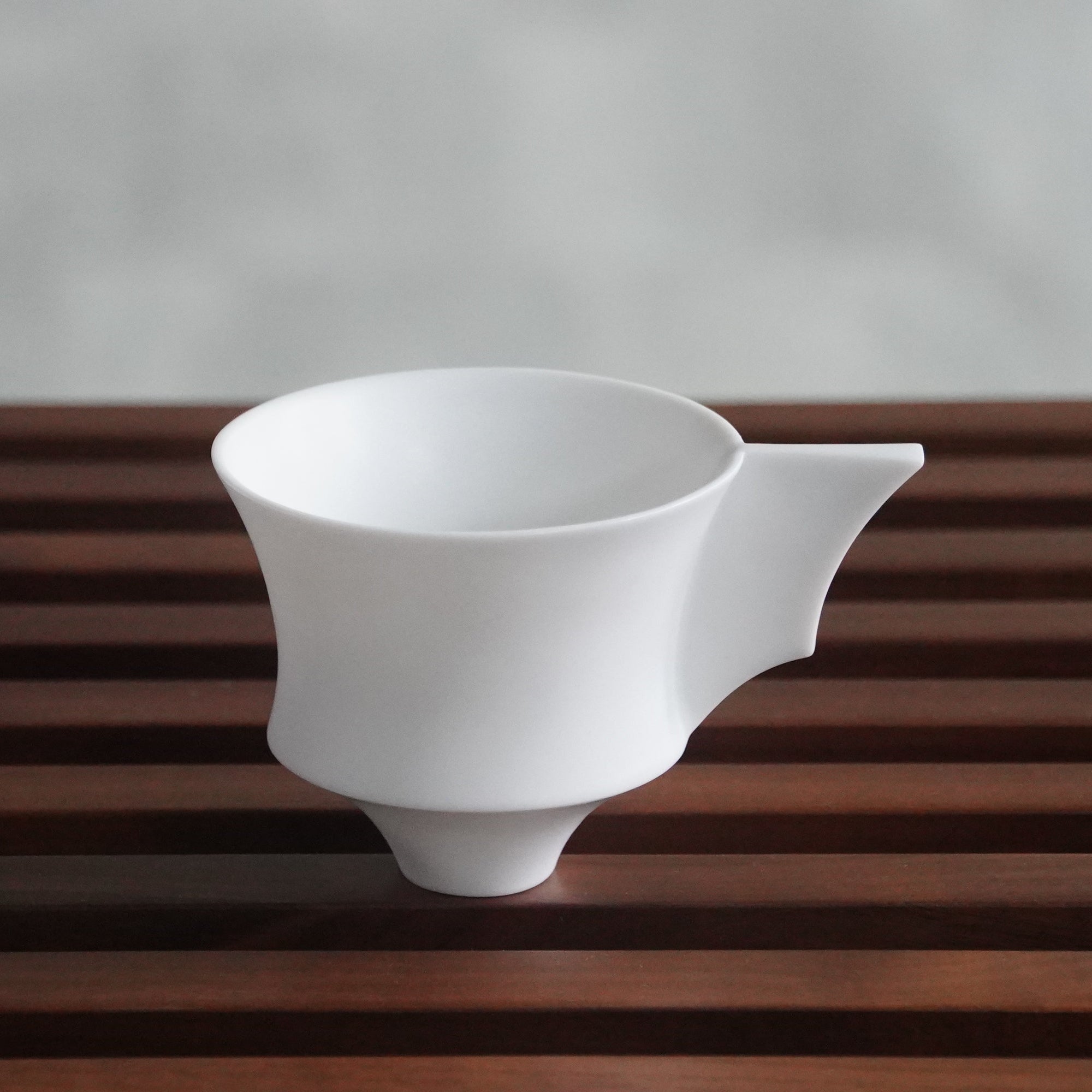
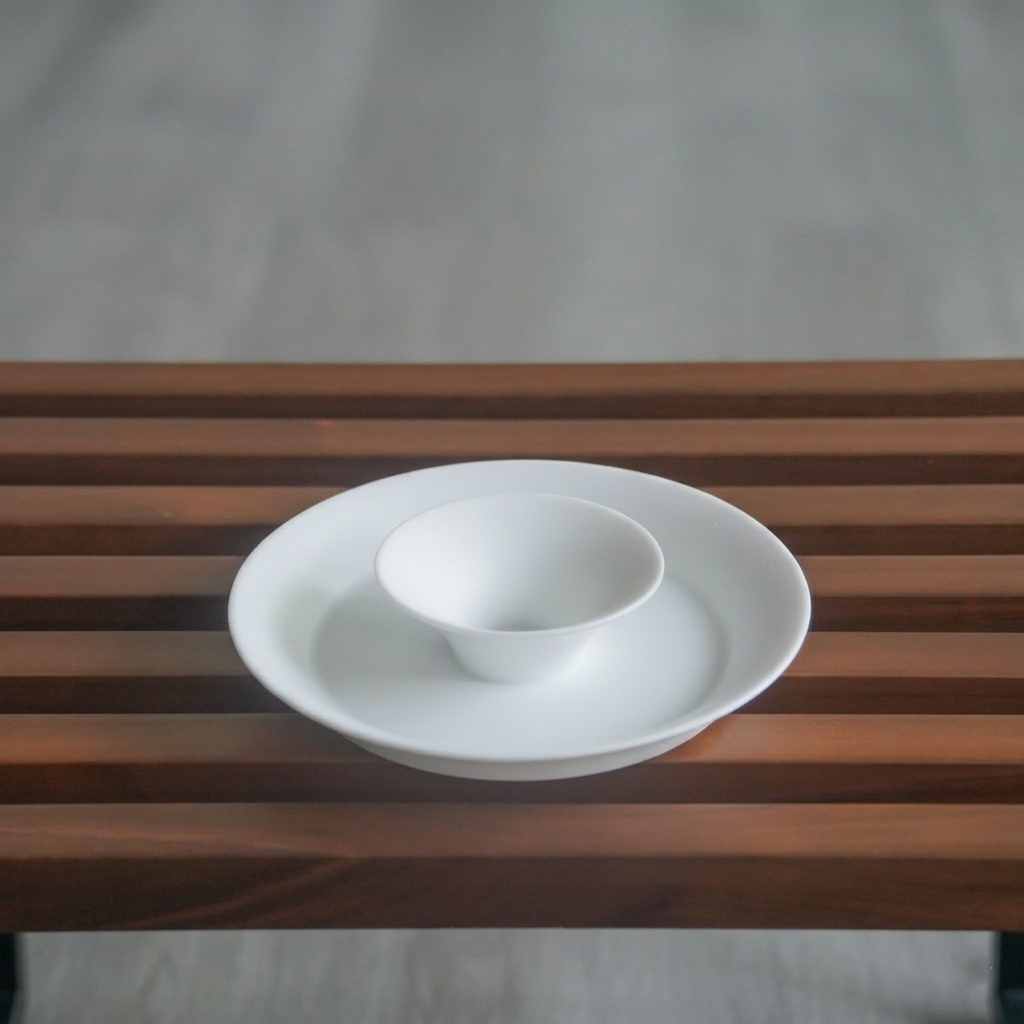
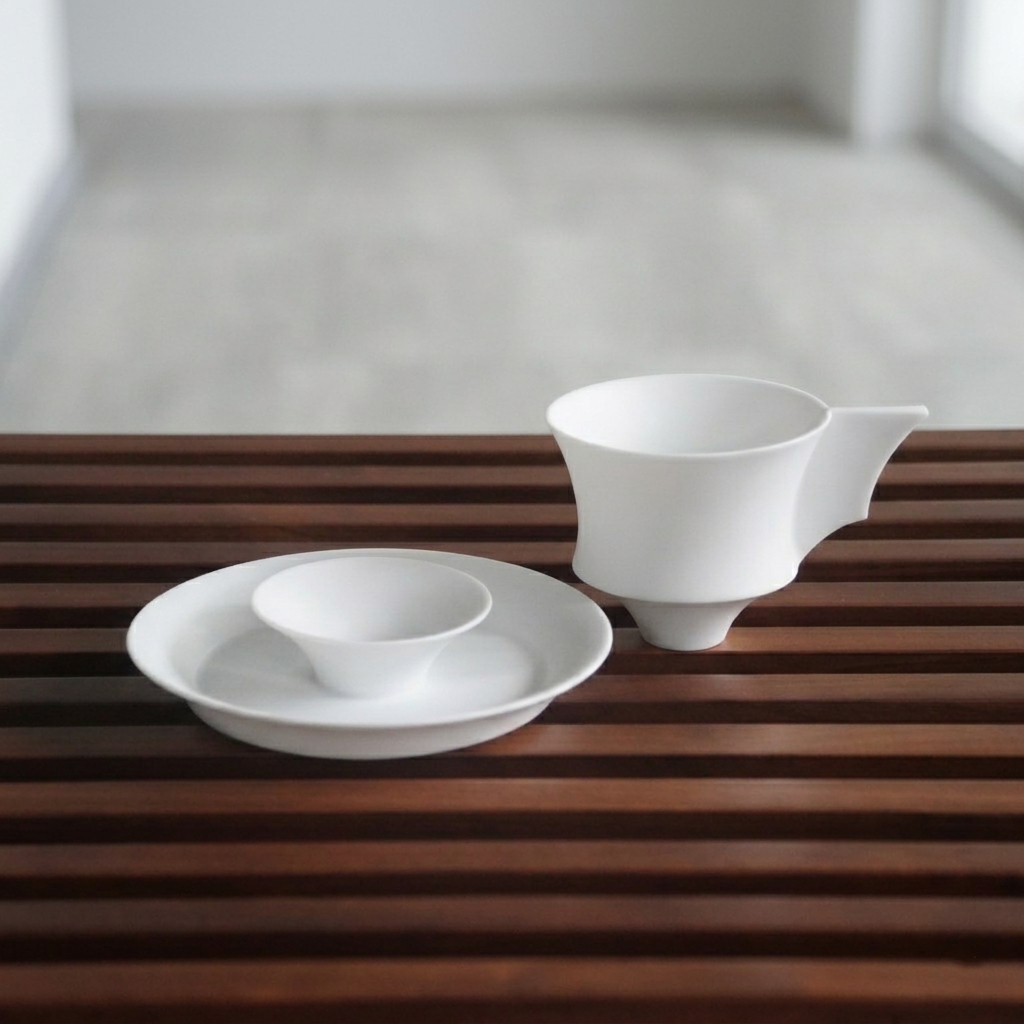
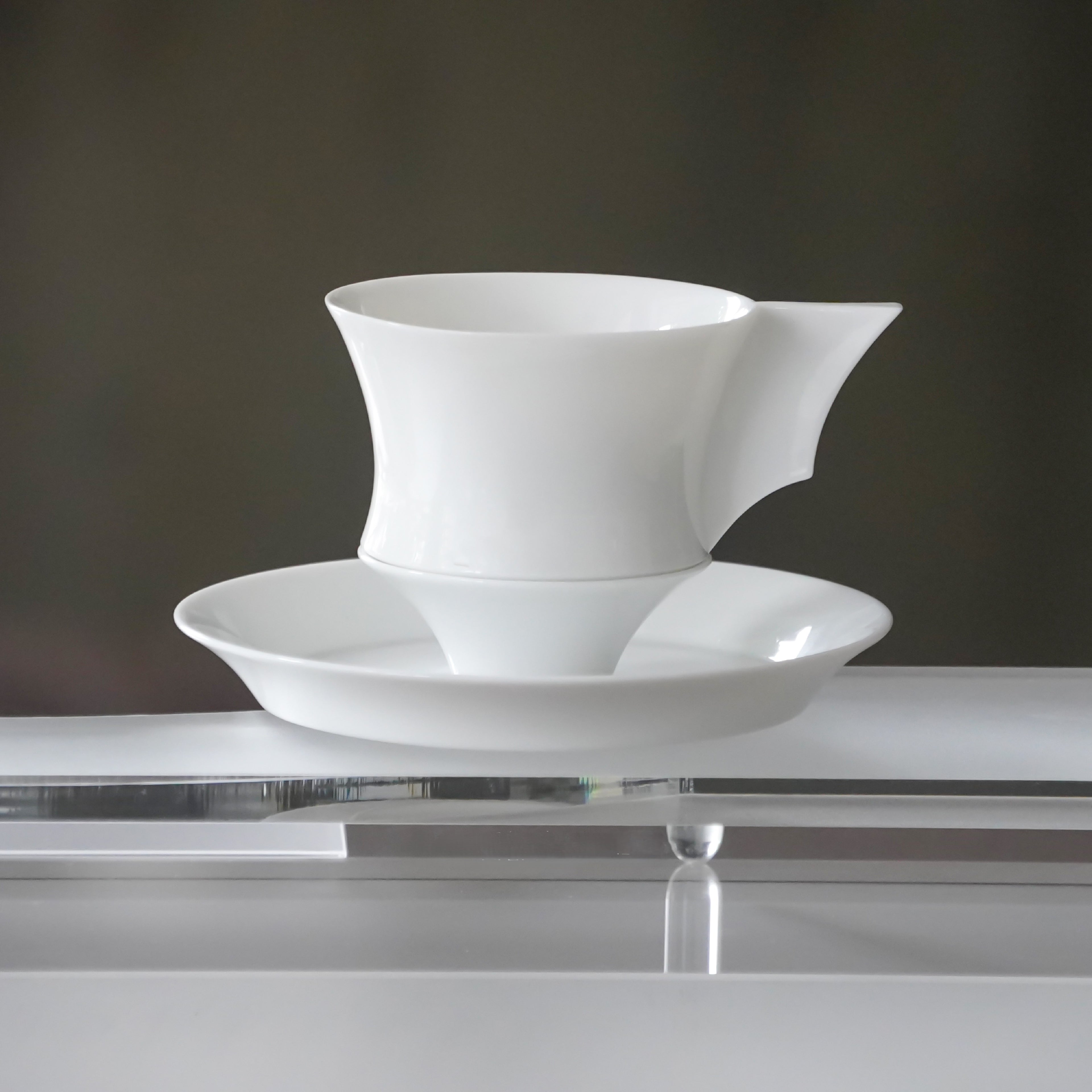
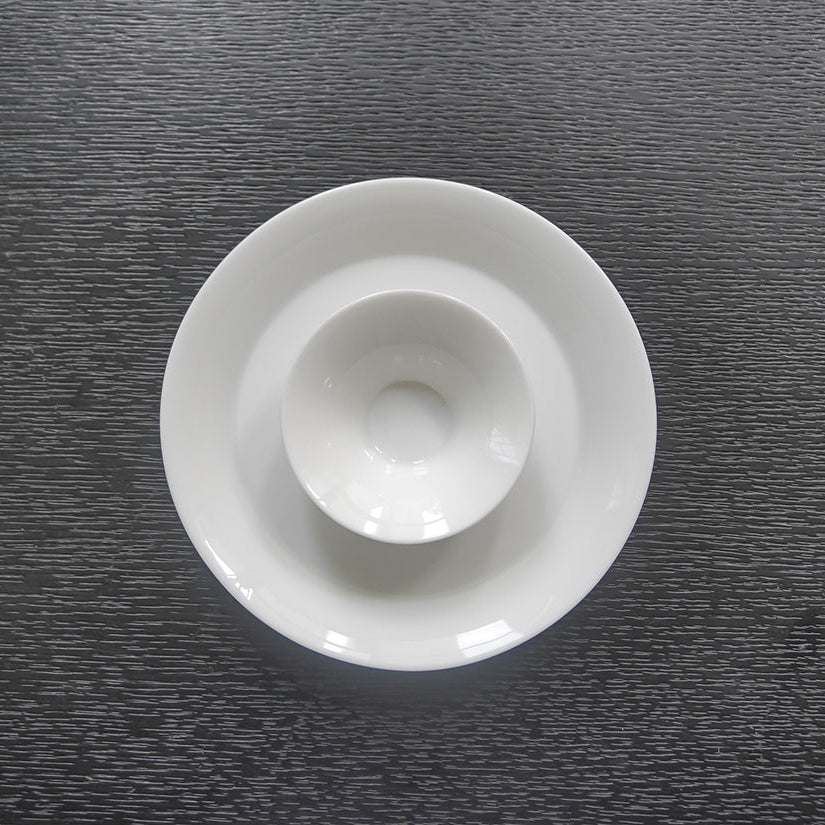
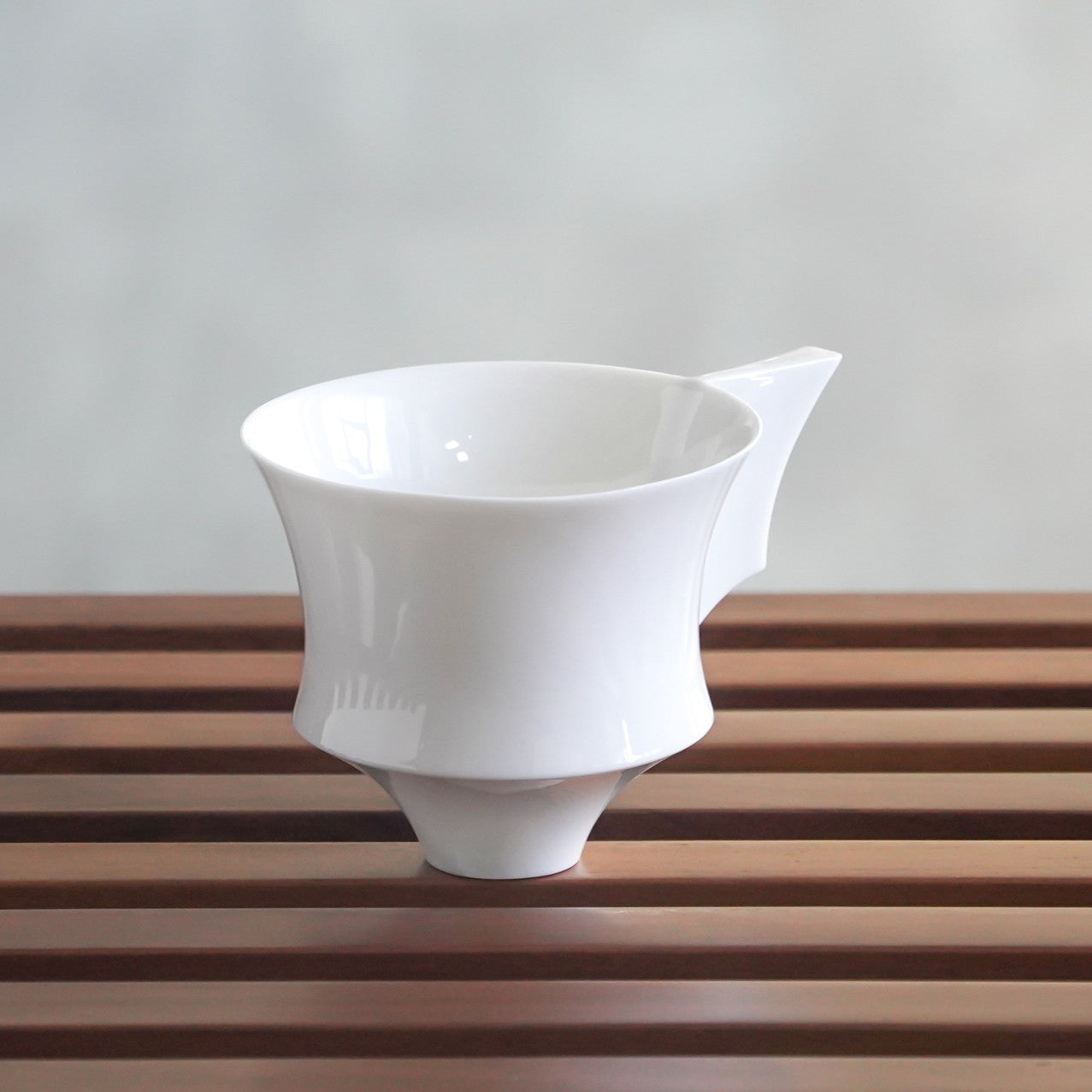
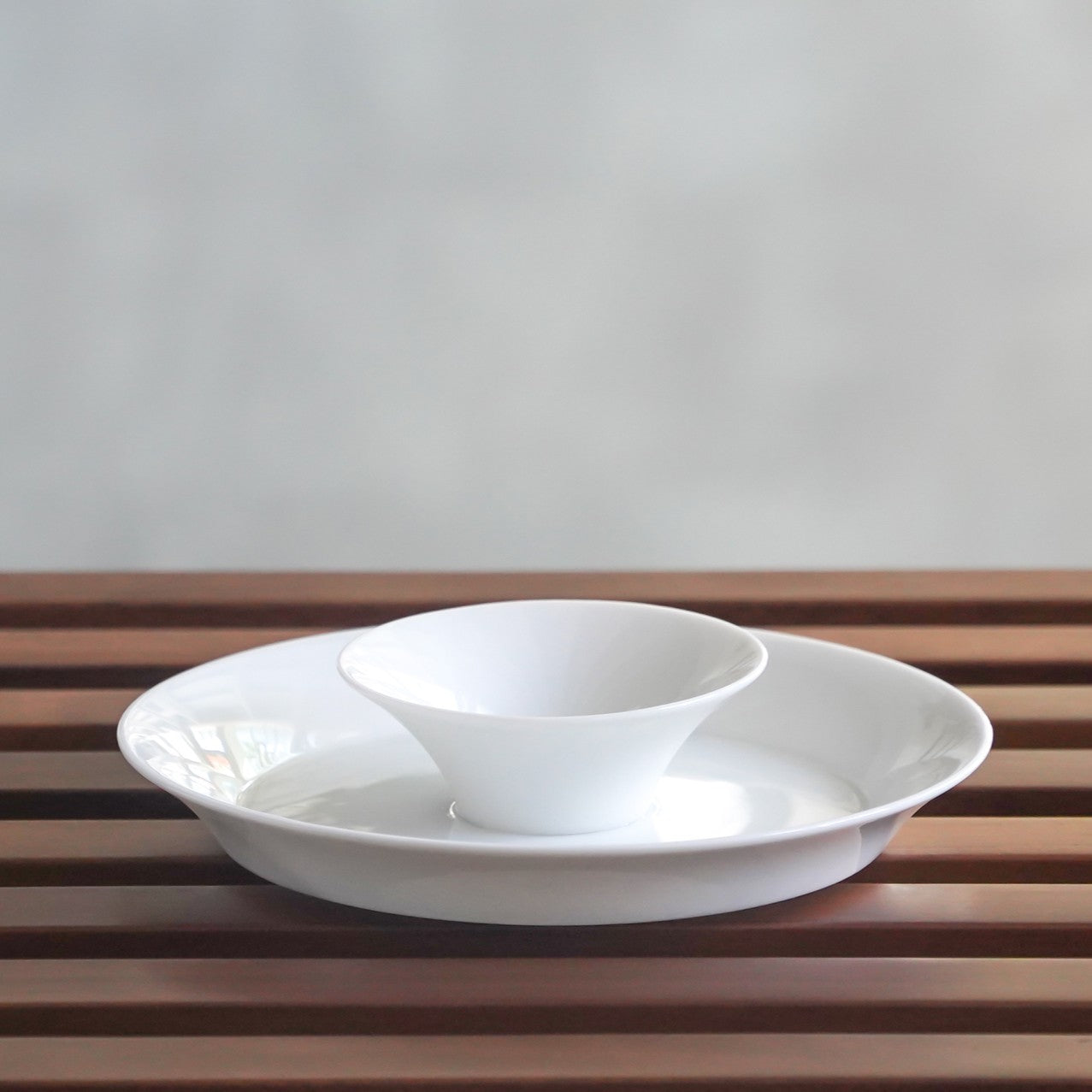
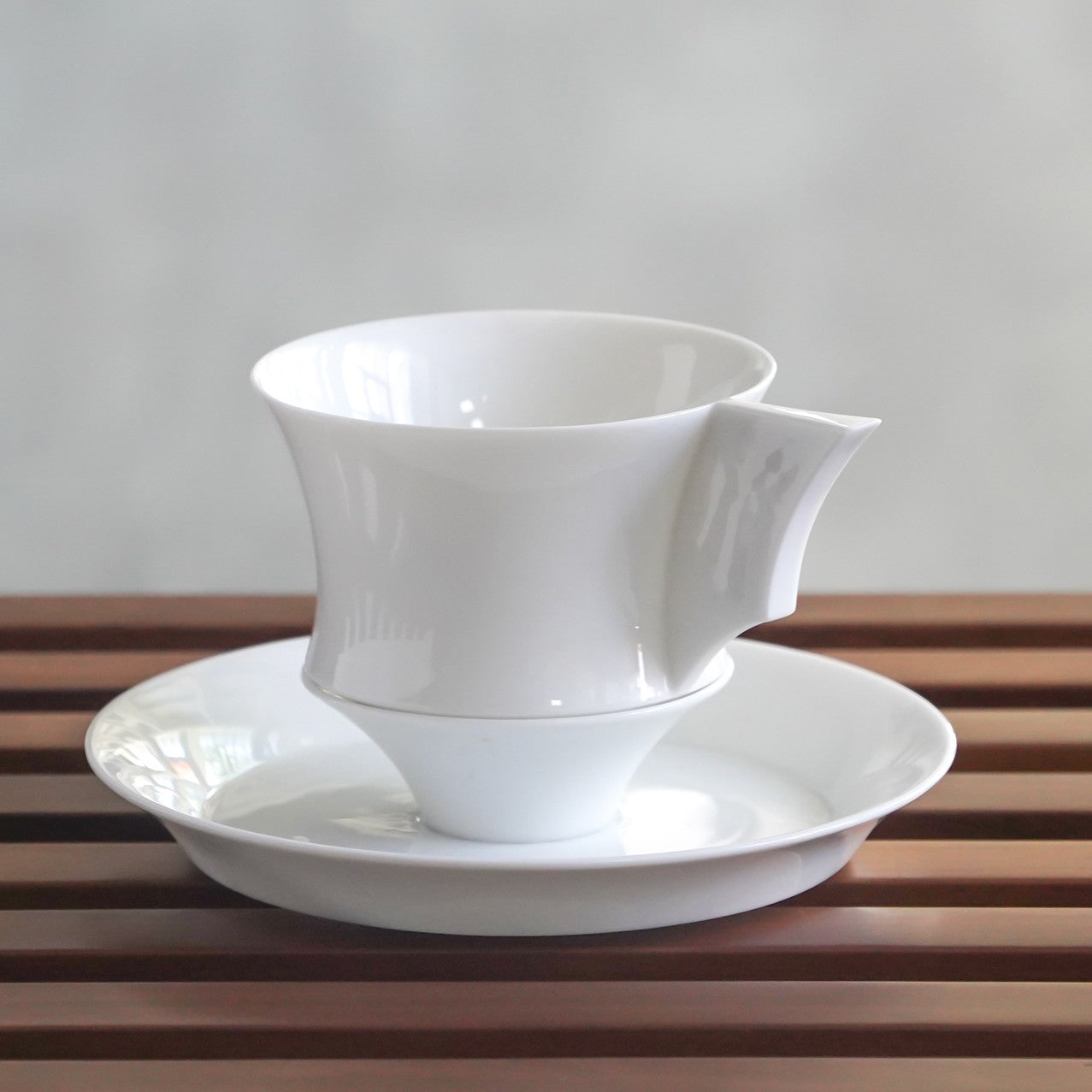
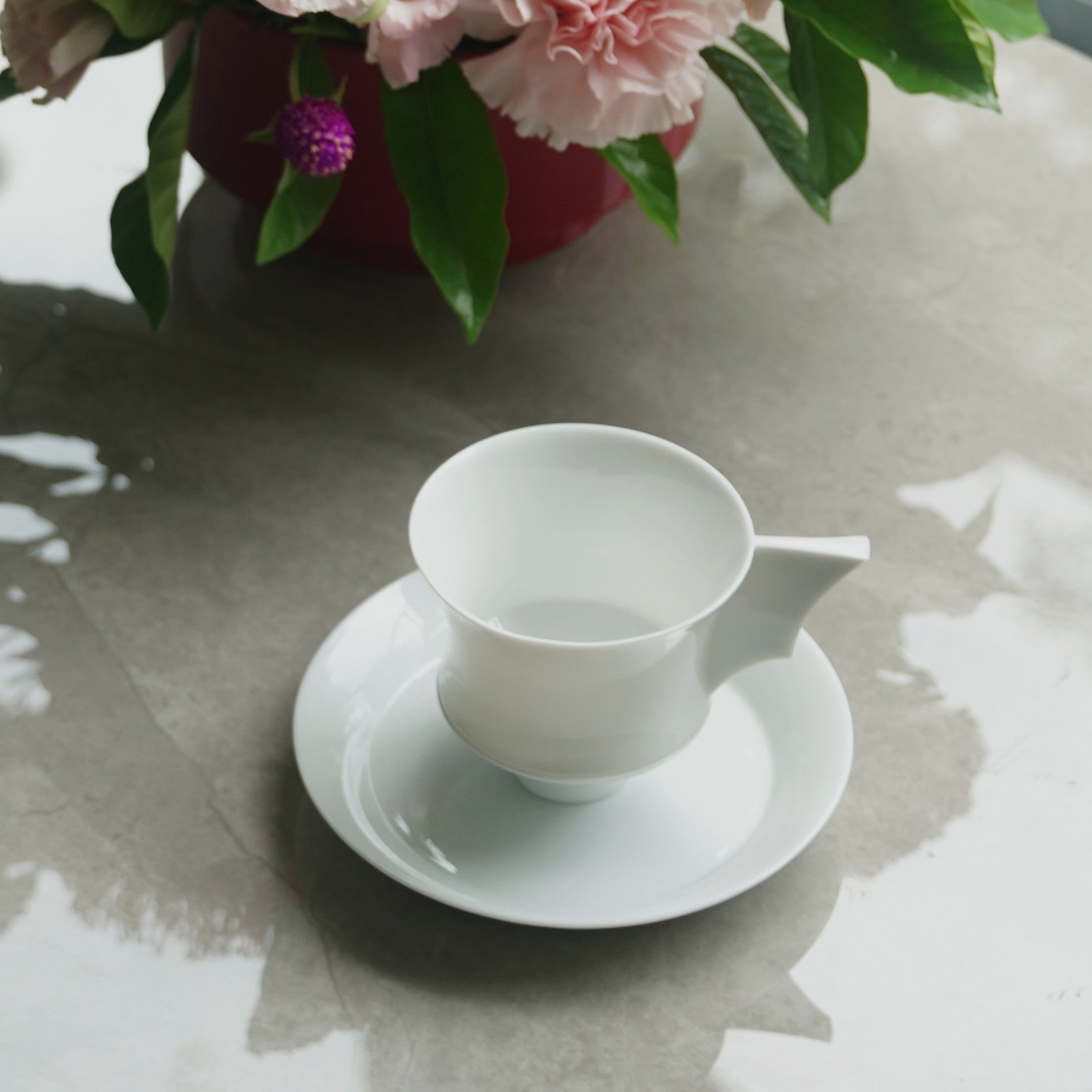
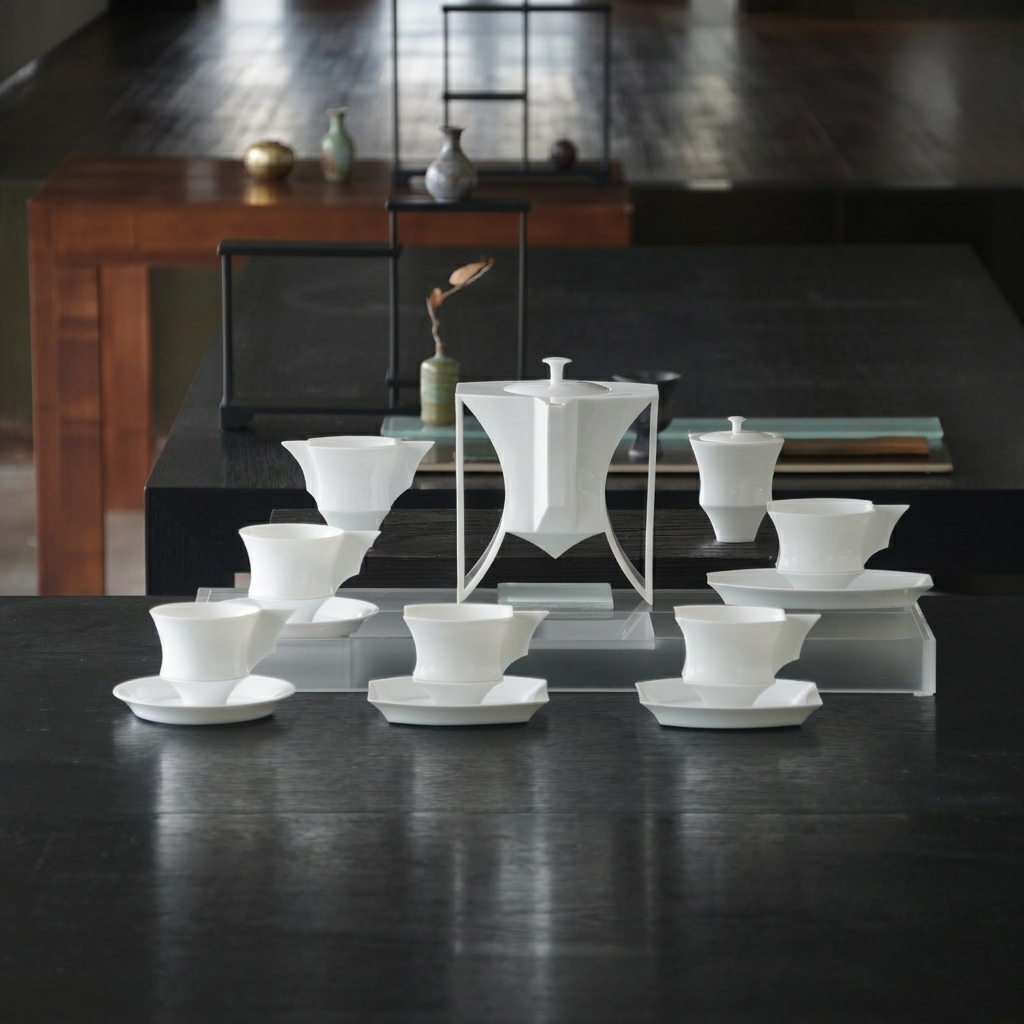
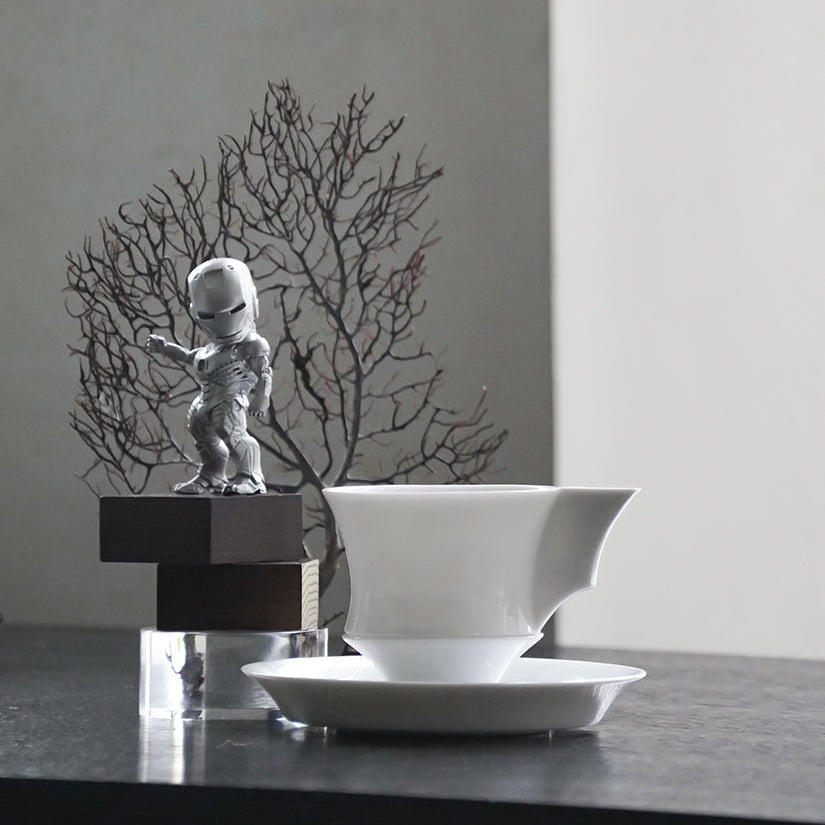
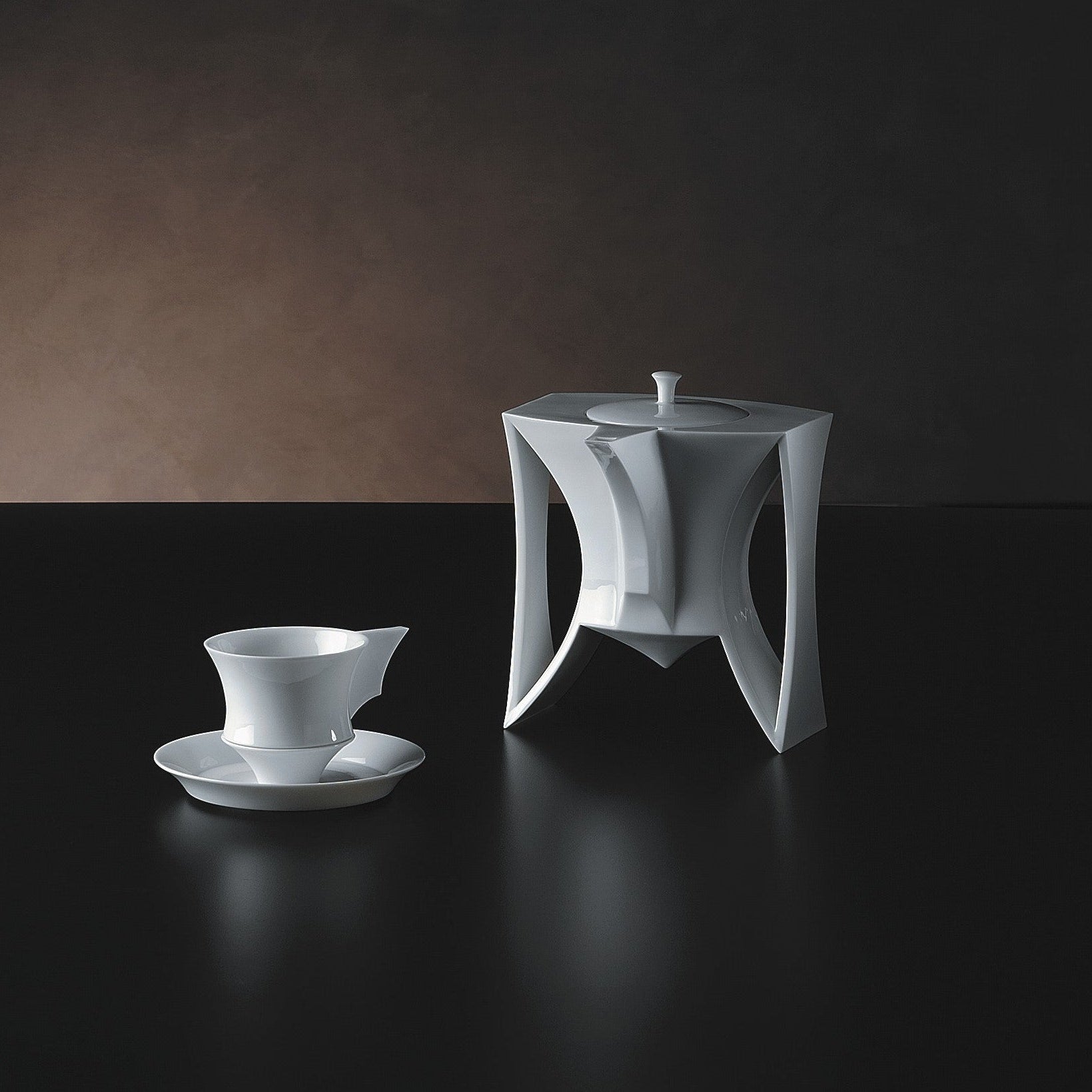
Imperial Memories is among the earliest works of NewChi Porcelain, and the piece through which Heinrich Wang broke with eighteen hundred years of porcelain convention. Its cup body layers arc upon arc in homage to the column forms of Eastern temple architecture; the blade handle guides a specific grip; and every saucer has a seat made precisely for its cup — the cup must be returned to that position for the act of drinking to be complete.
This text is excerpted from Heinrich Wang's book 俠骨柔情 (時報出版 / China Times Publishing, p. 229), written as part of his tea ceremony proposal "I Drink, Therefore I Am" — a scene he composed specifically for the Imperial Memories cup. In his view, Imperial Memories is not simply a vessel. It is a complete proposal for how a person might drink with full presence: from the moment the eyes first meet it, to the moment the fingers close around the handle, to the moment the cup is returned to its seat. Every gesture is part of the design.
What follows is Wang's original text.
Imperial Memories — Holding Ceremony Lightly, Savoring the Rites of Living
This is a gentle guidance. First, you enter a state of wanting to honor this moment — steadying the movement of the mind, composing yourself with sincerity. Then you follow, carefully, the detail of each step that unfolds before you. Within this quietly suggested orientation of the spirit, you step into the explicit frame, and begin to sense the refined pleasure of precision and propriety — a beauty rich in gradation, orderly in its advance and retreat. To feel this is already to be present. That is the weight that ceremony brings.
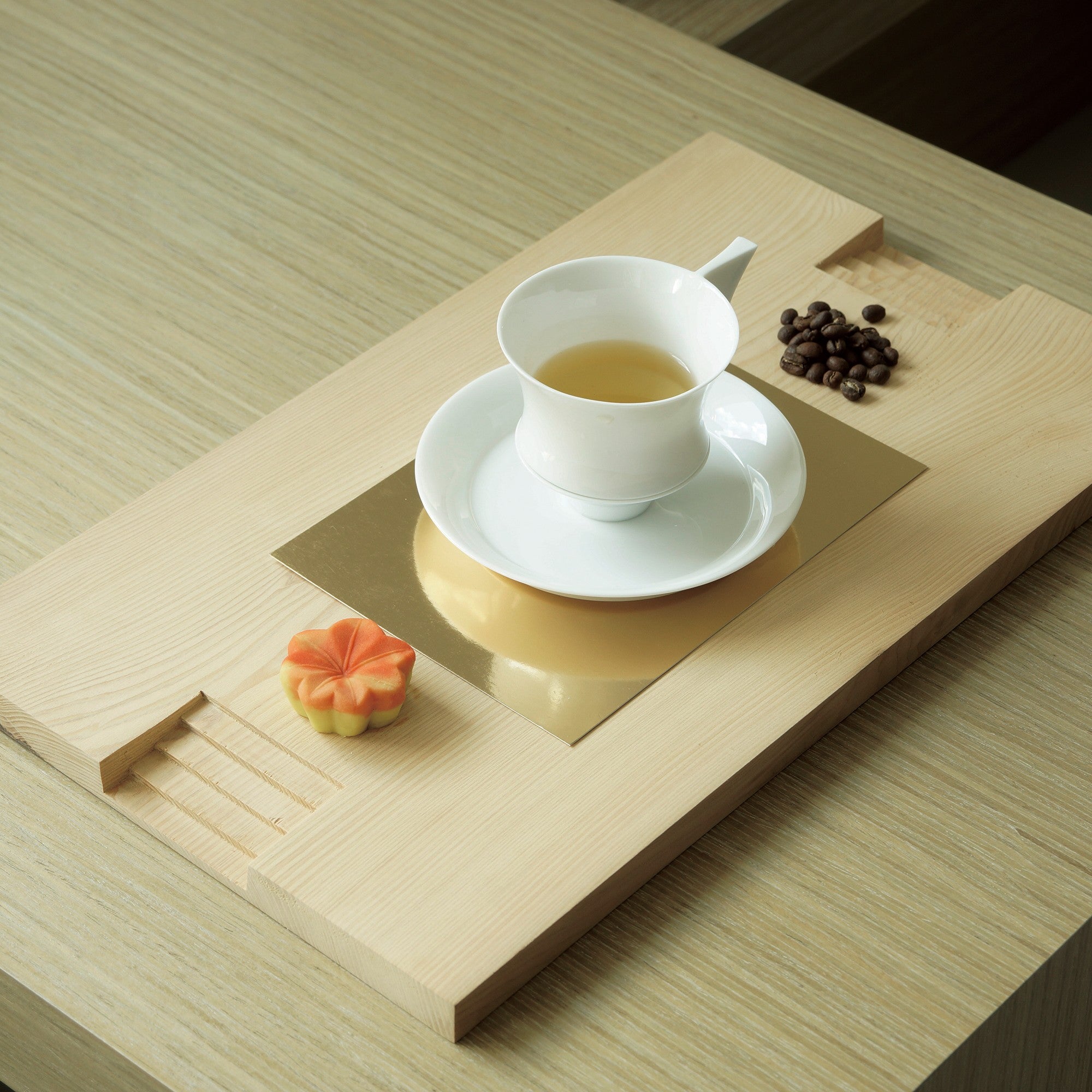
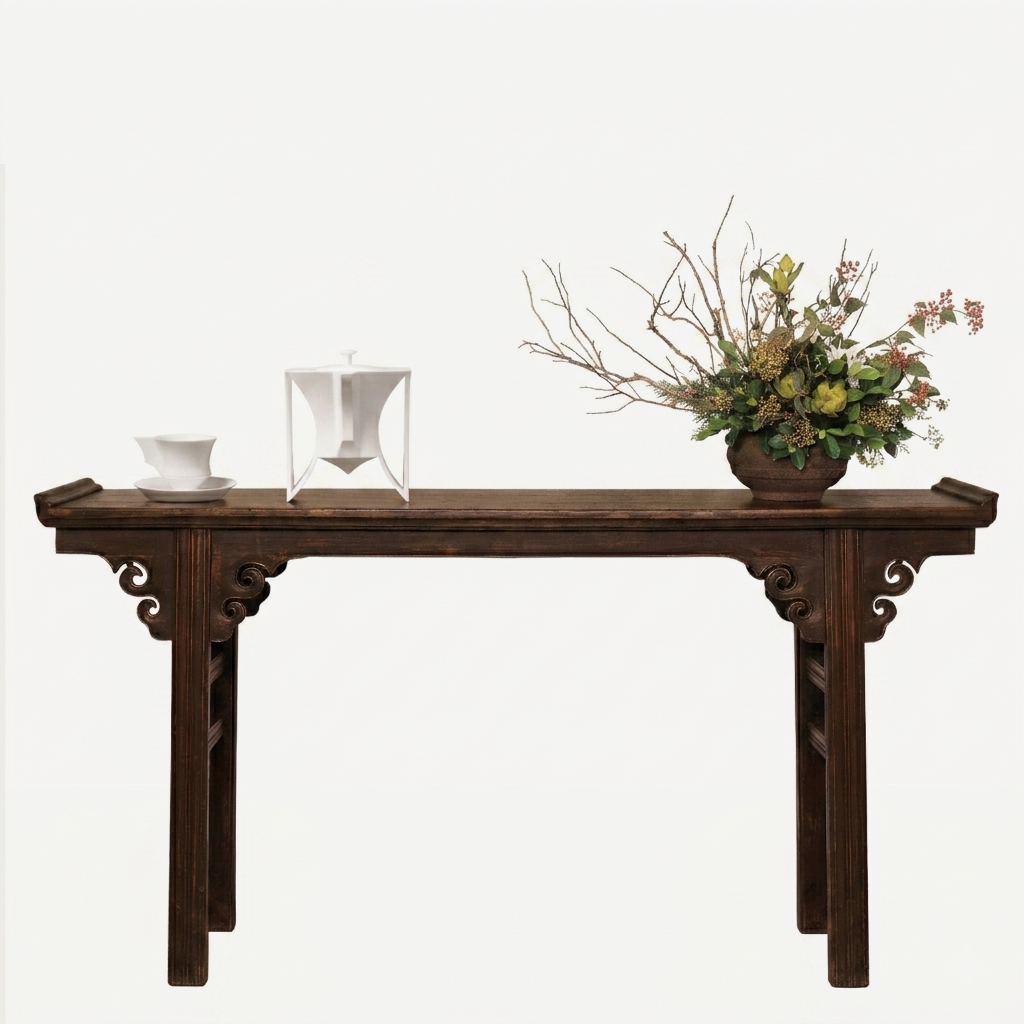
This is an imperial hall stripped of its painted beams and gilded ceilings, leaving only a stage that rises tier by tier — presiding over the solemn opening of a tea ceremony, the most deliberate of solitary occasions, waiting for the sole honored guest to be seated. It is a composed elevation, a layered clarity of ascent and descent, drawing out the temperament of a gentleman entering tea, the poised elegance of the connoisseur. This is a forgotten sanctuary in the afternoon city.
It answers to the order and gravity of the arcs repeated across the cup body, the saucer, and the handle — the platform of cypress wood rising in steps to echo the rhythm of those curves, deepening the mood of considered ceremony.
The blade handle of the cup is the center of this tea experience. Unlike the casual hook or lift of a traditional cup, this one is raised by pinching lightly between thumb and forefinger, the middle finger tracing the arc below to support the lift. This grip transmits a quiet gravity from the fingertips inward — body and mind align naturally. Combined with the deliberateness of returning the cup to its base, solid meeting hollow, everything here is arranged so that the person drinking enters the ceremony with full presence. The act of lifting and guiding — of ascending through layers to the full formal arrangement — completes the composed posture of living. And then, in a single careful sip, you hold the refinement of the moment, and touch something noble.
To drink alone is to reach the spirit. A Tieguanyin — deep, enduring, full — will deepen that quality of sacred self-possession.
About Imperial Memories
Imperial Memories is the founding series of NewChi Porcelain — the work that emerged after Heinrich Wang spent three years visiting over a hundred porcelain factories across Asia and Europe, every one of which refused to produce his designs, before he built his own workshop and spent two further years in research and development.
The technical challenges were threefold: a wide, flat saucer surface; a blade handle suspended in the air; and the precise management of shrinkage ratios across layered arc structures — all three were considered impossible to fire successfully by the global porcelain industry at the time. Imperial Memories was the answer to that impossibility.
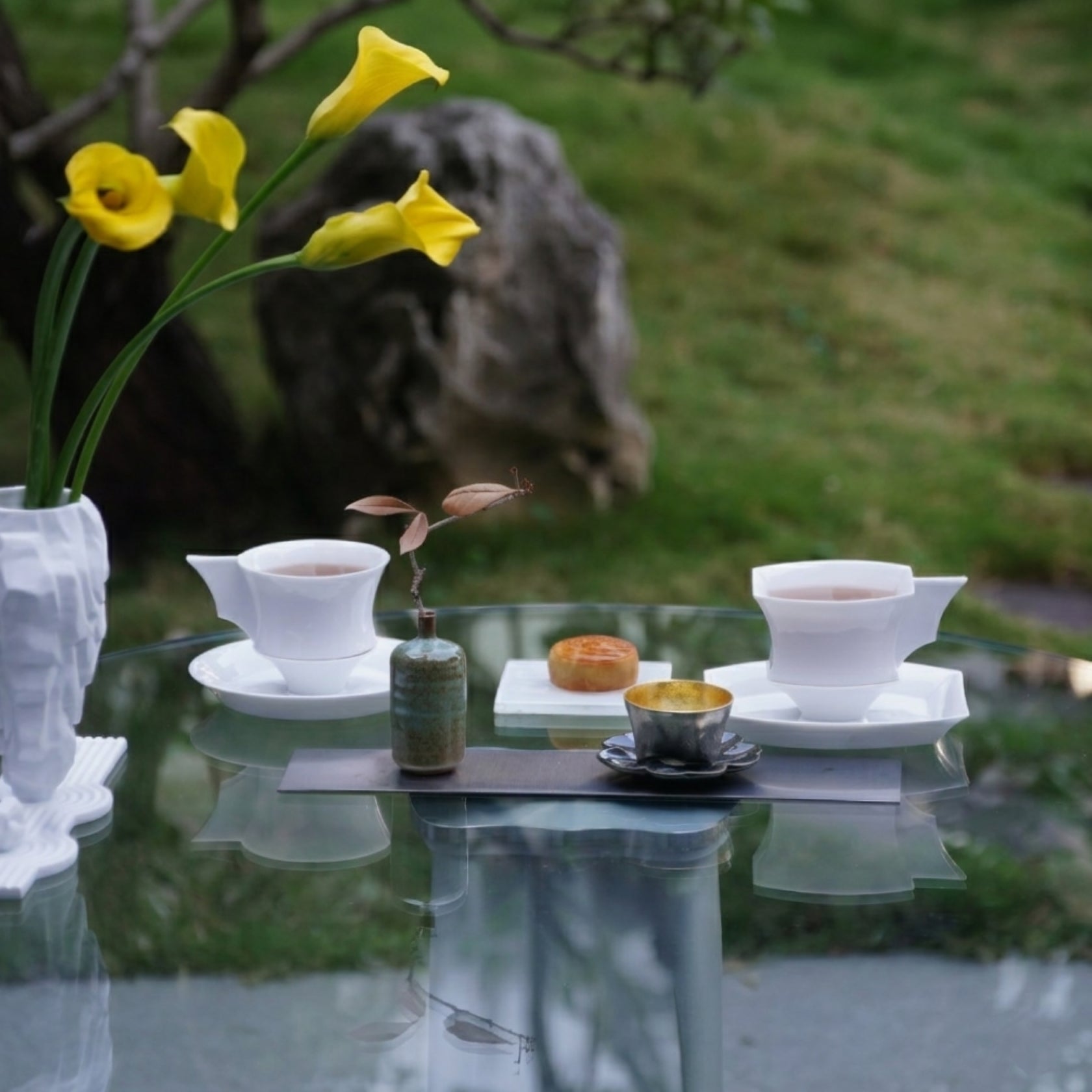
The series is currently available in three forms — Round Cup and Saucer, Square Cup and Saucer, and Square Cup and Long Saucer — in both gloss and matte finishes, for personal use or as a significant gift. Each set ships in a gift box.
Further Reading
To explore the full Imperial Memories series, visit the Imperial Memories collection page, or browse the individual product pages:
Excerpted from 俠骨柔情 by Heinrich Wang, China Times Publishing, p. 229.